
Best Business Books Every Professional Should Read
From startup playbooks to corporate strategy bibles, these are the business books that shaped modern entrepreneurship and management.

 10 min read
Shoe Dog
by Phil Knight
Shoe Dog es una memoria escrita por Phil Knight, fundador de Nike, que narra la historia de cómo transformó un pequeño préstamo de $50 en una de las marcas más reconocidas del mundo. El libro describe los desafíos, fracasos y triunfos que enfrentó mientras construía la empresa desde sus humildes comienzos como Blue Ribbon Sports hasta convertirse en un gigante global. Con humor, humanidad y franqueza, Knight ofrece una mirada íntima al espíritu emprendedor y la perseverancia detrás del éxito de Nike.
Key Takeaways
- 1The Crazy Idea: From Post-College Doubt to Bold Vision — After finishing my MBA at Stanford, I found myself drifting, restless. The world seemed vast and full of possibilities, …
- 2Building Blue Ribbon Sports: Hustle, Partnership, and Persistence — When I returned to Oregon, my grand dream shrunk to the size of a car trunk. I began selling Onitsuka Tiger shoes at tra…
- 3Breaking Away: Conflict with Onitsuka and the Birth of Nike
 10 min read
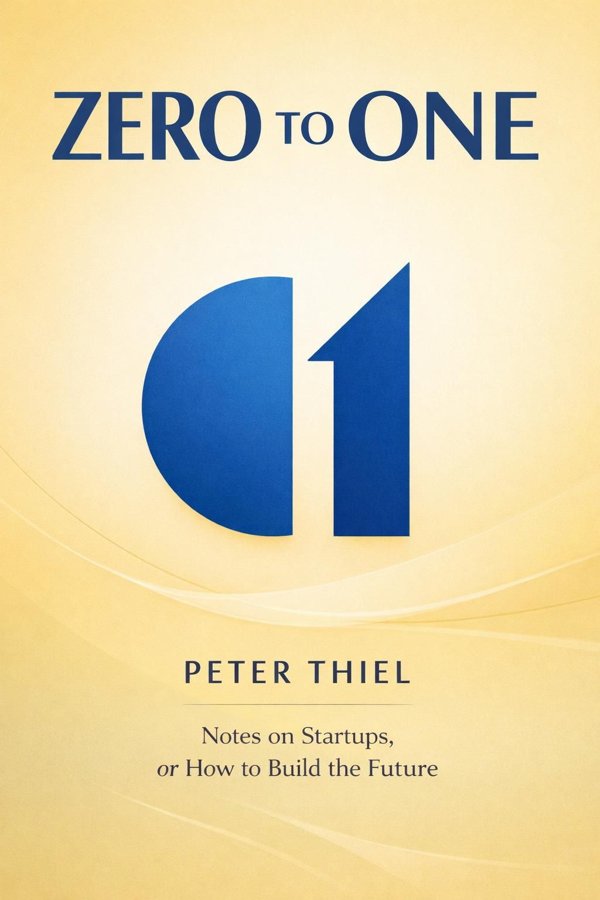
Zero to One
by Peter Thiel
Zero to One by Peter Thiel, based on notes by Blake Masters, is one of the most provocative books ever written about startups, innovation, and building companies that matter. Rather than offering generic business advice, Thiel asks a deeper question: how do you create something truly new? His answer is the idea of going from “zero to one” — producing a breakthrough that did not exist before — instead of going from “one to many,” which simply means copying or scaling what is already known. That distinction sits at the heart of the book. Drawing on his experience as a co-founder of PayPal, an early investor in Facebook, and a leading Silicon Valley thinker, Thiel challenges many popular assumptions about competition, risk, technology, and success. He argues that the best businesses are not those that fight hardest in crowded markets, but those that build unique products so valuable they effectively become monopolies. Along the way, he explores founding teams, sales, culture, long-term planning, and the role of secrets in entrepreneurship. For founders, investors, students, and ambitious professionals, Zero to One is a sharp, contrarian guide to creating the future instead of merely reacting to it.
Key Takeaways
- 1The Future Depends on New Creation — Most people talk about the future as if it will simply arrive on schedule. Thiel’s central insight is that the future is…
- 2Learn from Bubbles Without Becoming Cynical — A failed boom can teach more than a smooth success. Thiel uses the dot-com bubble of the late 1990s to show how mass ent…
- 3Happy Companies Escape Destructive Competition — Thiel’s famous claim that competition is for losers sounds extreme, but it highlights an important truth: the best busin…
 10 min read
The Hard Thing About Hard Things
by Ben Horowitz
Building a company is often romanticized as a thrilling journey powered by vision, talent, and hustle. Ben Horowitz shatters that illusion. In The Hard Thing About Hard Things, he focuses on the brutal realities of leadership: running out of cash, firing friends, laying off loyal employees, managing executives who disappoint, and making high-stakes decisions when no option feels right. This is not a book of tidy frameworks or motivational slogans. It is a survival guide for leaders facing ambiguity, pressure, and fear. Horowitz writes from hard-earned experience. As cofounder and CEO of Loudcloud, later transformed into Opsware, he led a company through the dot-com crash, near-collapse, painful restructuring, and ultimately a successful sale to Hewlett-Packard. He later became a cofounder of Andreessen Horowitz, one of Silicon Valley’s most influential venture capital firms, giving him a front-row seat to the struggles of countless founders. What makes this book matter is its honesty. Horowitz argues that the toughest moments in business rarely come with clear answers. Leadership is not about avoiding pain; it is about carrying responsibility through it. For founders, executives, and anyone managing under pressure, this book offers unusually practical wisdom for doing the job when it is hardest.
Key Takeaways
- 1Entrepreneurship Means Entering Organized Chaos — The biggest shock of entrepreneurship is not the workload; it is the absence of certainty. People often imagine startups…
- 2Crisis Leadership Requires Choosing Under Pressure — A crisis does not test your intelligence nearly as much as it tests your nerve. Horowitz shows that when companies appro…
- 3The CEO Job Is Inherently Lonely — The hardest part of being a CEO is not the title, the schedule, or even the responsibility. It is the isolation. Horowit…
 10 min read
48 Laws of Power
by Robert Greene
The 48 Laws of Power is a provocative guide to understanding how influence really works beneath the surface of everyday life. Rather than offering idealistic advice about fairness or good intentions, Robert Greene studies how power has been gained, protected, lost, and manipulated across centuries of history. Drawing on examples from rulers, generals, courtiers, artists, and strategists such as Machiavelli, Sun Tzu, Louis XIV, and Napoleon, he distills recurring patterns into 48 memorable laws. What makes this book endure is not just its boldness, but its honesty. Greene argues that power dynamics exist in offices, friendships, leadership roles, negotiations, politics, and creative fields whether we acknowledge them or not. To ignore them is to remain vulnerable; to understand them is to move more carefully and effectively. Greene writes with the eye of a historian and the precision of a strategist. His gift lies in turning complex human behavior into practical principles readers can observe immediately in the real world. Whether you see the book as a manual, a warning, or both, it offers a sharp framework for navigating ambition, status, reputation, and influence.
Key Takeaways
- 1Foundations of Power: Perception and Restraint — Power often begins long before action; it begins in perception. One of Greene’s central insights is that people do not r…
- 2Capturing Attention and Building Reputation — Obscurity is rarely neutral; in competitive environments, it is often a form of powerlessness. Greene argues that reputa…
- 3Relationships, Independence, and Strategic Absence — Dependence is one of the hidden currencies of power. Greene repeatedly shows that those who become indispensable gain le…
 10 min read
Never Eat Alone
by Keith Ferrazzi
Never Eat Alone is a practical and persuasive guide to one of the most underrated drivers of success: relationships. In this business classic, Keith Ferrazzi argues that achievement is rarely a solo act. Careers accelerate, ideas spread, and opportunities appear when people build authentic connections rooted in generosity, trust, and mutual support. Rather than treating networking as manipulation or self-promotion, Ferrazzi reframes it as a lifelong practice of helping others, sharing knowledge, and staying meaningfully connected. What makes the book especially powerful is its blend of mindset and method. Ferrazzi does not simply say that relationships matter; he explains how to build them deliberately, from identifying your purpose and reaching out with confidence to maintaining contact and creating value over time. His advice applies whether you are an entrepreneur, executive, job seeker, student, or anyone trying to grow in a competitive world. Ferrazzi writes with unusual authority. A Harvard and Yale graduate, former CMO, entrepreneur, and trusted advisor to major companies, he built his own career through strategic generosity and human connection. The result is a business book that feels both ambitious and deeply humane.
Key Takeaways
- 1Networking Means Relationships, Not Transactions — Many people resist networking because they associate it with shallow small talk, opportunism, and using people. Ferrazzi…
- 2Build Relationships Around A Clear Mission — Connection without direction can become noise. Ferrazzi emphasizes that meaningful relationship-building starts with kno…
- 3Create Visibility Before You Need It — Opportunity rarely goes to the most talented unknown person. Ferrazzi argues that if people do not know who you are, wha…
 10 min read
The Energy Bus
by Jon Gordon
The Energy Bus by Jon Gordon is a short business fable with a simple but powerful premise: the quality of your life, leadership, and work is shaped by the energy you bring to it every day. The story follows George, a stressed-out manager whose career, marriage, and mindset are all sliding in the wrong direction. When his car breaks down, he is forced to ride the bus and meets Joy, an unusually optimistic driver who teaches him ten rules for transforming negativity into purpose, teamwork, and momentum. What begins as an inconvenient commute becomes a blueprint for changing how he leads and lives. The book matters because it translates abstract ideas like attitude, culture, and leadership into memorable, practical lessons. Gordon argues that positive energy is not naïve cheerfulness; it is a disciplined choice that affects performance, relationships, and resilience. That message has resonated widely in companies, schools, and sports teams. As a bestselling author and speaker on leadership and team culture, Gordon writes with the authority of someone who has spent years helping organizations build stronger, more energized environments.
Key Takeaways
- 1You Are the Driver of Your Bus — A hard truth sits at the center of meaningful change: most people cannot improve a life they keep blaming on everyone el…
- 2Vision Gives Direction to Energy — Energy without direction is just motion, not progress. After George accepts responsibility, Joy pushes him to answer a h…
- 3Positive Energy Must Be Fueled Daily — Negativity is rarely a single dramatic collapse; more often, it is the slow result of running on empty. Gordon’s third r…
 10 min read
The Lean Startup
by Eric Ries
Most new ventures do not fail because their founders lack ambition, intelligence, or effort. They fail because they spend too long building products, features, and business plans based on assumptions instead of evidence. In The Lean Startup, Eric Ries offers a different path: treat entrepreneurship as a disciplined process of experimentation, learning, and adaptation. Rather than betting everything on a grand launch, Ries argues that successful innovators test ideas early, gather real customer feedback, and improve continuously. The book introduces a practical framework built around validated learning, minimum viable products, and the build-measure-learn loop, helping teams reduce waste and discover what customers actually value. Its relevance extends far beyond Silicon Valley. Whether you are launching a startup, leading innovation inside a large company, or developing a new service in a nonprofit, the principles apply wherever uncertainty is high. Ries writes with unusual authority because his ideas grew from hard experience as a founder and advisor. He combines startup scars, management thinking, and systems discipline into a methodology that has reshaped how modern businesses approach innovation.
Key Takeaways
- 1Entrepreneurs Exist Everywhere — The most dangerous myth about entrepreneurship is that it belongs only to hoodie-wearing founders in garages. Eric Ries …
- 2Lean Thinking Reduces Startup Waste — Waste in a startup is rarely obvious at first because it often looks like progress. Teams spend months refining business…
- 3Build, Measure, Learn Faster — Speed alone does not create successful startups; learning speed does. The core engine of The Lean Startup is the build-m…
 10 min read
Buy Back Your Time
by Dan Martell
Buy Back Your Time is a practical playbook for entrepreneurs who are tired of being trapped inside the very businesses they built. In this book, Dan Martell argues that most founders make a crucial mistake: they hire only when growth demands it, instead of hiring to reclaim their own time. That distinction changes everything. Rather than rewarding hustle, Martell shows how to measure the value of your time, identify low-value tasks, and systematically transfer them to other people so you can focus on work that truly drives revenue, creativity, and long-term fulfillment. The book matters because many ambitious leaders quietly suffer from the same problem—calendar chaos, decision fatigue, and the feeling that success has come at the expense of health, relationships, and freedom. Martell writes from hard-earned experience. A successful entrepreneur, angel investor, and founder of SaaS Academy, he has built, scaled, and exited companies while coaching thousands of business owners. His guidance is grounded not just in theory, but in systems tested in real companies. The result is an actionable framework for scaling without burnout and creating a business that serves your life, not the other way around.
Key Takeaways
- 1Hire to Buy Back Time — One of the most dangerous beliefs in entrepreneurship is that you should wait to hire until your business is “big enough…
- 2Know the Value of Your Hour — Most entrepreneurs treat time emotionally when they should treat it economically. Martell introduces the Time-Value Fram…
- 3Cross the Pain Line Early — Many founders do not delegate because they are lazy; they avoid it because delegation feels painful at first. Martell ca…
 10 min read
Rework
by Jason Fried
What if most of what you’ve been taught about business is not just outdated, but actively unhelpful? In Rework, Jason Fried and David Heinemeier Hansson argue that many of the so-called rules of entrepreneurship—writing elaborate business plans, raising outside capital, obsessing over competitors, hiring early, and working around the clock—create more friction than progress. Instead, they offer a radically simpler approach: start now, build something useful, keep costs low, communicate clearly, and grow only as much as necessary. The book matters because it replaces abstract business theory with sharp, experience-tested lessons from the founders of Basecamp, a company that built a profitable software business by ignoring much conventional wisdom. Fried writes with unusual clarity and conviction, cutting through the noise of startup culture and reminding readers that a business is not a performance—it is a product, a process, and a promise to customers. For entrepreneurs, freelancers, managers, and anyone tired of business clichés, Rework is a practical manifesto for doing less, better. It does not romanticize complexity. It shows that simplicity, focus, and action can be a real competitive advantage.
Key Takeaways
- 1Question the Planning Obsession — One of the most dangerous myths in business is that you need a complete map before taking the first step. Rework challen…
- 2Progress Comes From Starting Now — Most people are not stuck because they lack ideas; they are stuck because they keep waiting for ideal conditions. Rework…
- 3Productivity Means Less, Not More — Busyness is easy to confuse with usefulness. Rework argues that modern workplaces reward activity—meetings, emails, urge…
 10 min read
The First 90 Days
by Michael Watkins
The First 90 Days is a practical leadership guide about one of the most dangerous and decisive moments in any career: stepping into a new role. Michael Watkins argues that transitions are not passive events to be endured but strategic opportunities to be managed. Whether you are becoming a first-time manager, taking over a struggling team, moving into a bigger executive role, or joining a new company, your earliest choices shape your credibility, momentum, and long-term results. The book shows how to learn faster, avoid predictable mistakes, build trust with your boss and team, and deliver early progress without rushing blindly into action. Its central insight is simple but powerful: leaders who approach transitions systematically dramatically improve their odds of success. Watkins writes with unusual authority. As a professor of leadership and organizational change and a trusted adviser to senior executives, he combines research, real-world cases, and highly actionable frameworks. That is why this book has become a modern classic for managers and executives who want to lead well from day one.
Key Takeaways
- 1Promote Yourself Into Real Leadership — A new role does not just change your responsibilities; it demands a new identity. One of Watkins’s most important insigh…
- 2Accelerate Learning Before You Start Changing — In transitions, the leaders who look decisive too early often become decisively wrong. Watkins emphasizes that learning …
- 3Match Strategy To The STARS Situation — Not all transitions are created equal. A leader entering a thriving business needs a different playbook than one inherit…
 10 min read
Good to Great
by Jim Collins
What separates a merely good company from one that becomes truly great? In Good to Great, Jim Collins tackles that question with unusual rigor, moving beyond inspirational slogans and management fads to study how enduring business excellence actually happens. Based on a five-year research project, Collins and his team examined companies that achieved extraordinary long-term results after years of ordinary performance, then compared them with similar firms that failed to make the leap. The result is a practical framework for transformation built on discipline, leadership, culture, and strategic clarity. This book matters because it challenges many popular assumptions about success. Great companies, Collins argues, are not built by celebrity CEOs, dramatic turnarounds, or lucky timing alone. Instead, they emerge when leaders combine humility with fierce resolve, place the right people in the right roles, confront brutal facts without losing faith, and focus relentlessly on what they can do better than anyone else. Jim Collins is one of the most respected voices in business research, known for combining data-driven analysis with memorable ideas. Good to Great remains a foundational read for executives, entrepreneurs, managers, and anyone interested in building organizations that last.
Key Takeaways
- 1Level 5 Leadership Drives Lasting Greatness — The most powerful leaders are often the least theatrical. One of Collins’s most surprising findings is that the companie…
- 2First Who, Then What — Great strategy begins with people, not plans. Collins argues that before a company decides exactly where to go, it must …
- 3Confront Brutal Facts Without Losing Faith — Hope is not a strategy, but pessimism is not leadership either. One of the most enduring ideas in Good to Great is the S…
 10 min read
Secrets of the Millionaire Mind
by T. Harv Eker
In this influential personal finance and mindset book, T. Harv Eker explores the psychological and behavioral patterns that differentiate wealthy individuals from those who struggle financially. He introduces the concept of a 'money blueprint'—the subconscious set of beliefs about money learned in childhood—and provides practical steps to reprogram these beliefs to achieve financial success. The book combines motivational insights with actionable strategies for developing a millionaire mindset.
Key Takeaways
- 1Part I – Your Money Blueprint — When I talk about the Money Blueprint, I’m referring to the automatic script running underneath your financial life. It …
- 2Part II – The Wealth Files — Now that your inner foundation has begun to shift, it’s time to learn the behaviors and attitudes that define the rich. …
- 3Integration and Maintenance
 10 min read
The 50th Law
by 50 Cent & Robert Greene
The 50th Law is a sharp, unconventional guide to power, resilience, and strategic self-mastery. Co-authored by Curtis “50 Cent” Jackson and Robert Greene, the book argues that fear is the root of passivity, poor judgment, and unrealized potential—and that freedom from fear is one of the greatest advantages a person can develop. Blending Greene’s knowledge of history, strategy, and human nature with 50 Cent’s real-world experiences growing up in South Jamaica, Queens and later building a music and business empire, the book turns survival lessons into principles for modern life and work. This is not a motivational book built on vague optimism. It is grounded in reality, discipline, and the ability to see situations clearly, even when they are uncomfortable. That is what makes it especially relevant for entrepreneurs, leaders, creatives, and anyone navigating uncertainty. The book matters because it teaches a rare skill: how to remain bold without becoming reckless, realistic without becoming cynical, and ambitious without being ruled by anxiety. Its central message is simple but powerful—when fear no longer controls you, your decisions become stronger, sharper, and far more effective.
Key Takeaways
- 1Facing Reality Without Illusions — Fear grows strongest in the gap between reality and the story you tell yourself about reality. When people avoid difficu…
- 2Turn Adversity Into Strategic Advantage — What appears to be a setback often becomes the event that forces transformation. The 50th Law treats adversity not as a …
- 3Build Power Through Self-Reliance — Dependence feels safe until the person, institution, or system you rely on changes its priorities. A major lesson in The…
 10 min read
The Almanack of Naval Ravikant
by Eric Jorgenson
The Almanack of Naval Ravikant is not a traditional business book with a single linear argument. Instead, it is a carefully curated collection of entrepreneur and investor Naval Ravikant’s most valuable ideas on wealth, leverage, judgment, happiness, freedom, and self-mastery, assembled by Eric Jorgenson. Drawn from years of podcasts, interviews, tweets, and essays, the book reads like a distilled operating system for modern life: how to build wealth without renting out your soul, how to think clearly in a noisy world, and how to pursue happiness without falling into endless striving. What makes the book matter is its unusual combination of practicality and philosophy. Naval does not separate money from meaning, or career success from peace of mind. He argues that true wealth is freedom, that leverage is the engine of outsized results, and that inner clarity is as important as external achievement. Jorgenson’s contribution is significant because he organizes scattered insights into a coherent, accessible guide. The result is a book that speaks to founders, investors, creators, and anyone trying to build a life that is both financially successful and deeply satisfying.
Key Takeaways
- 1Wealth Means Freedom, Not Status — Most people chase money when what they really want is control over their time. One of Naval Ravikant’s most important di…
- 2Build Wealth Through Specific Knowledge — Hard work is common; irreplaceable value is rare. Naval argues that wealth is created not simply by effort, but by apply…
- 3Leverage Creates Outsized Results — You do not get rich by trading time for money forever. Naval repeatedly emphasizes leverage as the central mechanism beh…
 10 min read
Who Moved My Cheese
by Spencer Johnson
Change rarely asks for permission before it arrives. A stable job becomes uncertain, a winning strategy loses its edge, a relationship shifts, or a long-trusted routine stops working. In Who Moved My Cheese, Spencer Johnson turns this universal experience into a simple but powerful business fable. Set in a maze and centered on four characters searching for cheese, the story uses cheese as a metaphor for everything we value: success, security, money, health, love, or status. When that cheese disappears, each character responds differently, revealing the emotional patterns that often determine whether we stay stuck or move forward. What makes this book endure is its clarity. Johnson strips a complex topic—how people and organizations react to change—down to memorable images and practical lessons. The story is short, but its message applies to careers, leadership, entrepreneurship, and personal growth. Johnson’s authority comes from his long career writing influential motivational and management books, including The One Minute Manager. His gift was making difficult truths easy to understand and even easier to remember. This book matters because change is unavoidable, but suffering from it is often optional if we learn to adapt quickly and wisely.
Key Takeaways
- 1Life Is a Maze of Change — One of the book’s deepest insights is that uncertainty is not an interruption of life—it is the normal condition of life…
- 2Four Characters, Four Reactions — People rarely fail because change occurs; they fail because they respond to change in predictable and limiting ways. Joh…
- 3Cheese Station C Creates Comfort — Success can be more dangerous than failure when it convinces you that you no longer need to stay alert. When the charact…
Want the full summary?
Get instant access to this book summary and 100K+ more with Fizz Moment.
Get Free SummaryAvailable on App Store • Free to download
About This List
From startup playbooks to corporate strategy bibles, these are the business books that shaped modern entrepreneurship and management.
This list features 15 carefully selected books. With FizzRead, you can read AI-powered summaries of each book in just 15 minutes. Get the key takeaways and start applying the insights immediately.
Ready to start reading?
Get instant access to all 15 book summaries and 100K+ more with FizzRead.