
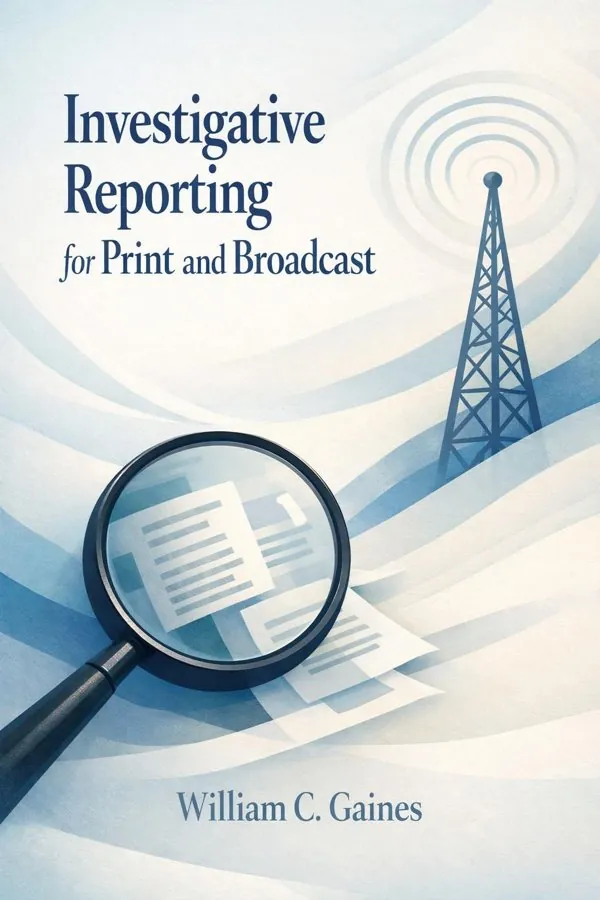
Investigative Reporting for Print and Broadcast: Summary & Key Insights
 10 min6 chaptersAudio available
What Is Investigative Reporting for Print and Broadcast About?
Investigative Reporting for Print and Broadcast by William C. Gaines is a writing book spanning 6 pages. This book by Pulitzer Prize-winning journalist William C. Gaines provides a comprehensive guide to investigative reporting for both print and broadcast media. Using a case-study approach, Gaines explains the principles, ethics, and techniques of investigative journalism, illustrating how reporters uncover hidden truths and hold institutions accountable.
This FizzRead summary covers all 6 key chapters of Investigative Reporting for Print and Broadcast in approximately 10 minutes, distilling the most important ideas, arguments, and takeaways from William C. Gaines's work. Also available as an audio summary and Key Quotes Podcast.
Investigative Reporting for Print and Broadcast
This book by Pulitzer Prize-winning journalist William C. Gaines provides a comprehensive guide to investigative reporting for both print and broadcast media. Using a case-study approach, Gaines explains the principles, ethics, and techniques of investigative journalism, illustrating how reporters uncover hidden truths and hold institutions accountable.
Who Should Read Investigative Reporting for Print and Broadcast?
This book is perfect for anyone interested in writing and looking to gain actionable insights in a short read. Whether you're a student, professional, or lifelong learner, the key ideas from Investigative Reporting for Print and Broadcast by William C. Gaines will help you think differently.
- ✓Readers who enjoy writing and want practical takeaways
- ✓Professionals looking to apply new ideas to their work and life
- ✓Anyone who wants the core insights of Investigative Reporting for Print and Broadcast in just 10 minutes
Want the full summary?
Get instant access to this book summary and 100K+ more with Fizz Moment.
Get Free SummaryAvailable on App Store • Free to download
Key Chapters
One of the first lessons I impart is that investigative reporting is fundamentally different from routine or interpretive journalism. Routine reporting describes what happens; interpretive reporting analyzes what those events mean. Investigative reporting, however, digs beneath visible reality to expose hidden wrongdoing or failure. It’s proactive rather than reactive. While ordinary news relies on public statements and events, investigative news originates from journalists’ own initiative—the questions that no one else has asked yet.
This difference brings unique responsibilities. Investigative reporting can change careers, reputations, and policies. That’s why fairness, accuracy, and accountability are nonnegotiable. You must check and double-check each fact; you must ensure that the people you’re investigating have a legitimate opportunity to respond. Fairness isn’t about politeness—it’s about ethical integrity. When a reporter blindsides someone without offering a chance to comment, credibility suffers, and the investigation risks becoming advocacy instead of journalism.
Accuracy, too, takes on deeper meaning. It is not enough to be approximately right; investigative reporters must be demonstrably correct. Every statement should be supported by verifiable evidence—documents, recorded interviews, or firsthand observation. The public must be able to trust that when you make a claim, it rests on solid ground.
Accountability, finally, reminds us that investigation is a public trust. Our work exists not to flatter or vilify, but to inform honestly. Successful reporters handle this responsibility with respect for both the truth and those affected by it. Ethical missteps—such as misuse of hidden cameras or manipulation of quotes—do lasting damage to the profession itself. Ethics are not just moral guidelines; they are practical safeguards for credibility and survival.
Investigative projects begin not with inspiration but with curiosity. Many of my best stories arose from a single perplexing figure in a government budget or a casual remark overheard in conversation. The key is to identify hints of wrongdoing or systemic failures, then to evaluate whether those hints can be developed into verifiable, significant stories.
Feasibility is crucial. Not all suspicions deserve investigation. A good investigative idea must have potential public importance, accessible evidence, and reasonable prospects of discovery. You need to ask: Can I get documents? Are there knowledgeable sources willing to talk? Does the issue affect enough people to warrant extended effort?
Once the idea passes these tests, planning begins. Investigative planning involves creating hypotheses—the logical outlines of what might be true, based on available indications. For instance, if I suspect that a contractor is overbilling a city department, I hypothesize the mechanism: falsified invoices, hidden partnerships, ignored audits. Each hypothesis directs what evidence I’ll need to seek.
A disciplined plan includes objectives, timelines, and contingencies. You set clear goals: identify financial records, interview key witnesses, analyze contract patterns. You must also allocate time; every investigation competes with deadlines and newsroom priorities. And you prepare contingencies: what happens if a source recants or a document remains inaccessible?
This method is not bureaucracy—it’s protection. Planning ensures that the story has direction and that limited resources are used wisely. It separates professional investigation from random digging. With a solid plan, the reporter becomes both detective and historian: reconstructing events, building a narrative of accountability, and documenting truth with precision.
+ 4 more chapters — available in the FizzRead app
All Chapters in Investigative Reporting for Print and Broadcast
About the Author
William C. Gaines is a two-time Pulitzer Prize-winning investigative journalist known for his work with the Chicago Tribune. He later became a professor of journalism at the University of Illinois, teaching investigative reporting and mentoring future journalists.
Get This Summary in Your Preferred Format
Read or listen to the Investigative Reporting for Print and Broadcast summary by William C. Gaines anytime, anywhere. FizzRead offers multiple formats so you can learn on your terms — all free.
Available formats: App · Audio · PDF · EPUB — All included free with FizzRead
Download Investigative Reporting for Print and Broadcast PDF and EPUB Summary
Key Quotes from Investigative Reporting for Print and Broadcast
“One of the first lessons I impart is that investigative reporting is fundamentally different from routine or interpretive journalism.”
“Investigative projects begin not with inspiration but with curiosity.”
Frequently Asked Questions about Investigative Reporting for Print and Broadcast
Investigative Reporting for Print and Broadcast by William C. Gaines is a writing book that explores key ideas across 6 chapters. This book by Pulitzer Prize-winning journalist William C. Gaines provides a comprehensive guide to investigative reporting for both print and broadcast media. Using a case-study approach, Gaines explains the principles, ethics, and techniques of investigative journalism, illustrating how reporters uncover hidden truths and hold institutions accountable.
You Might Also Like

The Art of Perspective
Christopher Castellani
10 min
Making a Point: The Persnickety Story of English Punctuation
David Crystal
10 min
The Elements Of Eloquence: How To Turn The Perfect English Phrase
Mark Forsyth
10 min
The Pocket Muse: Ideas and Inspirations for Writing
Monica Wood
10 min
A Little Book on Form: An Exploration into the Formal Imagination of Poetry
Robert Hass
10 min
Adventures In The Screen Trade: A Personal View Of Hollywood And Screenwriting
William Goldman
10 minBrowse by Category
Ready to read Investigative Reporting for Print and Broadcast?
Get the full summary and 100K+ more books with Fizz Moment.