
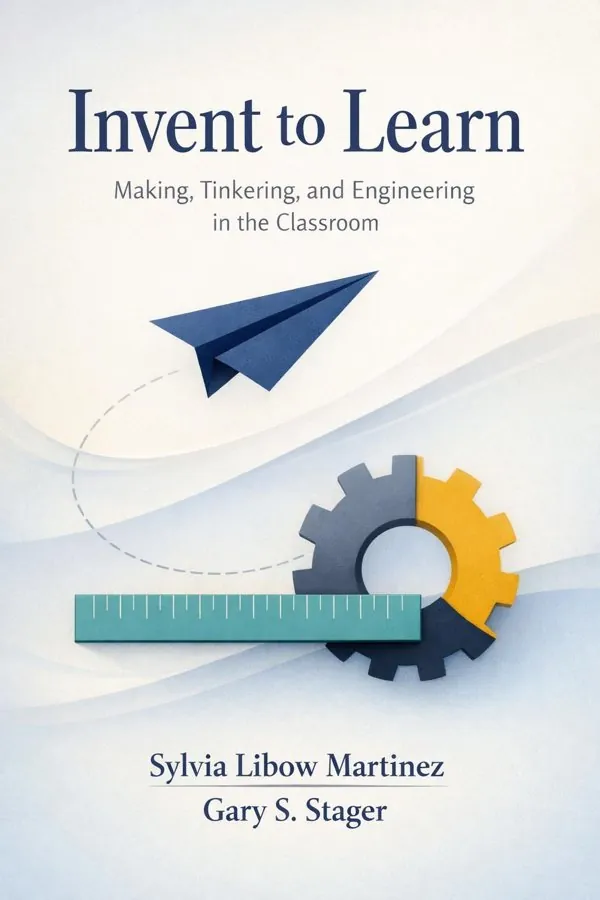
Invent to Learn: Making, Tinkering, and Engineering in the Classroom: Summary & Key Insights
by Sylvia Libow Martinez, Gary S. Stager
 10 min9 chaptersAudio available
What Is Invent to Learn: Making, Tinkering, and Engineering in the Classroom About?
Invent to Learn: Making, Tinkering, and Engineering in the Classroom by Sylvia Libow Martinez, Gary S. Stager is a education book spanning 9 pages. Invent to Learn es un libro que explora cómo el movimiento maker y la cultura del aprendizaje práctico pueden transformar la educación. Sylvia Libow Martinez y Gary S. Stager presentan estrategias para integrar la fabricación, la ingeniería y la invención en el aula, fomentando la creatividad, la resolución de problemas y el pensamiento crítico en los estudiantes.
This FizzRead summary covers all 9 key chapters of Invent to Learn: Making, Tinkering, and Engineering in the Classroom in approximately 10 minutes, distilling the most important ideas, arguments, and takeaways from Sylvia Libow Martinez, Gary S. Stager's work. Also available as an audio summary and Key Quotes Podcast.
Invent to Learn: Making, Tinkering, and Engineering in the Classroom
Invent to Learn es un libro que explora cómo el movimiento maker y la cultura del aprendizaje práctico pueden transformar la educación. Sylvia Libow Martinez y Gary S. Stager presentan estrategias para integrar la fabricación, la ingeniería y la invención en el aula, fomentando la creatividad, la resolución de problemas y el pensamiento crítico en los estudiantes.
Who Should Read Invent to Learn: Making, Tinkering, and Engineering in the Classroom?
This book is perfect for anyone interested in education and looking to gain actionable insights in a short read. Whether you're a student, professional, or lifelong learner, the key ideas from Invent to Learn: Making, Tinkering, and Engineering in the Classroom by Sylvia Libow Martinez, Gary S. Stager will help you think differently.
- ✓Readers who enjoy education and want practical takeaways
- ✓Professionals looking to apply new ideas to their work and life
- ✓Anyone who wants the core insights of Invent to Learn: Making, Tinkering, and Engineering in the Classroom in just 10 minutes
Want the full summary?
Get instant access to this book summary and 100K+ more with Fizz Moment.
Get Free SummaryAvailable on App Store • Free to download
Key Chapters
Every journey into maker education begins with understanding where we come from. The idea of learning through doing is not new—it stands on the shoulders of philosophical giants. John Dewey reminded us that education is not preparation for life; education is life itself. Jean Piaget opened our eyes to the way children actively construct knowledge through interaction with their environment. And Seymour Papert, our mentor and inspiration, took these ideas into the digital age with his theory of constructionism.
Papert understood that computers could liberate learning from passivity. A child programming a robot or designing an interactive story is not simply mastering a technical skill; they are constructing mental models of how systems work. Constructionism posits that learning becomes most effective when people are engaged in making something that can be shared with others—something with real meaning and value.
This philosophy fuels every aspect of the maker movement. When a student builds a bridge from popsicle sticks and sensors or codes a simulation that models climate change, they are thinking deeply and creatively. They're testing ideas, experiencing failure, and finding solutions—not because a teacher told them to, but because they are genuinely solving problems that matter. As educators, it’s our responsibility to create conditions where this kind of learning flourishes. We are not filling vessels but lighting fires.
Technology in maker education is not about gadgets; it's about empowerment. It’s about tools that extend creativity, not replace it. When we talk about 3D printers, microcontrollers like Arduino, or platforms like Raspberry Pi, we do so not because they are trendy, but because they are tangible gateways to understanding complex ideas through experimentation.
In a well-designed maker classroom, technology becomes invisible—the focus shifts from the tool itself to the ideas it enables. Students who once memorized textbook definitions of engineering design now experience it as tangible problem-solving. They are engineers because they are building, testing, revising, and improving their own creations.
This democratization of technology dismantles old hierarchies. It gives every learner, regardless of their academic standing, a voice in shaping their learning. Students begin to see themselves as creators and inventors, not just consumers of prepackaged content. In that process, they start viewing challenges as opportunities for invention.
Our goal as educators is to guide them—not by providing answers, but by asking better questions. We become mentors who help students connect technology to human purpose. When a child programs a sensor to help elders monitor air quality at home, learning transcends the classroom. It becomes a force for social good. That is the ultimate promise of technology as a tool for thinking.
+ 7 more chapters — available in the FizzRead app
All Chapters in Invent to Learn: Making, Tinkering, and Engineering in the Classroom
About the Authors
Sylvia Libow Martinez es una educadora y defensora del aprendizaje basado en proyectos y la tecnología educativa. Gary S. Stager es un consultor educativo y pionero en el uso de la informática en la enseñanza. Ambos son reconocidos por su trabajo en promover el aprendizaje activo y la cultura maker en la educación.
Get This Summary in Your Preferred Format
Read or listen to the Invent to Learn: Making, Tinkering, and Engineering in the Classroom summary by Sylvia Libow Martinez, Gary S. Stager anytime, anywhere. FizzRead offers multiple formats so you can learn on your terms — all free.
Available formats: App · Audio · PDF · EPUB — All included free with FizzRead
Download Invent to Learn: Making, Tinkering, and Engineering in the Classroom PDF and EPUB Summary
Key Quotes from Invent to Learn: Making, Tinkering, and Engineering in the Classroom
“Every journey into maker education begins with understanding where we come from.”
“Technology in maker education is not about gadgets; it's about empowerment.”
Frequently Asked Questions about Invent to Learn: Making, Tinkering, and Engineering in the Classroom
Invent to Learn: Making, Tinkering, and Engineering in the Classroom by Sylvia Libow Martinez, Gary S. Stager is a education book that explores key ideas across 9 chapters. Invent to Learn es un libro que explora cómo el movimiento maker y la cultura del aprendizaje práctico pueden transformar la educación. Sylvia Libow Martinez y Gary S. Stager presentan estrategias para integrar la fabricación, la ingeniería y la invención en el aula, fomentando la creatividad, la resolución de problemas y el pensamiento crítico en los estudiantes.
You Might Also Like

Bedtime Biography: Florence Nightingale
Isabel Thomas
10 min
Introduction To Museum Studies
Howard H. Hoyt
10 min
A Mind for Numbers: How to Excel at Math and Science (Even If You Flunked Algebra)
Barbara Oakley
10 min
AI for Educators: Learning Strategies, Teacher Empowerment, and the Future of Education
Matt Miller
10 min
Animation For Beginners
Morr Meroz
10 min
Artificial Intelligence for Learning
Donald Clark
10 minBrowse by Category
Ready to read Invent to Learn: Making, Tinkering, and Engineering in the Classroom?
Get the full summary and 100K+ more books with Fizz Moment.