
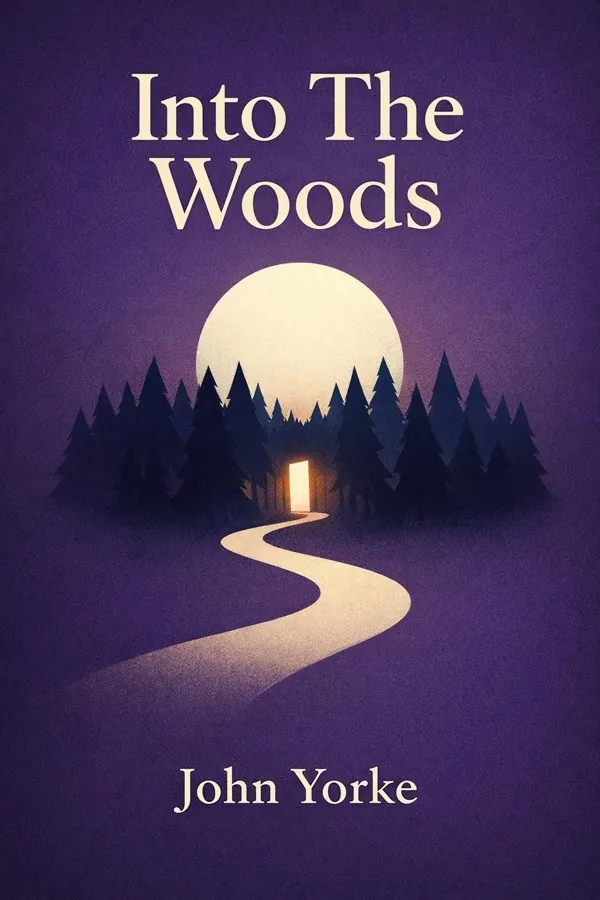
Into The Woods: How Stories Work And Why We Tell Them: Summary & Key Insights
by John Yorke
 10 min10 chaptersAudio available
Key Takeaways from Into The Woods: How Stories Work And Why We Tell Them
Most people talk about stories as if they naturally fall into three acts, but Yorke argues that the deeper pattern is closer to five.
Every memorable story begins when normal life becomes impossible to continue.
A story truly begins not when life is interrupted, but when the protagonist commits to a path from which return is difficult.
The middle of a story is often where weak writing is exposed, because movement without transformation quickly becomes repetition.
Stories become unforgettable when they force a character to choose under pressure.
What Is Into The Woods: How Stories Work And Why We Tell Them About?
Into The Woods: How Stories Work And Why We Tell Them by John Yorke is a writing book spanning 11 pages. Why do stories from ancient myths, Shakespearean drama, Hollywood films, and modern television often feel strangely alike? In Into The Woods, John Yorke argues that this is no accident. Beneath the surface variety of genre, style, and medium lies a deep narrative architecture that humans instinctively recognize. Drawing on examples from literature, film, TV, and theater, Yorke shows that story is not merely entertainment but a pattern of meaning that helps us understand conflict, change, and human nature. What makes this book so valuable is that it bridges theory and practice. Yorke is not an academic theorizing from a distance; he is a veteran television producer, script editor, and teacher who has spent years developing successful dramas and helping writers solve story problems. His central claim is both bold and reassuring: structure is not the enemy of creativity but the hidden framework that allows creativity to flourish. For writers, filmmakers, students, and curious readers alike, this book offers a powerful way to see why stories work, why they matter, and how to build them with greater precision and emotional force.
This FizzRead summary covers all 10 key chapters of Into The Woods: How Stories Work And Why We Tell Them in approximately 10 minutes, distilling the most important ideas, arguments, and takeaways from John Yorke's work. Also available as an audio summary and Key Quotes Podcast.
Into The Woods: How Stories Work And Why We Tell Them
Why do stories from ancient myths, Shakespearean drama, Hollywood films, and modern television often feel strangely alike? In Into The Woods, John Yorke argues that this is no accident. Beneath the surface variety of genre, style, and medium lies a deep narrative architecture that humans instinctively recognize. Drawing on examples from literature, film, TV, and theater, Yorke shows that story is not merely entertainment but a pattern of meaning that helps us understand conflict, change, and human nature.
What makes this book so valuable is that it bridges theory and practice. Yorke is not an academic theorizing from a distance; he is a veteran television producer, script editor, and teacher who has spent years developing successful dramas and helping writers solve story problems. His central claim is both bold and reassuring: structure is not the enemy of creativity but the hidden framework that allows creativity to flourish. For writers, filmmakers, students, and curious readers alike, this book offers a powerful way to see why stories work, why they matter, and how to build them with greater precision and emotional force.
Who Should Read Into The Woods: How Stories Work And Why We Tell Them?
This book is perfect for anyone interested in writing and looking to gain actionable insights in a short read. Whether you're a student, professional, or lifelong learner, the key ideas from Into The Woods: How Stories Work And Why We Tell Them by John Yorke will help you think differently.
- ✓Readers who enjoy writing and want practical takeaways
- ✓Professionals looking to apply new ideas to their work and life
- ✓Anyone who wants the core insights of Into The Woods: How Stories Work And Why We Tell Them in just 10 minutes
Want the full summary?
Get instant access to this book summary and 100K+ more with Fizz Moment.
Get Free SummaryAvailable on App Store • Free to download
Key Chapters
Every memorable story begins when normal life becomes impossible to continue. The inciting incident is not just the first event in a plot; it is the fracture that creates need, desire, and momentum. It can be loud, like a murder, invasion, or betrayal, or quiet, like an invitation, glance, diagnosis, or secret revealed. What matters is not scale but consequence. The protagonist’s old equilibrium is broken, and something now demands response.
Yorke emphasizes that an inciting incident works because it exposes tension that was already latent. In great stories, disruption does not come from nowhere. It reveals a fault line in the character, family, institution, or world. In Pride and Prejudice, new arrivals disturb social expectations and emotional defenses. In crime drama, a body exposes hidden corruption. In romantic comedy, an unexpected meeting tests carefully maintained identity. The event matters because it puts pressure on what was already unstable underneath.
For writers, the lesson is that the inciting incident should do more than launch action. It should define the central dramatic question. Who will the protagonist become because of this rupture? What are they now forced to confront? A weak inciting incident creates activity without direction. A strong one turns the whole story on its axis and binds external events to internal transformation.
When revising, ask whether your opening disturbance is specific, consequential, and unavoidable. Does it set the story’s tone? Does it activate both plot and character? Can the protagonist ignore it without collapsing the narrative? If the answer is yes, the incident is too small.
Actionable takeaway: Rewrite your story’s inciting incident in one sentence and make sure it clearly disrupts the protagonist’s status quo while introducing the central conflict.
A story truly begins not when life is interrupted, but when the protagonist commits to a path from which return is difficult. Yorke treats this threshold moment as essential because it separates passive disturbance from active narrative. Something happens early on, but then comes the more important beat: the hero enters a new world, accepts a challenge, makes a mistake, flees safety, or chooses desire over security. That decision is the gateway into drama.
The threshold matters because stories are powered by consequence. Once crossed, old rules no longer apply. Dorothy leaves Kansas, detectives take the case, lovers agree to the first date, whistleblowers leak the file, and ordinary people step into moral danger. Even if the protagonist is reluctant, their movement into the unknown activates the machinery of change. This is where theme often becomes embodied. A fearful person must risk. A controlled person must improvise. A selfish person must attach themselves to others.
Yorke shows that thresholds also organize audience expectation. They tell us what kind of journey we are on. In thrillers, the threshold may be entering the conspiracy. In family drama, it may be returning home. In comedy, it may be pursuing a false solution that creates escalating disorder. If this step is vague, the narrative can feel hesitant, as though it is circling its premise instead of living it.
For creators, the threshold is a powerful revision tool. If Act Two feels soft, ask whether the protagonist has genuinely crossed into a different arena of conflict. Have they committed enough? Are the stakes irreversible enough? If not, the story has not truly begun.
Actionable takeaway: Identify the exact moment your protagonist can no longer go back unchanged, and sharpen that scene so it feels like a meaningful point of no return.
The middle of a story is often where weak writing is exposed, because movement without transformation quickly becomes repetition. Yorke argues that the midpoint solves this problem by acting as a pivot: a revelation, reversal, victory, defeat, or recognition that changes how the rest of the narrative unfolds. It is not just another event in the chain. It is the point where the story becomes deeper, darker, clearer, or more urgent.
In many strong narratives, the midpoint either gives the protagonist what they thought they wanted or shows them why they can never have it in the way they imagined. A detective identifies the suspect but misses the larger truth. A romance reaches intimacy but reveals incompatibility. A success story delivers achievement but exposes emptiness. This turn is powerful because it reorients both audience and character. We are no longer asking the same simple question we asked at the start. The conflict has evolved.
Yorke’s insight is especially useful for writers who struggle with sagging middles. The midpoint should not merely escalate pressure; it should alter understanding. It can convert an external chase into an internal reckoning, or turn a personal desire into a moral problem. In doing so, it prepares the road to crisis. Without it, the latter half of a story can feel like a longer version of the first half.
A practical way to test your midpoint is to ask whether the protagonist sees the world differently afterward. If the answer is no, the scene may be entertaining but structurally weak. The midpoint should leave a mark. It should expose what the story is really about.
Actionable takeaway: Design your midpoint around a revelation or reversal that changes the protagonist’s strategy, not just the level of difficulty.
Stories become unforgettable when they force a character to choose under pressure. Yorke distinguishes between mere excitement and genuine climax by focusing on crisis. The crisis is the narrowing of options to a painful decision; the climax is the action that follows from that choice. Explosions, speeches, fights, or confessions only matter if they emerge from a moral or emotional crossroads.
This idea explains why some endings feel hollow despite spectacle. If the hero simply wins because they are brave, clever, or lucky, the ending may entertain but it will not resonate deeply. A strong climax grows out of everything the story has been testing. The protagonist must face the contradiction at their core: selfishness versus sacrifice, fear versus courage, illusion versus truth, revenge versus mercy. The external conflict becomes meaningful because it crystallizes internal conflict.
Yorke’s framework helps writers understand that the crisis is often the most important structural beat in the latter half of a story. It is where theme, character, and plot lock together. In a courtroom drama, the crisis may be whether to expose a damaging truth. In a war film, whether to save one person or follow orders. In a family story, whether to repeat inherited patterns or break them. The climax then proves who the character has become.
This also means endings must be earned. If the protagonist solves the problem in a way unrelated to their arc, the story fractures. The conclusion should feel surprising in event but inevitable in meaning. It should arise from the deepest pressure point the story has built.
Actionable takeaway: Before writing your ending, define the hardest choice your protagonist must make, and ensure the climax is the direct consequence of that decision.
An ending does more than stop the plot. It shows what transformation has meant. Yorke argues that resolution is the return from the woods: the moment when we see the world again, now altered by what has been endured, learned, or lost. This final movement matters because audiences do not only want to know what happened; they want to know what it means.
A strong resolution often echoes the beginning. The hero may return home, but home now feels different. The family table is the same, but relationships have shifted. The city survives, yet innocence is gone. In comedy, order may be restored in a brighter or looser form. In tragedy, restoration may be partial, costly, or impossible. The point is not always happiness; it is legibility. The ending should let us understand the new balance created by the climax.
Yorke’s emphasis on return is especially useful because many modern stories mistake abruptness for sophistication. They end on the final confrontation and deny the audience a chance to process consequence. Yet even a brief coda can reveal enormous meaning. Who remains? What has changed in the protagonist’s behavior, language, or relationships? What pattern has been broken, repeated, or transcended?
For writers, the resolution is where emotional credibility is tested. If change has occurred, the final state must embody it. A coward should not simply be declared brave; they should behave differently. A corrupted institution should show scars, reform, collapse, or continuation. Endings become memorable when they answer the story’s opening disturbance with a transformed reality.
Actionable takeaway: Compare your first and last scenes side by side and make sure the ending visibly reflects the inner and outer change your story has earned.
Plot may move the story forward, but character gives that movement emotional and philosophical weight. For Yorke, character is not a collection of traits, quirks, or backstory details. Character is revealed through desire, contradiction, and change under pressure. We do not truly know a protagonist because of what they say about themselves; we know them because of what they pursue, resist, misunderstand, and become.
This is why Yorke links character and structure so tightly. The external journey only matters if it activates an internal one. A hero wants something concrete: justice, love, success, escape, survival. But beneath that sits a deeper lack: fear of intimacy, refusal of responsibility, wounded pride, unresolved grief, moral blindness. The story places the character in situations that expose this hidden flaw or wound and make old coping mechanisms fail. Transformation becomes possible because conflict strips away illusion.
In practical storytelling, this means secondary characters are not decorative either. They often embody alternative responses to the same thematic problem. A friend may represent honesty, a rival ambition, a mentor wisdom, an antagonist denial or corruption. Through contrast, the protagonist’s inner struggle becomes visible. The best narratives make every important relationship part of the same moral ecosystem.
For writers, one of the clearest signs of a weak character arc is that the protagonist could be replaced without changing the story’s meaning. If events happen to them but do not force self-confrontation, the narrative may be busy but shallow. Strong character design asks: what does this person want, what are they avoiding, and what must they learn or lose to become whole?
Actionable takeaway: Write two sentences for your protagonist: one describing their outer goal and one naming the inner flaw or wound the story must expose and transform.
Stories are not sermons, yet they always imply a way of seeing the world. Yorke argues that theme is not something pasted on through dialogue or message-driven scenes. It emerges from the structure of conflict itself. What values are placed in tension? What belief is being tested? What pattern of cause and consequence keeps recurring? Theme lives in opposition.
This is why duality is so central to storytelling. Order and chaos, freedom and security, truth and comfort, self and community, innocence and experience: stories gain power when they stage meaningful collisions between such forces. The antagonist is not merely an obstacle but often a thematic counterforce. Likewise, subplots can echo or refract the main question, giving the central argument more depth. In a great story, theme is not announced; it is dramatized repeatedly until the climax forces a definitive expression of it.
Yorke shows that this pattern appears across genres and media. A detective story may be about truth versus corruption. A romance about intimacy versus self-protection. A satire about status versus authenticity. The audience feels thematic coherence when scenes are not random incidents but variations on the same deeper tension.
For creators, theme becomes easier to handle when approached as a question rather than a slogan. Instead of deciding, “This story is about bravery,” ask, “What does bravery cost, and when does it become recklessness?” Such questions generate richer conflict. They also help in revision. If a subplot does not connect to the central tension, it may need reworking or removal.
Actionable takeaway: State your story’s theme as a conflict between two values or forces, then check whether your main plot, antagonist, and subplots all engage that same tension.
One of Yorke’s most persuasive claims is that narrative structure is not limited to novels, screenplays, or stage plays. The same underlying principles appear across myths, sitcoms, prestige television, fairy tales, journalism, and even the stories people tell about their own lives. Medium affects pacing, scale, and technique, but not the basic human appetite for causality, transformation, and meaning.
This explains why a television episode can feel dramatically complete while also serving a larger season arc, or why a short story can mirror the emotional movement of an epic in miniature. The structural beats may compress or expand, but the logic remains recognizable: order, disruption, pursuit, revelation, crisis, resolution. Even experimental works often gain their power by bending expectations that the audience already understands intuitively.
For writers and creators, this is liberating. It means structure is not a narrow Hollywood invention but a broad human inheritance. A podcaster shaping a nonfiction narrative, a novelist designing chapters, a game writer building quests, and a filmmaker planning scenes can all benefit from the same core insights. The question is not whether to use structure, but how consciously to deploy it in a given form.
Yorke also reminds readers that successful storytelling depends on rhythm. A serialized drama may delay climaxes and multiply reversals, while a children’s tale may strip the pattern to essentials. Yet both still rely on setup, expectation, contrast, and payoff. Understanding these common mechanics allows creators to adapt rather than imitate.
Actionable takeaway: Study a story from a medium different from your own and map its structural turns; you will sharpen your sense of what is universal and what is form-specific.
At the deepest level, Yorke’s book is not only about craft but about cognition. Humans tell stories because raw experience is chaotic, and narrative turns chaos into shape. We seek patterns, assign cause, imagine alternatives, and search for meaning in suffering, love, conflict, and change. Storytelling is therefore not a luxury added to life; it is one of the ways we understand life.
This is why recurring narrative structures feel so universal. They resemble the psychological and social journeys we actually live through. We begin in one state, encounter disruption, struggle with uncertainty, gain painful insight, make choices, and emerge transformed or broken. Stories rehearse these processes for us. They let us feel danger safely, test values imaginatively, and practice empathy with minds unlike our own. In that sense, narrative is both art and equipment for living.
Yorke’s contribution is to connect this human function with practical storytelling mechanics. Structure matters not because audiences crave formulas, but because they crave intelligible experience. A story satisfies when events feel connected, changes feel earned, and endings reveal significance. The emotional power of narrative comes from this fusion of design and truth.
For readers, this perspective can also change how stories are consumed. Instead of seeing plot as mere entertainment, we begin to notice how narratives teach us what to fear, admire, forgive, resist, and become. For writers, it raises the stakes. Craft is not only about holding attention. It is about shaping meaning responsibly and powerfully.
Actionable takeaway: The next time you draft or analyze a story, ask not only “What happens next?” but “What human truth is this pattern helping the audience experience and understand?”
All Chapters in Into The Woods: How Stories Work And Why We Tell Them
About the Author
John Yorke is a British television producer, screenwriter, executive, and teacher widely respected for his expertise in story structure. Over a distinguished career in UK broadcasting, he has held senior roles including Head of Channel 4 Drama and Controller of BBC Drama Production, where he worked on the development of major dramatic projects and collaborated with leading writers. His professional background gives him a rare combination of practical industry experience and deep analytical insight into narrative. Yorke is also the founder of John Yorke Story, a company dedicated to training writers and creative professionals in the craft of storytelling. Through his teaching, lectures, and writing, he has become one of the most influential contemporary voices on how stories function and why structure matters.
Get This Summary in Your Preferred Format
Read or listen to the Into The Woods: How Stories Work And Why We Tell Them summary by John Yorke anytime, anywhere. FizzRead offers multiple formats so you can learn on your terms — all free.
Available formats: App · Audio · PDF · EPUB — All included free with FizzRead
Download Into The Woods: How Stories Work And Why We Tell Them PDF and EPUB Summary
Key Quotes from Into The Woods: How Stories Work And Why We Tell Them
“Most people talk about stories as if they naturally fall into three acts, but Yorke argues that the deeper pattern is closer to five.”
“Every memorable story begins when normal life becomes impossible to continue.”
“A story truly begins not when life is interrupted, but when the protagonist commits to a path from which return is difficult.”
“The middle of a story is often where weak writing is exposed, because movement without transformation quickly becomes repetition.”
“Stories become unforgettable when they force a character to choose under pressure.”
Frequently Asked Questions about Into The Woods: How Stories Work And Why We Tell Them
Into The Woods: How Stories Work And Why We Tell Them by John Yorke is a writing book that explores key ideas across 10 chapters. Why do stories from ancient myths, Shakespearean drama, Hollywood films, and modern television often feel strangely alike? In Into The Woods, John Yorke argues that this is no accident. Beneath the surface variety of genre, style, and medium lies a deep narrative architecture that humans instinctively recognize. Drawing on examples from literature, film, TV, and theater, Yorke shows that story is not merely entertainment but a pattern of meaning that helps us understand conflict, change, and human nature. What makes this book so valuable is that it bridges theory and practice. Yorke is not an academic theorizing from a distance; he is a veteran television producer, script editor, and teacher who has spent years developing successful dramas and helping writers solve story problems. His central claim is both bold and reassuring: structure is not the enemy of creativity but the hidden framework that allows creativity to flourish. For writers, filmmakers, students, and curious readers alike, this book offers a powerful way to see why stories work, why they matter, and how to build them with greater precision and emotional force.
You Might Also Like
The Art of Perspective
Christopher Castellani
10 min
Making a Point: The Persnickety Story of English Punctuation
David Crystal
10 min
The Elements Of Eloquence: How To Turn The Perfect English Phrase
Mark Forsyth
10 min
The Pocket Muse: Ideas and Inspirations for Writing
Monica Wood
10 min
A Little Book on Form: An Exploration into the Formal Imagination of Poetry
Robert Hass
10 min
Adventures In The Screen Trade: A Personal View Of Hollywood And Screenwriting
William Goldman
10 minBrowse by Category
Ready to read Into The Woods: How Stories Work And Why We Tell Them?
Get the full summary and 100K+ more books with Fizz Moment.