
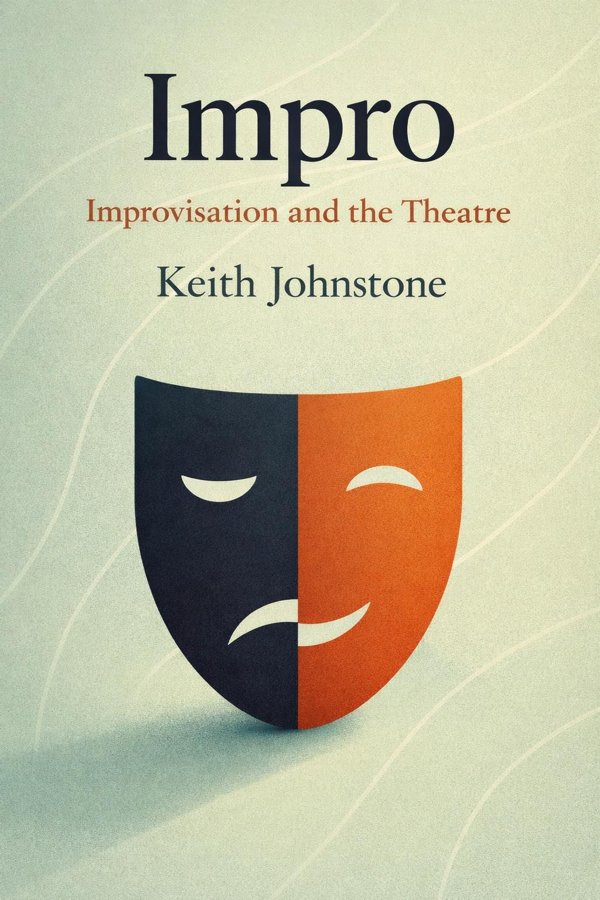
Impro: Improvisation and the Theatre: Summary & Key Insights
 10 min10 chaptersAudio available
What Is Impro: Improvisation and the Theatre About?
Impro: Improvisation and the Theatre by Keith Johnstone is a performing_arts book spanning 10 pages. Impro is a seminal work on improvisational theatre by Keith Johnstone, exploring spontaneity, creativity, and the psychology of performance. The book presents exercises and insights that help actors, teachers, and students unlock their natural creativity and overcome inhibitions. It covers key themes such as status, storytelling, masks, and the unconscious, offering a practical and philosophical guide to improvisation as both an art form and a way of thinking.
This FizzRead summary covers all 10 key chapters of Impro: Improvisation and the Theatre in approximately 10 minutes, distilling the most important ideas, arguments, and takeaways from Keith Johnstone's work. Also available as an audio summary and Key Quotes Podcast.
Impro: Improvisation and the Theatre
Impro is a seminal work on improvisational theatre by Keith Johnstone, exploring spontaneity, creativity, and the psychology of performance. The book presents exercises and insights that help actors, teachers, and students unlock their natural creativity and overcome inhibitions. It covers key themes such as status, storytelling, masks, and the unconscious, offering a practical and philosophical guide to improvisation as both an art form and a way of thinking.
Who Should Read Impro: Improvisation and the Theatre?
This book is perfect for anyone interested in performing_arts and looking to gain actionable insights in a short read. Whether you're a student, professional, or lifelong learner, the key ideas from Impro: Improvisation and the Theatre by Keith Johnstone will help you think differently.
- ✓Readers who enjoy performing_arts and want practical takeaways
- ✓Professionals looking to apply new ideas to their work and life
- ✓Anyone who wants the core insights of Impro: Improvisation and the Theatre in just 10 minutes
Want the full summary?
Get instant access to this book summary and 100K+ more with Fizz Moment.
Get Free SummaryAvailable on App Store • Free to download
Key Chapters
Spontaneity is the heartbeat of creativity, yet it’s the first quality education often drives out of us. In teaching, we reward correctness, not curiosity. By the time students reach my classes, they’ve learned to seek approval rather than discovery. My first task is undoing that conditioning. When I ask them to perform an improvisation, their immediate worry is ‘What’s the right answer?’—yet in improvisation, the only wrong answer is hesitation.
I’ve often compared the spontaneous self to a spring buried underground. The more we’re told to behave, the deeper it’s pressed. Only by removing the weight of judgment do we let it rise. I use exercises that compel instant response—word associations, physical movement, absurd prompts—because speed bypasses self-censorship. The intellect hesitates, but instinct acts. And when students act before they can plan, they surprise themselves. Spontaneity isn’t creating something new so much as allowing what already exists to emerge unfiltered.
I’ve found that improvisation must create an atmosphere of safety, where mistakes are celebrated rather than punished. If a performer feels free to fail, they will inevitably succeed. A scene’s vitality springs not from perfection, but from genuine reaction—the unrepeatable moment when two people share discovery. My goal, then, is to restore spontaneity not as a technique, but as a way of perceiving and responding to the world.
One of the most illuminating discoveries in my teaching came when I began analyzing everything in terms of status. Every interaction, I realized, is a negotiation of relative status. Whether we’re aware of it or not, we constantly raise or lower ourselves and others through posture, tone, and gesture. The idea revolutionized how my students understood scenes. Suddenly, realism was no longer about pretending emotions—it was about altering status transactions truthfully.
When actors focus on status, they naturally become more alive. Two characters may both desire the same cup of tea, but what transforms a dull exchange into gripping drama is their shifting status. The superior subtly checks the inferior with a glance; the inferior gains ground through self-deprecation. Power dynamics are everywhere, from the way we offer a seat to how we hesitate before speaking. High status is not arrogance, nor is low status submission; both can be played with delicacy and humor, and the tension between them drives human behavior.
As I watched scenes evolve, I discovered that students who grasp status begin to listen more truthfully. They observe physical cues and adjust naturally, just as people do in life. The moments become unpredictable and real. Recognizing status not only sharpens acting—it reveals the invisible structures of social life.
+ 8 more chapters — available in the FizzRead app
All Chapters in Impro: Improvisation and the Theatre
About the Author
Keith Johnstone (1933–2023) was a British-Canadian playwright, director, and educator known for revolutionizing improvisational theatre. He founded The Theatre Machine in London and later worked with the Royal Court Theatre. Johnstone developed influential improvisation techniques and concepts such as 'status transactions' and 'Theatresports', which have shaped modern acting and teaching practices worldwide.
Get This Summary in Your Preferred Format
Read or listen to the Impro: Improvisation and the Theatre summary by Keith Johnstone anytime, anywhere. FizzRead offers multiple formats so you can learn on your terms — all free.
Available formats: App · Audio · PDF · EPUB — All included free with FizzRead
Download Impro: Improvisation and the Theatre PDF and EPUB Summary
Key Quotes from Impro: Improvisation and the Theatre
“Spontaneity is the heartbeat of creativity, yet it’s the first quality education often drives out of us.”
“One of the most illuminating discoveries in my teaching came when I began analyzing everything in terms of status.”
Frequently Asked Questions about Impro: Improvisation and the Theatre
Impro: Improvisation and the Theatre by Keith Johnstone is a performing_arts book that explores key ideas across 10 chapters. Impro is a seminal work on improvisational theatre by Keith Johnstone, exploring spontaneity, creativity, and the psychology of performance. The book presents exercises and insights that help actors, teachers, and students unlock their natural creativity and overcome inhibitions. It covers key themes such as status, storytelling, masks, and the unconscious, offering a practical and philosophical guide to improvisation as both an art form and a way of thinking.
You Might Also Like

Harriet Tubman: Live in Concert
Bob the Drag Queen
10 min
The Art of Stagecraft
Robert Edmond Jones
10 min
The Art of Stop-Motion Animation
Ken A. Priebe
10 min
Thunderstorm
Cao Yu
10 min
Acting In Film: An Actor's Take on Movie Making
Michael Caine
10 min
Character Animation Crash Course!
Eric Goldberg
10 minBrowse by Category
Ready to read Impro: Improvisation and the Theatre?
Get the full summary and 100K+ more books with Fizz Moment.