
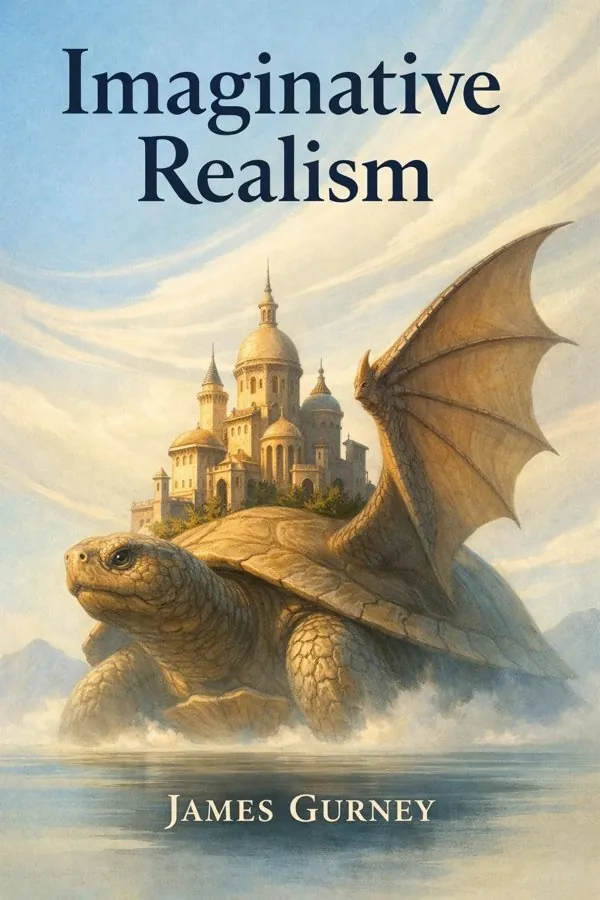
Imaginative Realism: How to Paint What Doesn't Exist: Summary & Key Insights
by James Gurney
 10 min10 chaptersAudio available
What Is Imaginative Realism: How to Paint What Doesn't Exist About?
Imaginative Realism: How to Paint What Doesn't Exist by James Gurney is a creativity book spanning 10 pages. Imaginative Realism: How to Paint What Doesn't Exist is a comprehensive guide by award-winning artist James Gurney, creator of Dinotopia. The book explores the principles and techniques behind creating realistic depictions of imaginary subjects, such as fantastical creatures, ancient civilizations, and speculative worlds. Gurney draws on classical art methods, including composition, lighting, and color theory, to teach artists how to make the unreal appear believable. The book combines practical instruction with insights into the creative process, making it a valuable resource for illustrators, concept artists, and painters interested in realism and fantasy art.
This FizzRead summary covers all 10 key chapters of Imaginative Realism: How to Paint What Doesn't Exist in approximately 10 minutes, distilling the most important ideas, arguments, and takeaways from James Gurney's work. Also available as an audio summary and Key Quotes Podcast.
Imaginative Realism: How to Paint What Doesn't Exist
Imaginative Realism: How to Paint What Doesn't Exist is a comprehensive guide by award-winning artist James Gurney, creator of Dinotopia. The book explores the principles and techniques behind creating realistic depictions of imaginary subjects, such as fantastical creatures, ancient civilizations, and speculative worlds. Gurney draws on classical art methods, including composition, lighting, and color theory, to teach artists how to make the unreal appear believable. The book combines practical instruction with insights into the creative process, making it a valuable resource for illustrators, concept artists, and painters interested in realism and fantasy art.
Who Should Read Imaginative Realism: How to Paint What Doesn't Exist?
This book is perfect for anyone interested in creativity and looking to gain actionable insights in a short read. Whether you're a student, professional, or lifelong learner, the key ideas from Imaginative Realism: How to Paint What Doesn't Exist by James Gurney will help you think differently.
- ✓Readers who enjoy creativity and want practical takeaways
- ✓Professionals looking to apply new ideas to their work and life
- ✓Anyone who wants the core insights of Imaginative Realism: How to Paint What Doesn't Exist in just 10 minutes
Want the full summary?
Get instant access to this book summary and 100K+ more with Fizz Moment.
Get Free SummaryAvailable on App Store • Free to download
Key Chapters
Everything begins with looking. No matter how otherworldly your subject, truth comes from the discipline of observation. In my career, even painting dinosaurs demanded studying the posture of birds, the massing of elephants, and the way sunlight scatters through leaves. The artist’s eye interprets, not invents from emptiness. To paint what does not exist, you must first know intimately what does. I’ve always urged artists to carry sketchbooks everywhere. The act of drawing from life teaches proportion and rhythm in a way photographs never can, and when the time comes to invent, those studies become the unseen scaffolding of your imagery.
References — whether photographs, live models, or small clay maquettes — aren’t crutches. They’re tools for understanding. I frequently build miniature models of imagined architecture, light them under a lamp, and observe how the shadow edges soften with distance. With a simple cardboard mock-up, you can test an entire city’s lighting before lifting a brush. This reliance on reference is not to limit imagination but to strengthen it; each detail grounded in observation makes the illusion more convincing. After all, even the most extraordinary fantasy thrives on the ordinary made visible.
Creation begins with curiosity. Often my paintings start with a question — what if humans and dinosaurs lived collaboratively, or what would an ancient civilization look like if history had taken a different turn? The next phase is research, because speculation gains depth when anchored in reality. Archaeology, zoology, classical architecture — these disciplines provide vocabulary for image-making. I spend weeks gathering notes and sketches, studying fossils and period clothing, collating all these bits until they form a coherent vision.
Then imagination weaves those facts into fiction. A believable painting is not a collage of references but a synthesis of them. I find joy in recombining accurate details in new ways — a creature based partly on a rhinoceros’ muscle structure, illuminated by Renaissance chiaroscuro, standing in a city planned with Roman engineering logic. By respecting how the real world works, your invented world earns credibility. This stage is also where story enters. Each painting should hint at a narrative; light, gesture, and setting become devices of storytelling. Imaginative realism succeeds when curiosity about how something could exist replaces disbelief that it cannot.
+ 8 more chapters — available in the FizzRead app
All Chapters in Imaginative Realism: How to Paint What Doesn't Exist
About the Author
James Gurney is an American artist, author, and illustrator best known for his illustrated book series Dinotopia. Trained in archaeology and anthropology, Gurney combines scientific accuracy with imaginative storytelling. His work has appeared in National Geographic and numerous art publications. He is recognized for his mastery of traditional painting techniques and his ability to blend realism with fantasy, inspiring artists worldwide through his books, workshops, and online tutorials.
Get This Summary in Your Preferred Format
Read or listen to the Imaginative Realism: How to Paint What Doesn't Exist summary by James Gurney anytime, anywhere. FizzRead offers multiple formats so you can learn on your terms — all free.
Available formats: App · Audio · PDF · EPUB — All included free with FizzRead
Download Imaginative Realism: How to Paint What Doesn't Exist PDF and EPUB Summary
Key Quotes from Imaginative Realism: How to Paint What Doesn't Exist
“No matter how otherworldly your subject, truth comes from the discipline of observation.”
“Often my paintings start with a question — what if humans and dinosaurs lived collaboratively, or what would an ancient civilization look like if history had taken a different turn?”
Frequently Asked Questions about Imaginative Realism: How to Paint What Doesn't Exist
Imaginative Realism: How to Paint What Doesn't Exist by James Gurney is a creativity book that explores key ideas across 10 chapters. Imaginative Realism: How to Paint What Doesn't Exist is a comprehensive guide by award-winning artist James Gurney, creator of Dinotopia. The book explores the principles and techniques behind creating realistic depictions of imaginary subjects, such as fantastical creatures, ancient civilizations, and speculative worlds. Gurney draws on classical art methods, including composition, lighting, and color theory, to teach artists how to make the unreal appear believable. The book combines practical instruction with insights into the creative process, making it a valuable resource for illustrators, concept artists, and painters interested in realism and fantasy art.
More by James Gurney
You Might Also Like
Dimensions Of Creativity
Margaret A. Boden
10 min
How to Fly a Horse: The Secret History of Creation, Invention, and Discovery
Kevin Ashton
10 min
Imagine: How Creativity Works
Jonah Lehrer
10 min
The Accidental Creative: How to Be Brilliant at a Moment's Notice
Todd Henry
10 min
The Origins of Creativity
Edward O. Wilson
10 min
Wired to Create: Unraveling the Mysteries of the Creative Mind
Scott Barry Kaufman, Carolyn Gregoire
10 minBrowse by Category
Ready to read Imaginative Realism: How to Paint What Doesn't Exist?
Get the full summary and 100K+ more books with Fizz Moment.