
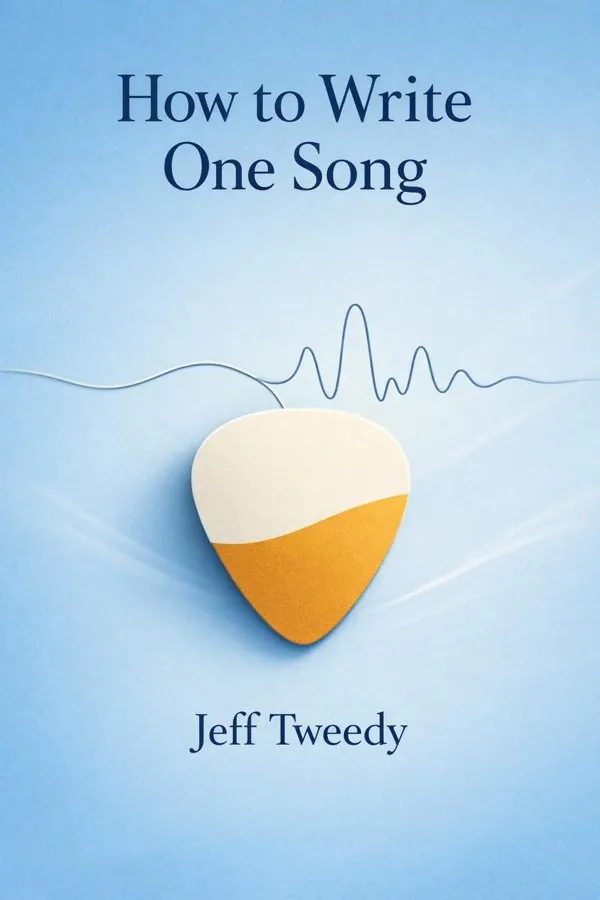
How to Write One Song: Loving the Things We Create and How They Love Us Back: Summary & Key Insights
by Jeff Tweedy
 10 min11 chaptersAudio available
What Is How to Write One Song: Loving the Things We Create and How They Love Us Back About?
How to Write One Song: Loving the Things We Create and How They Love Us Back by Jeff Tweedy is a writing book spanning 11 pages. In this book, Jeff Tweedy, the lead singer and songwriter of Wilco, shares his creative process and philosophy on songwriting. He offers practical advice and personal reflections on how writing a single song can open up a world of creativity, self-expression, and emotional connection. The book encourages readers to embrace the joy of making art and to find meaning in the act of creation itself.
This FizzRead summary covers all 11 key chapters of How to Write One Song: Loving the Things We Create and How They Love Us Back in approximately 10 minutes, distilling the most important ideas, arguments, and takeaways from Jeff Tweedy's work. Also available as an audio summary and Key Quotes Podcast.
How to Write One Song: Loving the Things We Create and How They Love Us Back
In this book, Jeff Tweedy, the lead singer and songwriter of Wilco, shares his creative process and philosophy on songwriting. He offers practical advice and personal reflections on how writing a single song can open up a world of creativity, self-expression, and emotional connection. The book encourages readers to embrace the joy of making art and to find meaning in the act of creation itself.
Who Should Read How to Write One Song: Loving the Things We Create and How They Love Us Back?
This book is perfect for anyone interested in writing and looking to gain actionable insights in a short read. Whether you're a student, professional, or lifelong learner, the key ideas from How to Write One Song: Loving the Things We Create and How They Love Us Back by Jeff Tweedy will help you think differently.
- ✓Readers who enjoy writing and want practical takeaways
- ✓Professionals looking to apply new ideas to their work and life
- ✓Anyone who wants the core insights of How to Write One Song: Loving the Things We Create and How They Love Us Back in just 10 minutes
Want the full summary?
Get instant access to this book summary and 100K+ more with Fizz Moment.
Get Free SummaryAvailable on App Store • Free to download
Key Chapters
People often imagine creativity as a limitless expanse—endless possibilities ready to be explored. But I’ve found the opposite to be true. Creativity thrives not in infinite possibilities, but in boundaries. That’s why I set the challenge as writing just one song. It’s small enough to feel manageable, but it still asks something of you. Limitation narrows the field of focus in a way that paradoxically sets you free.
When you limit yourself to one song, you remove the pressure of imagining yourself as a songwriter with a career or a huge catalog. You free yourself from questions like, “Who will hear this?” or “Will anyone like it?” You’re left with the purity of process. It’s just you and the work in front of you. That small container is where honesty emerges.
In my own experience with Wilco and earlier bands, the best music came when I stopped trying to write an album and started listening for the song that wanted to be written. Each lyric, each melody, unfolds more naturally when it’s not competing with the weight of expectation. By containing your creative task, you make it human. You make it possible.
There’s also something wonderful about focusing on completion. Finishing one song teaches you about follow-through, about what it means to nurture an idea until it’s whole. It resets your brain’s understanding of what you can do. Suddenly, the blank page looks less threatening, and your future creative endeavors start to feel accessible again.
The creative impulse isn’t a lightning bolt—it’s a muscle. If you want creativity to become part of your life, you need to cultivate consistency rather than wait for inspiration. I often remind myself that showing up every day—even for ten minutes—is the real work. The point is to build a habit of paying attention.
In my own songwriting process, I don’t always start with a clear direction. Some days I pick up my guitar and strum nonsense chords. Some days I write random phrases, knowing most of them won’t survive. The practice isn’t about perfection; it’s about staying connected to the act of making. When you work daily, even briefly, you build artistic stamina and quiet the noise of self-judgment.
Routine also has a grounding power. It transforms creativity from something mystical into something ordinary and sustainable. It lets you live inside the creative act instead of chasing it. Over time, you start to notice patterns—ideas returning, melodies echoing—and your sense of creative identity strengthens. The point isn’t always to make something “good.” The point is to make something real, consistently, until your creative self becomes a natural expression of your daily life.
+ 9 more chapters — available in the FizzRead app
All Chapters in How to Write One Song: Loving the Things We Create and How They Love Us Back
About the Author
Jeff Tweedy is an American musician, songwriter, and author best known as the frontman of the band Wilco. He has been acclaimed for his innovative approach to music and his introspective lyrics. Tweedy has also published memoirs and essays exploring creativity and the artistic process.
Get This Summary in Your Preferred Format
Read or listen to the How to Write One Song: Loving the Things We Create and How They Love Us Back summary by Jeff Tweedy anytime, anywhere. FizzRead offers multiple formats so you can learn on your terms — all free.
Available formats: App · Audio · PDF · EPUB — All included free with FizzRead
Download How to Write One Song: Loving the Things We Create and How They Love Us Back PDF and EPUB Summary
Key Quotes from How to Write One Song: Loving the Things We Create and How They Love Us Back
“People often imagine creativity as a limitless expanse—endless possibilities ready to be explored.”
“The creative impulse isn’t a lightning bolt—it’s a muscle.”
Frequently Asked Questions about How to Write One Song: Loving the Things We Create and How They Love Us Back
How to Write One Song: Loving the Things We Create and How They Love Us Back by Jeff Tweedy is a writing book that explores key ideas across 11 chapters. In this book, Jeff Tweedy, the lead singer and songwriter of Wilco, shares his creative process and philosophy on songwriting. He offers practical advice and personal reflections on how writing a single song can open up a world of creativity, self-expression, and emotional connection. The book encourages readers to embrace the joy of making art and to find meaning in the act of creation itself.
You Might Also Like
The Art of Perspective
Christopher Castellani
10 min
Making a Point: The Persnickety Story of English Punctuation
David Crystal
10 min
The Elements Of Eloquence: How To Turn The Perfect English Phrase
Mark Forsyth
10 min
The Pocket Muse: Ideas and Inspirations for Writing
Monica Wood
10 min
A Little Book on Form: An Exploration into the Formal Imagination of Poetry
Robert Hass
10 min
Adventures In The Screen Trade: A Personal View Of Hollywood And Screenwriting
William Goldman
10 minBrowse by Category
Ready to read How to Write One Song: Loving the Things We Create and How They Love Us Back?
Get the full summary and 100K+ more books with Fizz Moment.