
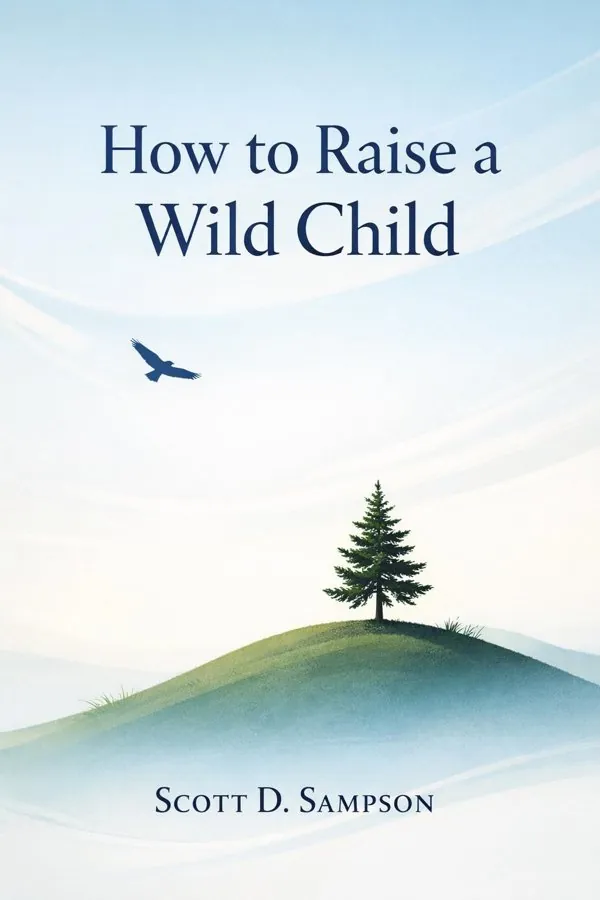
How to Raise a Wild Child: The Art and Science of Falling in Love with Nature: Summary & Key Insights
 10 min10 chaptersAudio available
What Is How to Raise a Wild Child: The Art and Science of Falling in Love with Nature About?
How to Raise a Wild Child: The Art and Science of Falling in Love with Nature by Scott D. Sampson is a education book spanning 10 pages. In this insightful and inspiring book, paleontologist and science communicator Scott D. Sampson explores how parents, educators, and communities can reconnect children with the natural world. Drawing on research in child development, education, and ecology, Sampson argues that direct experiences in nature are essential for children’s physical, emotional, and intellectual growth. He offers practical guidance for fostering curiosity, wonder, and environmental stewardship in the next generation.
This FizzRead summary covers all 10 key chapters of How to Raise a Wild Child: The Art and Science of Falling in Love with Nature in approximately 10 minutes, distilling the most important ideas, arguments, and takeaways from Scott D. Sampson's work. Also available as an audio summary and Key Quotes Podcast.
How to Raise a Wild Child: The Art and Science of Falling in Love with Nature
In this insightful and inspiring book, paleontologist and science communicator Scott D. Sampson explores how parents, educators, and communities can reconnect children with the natural world. Drawing on research in child development, education, and ecology, Sampson argues that direct experiences in nature are essential for children’s physical, emotional, and intellectual growth. He offers practical guidance for fostering curiosity, wonder, and environmental stewardship in the next generation.
Who Should Read How to Raise a Wild Child: The Art and Science of Falling in Love with Nature?
This book is perfect for anyone interested in education and looking to gain actionable insights in a short read. Whether you're a student, professional, or lifelong learner, the key ideas from How to Raise a Wild Child: The Art and Science of Falling in Love with Nature by Scott D. Sampson will help you think differently.
- ✓Readers who enjoy education and want practical takeaways
- ✓Professionals looking to apply new ideas to their work and life
- ✓Anyone who wants the core insights of How to Raise a Wild Child: The Art and Science of Falling in Love with Nature in just 10 minutes
Want the full summary?
Get instant access to this book summary and 100K+ more with Fizz Moment.
Get Free SummaryAvailable on App Store • Free to download
Key Chapters
Every creature on Earth evolved within a living tapestry of air, soil, water, and other organisms. For humans, especially children, that tapestry still shapes our minds and bodies in ways we often overlook. When I speak of reconnecting with nature, I’m not asking for nostalgia. I’m referring to a measurable set of benefits for children’s development. Study after study shows that time in green spaces sharpens concentration, reduces stress hormones, boosts immune function, and fosters social cooperation. Children who play freely outdoors tend to show higher levels of creativity, self-regulation, and resilience.
But beyond these physiological or cognitive effects, there’s something deeper. Nature cultivates empathy and awareness. When a child lifts a stone to see pill bugs scurrying beneath, she’s exercising curiosity—but also care. She’s sensing that she’s not alone, that she participates in something ancient and vast. These small moments of wonder form the emotional groundwork for ecological literacy.
Unfortunately, we’ve largely built a culture that severs these roots. Childhood today often unfolds indoors, mediated by screens, and observed through fear rather than freedom. Yet even small, regular experiences in nearby nature—a neighborhood park, a backyard garden, a vacant lot—can restore that vital connection. The goal is not escape from modern life; it’s integration. When we help children know the rhythms of natural change, we help them know themselves.
Our species has spent over ninety-nine percent of its history as hunter-gatherers deeply embedded in the natural world. For our ancestors, knowing the songs of birds or the behavior of wind wasn’t leisure knowledge—it meant survival. The human brain evolved to detect patterns in that living matrix. Our emotional systems, too, are tuned to respond to landscapes, other animals, and natural cues of safety and abundance. No wonder that when deprived of these cues, we feel uneasy or incomplete.
The modern experiment of living apart from nature is only a few generations old, yet it reshapes us rapidly. Many children grow up perceiving nature as something distant—someplace one drives to for recreation, rather than a context for daily life. This alienation distorts our sense of belonging on the planet. By reintroducing nature-based experiences early in life, we reawaken an evolutionary memory encoded within us, one that recognizes Earth not as backdrop but as home.
When I observe a child crouching to examine a beetle, I see evolution at play. Curiosity toward life has always been our species’ strength. Channel that instinct, and you awaken a child’s innate biophilia—the love of living things. Lose it, and we risk raising generations unequipped to care for the living systems that sustain them.
+ 8 more chapters — available in the FizzRead app
All Chapters in How to Raise a Wild Child: The Art and Science of Falling in Love with Nature
About the Author
Scott D. Sampson is a Canadian paleontologist, science communicator, and museum executive. He is known for his work on dinosaur evolution and for promoting science education and nature connection among children. Sampson has served as a host on PBS’s 'Dinosaur Train' and as CEO of Science World in Vancouver.
Get This Summary in Your Preferred Format
Read or listen to the How to Raise a Wild Child: The Art and Science of Falling in Love with Nature summary by Scott D. Sampson anytime, anywhere. FizzRead offers multiple formats so you can learn on your terms — all free.
Available formats: App · Audio · PDF · EPUB — All included free with FizzRead
Download How to Raise a Wild Child: The Art and Science of Falling in Love with Nature PDF and EPUB Summary
Key Quotes from How to Raise a Wild Child: The Art and Science of Falling in Love with Nature
“Every creature on Earth evolved within a living tapestry of air, soil, water, and other organisms.”
“Our species has spent over ninety-nine percent of its history as hunter-gatherers deeply embedded in the natural world.”
Frequently Asked Questions about How to Raise a Wild Child: The Art and Science of Falling in Love with Nature
How to Raise a Wild Child: The Art and Science of Falling in Love with Nature by Scott D. Sampson is a education book that explores key ideas across 10 chapters. In this insightful and inspiring book, paleontologist and science communicator Scott D. Sampson explores how parents, educators, and communities can reconnect children with the natural world. Drawing on research in child development, education, and ecology, Sampson argues that direct experiences in nature are essential for children’s physical, emotional, and intellectual growth. He offers practical guidance for fostering curiosity, wonder, and environmental stewardship in the next generation.
You Might Also Like

Bedtime Biography: Florence Nightingale
Isabel Thomas
10 min
Introduction To Museum Studies
Howard H. Hoyt
10 min
A Mind for Numbers: How to Excel at Math and Science (Even If You Flunked Algebra)
Barbara Oakley
10 min
AI for Educators: Learning Strategies, Teacher Empowerment, and the Future of Education
Matt Miller
10 min
Animation For Beginners
Morr Meroz
10 min
Artificial Intelligence for Learning
Donald Clark
10 minBrowse by Category
Ready to read How to Raise a Wild Child: The Art and Science of Falling in Love with Nature?
Get the full summary and 100K+ more books with Fizz Moment.