
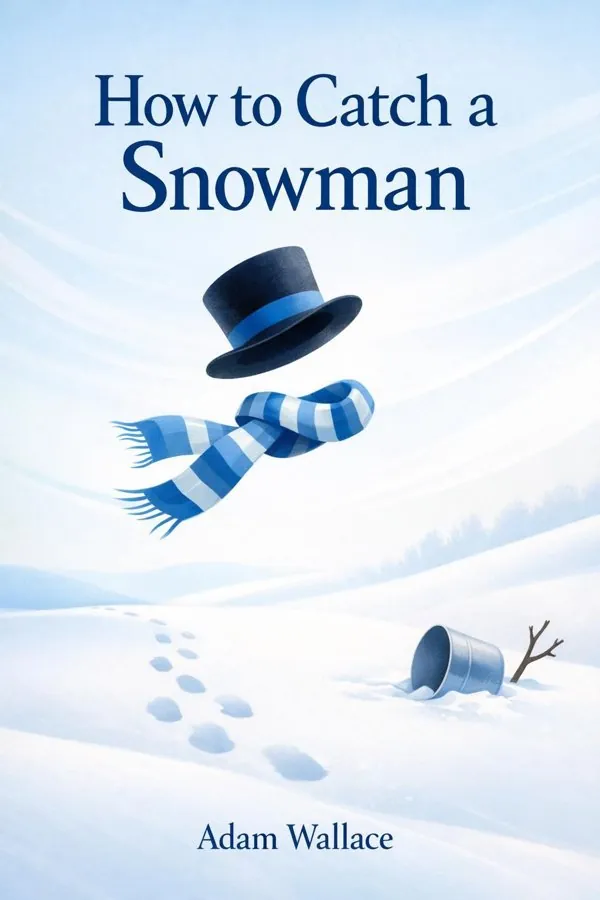
How to Catch a Snowman: Summary & Key Insights
by Adam Wallace
 10 min8 chaptersAudio available
Key Takeaways from How to Catch a Snowman
A snowy day becomes magical the moment a child asks, “What if?
Children do not need immediate success to feel accomplished; often, they need permission to keep trying with enthusiasm.
Some of the best thinking begins as play.
When children laugh, they lean in.
Children often learn language by hearing patterns before they fully understand rules.
What Is How to Catch a Snowman About?
How to Catch a Snowman by Adam Wallace is a bestsellers book. How to Catch a Snowman by Adam Wallace is a lively, rhyming picture book that turns a simple winter fantasy into a celebration of imagination, problem-solving, and joyful persistence. The story follows a group of enthusiastic children who build clever traps in hopes of catching a mischievous snowman, only to discover that their frosty target is far more playful and elusive than they expected. What makes the book so appealing is not the question of whether the snowman will be caught, but the creativity, teamwork, and excitement that unfold with every new attempt. Like other books in Wallace’s popular “How to Catch” series, this one blends humor, rhythm, and bright visual energy to create a read-aloud experience children want to revisit again and again. Adam Wallace has earned a devoted following for crafting picture books that encourage curiosity and active participation, making him a trusted voice in modern children’s literature. This book matters because it reminds young readers that trying, imagining, and laughing together can be just as rewarding as success itself.
This FizzRead summary covers all 8 key chapters of How to Catch a Snowman in approximately 10 minutes, distilling the most important ideas, arguments, and takeaways from Adam Wallace's work. Also available as an audio summary and Key Quotes Podcast.
How to Catch a Snowman
How to Catch a Snowman by Adam Wallace is a lively, rhyming picture book that turns a simple winter fantasy into a celebration of imagination, problem-solving, and joyful persistence. The story follows a group of enthusiastic children who build clever traps in hopes of catching a mischievous snowman, only to discover that their frosty target is far more playful and elusive than they expected. What makes the book so appealing is not the question of whether the snowman will be caught, but the creativity, teamwork, and excitement that unfold with every new attempt. Like other books in Wallace’s popular “How to Catch” series, this one blends humor, rhythm, and bright visual energy to create a read-aloud experience children want to revisit again and again. Adam Wallace has earned a devoted following for crafting picture books that encourage curiosity and active participation, making him a trusted voice in modern children’s literature. This book matters because it reminds young readers that trying, imagining, and laughing together can be just as rewarding as success itself.
Who Should Read How to Catch a Snowman?
This book is perfect for anyone interested in bestsellers and looking to gain actionable insights in a short read. Whether you're a student, professional, or lifelong learner, the key ideas from How to Catch a Snowman by Adam Wallace will help you think differently.
- ✓Readers who enjoy bestsellers and want practical takeaways
- ✓Professionals looking to apply new ideas to their work and life
- ✓Anyone who wants the core insights of How to Catch a Snowman in just 10 minutes
Want the full summary?
Get instant access to this book summary and 100K+ more with Fizz Moment.
Get Free SummaryAvailable on App Store • Free to download
Key Chapters
A snowy day becomes magical the moment a child asks, “What if?” That spirit of possibility powers How to Catch a Snowman, where ordinary winter fun transforms into an exciting mission filled with inventions, surprises, and laughter. Rather than treating snow as just weather or a snowman as only a decoration, the book invites children to imagine a living, playful character who can outsmart every trap designed to catch him. This shift matters because it shows how creativity can make even familiar experiences feel full of wonder.
The book uses a simple premise, but that simplicity is its strength. Children already know what a snowman is, and many have built one themselves. By asking readers to believe that this snowman might run away, dodge plans, and leave clues behind, Adam Wallace expands a child’s imaginative world without making it feel confusing or distant. The story becomes a model for pretend play: a blanket fort can become a castle, a cardboard box can become a spaceship, and a backyard snowman can become the star of an adventure.
In practical terms, parents and teachers can use this idea to encourage creative engagement beyond the page. After reading, children might draw their own magical snowman, invent a trap from household items, or write a short story about what happens if the snowman escapes into town. These activities strengthen storytelling, sequencing, and design thinking while keeping the mood playful rather than instructional.
The deeper lesson is that imagination is not separate from learning. It is often the doorway into it. When children imagine boldly, they practice language, planning, empathy, and experimentation. Actionable takeaway: use the book as a launchpad for a “what if” activity, asking children to invent one new winter character or scenario and explain how it would behave.
Children do not need immediate success to feel accomplished; often, they need permission to keep trying with enthusiasm. One of the clearest strengths of How to Catch a Snowman is that it frames repeated failed attempts not as disappointment, but as part of the fun. The children in the story create trap after trap, yet the snowman continues to slip away. Instead of making failure feel discouraging, the book turns each setback into a joke, a surprise, or a reason to come up with a better plan.
This matters because many young readers are still learning how to respond when things do not go their way. A game is lost, a block tower falls, a drawing does not look right, or a puzzle seems too hard. Books like this help reframe those moments. The message is subtle but powerful: effort can be exciting, and persistence can feel playful rather than stressful. The emotional tone stays light, allowing children to absorb resilience in a way that does not sound preachy.
Adults can apply this lesson by praising process instead of only outcomes. If a child creates a paper trap for a pretend snowman and it “fails,” the response can be, “I love how you tried using a ramp. What would you change next time?” This kind of feedback encourages experimentation and keeps curiosity alive. In classrooms, teachers can connect the story to STEM-style building challenges, where the goal is not perfection but redesign.
The book suggests that persistence works best when it is paired with humor. Children are more willing to try again when they are allowed to laugh at mistakes. Actionable takeaway: after reading, ask children to name a time something did not work at first and then brainstorm one fun, low-pressure way they could try again.
Some of the best thinking begins as play. In How to Catch a Snowman, each new trap represents a child-friendly version of design, testing, and revision. The characters are not just running around in the snow; they are imagining mechanisms, predicting outcomes, and responding to unexpected results. The snowman’s escape becomes a catalyst for creative problem-solving, encouraging readers to think about how ideas are built, challenged, and improved.
This is one reason the book resonates beyond entertainment. Under its silly premise is a practical mental habit: when one solution fails, invent another. Children watch as plans are made, expectations are formed, and surprises force adjustment. That pattern mirrors the earliest stages of critical thinking. The traps may be whimsical, but the mindset is real. Readers learn that solving problems is rarely a straight line. It involves testing assumptions, noticing details, and making changes.
At home or in school, adults can use the story to introduce age-appropriate design challenges. For example, children might build a “snowman catcher” from paper cups, blocks, tape, or craft sticks. Then they can explain why they chose each part and what might happen if the snowman were slippery, fast, or clever. This process supports verbal reasoning, fine motor skills, and confidence in expressing ideas. It also teaches that there can be many possible solutions to one question.
Importantly, the book keeps problem-solving emotionally safe. There is no punishment for a bad idea, only another chance to think bigger. That tone helps children associate challenge with creativity instead of fear. Actionable takeaway: invite children to design a simple trap or tool after reading, then ask three reflection questions: What was your idea? What might go wrong? What would you change?
When children laugh, they lean in. How to Catch a Snowman understands this perfectly, using humor to turn reading into an active, memorable experience. The snowman’s trickster energy, the exaggerated trap designs, and the repeated near-misses create comic tension that keeps young readers engaged. Even children who are still developing attention spans can stay connected because the story invites anticipation: what silly thing will happen next?
Humor matters in children’s literature because it lowers pressure. A child does not have to decode a moral lesson before enjoying the story. They can first respond emotionally by smiling, predicting, and giggling. Once engagement is established, deeper lessons about persistence, creativity, and teamwork can slip in naturally. This is one reason Adam Wallace’s “How to Catch” books work so well as read-alouds. Their rhythm and comic timing support interaction, making them enjoyable for both children and adults.
Practical application is easy. Parents can read with dramatic voices, pause before reveals, or ask children to guess how the snowman escaped. Teachers can turn the story into a group performance, assigning students sound effects or encouraging them to chant repeated phrases. These playful reading strategies build comprehension because children become active participants rather than passive listeners. Humor also helps reluctant readers associate books with enjoyment instead of obligation.
The broader insight is that emotional connection often comes before educational impact. A book that delights a child is more likely to be reread, remembered, and discussed. Repetition then strengthens language acquisition and story understanding. Actionable takeaway: during your next read-aloud, emphasize the funny moments with expressive pacing and ask children to predict the next escape, turning laughter into a tool for engagement.
Children often learn language by hearing patterns before they fully understand rules. How to Catch a Snowman uses rhyme, rhythm, and repetition to create a musical reading experience that supports early literacy. The text flows with a bounce that makes it enjoyable to hear aloud, while repeated structural patterns help children anticipate sounds, phrases, and story progression. This predictability is not limiting; it is supportive. It gives young readers footholds as they build confidence with language.
Rhyming picture books can reinforce phonological awareness, an important foundation for reading. When children hear words that sound alike or notice repeated sentence rhythms, they begin to recognize how language is structured. They may start finishing lines, predicting rhymes, or repeating favorite phrases from memory. In this way, the book becomes more than entertainment. It becomes a gentle training ground for listening skills, vocabulary, and oral fluency.
Adults can maximize this benefit by reading slowly enough for children to hear the patterns. Pause before the final word in a rhyming line and let them guess it. Read the same page twice if they enjoy the sound. Encourage them to clap along to the rhythm or invent their own rhyming lines about snow, winter, or a different magical creature. These simple interactions make literacy feel like play.
The book also shows that repetition serves emotional as well as educational purposes. Children enjoy knowing what kind of story they are in: a chase, a plan, a surprise, another attempt. That sense of structure creates comfort and excitement at once. Actionable takeaway: use the book for an interactive read-aloud by pausing at rhyme points and inviting children to predict, repeat, or create matching sounds.
Big imaginative projects become even more exciting when children work together. In How to Catch a Snowman, the effort to trap the snowman feels communal rather than solitary. The energy of the story comes from shared excitement, shared planning, and shared surprise. Whether explicitly stated on every page or implied through the group dynamic, the message is clear: collaboration expands what is possible.
This is an important lesson for young readers because group work can be both thrilling and difficult. Children must learn to contribute ideas, listen to others, handle disagreement, and celebrate collective effort. The book presents these experiences in a fun, low-stakes context. A snowman-catching mission is whimsical enough that children can focus on cooperation without feeling judged. They can imagine themselves offering a clever trap idea, helping build part of the plan, or cheering when a new attempt begins.
Adults can build on this theme with collaborative activities. In a classroom, small groups can design different snowman traps and then present them to one another. At home, siblings can draw a shared blueprint or take turns adding elements to a pretend winter plan. The point is not whose idea is best, but how ideas improve when combined. One child might imagine bait, another a net, and another a decoy. Together, they create something more inventive than any one child alone.
The story also helps normalize the fact that teamwork does not guarantee instant success. Even with group effort, the snowman remains delightfully difficult to catch. That teaches a valuable balance: cooperation increases creativity, but outcomes still require patience. Actionable takeaway: after reading, assign a shared creative task where each child must add one idea to a group plan, reinforcing listening and co-creation.
Not every magical thing needs to be captured to be meaningful. Beneath the chase and comedy of How to Catch a Snowman lies a gentle reminder that wonder is sometimes more valuable than possession. The children want to catch the snowman, but the book’s emotional payoff comes less from control and more from interaction, discovery, and delight. The snowman’s elusiveness is part of what makes him magical.
This idea can be surprisingly important for children, who often live in a world filled with instructions, outcomes, and measurable success. The story quietly suggests that some experiences are best enjoyed rather than mastered. Snow falls and melts. Winter appears and passes. A snowman may seem alive for a moment in the imagination and then vanish. Instead of treating that fleetingness as disappointing, the book turns it into enchantment.
Parents and educators can use this lesson to discuss temporary joys. A child may spend hours building something in the snow that melts the next day. Rather than focusing on loss, adults can ask: What was fun about making it? What did you notice? What would you build again? This helps children appreciate process, memory, and seasonal beauty. The book can also spark conversations about respecting nature and playful mystery rather than trying to own every special thing.
In a larger sense, the story honors childhood itself, a season of life shaped by brief but vivid moments of magic. The snowman is memorable because he cannot be fully pinned down. Actionable takeaway: encourage children to share one thing they loved but could not keep, then talk about why the experience still mattered.
Books tied to seasons often become traditions, and traditions give childhood its emotional texture. How to Catch a Snowman is especially effective as a winter read because it captures the excitement, playfulness, and imagination that many families associate with snowy days and holiday time. Its cheerful tone and interactive premise make it the kind of picture book children ask for repeatedly, which is exactly how rituals begin.
Seasonal rereading has special value. When a child revisits the same story each winter, the book becomes linked with memory: hot cocoa, school breaks, new mittens, snow outside the window, or bedtime after a cold afternoon of play. This repetition deepens comprehension, but it also creates security and anticipation. Children love recognizing what they already know, and adults often cherish the continuity of returning to the same story year after year.
Families can use the book as part of a winter tradition in simple ways. Read it on the first snowy day of the season. Pair it with building an actual snowman outdoors. Follow it with a craft where children design a trap or decorate paper snowflakes. In classrooms or libraries, it can anchor winter storytime and lead naturally into art, movement, or science activities about snow and ice. Because the book is energetic and accessible, it works especially well in shared settings.
The broader contribution of the story is that it turns reading into an event rather than a task. A beloved seasonal book can become a marker of time and togetherness. Actionable takeaway: choose a recurring winter moment each year to read this book, then connect it to one small family or classroom activity to build a lasting ritual.
All Chapters in How to Catch a Snowman
About the Author
Adam Wallace is a bestselling children’s author known for writing energetic, humorous picture books that spark imagination and make read-aloud time fun. He has become especially popular for his “How to Catch” series, which invites young readers into playful adventures built around clever traps, magical creatures, and lots of laughter. Wallace’s writing often features lively rhyme, accessible storytelling, and themes of creativity, persistence, and teamwork. His books are widely enjoyed by families, teachers, and librarians because they balance entertainment with developmental value, encouraging participation and curiosity. With a gift for turning simple ideas into memorable adventures, Wallace has established himself as a trusted and beloved voice in contemporary children’s literature.
Get This Summary in Your Preferred Format
Read or listen to the How to Catch a Snowman summary by Adam Wallace anytime, anywhere. FizzRead offers multiple formats so you can learn on your terms — all free.
Available formats: App · Audio · PDF · EPUB — All included free with FizzRead
Download How to Catch a Snowman PDF and EPUB Summary
Key Quotes from How to Catch a Snowman
“A snowy day becomes magical the moment a child asks, “What if?”
“Children do not need immediate success to feel accomplished; often, they need permission to keep trying with enthusiasm.”
“Some of the best thinking begins as play.”
“How to Catch a Snowman understands this perfectly, using humor to turn reading into an active, memorable experience.”
“Children often learn language by hearing patterns before they fully understand rules.”
Frequently Asked Questions about How to Catch a Snowman
How to Catch a Snowman by Adam Wallace is a bestsellers book that explores key ideas across 8 chapters. How to Catch a Snowman by Adam Wallace is a lively, rhyming picture book that turns a simple winter fantasy into a celebration of imagination, problem-solving, and joyful persistence. The story follows a group of enthusiastic children who build clever traps in hopes of catching a mischievous snowman, only to discover that their frosty target is far more playful and elusive than they expected. What makes the book so appealing is not the question of whether the snowman will be caught, but the creativity, teamwork, and excitement that unfold with every new attempt. Like other books in Wallace’s popular “How to Catch” series, this one blends humor, rhythm, and bright visual energy to create a read-aloud experience children want to revisit again and again. Adam Wallace has earned a devoted following for crafting picture books that encourage curiosity and active participation, making him a trusted voice in modern children’s literature. This book matters because it reminds young readers that trying, imagining, and laughing together can be just as rewarding as success itself.
More by Adam Wallace
You Might Also Like
The Godfather
Mario Puzo
10 min
The Handmaid's Tale
Margaret Atwood
10 min
The Hunger Games
Suzanne Collins
10 min
The Nightingale
Kristin Hannah
10 min
The Seven Husbands of Evelyn Hugo
Taylor Jenkins Reid
10 min
Backwater Justice
Fern Michaels
10 minBrowse by Category
Ready to read How to Catch a Snowman?
Get the full summary and 100K+ more books with Fizz Moment.