
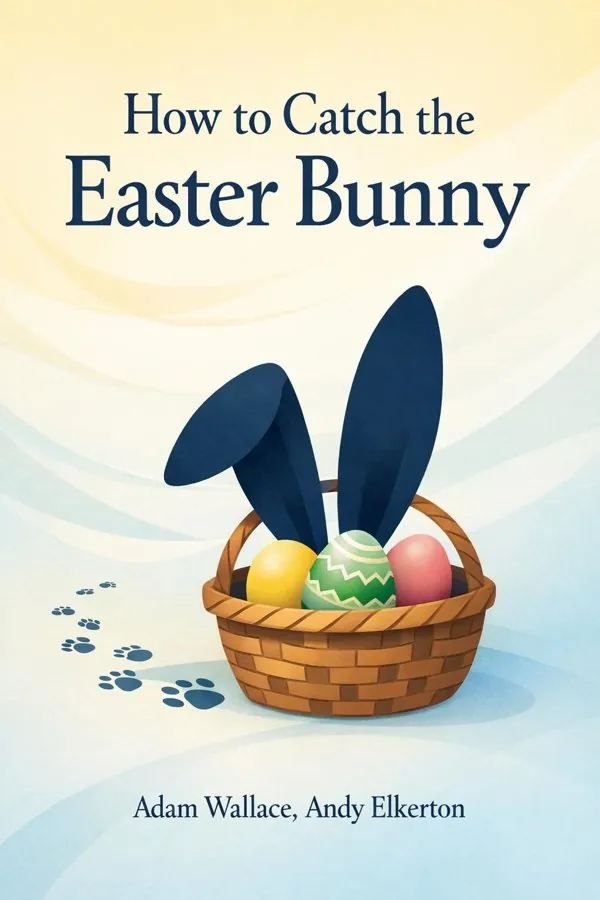
How to Catch the Easter Bunny: Summary & Key Insights
by Adam Wallace, Andy Elkerton
 10 min9 chaptersAudio available
Key Takeaways from How to Catch the Easter Bunny
The most memorable childhood stories do not simply describe an event; they invite children to step inside it.
One of the smartest lessons in this playful book is that repeated failure does not have to feel discouraging.
Children often fall in love with books before they fully understand every word, and sound is a big reason why.
In a strong picture book, illustrations do more than decorate the page; they carry part of the story.
Children engage most deeply with stories when they feel that they are part of the action.
What Is How to Catch the Easter Bunny About?
How to Catch the Easter Bunny by Adam Wallace, Andy Elkerton is a bestsellers book. What makes a holiday story unforgettable for children? Often, it is not just the celebration itself, but the sense of wonder, mischief, and possibility that surrounds it. How to Catch the Easter Bunny by Adam Wallace, illustrated by Andy Elkerton, turns Easter into a playful challenge by inviting young readers to imagine elaborate traps for one of the season’s most magical visitors. Part of Wallace’s popular “How to Catch” series, this picture book combines bouncing rhymes, comic suspense, and colorful illustrations to create a read-aloud experience that feels both exciting and interactive. At its heart, the book is about imagination in action. Children are encouraged to think like inventors, problem-solvers, and dreamers as they follow a series of clever attempts to capture the Easter Bunny. Adam Wallace has built a reputation for writing energetic, child-centered stories that celebrate creativity and humor, while Andy Elkerton’s bright, expressive art gives every page movement and charm. The result is a book that matters not because it teaches a heavy lesson, but because it reminds readers that curiosity, teamwork, and playful experimentation are powerful ways to learn. It is a joyful story that transforms Easter into an adventure children can actively join.
This FizzRead summary covers all 9 key chapters of How to Catch the Easter Bunny in approximately 10 minutes, distilling the most important ideas, arguments, and takeaways from Adam Wallace, Andy Elkerton's work. Also available as an audio summary and Key Quotes Podcast.
How to Catch the Easter Bunny
What makes a holiday story unforgettable for children? Often, it is not just the celebration itself, but the sense of wonder, mischief, and possibility that surrounds it. How to Catch the Easter Bunny by Adam Wallace, illustrated by Andy Elkerton, turns Easter into a playful challenge by inviting young readers to imagine elaborate traps for one of the season’s most magical visitors. Part of Wallace’s popular “How to Catch” series, this picture book combines bouncing rhymes, comic suspense, and colorful illustrations to create a read-aloud experience that feels both exciting and interactive.
At its heart, the book is about imagination in action. Children are encouraged to think like inventors, problem-solvers, and dreamers as they follow a series of clever attempts to capture the Easter Bunny. Adam Wallace has built a reputation for writing energetic, child-centered stories that celebrate creativity and humor, while Andy Elkerton’s bright, expressive art gives every page movement and charm. The result is a book that matters not because it teaches a heavy lesson, but because it reminds readers that curiosity, teamwork, and playful experimentation are powerful ways to learn. It is a joyful story that transforms Easter into an adventure children can actively join.
Who Should Read How to Catch the Easter Bunny?
This book is perfect for anyone interested in bestsellers and looking to gain actionable insights in a short read. Whether you're a student, professional, or lifelong learner, the key ideas from How to Catch the Easter Bunny by Adam Wallace, Andy Elkerton will help you think differently.
- ✓Readers who enjoy bestsellers and want practical takeaways
- ✓Professionals looking to apply new ideas to their work and life
- ✓Anyone who wants the core insights of How to Catch the Easter Bunny in just 10 minutes
Want the full summary?
Get instant access to this book summary and 100K+ more with Fizz Moment.
Get Free SummaryAvailable on App Store • Free to download
Key Chapters
The most memorable childhood stories do not simply describe an event; they invite children to step inside it. How to Catch the Easter Bunny works so well because it transforms Easter from a passive holiday into an active adventure. Instead of waiting for eggs to appear, children are drawn into a game of invention and possibility. The book asks an irresistible question: what if you could actually catch the Easter Bunny? That question immediately activates imagination, encouraging readers to think beyond routine traditions.
This idea matters because children learn through imaginative play long before they can explain abstract concepts. When they picture building traps, following clues, and trying to outsmart a magical character, they are practicing creative thinking. They begin asking their own questions: What would I build? Where would I hide it? What kind of bait would work? The story opens up a mental playground where fantasy and problem-solving meet.
In homes and classrooms, this concept can be used in simple, practical ways. Adults can invite children to draw their own Easter Bunny traps, build them from craft supplies, or explain how their designs would work. A family might turn the night before Easter into a mini engineering challenge with boxes, string, paper, and stickers. A teacher might ask students to write a short paragraph about their trap and what happened when the Bunny escaped.
The deeper value is not in whether the Bunny is caught, but in the joyful act of imagining what could happen. By making the holiday interactive, the book helps children become creators rather than just spectators.
Actionable takeaway: After reading, ask a child to design an original Easter Bunny trap and explain the idea aloud to strengthen imagination and storytelling skills.
One of the smartest lessons in this playful book is that repeated failure does not have to feel discouraging. In How to Catch the Easter Bunny, trap after trap is outwitted, avoided, or cleverly escaped. Yet the story never treats these failed attempts as embarrassing. Instead, they become the source of humor, suspense, and delight. Children see that trying hard and not succeeding right away can still be exciting.
This is an important emotional message, especially for young readers who are just beginning to form attitudes about effort and success. If children only see stories where plans work perfectly, they may start to believe mistakes mean they are not good enough. Here, the opposite is true. Every failed trap suggests another chance to think, tweak, and try again. The Bunny’s escape is not the end of the fun; it is what keeps the story moving.
Adults can apply this lesson beyond the book. If a child builds a craft project that falls apart, solves a puzzle incorrectly, or loses a game, the spirit of the story offers a healthier response: laugh, learn, and make a new plan. A parent might say, “That trap didn’t work, but what would you change next time?” A teacher might use the book to start a conversation about perseverance and experimentation.
The humor is key. By making failure funny rather than frightening, the book lowers the emotional stakes of trying something difficult. Children come away with the sense that effort itself is worthwhile. That mindset supports resilience not just in play, but in school, friendships, and everyday learning.
Actionable takeaway: When a child’s idea does not work, respond with curiosity instead of correction by asking what they would change on their next attempt.
Children often fall in love with books before they fully understand every word, and sound is a big reason why. How to Catch the Easter Bunny uses lively rhyme and rhythmic language to make reading feel musical, memorable, and fun. The text bounces forward with energy, which keeps young listeners engaged and helps early readers anticipate patterns. In many picture books, rhyme is decorative; here, it is structural. It gives the story momentum and supports the sense of playful chase.
This matters because predictable sound patterns can build literacy confidence. When children hear repeated structures and rhyming endings, they start to recognize language patterns naturally. They may guess what word comes next, repeat favorite lines, or memorize parts of the book after just a few readings. That participation turns reading from a one-way activity into a shared performance.
In practical terms, parents and educators can use the book as a read-aloud tool to strengthen phonemic awareness. Pause before the final rhyming word in a line and invite children to fill it in. Re-read a favorite page and clap to the rhythm. Ask children to think of their own rhyming words related to Easter, such as “bunny,” “sunny,” or “hop,” “stop.” These simple activities connect pleasure with language learning.
The rhythmic quality also supports attention. Young children, especially those with short attention spans, often stay engaged longer when text has movement and sound. The book’s verbal play makes it ideal for group reading, bedtime reading, or seasonal classroom circles.
Actionable takeaway: During read-alouds, pause before rhyming words and let children predict the ending to build listening skills, phonics awareness, and reading confidence.
In a strong picture book, illustrations do more than decorate the page; they carry part of the story. Andy Elkerton’s artwork in How to Catch the Easter Bunny is essential to the book’s charm and effectiveness. The illustrations amplify the humor, reveal details that the text only hints at, and help children track the action even if they are not yet independent readers. Facial expressions, color choices, trap designs, and the Easter Bunny’s mischievous energy all work together to create a richer narrative experience.
This visual storytelling matters because many young readers process meaning through images before they do through text. A child might not fully grasp every line, but they can instantly understand surprise, excitement, or playful chaos through the illustrations. The pictures also invite slower, more observant reading. Children can scan each scene for clues, hidden details, and signs of what the Bunny might do next.
Adults can make the most of this by treating the illustrations as conversation starters rather than background. Ask, “What do you notice on this page?” or “How can you tell the Bunny is about to escape?” A classroom teacher might have students compare two pages and describe how the pictures show motion or emotion. At home, children can be asked to choose their favorite trap design from the artwork and explain why it seems clever.
Visual literacy is an important skill, and books like this help build it naturally. Children learn to infer story details from visual cues, connect images to words, and notice sequencing across pages. They are not just listening; they are interpreting.
Actionable takeaway: Spend extra time on each page asking children to describe what the illustrations reveal that the words do not say directly.
Children engage most deeply with stories when they feel that they are part of the action. How to Catch the Easter Bunny succeeds because it is inherently interactive, even without buttons, flaps, or digital features. The central premise invites readers to mentally participate: they are not merely hearing about someone else’s plan, they are constantly imagining what they would do to catch the Bunny themselves. That sense of involvement keeps attention high and makes the story feel personal.
Interactive reading is especially valuable in early childhood because it turns books into experiences rather than assignments. Instead of asking children to sit quietly and absorb information, this story encourages them to anticipate, guess, laugh, and invent. The suspense of whether the Bunny will be caught creates momentum, while the repeated pattern of traps and escapes gives children a structure they can join.
There are many practical ways to extend this participation. During reading, adults can ask predictive questions such as, “Do you think this trap will work?” or “Where would you hide if you were the Bunny?” After reading, children can role-play as the Easter Bunny or the trap builders. In classrooms, students can work in pairs to invent a trap and present it to the group. Families can turn the book into an Easter tradition by setting up pretend Bunny traps the night before the holiday.
The larger lesson is that books become more meaningful when readers are invited to co-create the fun. Participation strengthens comprehension, emotional investment, and memory. A child who helps build the story in their mind is far more likely to revisit it again and again.
Actionable takeaway: While reading, ask children prediction and “what would you do?” questions to transform the story into a conversation instead of a performance.
Children rarely think of a funny story as educational, yet humor is often one of the best teaching tools. In How to Catch the Easter Bunny, comedy drives the entire reading experience. The exaggerated traps, the Bunny’s sly escapes, and the playful tone keep children entertained while quietly reinforcing important developmental skills like observation, sequencing, and flexible thinking. Because the story never feels preachy, children absorb these lessons almost by accident.
Humor works because it lowers resistance. A child who might lose interest in a more serious lesson will often stay engaged when something feels silly or surprising. Laughter creates positive emotional associations, and those feelings improve attention and recall. In this book, the funny failures and energetic situations make children want to turn the page, listen closely, and talk about what happened.
Parents and teachers can use that energy in practical ways. A child can be asked to retell the funniest moment, which supports narrative sequencing. They can explain why a trap failed, which encourages cause-and-effect thinking. They can invent an even sillier trap, which builds creativity and verbal expression. Teachers can use the book as a springboard for seasonal writing prompts like “How I almost caught the Easter Bunny.”
The important point is that learning does not have to look serious to be meaningful. Books that entertain can also strengthen language, reasoning, and emotional resilience. Humor creates a safe and enjoyable environment where children are more willing to think, speak, and experiment.
Actionable takeaway: Use the book’s funniest moments as prompts for retelling, drawing, or writing activities that reinforce comprehension through laughter.
At the center of How to Catch the Easter Bunny is a powerful idea: curiosity naturally leads to creativity. The moment children start wondering how they might catch a magical rabbit, they begin generating possibilities. The story encourages them to observe, question, test, and imagine. That sequence mirrors real learning. Curiosity asks, “What if?” Creativity answers, “Maybe like this.”
This connection matters far beyond holiday fun. Children who are encouraged to ask questions and invent solutions are building habits that support science, writing, design, and everyday problem-solving. The book’s trap-building premise may be fantastical, but the thinking behind it is real. Children must consider the Bunny’s behavior, predict outcomes, and improve their ideas. That is early experimentation in a playful form.
Adults can nurture this by focusing less on correctness and more on possibility. If a child proposes a trap made of jellybeans and balloons, the best response may be, “Interesting. How would that work?” rather than “That would never happen.” In classrooms, the story can support STEM-style activities where students sketch trap prototypes, label materials, and describe the steps. At home, it can spark open-ended conversations about inventions, animals, or holiday traditions.
The book reminds us that creativity is not a rare talent; it is a skill strengthened through permission and practice. When children feel free to explore unusual ideas, they become more confident thinkers. Curiosity gives them energy, and creativity gives that energy shape.
Actionable takeaway: When children share unusual ideas inspired by the book, respond with questions that help them develop the idea instead of judging whether it is realistic.
Some books teach facts, some teach morals, and some do something equally important: they create joyful emotional connection between children and the adults reading with them. How to Catch the Easter Bunny belongs in that third category. Its humor, rhythm, and mischief make it ideal for shared laughter, and those moments of laughter often matter more than any explicit lesson. When a child associates books with warmth and delight, reading becomes emotionally rewarding.
This is significant because early reading habits are shaped not only by skill level, but by feeling. A child who experiences books as pressure may resist them. A child who experiences books as closeness, fun, and excitement is more likely to seek them out. This title helps create that positive association. The chase, the colorful scenes, and the silly premise invite expressive reading voices, dramatic pauses, and giggles.
Parents can lean into this by reading with energy, using funny voices, and allowing room for interruption and discussion. A bedtime read does not have to be perfectly calm to be meaningful. Teachers can use the story to create a festive, communal atmosphere where children laugh together and contribute ideas. Siblings can bond by inventing competing trap designs.
The emotional benefit also supports confidence. When children laugh and participate without fear of getting the “right” answer, they become more willing to speak up, guess, and engage with books openly. A positive reading relationship can last long after the Easter season ends.
Actionable takeaway: Read the book with dramatic expression and pause for shared laughter so children connect reading with joy, closeness, and confidence.
All Chapters in How to Catch the Easter Bunny
About the Authors
Adam Wallace is a bestselling children’s author known for his energetic storytelling, playful rhymes, and highly imaginative picture books. He has written many titles for young readers, but he is especially celebrated for the popular “How to Catch” series, which turns magical and seasonal characters into fun, child-friendly adventures. His books often encourage creativity, humor, and audience participation, making them favorites for homes and classrooms. Andy Elkerton is a talented illustrator whose bright, expressive artwork brings these stories vividly to life. His illustrations are full of movement, warmth, and comic detail, helping young readers engage with the action on every page. Together, Wallace and Elkerton have created memorable picture books that blend lively language with appealing visuals, delighting children and adults alike.
Get This Summary in Your Preferred Format
Read or listen to the How to Catch the Easter Bunny summary by Adam Wallace, Andy Elkerton anytime, anywhere. FizzRead offers multiple formats so you can learn on your terms — all free.
Available formats: App · Audio · PDF · EPUB — All included free with FizzRead
Download How to Catch the Easter Bunny PDF and EPUB Summary
Key Quotes from How to Catch the Easter Bunny
“The most memorable childhood stories do not simply describe an event; they invite children to step inside it.”
“One of the smartest lessons in this playful book is that repeated failure does not have to feel discouraging.”
“Children often fall in love with books before they fully understand every word, and sound is a big reason why.”
“In a strong picture book, illustrations do more than decorate the page; they carry part of the story.”
“Children engage most deeply with stories when they feel that they are part of the action.”
Frequently Asked Questions about How to Catch the Easter Bunny
How to Catch the Easter Bunny by Adam Wallace, Andy Elkerton is a bestsellers book that explores key ideas across 9 chapters. What makes a holiday story unforgettable for children? Often, it is not just the celebration itself, but the sense of wonder, mischief, and possibility that surrounds it. How to Catch the Easter Bunny by Adam Wallace, illustrated by Andy Elkerton, turns Easter into a playful challenge by inviting young readers to imagine elaborate traps for one of the season’s most magical visitors. Part of Wallace’s popular “How to Catch” series, this picture book combines bouncing rhymes, comic suspense, and colorful illustrations to create a read-aloud experience that feels both exciting and interactive. At its heart, the book is about imagination in action. Children are encouraged to think like inventors, problem-solvers, and dreamers as they follow a series of clever attempts to capture the Easter Bunny. Adam Wallace has built a reputation for writing energetic, child-centered stories that celebrate creativity and humor, while Andy Elkerton’s bright, expressive art gives every page movement and charm. The result is a book that matters not because it teaches a heavy lesson, but because it reminds readers that curiosity, teamwork, and playful experimentation are powerful ways to learn. It is a joyful story that transforms Easter into an adventure children can actively join.
You Might Also Like
The Godfather
Mario Puzo
10 min
The Handmaid's Tale
Margaret Atwood
10 min
The Hunger Games
Suzanne Collins
10 min
The Nightingale
Kristin Hannah
10 min
The Seven Husbands of Evelyn Hugo
Taylor Jenkins Reid
10 min
Backwater Justice
Fern Michaels
10 minBrowse by Category
Ready to read How to Catch the Easter Bunny?
Get the full summary and 100K+ more books with Fizz Moment.