
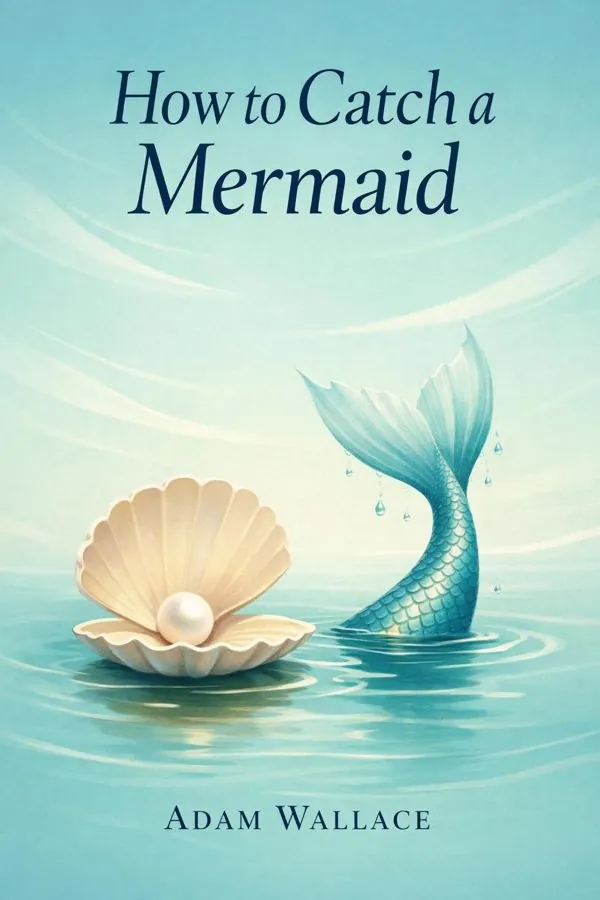
How to Catch a Mermaid: Summary & Key Insights
by Adam Wallace
 10 min8 chaptersAudio available
Key Takeaways from How to Catch a Mermaid
Every memorable adventure starts when someone dares to ask, "What if?
Imagination becomes most exciting when it takes shape.
One of the most reassuring truths for children is that failed attempts do not have to feel discouraging.
Dreams rarely respond to a single attempt.
Some stories teach children to escape reality; How to Catch a Mermaid teaches them to see reality as more enchanted.
What Is How to Catch a Mermaid About?
How to Catch a Mermaid by Adam Wallace is a bestsellers book. How to Catch a Mermaid by Adam Wallace is a playful, fast-paced picture book that turns a simple childhood wish into an imaginative adventure. The story follows a determined young girl who dreams of meeting a mermaid and sets out to catch one using a series of clever, colorful traps. What makes the book so appealing is that it is not really about capturing a magical creature at all. Instead, it celebrates curiosity, creativity, persistence, and the joy of chasing wonder. Each page invites children to think inventively, laugh at unexpected outcomes, and appreciate the excitement of trying again when plans do not work. The book matters because it transforms problem-solving into a game. It encourages young readers to imagine possibilities, test ideas, and enjoy the process rather than focus only on success. Adam Wallace is widely known for his bestselling "How to Catch" series, a collection loved by families, teachers, and librarians for its energetic rhymes, humor, and child-friendly lessons about resilience and imagination. In How to Catch a Mermaid, he combines lyrical storytelling with a sense of magical fun, creating a read-aloud experience that entertains while quietly nurturing creative confidence.
This FizzRead summary covers all 8 key chapters of How to Catch a Mermaid in approximately 10 minutes, distilling the most important ideas, arguments, and takeaways from Adam Wallace's work. Also available as an audio summary and Key Quotes Podcast.
How to Catch a Mermaid
How to Catch a Mermaid by Adam Wallace is a playful, fast-paced picture book that turns a simple childhood wish into an imaginative adventure. The story follows a determined young girl who dreams of meeting a mermaid and sets out to catch one using a series of clever, colorful traps. What makes the book so appealing is that it is not really about capturing a magical creature at all. Instead, it celebrates curiosity, creativity, persistence, and the joy of chasing wonder. Each page invites children to think inventively, laugh at unexpected outcomes, and appreciate the excitement of trying again when plans do not work.
The book matters because it transforms problem-solving into a game. It encourages young readers to imagine possibilities, test ideas, and enjoy the process rather than focus only on success. Adam Wallace is widely known for his bestselling "How to Catch" series, a collection loved by families, teachers, and librarians for its energetic rhymes, humor, and child-friendly lessons about resilience and imagination. In How to Catch a Mermaid, he combines lyrical storytelling with a sense of magical fun, creating a read-aloud experience that entertains while quietly nurturing creative confidence.
Who Should Read How to Catch a Mermaid?
This book is perfect for anyone interested in bestsellers and looking to gain actionable insights in a short read. Whether you're a student, professional, or lifelong learner, the key ideas from How to Catch a Mermaid by Adam Wallace will help you think differently.
- ✓Readers who enjoy bestsellers and want practical takeaways
- ✓Professionals looking to apply new ideas to their work and life
- ✓Anyone who wants the core insights of How to Catch a Mermaid in just 10 minutes
Want the full summary?
Get instant access to this book summary and 100K+ more with Fizz Moment.
Get Free SummaryAvailable on App Store • Free to download
Key Chapters
Every memorable adventure starts when someone dares to ask, "What if?" In How to Catch a Mermaid, the young narrator is not content to merely imagine mermaids from a distance. She wants to meet one, understand one, and somehow bring that dream into real experience. That simple desire transforms the story from a fantasy into a mission. The book shows children that curiosity is not passive. It is active, energizing, and often the beginning of discovery.
This idea matters because many children are naturally curious, but not all are encouraged to act on that curiosity. Wallace frames wonder as something worth pursuing. The child in the story does not dismiss her dream as silly or impossible. Instead, she treats it seriously enough to plan, experiment, and keep trying. In educational and family settings, this message is powerful. When a child asks how rainbows form, whether fish sleep, or what might live at the bottom of the sea, the most valuable response may be to explore the question together rather than shut it down.
The story also models emotional permission. The narrator allows herself to believe in something magical, which opens the door to imaginative thinking. In practical terms, this can inspire parents and teachers to create spaces where children are invited to ask unusual questions, invent creatures, design treasure hunts, or build homemade traps for imaginary beings. The goal is not realism but engagement.
By making wonder the first step of the plot, the book suggests that curiosity itself is an achievement. Children learn that big ideas often begin as playful questions.
Actionable takeaway: Encourage children to turn one curious question into a creative project, drawing, experiment, or story rather than leaving it as a passing thought.
Imagination becomes most exciting when it takes shape. In How to Catch a Mermaid, the child does not merely wish for a mermaid encounter; she invents traps, tools, and plans to make it happen. That shift from dreaming to designing is one of the book’s most valuable lessons. Creativity is presented not as abstract talent but as a practical way of approaching problems.
The traps in the story are whimsical and exaggerated, but that is precisely why they work so well for young readers. They show that solutions do not have to be perfect to be meaningful. Children often hesitate when they think there is a single right answer. Wallace counters that fear by presenting idea-making as fun, messy, and iterative. A glittery, over-the-top trap may not catch a mermaid, but it reveals thought, effort, and personality.
This concept applies far beyond the page. In real life, a child trying to build a pillow fort, organize a lemonade stand, or design a costume is using the same process: imagining an outcome, gathering materials, and testing what works. Adults can support this by focusing less on polished results and more on the originality of the attempt. Questions like "How did you think of that?" or "What could you add next?" reinforce creative confidence.
The book also suggests that play is a serious engine for learning. Through pretend designs and playful engineering, children practice planning, sequencing, and flexible thinking. Even when the target is fantastical, the underlying skill set is real.
Actionable takeaway: Invite children to solve an imaginary problem with household materials, then praise the inventiveness of their process rather than whether their creation succeeds.
One of the most reassuring truths for children is that failed attempts do not have to feel discouraging. In How to Catch a Mermaid, the repeated efforts to trap a magical creature do not lead to frustration alone; they become part of the fun. The missed catches, surprise outcomes, and ongoing chase turn failure into entertainment, which is a subtle but powerful emotional lesson.
Many children fear getting things wrong, especially in school or structured activities where correctness is emphasized. Wallace softens that fear by showing that unsuccessful plans can still be exciting, interesting, and worth celebrating. The narrator’s attempts matter even when they do not produce the desired result. This teaches resilience in a way that feels natural rather than preachy.
There is also a practical cognitive benefit here. Every failed trap contains information. Something did not work, which means the character must observe, rethink, and adjust. That is the heart of experimentation. Whether a child is learning to ride a bike, sound out words, or build with blocks, progress often comes through multiple imperfect tries. The story normalizes that process.
Adults can use this lesson by reframing mistakes at home and in classrooms. Instead of saying, "That didn’t work," they can ask, "What did we learn?" or "What should we try next?" This keeps momentum alive. The book’s humorous tone is especially important because laughter reduces the sting of disappointment and keeps children emotionally open to trying again.
The deeper message is that setbacks are not interruptions to adventure; they are part of adventure.
Actionable takeaway: After a child’s plan fails, help them name one funny part and one useful lesson so mistakes become both lighter and more constructive.
Dreams rarely respond to a single attempt. How to Catch a Mermaid makes this clear through the narrator’s steady determination. She keeps imagining, building, and pursuing even though success remains uncertain. That persistence gives the story its momentum and gives children an accessible model of perseverance.
What makes this lesson effective is that persistence is not presented as grim endurance. It feels lively, hopeful, and playful. The child is not stubborn in a joyless way; she is committed because the possibility of wonder feels worth the effort. For young readers, this distinction matters. Persistence can sound like a chore when framed only as working harder. Wallace instead shows that people keep going when they care deeply about what they are pursuing.
This has practical value for everyday development. A child learning to tie shoes, finish a puzzle, or improve at swimming may become discouraged after early difficulties. The book quietly teaches that repeated trying is normal, especially when the goal is exciting. Adults can build on this by connecting persistence to meaningful motivation: "You really wanted to build that tower," or "You care about drawing that dragon just the way you imagine it."
The story also suggests that persistence and imagination work together. The narrator does not repeat the exact same move blindly; she continues with energy and variation. That is a healthier version of perseverance than simply forcing effort without adaptation.
Ultimately, the book tells children that staying with a dream keeps possibility alive. Not every wish ends the way expected, but nothing magical happens if we quit too soon.
Actionable takeaway: When children face a challenge, help them choose one small next attempt rather than abandoning the goal, reminding them that persistence is built one try at a time.
Some stories teach children to escape reality; How to Catch a Mermaid teaches them to see reality as more enchanted. The ocean setting, shimmering visuals, and mermaid mythology invite readers to view nature as a place full of mystery. The sea is not just water in the background. It becomes a realm of possibility, beauty, and hidden life.
This matters because children form emotional relationships with the natural world through stories long before they understand science in formal terms. A book like this can make oceans feel alive and worth caring about. Even though mermaids are imaginary, the sense of wonder attached to reefs, waves, shells, and sea creatures can inspire real curiosity about marine environments. Fantasy becomes a gateway to observation.
Parents and educators can use this imaginative opening to deepen learning. After reading, children might explore books about dolphins, coral reefs, tide pools, or ocean conservation. They may draw underwater scenes, collect shells, or ask new questions about sea life. The magic of the story does not compete with factual learning; it can actually motivate it.
There is also an emotional dimension. The book reminds readers that beauty and surprise often exist just beyond ordinary attention. A beach walk, aquarium visit, or rainy-day water play activity can feel more meaningful when children are primed to imagine hidden stories within them.
By blending fantasy with natural imagery, Wallace encourages reverence without heaviness. The sea becomes a symbol of the unknown, inviting both delight and respect.
Actionable takeaway: Pair imaginative reading with a simple nature activity, such as learning one real fact about the ocean, to connect fantasy-driven wonder with real-world curiosity.
Children often think success means getting exactly what they wanted, but How to Catch a Mermaid offers a gentler and wiser idea: the pursuit itself can be the true reward. The title promises a capture, yet the emotional heart of the book lies in the excitement of searching, planning, and almost connecting with something magical. This subtle shift helps young readers rethink what achievement looks like.
The narrator’s journey is filled with anticipation. Each trap is a fresh attempt, each moment a chance for surprise. The value comes from engagement, not just the final result. This is an important lesson in a culture that often emphasizes winning, finishing first, or producing visible outcomes. Children benefit from seeing that joy, learning, and memorable experiences often happen before any clear success arrives.
In daily life, this perspective can transform how children approach goals. A child practicing piano may not master the song immediately, but the act of learning notes, experimenting with rhythm, and improving over time has its own worth. A family vacation may be remembered more for the funny misadventures than for the planned destination. The process creates meaning.
Adults can reinforce this by commenting on effort, excitement, and discovery rather than only results. Saying, "You had so many creative ideas," or "You really enjoyed figuring that out," teaches children to value the journey. The book’s playful tone makes that message feel liberating rather than instructional.
At its core, the story suggests that some wonders are not meant to be possessed. They are meant to be experienced.
Actionable takeaway: After any project or activity, ask children what they enjoyed most during the process, not just whether they achieved the original goal.
A great picture book is not only read; it is heard, felt, and performed. How to Catch a Mermaid uses rhyme and lively language to create momentum, making the reading experience interactive and musical. This is more than a stylistic choice. It is one of the reasons the book works so well for young audiences.
Rhythm helps children anticipate patterns, recognize sounds, and stay engaged from page to page. The rhyming structure supports language development by drawing attention to word endings, sound families, and verbal play. For emerging readers, this can build phonological awareness in a way that feels natural and enjoyable. For listeners, it creates suspense and delight.
The performative quality of the text also strengthens adult-child connection. A parent, teacher, or librarian can lean into the dramatic pacing, emphasize sound effects, and invite children to guess what might happen next. Repeated readings become more appealing because the language itself is pleasurable. This is one reason books in Wallace’s series are often popular in classrooms and bedtime routines.
Beyond literacy, rhyme can make emotional lessons easier to absorb. Messages about persistence, creativity, and wonder feel lighter when delivered through playful sound rather than direct instruction. The rhythm carries the meaning without making it feel heavy.
In practical use, adults can pause on rhyming pairs, ask children to predict missing words, or encourage them to create their own rhyming lines about sea creatures or magical adventures. The book becomes both entertainment and language play.
Actionable takeaway: During read-alouds, emphasize rhyme and invite children to predict the next sound or word, turning the story into an active literacy experience.
Fantasy stories often seem to be about impossible creatures, but they are frequently about real emotions. In How to Catch a Mermaid, the narrator’s quest reflects desire, hope, excitement, uncertainty, and determination. The mermaid may be magical, but the feelings driving the search are deeply familiar. This is one reason imaginative stories matter so much in childhood.
When children engage with fantasy, they get a safe space to explore inner experiences indirectly. Wanting to catch a mermaid can stand in for wanting friendship, recognition, adventure, or connection with something special. The distance created by make-believe allows children to process big feelings without needing to name them too directly. That can be especially valuable for younger readers who feel more than they can yet explain.
The story also validates individuality. The narrator takes her unusual goal seriously, and the book does too. That communicates an important message: your interests, ideas, and imaginative world are worth attention. Children who love mythical creatures, elaborate plans, or unusual questions may feel seen by that attitude.
Adults can extend this emotional benefit by asking reflective questions after reading. "Why do you think she wanted to meet a mermaid so much?" or "What magical creature would you want to find?" opens conversation about wishes, fears, and interests. Through fantasy, children often reveal what matters to them.
In this way, the book does more than entertain. It gives children language, images, and scenarios through which to understand their own hopes and persistence.
Actionable takeaway: Use the story as a conversation starter by asking children what they would try to catch and why, then listen for the feelings behind their answer.
All Chapters in How to Catch a Mermaid
About the Author
Adam Wallace is a bestselling author of children’s books best known for his wildly popular How to Catch series. His writing is loved for its playful rhymes, high-energy storytelling, and imaginative premises that invite children into worlds filled with humor, wonder, and adventure. Wallace has a talent for creating read-aloud books that entertain while also encouraging creativity, problem-solving, and persistence. His stories are widely used in homes, classrooms, and libraries because they appeal to young readers and the adults reading with them. Through books like How to Catch a Mermaid, he has built a reputation for turning big childhood fascinations into lively, memorable picture-book experiences that spark laughter and imagination.
Get This Summary in Your Preferred Format
Read or listen to the How to Catch a Mermaid summary by Adam Wallace anytime, anywhere. FizzRead offers multiple formats so you can learn on your terms — all free.
Available formats: App · Audio · PDF · EPUB — All included free with FizzRead
Download How to Catch a Mermaid PDF and EPUB Summary
Key Quotes from How to Catch a Mermaid
“Every memorable adventure starts when someone dares to ask, "What if?”
“Imagination becomes most exciting when it takes shape.”
“One of the most reassuring truths for children is that failed attempts do not have to feel discouraging.”
“Dreams rarely respond to a single attempt.”
“Some stories teach children to escape reality; How to Catch a Mermaid teaches them to see reality as more enchanted.”
Frequently Asked Questions about How to Catch a Mermaid
How to Catch a Mermaid by Adam Wallace is a bestsellers book that explores key ideas across 8 chapters. How to Catch a Mermaid by Adam Wallace is a playful, fast-paced picture book that turns a simple childhood wish into an imaginative adventure. The story follows a determined young girl who dreams of meeting a mermaid and sets out to catch one using a series of clever, colorful traps. What makes the book so appealing is that it is not really about capturing a magical creature at all. Instead, it celebrates curiosity, creativity, persistence, and the joy of chasing wonder. Each page invites children to think inventively, laugh at unexpected outcomes, and appreciate the excitement of trying again when plans do not work. The book matters because it transforms problem-solving into a game. It encourages young readers to imagine possibilities, test ideas, and enjoy the process rather than focus only on success. Adam Wallace is widely known for his bestselling "How to Catch" series, a collection loved by families, teachers, and librarians for its energetic rhymes, humor, and child-friendly lessons about resilience and imagination. In How to Catch a Mermaid, he combines lyrical storytelling with a sense of magical fun, creating a read-aloud experience that entertains while quietly nurturing creative confidence.
More by Adam Wallace



You Might Also Like

The Godfather
Mario Puzo
10 min
The Handmaid's Tale
Margaret Atwood
10 min
The Hunger Games
Suzanne Collins
10 min
The Nightingale
Kristin Hannah
10 min
The Seven Husbands of Evelyn Hugo
Taylor Jenkins Reid
10 min
Backwater Justice
Fern Michaels
10 minBrowse by Category
Ready to read How to Catch a Mermaid?
Get the full summary and 100K+ more books with Fizz Moment.