

How to Be an Antiracist: Summary & Key Insights
 10 min9 chaptersAudio available
Key Takeaways from How to Be an Antiracist
The most dangerous words in any moral debate are often the ones we think we already understand.
We often assume racist ideas come first and discriminatory policies follow.
Few ideas have done more damage than the belief that racial groups are biologically different in ways that determine intelligence, morality, athleticism, beauty, or human worth.
When biological racism becomes socially unacceptable, it often returns in a new costume: culture.
One of the most common shortcuts in racist thinking is the leap from an individual action to a group judgment.
What Is How to Be an Antiracist About?
How to Be an Antiracist by Ibram X. Kendi is a sociology book spanning 10 pages. In How to Be an Antiracist, Ibram X. Kendi challenges one of the most comforting myths in modern public life: that it is enough to simply avoid being racist. He argues that neutrality does not exist. In every sphere of society, from schools and housing to healthcare, politics, and everyday relationships, our ideas and actions either support racial equity or reinforce racial hierarchy. That is what makes this book so urgent. Rather than treating racism as a matter of individual bad people with hateful intentions, Kendi reframes it as a system of policies and ideas that produce unequal outcomes between racial groups. Drawing on history, philosophy, social analysis, and deeply personal stories from his own life, he invites readers into an honest examination of how racist and antiracist ideas shape all of us. Kendi writes with unusual authority: he is a celebrated historian of racism, a National Book Award-winning author, and a leading scholar of antiracist thought. The result is a powerful, challenging guide for anyone who wants to move beyond guilt, denial, or passivity and toward deliberate, transformative action.
This FizzRead summary covers all 9 key chapters of How to Be an Antiracist in approximately 10 minutes, distilling the most important ideas, arguments, and takeaways from Ibram X. Kendi's work. Also available as an audio summary and Key Quotes Podcast.
How to Be an Antiracist
In How to Be an Antiracist, Ibram X. Kendi challenges one of the most comforting myths in modern public life: that it is enough to simply avoid being racist. He argues that neutrality does not exist. In every sphere of society, from schools and housing to healthcare, politics, and everyday relationships, our ideas and actions either support racial equity or reinforce racial hierarchy. That is what makes this book so urgent. Rather than treating racism as a matter of individual bad people with hateful intentions, Kendi reframes it as a system of policies and ideas that produce unequal outcomes between racial groups. Drawing on history, philosophy, social analysis, and deeply personal stories from his own life, he invites readers into an honest examination of how racist and antiracist ideas shape all of us. Kendi writes with unusual authority: he is a celebrated historian of racism, a National Book Award-winning author, and a leading scholar of antiracist thought. The result is a powerful, challenging guide for anyone who wants to move beyond guilt, denial, or passivity and toward deliberate, transformative action.
Who Should Read How to Be an Antiracist?
This book is perfect for anyone interested in sociology and looking to gain actionable insights in a short read. Whether you're a student, professional, or lifelong learner, the key ideas from How to Be an Antiracist by Ibram X. Kendi will help you think differently.
- ✓Readers who enjoy sociology and want practical takeaways
- ✓Professionals looking to apply new ideas to their work and life
- ✓Anyone who wants the core insights of How to Be an Antiracist in just 10 minutes
Want the full summary?
Get instant access to this book summary and 100K+ more with Fizz Moment.
Get Free SummaryAvailable on App Store • Free to download
Key Chapters
The most dangerous words in any moral debate are often the ones we think we already understand. Kendi begins by insisting that the journey toward antiracism requires precise definitions, because vague language protects harmful ideas. In everyday conversation, people often use the word “racist” as a permanent identity, as if it describes an evil type of person rather than a description of ideas, behaviors, or policies. This framing leads people to defend themselves instead of examining what they support. Kendi offers a sharper distinction: a racist idea is any idea that suggests one racial group is superior or inferior to another in any way, while an antiracist idea is one that affirms the equality of racial groups and seeks to explain disparities through policy and power rather than biological or cultural deficiency.
This distinction matters because it changes the focus from self-image to accountability. A person can hold both racist and antiracist ideas at different times. Institutions can do the same. A school district that celebrates diversity but maintains funding practices that disadvantage Black or Latino students may speak antiracist language while upholding racist effects. Likewise, a manager who believes in fairness but dismisses evidence of bias in hiring may still be participating in racist practice.
Kendi’s definition also removes the comfort of the middle ground. There is no safe category called “not racist.” If ideas and policies create inequality, then refusing to challenge them helps preserve them. In practical terms, this means asking better questions in everyday life: Does this belief blame a racial group for an outcome, or does it examine structural causes? Does this policy produce equity, or disparity?
Actionable takeaway: stop asking whether a person or institution is “a racist” and start asking whether a specific idea, action, or policy is racist or antiracist right now.
We often assume racist ideas come first and discriminatory policies follow. Kendi turns that story upside down. He argues that racist policies are frequently created to protect political or economic interests, and racist ideas are then produced afterward to justify those policies. In other words, power is not just influenced by prejudice; power manufactures prejudice when it needs a moral excuse.
This is a crucial shift. If racism were mainly about ignorance, then education alone would solve it. But history shows that deeply educated societies have repeatedly designed racial hierarchies when doing so served wealth, labor control, territorial expansion, or political advantage. Enslavement was not born because people first discovered “evidence” of Black inferiority. Rather, systems of exploitation were built, and ideologies of inferiority were developed to defend them. The same pattern appears in redlining, voter suppression, employment discrimination, and inequitable criminal justice practices.
This framework helps explain why racism survives even when many individuals claim good intentions. A company may not openly endorse prejudice, yet still rely on referral-based hiring that reproduces racial exclusion because it benefits existing insiders. A city may describe itself as race-neutral while zoning laws and transportation decisions isolate communities by race and class. In both cases, the issue is not simply flawed beliefs floating in the air; it is the protection of advantage.
Kendi’s argument pushes readers toward political analysis. To fight racism effectively, we must ask who benefits from a policy, who is burdened by it, and what narratives are being used to make those burdens seem natural or deserved. Reform requires more than changing hearts; it requires changing incentives, institutions, and law.
Actionable takeaway: whenever you encounter a racial disparity, investigate the policies and power structures behind it before accepting explanations rooted in supposed group deficiencies.
Few ideas have done more damage than the belief that racial groups are biologically different in ways that determine intelligence, morality, athleticism, beauty, or human worth. Kendi confronts biological racism directly, showing how claims of innate racial difference have been repeatedly dressed up as science even when they were little more than ideology wearing a lab coat. These myths have justified slavery, segregation, immigration restriction, forced sterilization, and unequal treatment in medicine, education, and law.
Kendi emphasizes that race is not a biological truth but a social and political category. Human genetic variation exists, but the racial meanings attached to bodies are constructed by societies, not revealed by nature. The problem is not merely historical. Biological thinking still appears today in more subtle forms: assumptions that one group is “naturally” better at math, more prone to violence, better suited for leadership, or physically tougher and therefore able to endure more pain. Such beliefs can influence everything from classroom expectations to medical treatment decisions.
Practical applications of this insight matter. In healthcare, clinicians must challenge racialized shortcuts that can lead to undertreatment or misdiagnosis. In education, teachers should question assumptions about innate ability and instead examine access, support, and bias. In workplaces, leaders should reject any stereotype that links race to temperament, communication style, or competence. Even apparently positive stereotypes are harmful, because they flatten individuals and turn people into racial scripts.
Kendi’s deeper point is moral as well as intellectual: when we explain inequality through biology, we stop looking at policy. Biological myths make injustice seem inevitable. Antiracism restores responsibility by insisting that unequal outcomes arise from human decisions, not natural hierarchy.
Actionable takeaway: challenge any explanation of racial difference that treats inequality as natural, inherited, or inevitable, and redirect the conversation toward conditions, access, and policy.
When biological racism becomes socially unacceptable, it often returns in a new costume: culture. Kendi shows how arguments about “values,” “family structure,” “work ethic,” or “attitude” are frequently used to explain why some racial groups experience worse outcomes than others. These claims sound more sophisticated than old pseudoscientific theories, but they often perform the same function: they shift blame from systems onto the people harmed by them.
Cultural racism suggests that disparities exist because a group’s habits or norms are deficient. Yet this explanation is often selective and circular. If a neighborhood lacks investment, jobs, quality schools, healthcare access, and stable housing, and then observers point to crime or educational struggle as evidence of cultural failure, they are confusing the effects of policy with the essence of a people. Kendi urges readers to be suspicious whenever cultural explanations appear without serious attention to history, power, and institutional design.
This does not mean culture is irrelevant. Communities do have traditions, beliefs, and social patterns that matter. But antiracism resists turning those patterns into moral judgments or fixed racial traits. For example, if an employer says a candidate is “not a cultural fit,” that phrase can quietly reproduce racial exclusion. If a politician blames poverty on “broken culture” while ignoring labor market inequality or school segregation, culture becomes an alibi for inaction.
A practical antiracist approach asks different questions. What public policies shaped the conditions under discussion? What barriers limit opportunity? What resources have been denied? In classrooms, workplaces, and media, we can replace deficit narratives with structural analysis and human complexity.
Actionable takeaway: when you hear racial disparities explained by culture alone, ask what policies, historical forces, and institutional barriers are being ignored in that explanation.
One of the most common shortcuts in racist thinking is the leap from an individual action to a group judgment. Kendi examines how societies routinely take the behavior of some members of a racial group and treat it as evidence about the character of the whole group. This move is intellectually lazy, morally unfair, and politically dangerous. It turns anecdote into essence and stereotype into policy.
The pattern appears everywhere. A crime committed by an individual becomes proof that a racial group is dangerous. A high achiever becomes proof that another stereotype is true. Media coverage intensifies the effect by repeatedly associating some groups with disorder, poverty, or dysfunction while treating the mistakes of dominant groups as isolated incidents. Once a behavior is racialized, people begin interpreting neutral events through that lens. Suspicion rises. Empathy shrinks. Punitive policies become easier to defend.
Kendi’s critique is especially useful because it applies even to apparently positive generalizations. Saying that a racial group is naturally resilient, spiritual, disciplined, or entrepreneurial still assigns a behavioral script to millions of individuals. Such scripts can create pressure, erase diversity within groups, and obscure the role of institutions. Antiracism insists that behavior belongs to individuals and contexts, not races.
This idea has practical value in schools, offices, policing, and personal relationships. Teachers should not treat one student’s conduct as representative of a race. Hiring managers should not read communication style through a stereotype. Citizens should reject crime narratives that rely on racial coding rather than actual evidence. The more carefully we separate people from stereotypes, the harder it becomes for biased policies to hide behind “common sense.”
Actionable takeaway: whenever you catch yourself connecting an individual’s behavior to a racial group, pause and replace the stereotype with evidence, context, and individual judgment.
Many people believe the most moral response to race is to stop seeing it altogether. Kendi argues that this “colorblind” ideal, though often well intentioned, can function as a barrier to justice. If racism operates through policies and institutions that create unequal outcomes, then refusing to notice race makes it harder to notice inequality. You cannot correct a racial disparity you insist on not seeing.
Colorblind language often sounds noble: treat everyone the same, focus on common humanity, move beyond race. But sameness of treatment in an unequal system can simply preserve inequality. If two communities begin from radically different conditions because of generations of housing discrimination, school underfunding, or environmental harm, a formally equal policy may still reproduce unequal results. Antiracism therefore demands race-conscious honesty rather than race-avoidant comfort.
This insight applies across public life. In education, a district that allocates resources equally per student may still fail to address greater needs in schools historically denied funding. In workplaces, a company that claims to hire “the best person” without tracking racial patterns may overlook how its recruiting channels favor some applicants over others. In medicine, ignoring race-related disparities in maternal mortality or chronic disease can cost lives.
Kendi is not arguing for obsession with racial categories for their own sake. He is arguing that race must be recognized as a social force if inequity is to be dismantled. The goal is not blindness but justice. Once disparities disappear, race-conscious remedies may become less necessary. Until then, pretending not to see race often means refusing to see racism.
Actionable takeaway: replace colorblind intentions with equity-focused questions by asking where racial disparities exist and what targeted action is needed to reduce them.
Kendi explores whiteness and Blackness not as timeless natural categories but as identities shaped by history, law, politics, and struggle. This matters because racial categories often appear fixed when they are actually produced and maintained by institutions. Whiteness has historically functioned as a category of power and protection, expanding or contracting depending on political needs. Blackness, by contrast, has often been defined through exclusion, surveillance, and stereotype, while also becoming a source of resistance, creativity, and solidarity.
Understanding these categories politically helps readers avoid two traps. The first is romanticizing racial identity as if it exists outside history. The second is reducing identity to insult or pride without asking how material structures shape experience. Kendi shows that whiteness is not merely a demographic label; it has often been tied to access, legitimacy, and presumed innocence. Blackness has often been burdened with presumed deficiency, danger, or disposability. These assumptions influence education, policing, media representation, and standards of professionalism.
At the same time, Kendi resists simplistic moral essentialism. Antiracism is not anti-white, nor does it require treating Black identity as uniform or beyond critique. Instead, it asks readers to examine how identities are manipulated to justify unequal treatment. In workplaces, this may mean questioning norms that define white styles of speech, dress, or leadership as neutral and everyone else as deviant. In cultural life, it means recognizing how Black expression is often appropriated, celebrated, or condemned depending on who holds power.
Seeing racial identity as political rather than natural allows for clearer action. It shifts attention from guilt or pride alone to the systems that assign value differently.
Actionable takeaway: examine how institutions treat whiteness as the default and Blackness as deviation, then work to change the standards, narratives, and policies that produce that imbalance.
No one experiences race in isolation. Kendi emphasizes that racism is lived through other dimensions of identity, especially gender and sexuality. A Black woman does not experience racism in the same way as a Black man, and neither experiences it in the same way as a queer Black person or a Black trans person. Antiracism becomes shallow when it speaks about race in a way that ignores these overlapping realities.
This intersectional perspective reveals how oppression compounds and mutates. Stereotypes about Black masculinity often frame men as threatening or criminal, affecting policing, schooling, and employment. Stereotypes about Black women can cast them as overly strong, angry, or sexually available, influencing healthcare, workplace treatment, and public sympathy. Queer and trans people of color face racial discrimination within LGBTQ+ spaces and anti-LGBTQ+ bias within racial communities, while also confronting broader systems that make housing, safety, and healthcare more precarious.
Kendi’s contribution here is to show that antiracism must resist all hierarchies that rank people by identity. If a movement fights racism but reproduces sexism, homophobia, or transphobia, it leaves the logic of domination intact. In practice, organizations committed to racial justice should examine leadership representation, pay equity, family leave, harassment policies, and inclusion for LGBTQ+ members. Educators should teach history that includes women, queer people, and others whose racial experiences are often erased. Individuals should notice whose voices are treated as central and whose are treated as optional.
Antiracism is strongest when it becomes a practice of broad human equality rather than a narrow defense of one group’s image.
Actionable takeaway: when addressing racial justice, ask whose experiences are missing and ensure gender, sexuality, and other intersecting realities are included in both analysis and action.
Kendi’s central message is ultimately practical: antiracism is not a label to claim but a commitment to enact. Good intentions, personal guilt, or symbolic gestures are insufficient if they do not lead to changes in policy and behavior. The test of antiracism is outcomes. Are disparities being reduced? Are institutions becoming more equitable? Are ideas that justify hierarchy being challenged consistently, including when doing so is uncomfortable?
This policy focus distinguishes the book from purely moral appeals. Kendi wants readers to understand that individual kindness does not neutralize unjust systems. A compassionate teacher still works within school funding structures. A fair-minded doctor still operates in a healthcare system marked by unequal access. A company that posts solidarity messages still makes decisions about wages, promotion, parental leave, and hiring pipelines. Transformation requires attention to these concrete levers.
At the personal level, Kendi also emphasizes humility. People do not arrive at permanent purity. They move between racist and antiracist ideas, often confronting contradictions within themselves. That is why antiracism requires ongoing self-examination rather than one-time declaration. It asks us to revise our thinking, listen when challenged, and accept discomfort as part of growth. This is especially important because defensiveness can quickly become a way of protecting the status quo.
For readers, the applications are clear. Support policies that reduce inequity in housing, voting, education, healthcare, and criminal justice. Audit your workplace or community for racial disparities. Learn to identify coded language that blames groups rather than systems. Use your influence, however limited, to advocate measurable change.
Actionable takeaway: define one racial disparity in a system you can influence, identify the policy behind it, and commit to one concrete action that moves that policy toward equity.
All Chapters in How to Be an Antiracist
About the Author
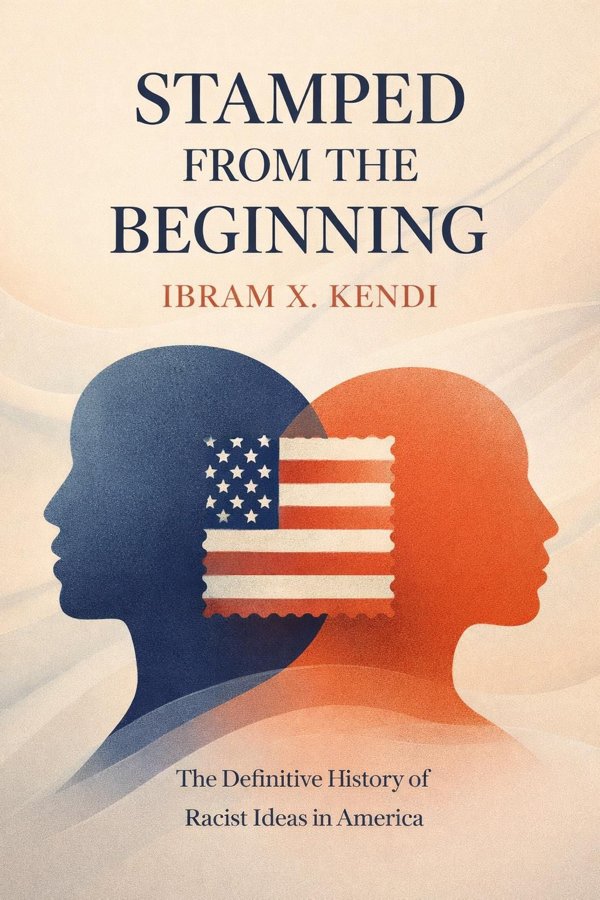
Ibram X. Kendi is an American historian, author, and public intellectual whose work focuses on racism, policy, and social transformation. He is one of the most prominent contemporary voices on antiracism and the author of several influential books, including the National Book Award-winning Stamped from the Beginning and the bestselling How to Be an Antiracist. Kendi has held major academic appointments and is the founding director of the Boston University Center for Antiracist Research. Known for combining rigorous historical scholarship with accessible public argument, he has helped shape national conversations about race, education, healthcare, and public policy. His writing challenges readers to move beyond passive opposition to prejudice and toward active support for equity. Through books, teaching, and research, Kendi has become a central figure in modern discussions of justice and institutional change.
Get This Summary in Your Preferred Format
Read or listen to the How to Be an Antiracist summary by Ibram X. Kendi anytime, anywhere. FizzRead offers multiple formats so you can learn on your terms — all free.
Available formats: App · Audio · PDF · EPUB — All included free with FizzRead
Download How to Be an Antiracist PDF and EPUB Summary
Key Quotes from How to Be an Antiracist
“The most dangerous words in any moral debate are often the ones we think we already understand.”
“We often assume racist ideas come first and discriminatory policies follow.”
“Few ideas have done more damage than the belief that racial groups are biologically different in ways that determine intelligence, morality, athleticism, beauty, or human worth.”
“When biological racism becomes socially unacceptable, it often returns in a new costume: culture.”
“One of the most common shortcuts in racist thinking is the leap from an individual action to a group judgment.”
Frequently Asked Questions about How to Be an Antiracist
How to Be an Antiracist by Ibram X. Kendi is a sociology book that explores key ideas across 9 chapters. In How to Be an Antiracist, Ibram X. Kendi challenges one of the most comforting myths in modern public life: that it is enough to simply avoid being racist. He argues that neutrality does not exist. In every sphere of society, from schools and housing to healthcare, politics, and everyday relationships, our ideas and actions either support racial equity or reinforce racial hierarchy. That is what makes this book so urgent. Rather than treating racism as a matter of individual bad people with hateful intentions, Kendi reframes it as a system of policies and ideas that produce unequal outcomes between racial groups. Drawing on history, philosophy, social analysis, and deeply personal stories from his own life, he invites readers into an honest examination of how racist and antiracist ideas shape all of us. Kendi writes with unusual authority: he is a celebrated historian of racism, a National Book Award-winning author, and a leading scholar of antiracist thought. The result is a powerful, challenging guide for anyone who wants to move beyond guilt, denial, or passivity and toward deliberate, transformative action.
More by Ibram X. Kendi


You Might Also Like

Between the World and Me
Ta-Nehisi Coates
10 min
Half the Sky
Nicholas D. Kristof, Sheryl WuDunn
10 min
Men Explain Things To Me
Rebecca Solnit
10 min
Rational Ritual
Michael Suk-Young Chwe
10 min
The New Jim Crow
Michelle Alexander
10 min
Beyond Culture
Edward T. Hall
10 minBrowse by Category
Ready to read How to Be an Antiracist?
Get the full summary and 100K+ more books with Fizz Moment.