
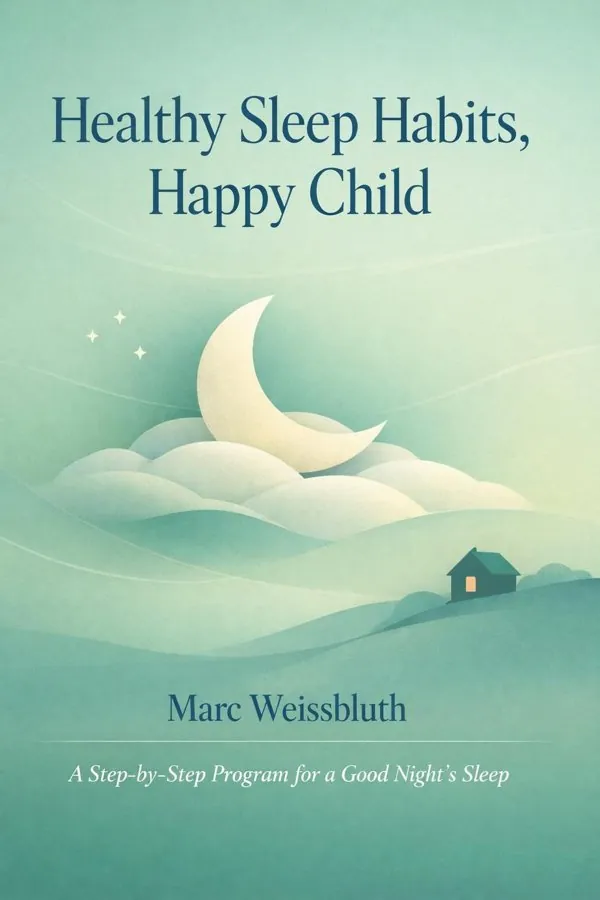
Healthy Sleep Habits, Happy Child: A Step-by-Step Program for a Good Night's Sleep: Summary & Key Insights
 10 min4 chaptersAudio available
What Is Healthy Sleep Habits, Happy Child: A Step-by-Step Program for a Good Night's Sleep About?
Healthy Sleep Habits, Happy Child: A Step-by-Step Program for a Good Night's Sleep by Marc Weissbluth is a parenting book spanning 4 pages. This comprehensive guide by pediatrician Marc Weissbluth provides parents with scientifically grounded strategies to help children develop healthy sleep patterns from infancy through adolescence. It explains the biological rhythms of sleep, the importance of consistent routines, and practical methods to address common sleep problems such as night waking, bedtime resistance, and irregular naps.
This FizzRead summary covers all 4 key chapters of Healthy Sleep Habits, Happy Child: A Step-by-Step Program for a Good Night's Sleep in approximately 10 minutes, distilling the most important ideas, arguments, and takeaways from Marc Weissbluth's work. Also available as an audio summary and Key Quotes Podcast.
Healthy Sleep Habits, Happy Child: A Step-by-Step Program for a Good Night's Sleep
This comprehensive guide by pediatrician Marc Weissbluth provides parents with scientifically grounded strategies to help children develop healthy sleep patterns from infancy through adolescence. It explains the biological rhythms of sleep, the importance of consistent routines, and practical methods to address common sleep problems such as night waking, bedtime resistance, and irregular naps.
Who Should Read Healthy Sleep Habits, Happy Child: A Step-by-Step Program for a Good Night's Sleep?
This book is perfect for anyone interested in parenting and looking to gain actionable insights in a short read. Whether you're a student, professional, or lifelong learner, the key ideas from Healthy Sleep Habits, Happy Child: A Step-by-Step Program for a Good Night's Sleep by Marc Weissbluth will help you think differently.
- ✓Readers who enjoy parenting and want practical takeaways
- ✓Professionals looking to apply new ideas to their work and life
- ✓Anyone who wants the core insights of Healthy Sleep Habits, Happy Child: A Step-by-Step Program for a Good Night's Sleep in just 10 minutes
Want the full summary?
Get instant access to this book summary and 100K+ more with Fizz Moment.
Get Free SummaryAvailable on App Store • Free to download
Key Chapters
At the core of everything we discuss in this book lies an essential biological truth: sleep is governed by rhythms that are both innate and adaptive. Every human being, from infancy onward, has an internal clock regulated by the hypothalamus — a mechanism that organizes cycles of alertness and rest in harmony with environmental cues such as light and darkness. I call these cycles ‘biological sleep rhythms.’ Understanding them is the foundation of healthy sleep.
In the first few months of life, infants have immature sleep-wake rhythms; their sleep is distributed throughout the 24-hour day in short fragments. Gradually, these naps consolidate as the brain matures. Around two to three months of age, day-night differentiation begins to appear — an early indication of the circadian rhythm taking hold. By six months, most infants exhibit more consistent nighttime sleep, usually 11 to 12 hours, with defined nap periods during the day.
Parents often ask, ‘Why can’t my baby just sleep longer at night?’ The answer is that biology always leads. We can’t force maturity before the body is ready, but we can support it by protecting opportunities for sleep at the right times. Keeping infants awake too long or missing their natural drowsy windows leads not to better nighttime sleep, but to overstimulation and fragmented rest.
As children grow, these rhythms shift again. Toddlers need one to two naps; school-aged children no longer nap, but they require early, consistent bedtimes because their circadian periods still favor earlier sleep onset. Teenagers experience yet another shift: their biological clocks drift later, making them naturally inclined to stay up and sleep in. Recognizing these transitions allows parents to adjust expectations and routines without unnecessary conflict.
The science of circadian timing teaches us this: successful sleep parenting is not about dominance but about alignment. Respect the rhythm, follow the cues, and you will find that good sleep emerges naturally.
+ 2 more chapters — available in the FizzRead app
All Chapters in Healthy Sleep Habits, Happy Child: A Step-by-Step Program for a Good Night's Sleep
About the Author
Marc Weissbluth, M.D., is a pediatrician and sleep researcher who has studied children's sleep patterns for decades. He is a professor of clinical pediatrics at Northwestern University School of Medicine and a leading authority on pediatric sleep health.
Get This Summary in Your Preferred Format
Read or listen to the Healthy Sleep Habits, Happy Child: A Step-by-Step Program for a Good Night's Sleep summary by Marc Weissbluth anytime, anywhere. FizzRead offers multiple formats so you can learn on your terms — all free.
Available formats: App · Audio · PDF · EPUB — All included free with FizzRead
Download Healthy Sleep Habits, Happy Child: A Step-by-Step Program for a Good Night's Sleep PDF and EPUB Summary
Key Quotes from Healthy Sleep Habits, Happy Child: A Step-by-Step Program for a Good Night's Sleep
“At the core of everything we discuss in this book lies an essential biological truth: sleep is governed by rhythms that are both innate and adaptive.”
“One of the most misunderstood aspects of children’s sleep is the cumulative effect of sleep loss, or what I call sleep debt.”
Frequently Asked Questions about Healthy Sleep Habits, Happy Child: A Step-by-Step Program for a Good Night's Sleep
Healthy Sleep Habits, Happy Child: A Step-by-Step Program for a Good Night's Sleep by Marc Weissbluth is a parenting book that explores key ideas across 4 chapters. This comprehensive guide by pediatrician Marc Weissbluth provides parents with scientifically grounded strategies to help children develop healthy sleep patterns from infancy through adolescence. It explains the biological rhythms of sleep, the importance of consistent routines, and practical methods to address common sleep problems such as night waking, bedtime resistance, and irregular naps.
You Might Also Like
Never Enough
Jennifer Breheny Wallace
10 min
Bluey: Sleepytime
Joe Brumm
10 min
In My Heart: A Book of Feelings
Jo Witek
10 min
Love From The Crayons
Drew Daywalt, Oliver Jeffers
10 min
Pete The Cat: Big Easter Adventure
James Dean, Kimberly Dean
10 min
Smart Money Smart Kids: Raising the Next Generation to Win with Money
Dave Ramsey, Rachel Cruze
10 minFeatured In
Browse by Category
Ready to read Healthy Sleep Habits, Happy Child: A Step-by-Step Program for a Good Night's Sleep?
Get the full summary and 100K+ more books with Fizz Moment.