
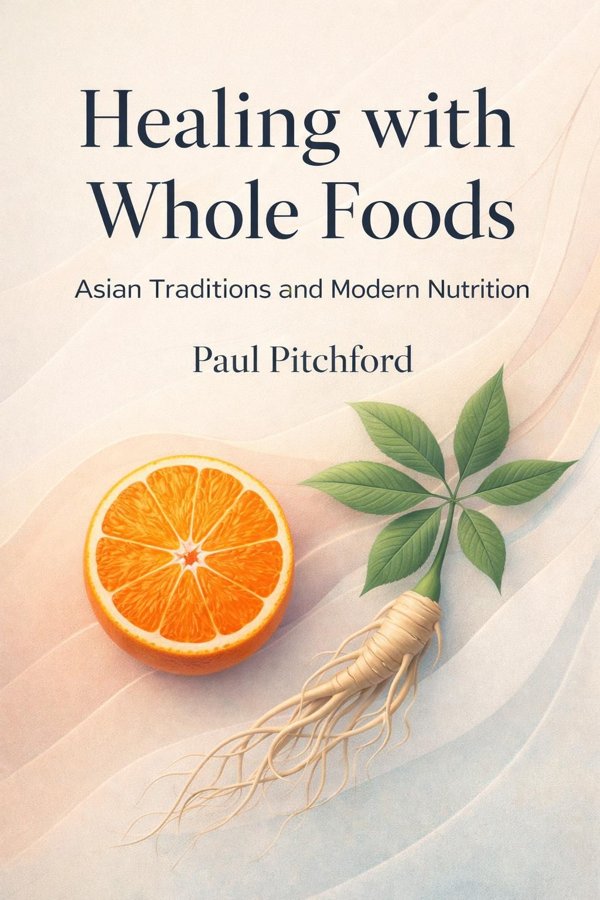
Healing with Whole Foods: Asian Traditions and Modern Nutrition: Summary & Key Insights
 10 min12 chaptersAudio available
What Is Healing with Whole Foods: Asian Traditions and Modern Nutrition About?
Healing with Whole Foods: Asian Traditions and Modern Nutrition by Paul Pitchford is a nutrition book spanning 12 pages. Healing with Whole Foods: Asian Traditions and Modern Nutrition es una obra fundamental en el campo de la nutrición holística. Combina principios de la medicina tradicional china con conocimientos modernos sobre nutrición y dietética. El libro ofrece una guía integral sobre cómo los alimentos pueden utilizarse para equilibrar el cuerpo, prevenir enfermedades y promover la salud integral. Incluye información detallada sobre alimentos naturales, terapias dietéticas y la relación entre la mente, el cuerpo y la alimentación.
This FizzRead summary covers all 12 key chapters of Healing with Whole Foods: Asian Traditions and Modern Nutrition in approximately 10 minutes, distilling the most important ideas, arguments, and takeaways from Paul Pitchford's work. Also available as an audio summary and Key Quotes Podcast.
Healing with Whole Foods: Asian Traditions and Modern Nutrition
Healing with Whole Foods: Asian Traditions and Modern Nutrition es una obra fundamental en el campo de la nutrición holística. Combina principios de la medicina tradicional china con conocimientos modernos sobre nutrición y dietética. El libro ofrece una guía integral sobre cómo los alimentos pueden utilizarse para equilibrar el cuerpo, prevenir enfermedades y promover la salud integral. Incluye información detallada sobre alimentos naturales, terapias dietéticas y la relación entre la mente, el cuerpo y la alimentación.
Who Should Read Healing with Whole Foods: Asian Traditions and Modern Nutrition?
This book is perfect for anyone interested in nutrition and looking to gain actionable insights in a short read. Whether you're a student, professional, or lifelong learner, the key ideas from Healing with Whole Foods: Asian Traditions and Modern Nutrition by Paul Pitchford will help you think differently.
- ✓Readers who enjoy nutrition and want practical takeaways
- ✓Professionals looking to apply new ideas to their work and life
- ✓Anyone who wants the core insights of Healing with Whole Foods: Asian Traditions and Modern Nutrition in just 10 minutes
Want the full summary?
Get instant access to this book summary and 100K+ more with Fizz Moment.
Get Free SummaryAvailable on App Store • Free to download
Key Chapters
When I first encountered Western nutrition, I admired its clarity and scientific rigor—the systematic classification of nutrients, the quantification of needs. But I also saw how reductionist this approach can be; the human body is not a machine simply fueled by protein, fat, and carbohydrate. In Eastern traditions, especially Traditional Chinese Medicine (TCM), we view the body as a living landscape, influenced by time, emotion, and environment.
Bringing these two systems together required dialogue. Western science excels at describing what is in food; Eastern wisdom explains what food does energetically. For instance, a bowl of brown rice contains complex carbohydrates and B vitamins—that’s its biochemical nature. Yet in Chinese medicine, brown rice is neutral and sweet, supporting spleen qi and grounding energy. One lens reveals its nutrients, the other its character. Integration happens when we recognize that both truths coexist: chemistry and energy are two expressions of the same reality.
My purpose is to help readers navigate these multidimensional insights without confusion. When you understand that food influences not only your lab results but also your vitality, digestion, and mood, you begin to make choices intuitively yet intelligently. Take ginger, for example—Western nutrition praises its anti-inflammatory compounds; TCM honors its warming, yang nature that dispels cold and promotes circulation. Combined, these perspectives offer a full picture of its healing power.
The integration of East and West is not compromise—it’s union. It honors the quantitative precision of the modern approach and the qualitative sensitivity of traditional practice. Through this synthesis, you learn to perceive your body as both organism and energy field. And once that perception deepens, food becomes language: what you eat is how you speak to life.
At the foundation of this book lies the philosophy of yin and yang, the dynamic polarity shaping all living things. Yin represents coolness, quiet, nourishment, rest; yang represents warmth, activity, transformation, movement. Health is the dance between these forces. Every imbalance—whether sluggishness or hyperactivity—reflects an excess or deficiency in one of these qualities. Food, as the most immediate daily influence, serves as the mediator between them.
The five elements—wood, fire, earth, metal, and water—provide another layer of understanding. Each element governs an organ network and carries specific energetic emotions and flavors. Wood links to the liver and the sour flavor; fire connects to the heart and the bitter taste; earth corresponds to the spleen and sweetness; metal governs the lungs with pungency; and water rules the kidneys with saltiness. By recognizing these correlations, you can fine-tune diet to harmonize internal conditions.
Food energetics describe how each food affects the body—not just nutritionally but vibrationally. Warming foods like garlic, onions, and lamb increase yang energy; cooling foods like cucumber and watermelon nourish yin. In times of stress or excessive heat, cooling foods calm inflammation; in cold and fatigue, warming foods rekindle life force. This interplay illustrates that healing begins when we understand what our bodies ask for seasonally and emotionally.
In my teaching, I often encourage students to listen beyond appetite. The craving for sweet, for instance, may reflect weakened spleen qi—a call for grounding and comfort. Rather than refined sugar, naturally sweet foods like whole grains or carrots offer healing sweetness. Thus, food energetics trains intuition, restores a sense of alignment with nature’s cycles, and makes every meal a mindful act of balancing yin and yang.
+ 10 more chapters — available in the FizzRead app
All Chapters in Healing with Whole Foods: Asian Traditions and Modern Nutrition
About the Author
Paul Pitchford es un educador y autor estadounidense especializado en nutrición holística y medicina tradicional china. Estudió en el Instituto de Medicina Tradicional China y ha dedicado su carrera a integrar la sabiduría oriental con la ciencia nutricional moderna. Su obra más conocida, Healing with Whole Foods, ha sido ampliamente utilizada como texto de referencia en programas de nutrición y salud natural.
Get This Summary in Your Preferred Format
Read or listen to the Healing with Whole Foods: Asian Traditions and Modern Nutrition summary by Paul Pitchford anytime, anywhere. FizzRead offers multiple formats so you can learn on your terms — all free.
Available formats: App · Audio · PDF · EPUB — All included free with FizzRead
Download Healing with Whole Foods: Asian Traditions and Modern Nutrition PDF and EPUB Summary
Key Quotes from Healing with Whole Foods: Asian Traditions and Modern Nutrition
“When I first encountered Western nutrition, I admired its clarity and scientific rigor—the systematic classification of nutrients, the quantification of needs.”
“At the foundation of this book lies the philosophy of yin and yang, the dynamic polarity shaping all living things.”
Frequently Asked Questions about Healing with Whole Foods: Asian Traditions and Modern Nutrition
Healing with Whole Foods: Asian Traditions and Modern Nutrition by Paul Pitchford is a nutrition book that explores key ideas across 12 chapters. Healing with Whole Foods: Asian Traditions and Modern Nutrition es una obra fundamental en el campo de la nutrición holística. Combina principios de la medicina tradicional china con conocimientos modernos sobre nutrición y dietética. El libro ofrece una guía integral sobre cómo los alimentos pueden utilizarse para equilibrar el cuerpo, prevenir enfermedades y promover la salud integral. Incluye información detallada sobre alimentos naturales, terapias dietéticas y la relación entre la mente, el cuerpo y la alimentación.
You Might Also Like
Eating by the Seasons Cookbook: Seasonal Produce-Focused Recipes
Clare Foster
10 min
From Crook to Cook: Platinum Recipes from Tha Boss Dogg's Kitchen
Snoop Dogg with Ryan Ford
10 min
Juicing for Beginners: The Essential Guide to Juicing Recipes and Juicing for Weight Loss
Rockridge Press
10 min
The Food Therapist: Break Bad Habits, Eat with Intention, and Indulge Without Worry
Shira Lenchewski
10 min
The Mediterranean Diet Meal Plan: A 4-Week Meal Plan for Optimal Health and Weight Loss
Various Contributors
10 min
The Well Plated Cookbook: Simple, Wholesome Recipes for Everyday Meals
Erin Clarke
10 minBrowse by Category
Ready to read Healing with Whole Foods: Asian Traditions and Modern Nutrition?
Get the full summary and 100K+ more books with Fizz Moment.