
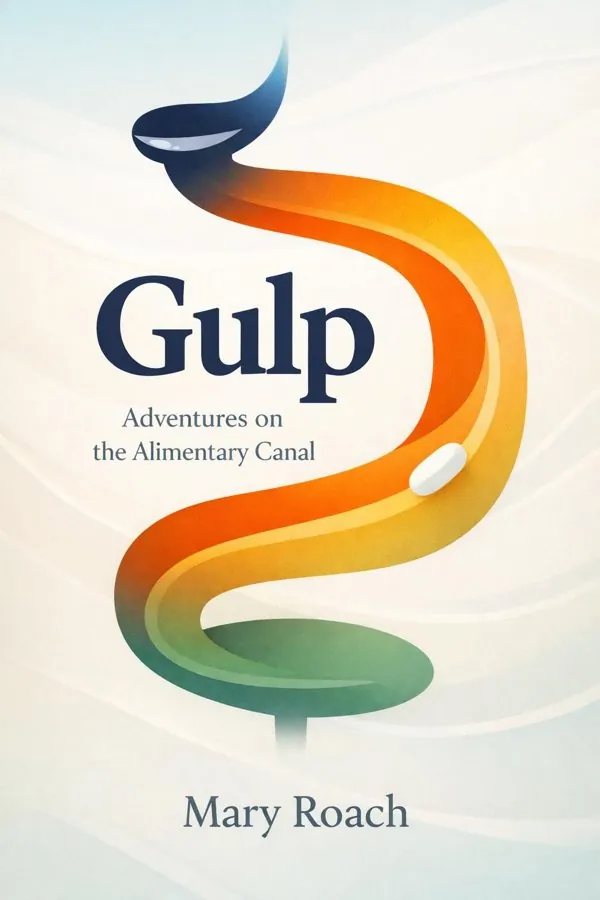
Gulp: Adventures on the Alimentary Canal: Summary & Key Insights
by Mary Roach
 10 min9 chaptersAudio available
What Is Gulp: Adventures on the Alimentary Canal About?
Gulp: Adventures on the Alimentary Canal by Mary Roach is a popular_sci book spanning 9 pages. A humorous and scientifically detailed exploration of the human digestive system, from the mouth to the colon. Mary Roach investigates the biology and oddities of eating, digestion, and excretion, blending wit with research to illuminate how our bodies process food.
This FizzRead summary covers all 9 key chapters of Gulp: Adventures on the Alimentary Canal in approximately 10 minutes, distilling the most important ideas, arguments, and takeaways from Mary Roach's work. Also available as an audio summary and Key Quotes Podcast.
Gulp: Adventures on the Alimentary Canal
A humorous and scientifically detailed exploration of the human digestive system, from the mouth to the colon. Mary Roach investigates the biology and oddities of eating, digestion, and excretion, blending wit with research to illuminate how our bodies process food.
Who Should Read Gulp: Adventures on the Alimentary Canal?
This book is perfect for anyone interested in popular_sci and looking to gain actionable insights in a short read. Whether you're a student, professional, or lifelong learner, the key ideas from Gulp: Adventures on the Alimentary Canal by Mary Roach will help you think differently.
- ✓Readers who enjoy popular_sci and want practical takeaways
- ✓Professionals looking to apply new ideas to their work and life
- ✓Anyone who wants the core insights of Gulp: Adventures on the Alimentary Canal in just 10 minutes
Want the full summary?
Get instant access to this book summary and 100K+ more with Fizz Moment.
Get Free SummaryAvailable on App Store • Free to download
Key Chapters
The adventure begins where it always begins — in the mouth. I’ve always been amazed by how the simple act of eating introduces a symphony of senses. Taste isn’t just taste; it’s smell, texture, temperature, and even sound. Scientists have traced how flavor is an illusion, born from the cooperation between tongue and nose. In laboratories where the air smells faintly of cheese or cooked meat, researchers analyze how aroma molecules can dictate preference, appetite, and even emotional response.
There’s a fascinating vulnerability in this process. Our mouth binds biology and psychology together. Dogs are experts at smell — they can track scents we’ll never perceive — but humans, though exponential weaker in olfactory range, use scent and flavor to anchor memory. It’s why a whiff of a childhood meal can unravel years. In *Gulp*, I explored how this sensory partnership creates desire. Every bite carries chemical messages that tell the brain to eat more, or sometimes — stop. We think we choose what we like, but our brain’s ancient architecture largely does that for us.
This was the first lesson the alimentary canal taught me: taste is persuasion, not choice. Scientists in flavor labs learn how subtle shifts — more salt, a touch of fat — ignite reward centers in the brain. And saliva? That humble liquid we mostly ignore, it’s the medium that dissolves and delivers flavor. When I visited research on saliva’s enzymatic dance, I learned it begins digestion before we even swallow. The mouth isn’t passive. It’s an analytical lab, measuring consistency, testing chemistry, preparing for what’s about to come.
Chewing may seem instinctive, but it is one of the most underappreciated steps in digestion. Early physiologists observed that the efficiency of digestion depends not just on what you eat, but on how long and how well you chew. I traveled through archives where scientists tested mastication using ingenious — and sometimes absurd — apparatuses to measure chewing efficiency. Some even weighed and photographed chewed food to analyze texture breakdown.
Saliva and chewing are partners in crime, working together to render solid food into something the stomach can handle. Saliva’s enzymes — mainly amylase — begin breaking down starches before the meal ever reaches the stomach. But saliva also performs mundane miracles: lubricating food, cleaning teeth, even maintaining oral pH. It’s a multitasker and a protector. You might think of it as the unsung hero of digestion.
What fascinated me most were the cultural variations in chewing and eating speed. In societies where food is soft, processed, or liquefied, the jaw muscles literally change — weaker, narrower over generations. Chewing is evolution in miniature, sculpting skulls and digestion alike. It made me realize how our modern habits, our rush through meals, is shaping our biology more than we realize. By understanding mastication, we come closer to respecting the quiet mechanics of survival that begin in the mouth.
+ 7 more chapters — available in the FizzRead app
All Chapters in Gulp: Adventures on the Alimentary Canal
About the Author
Mary Roach is an American author known for her popular science books that combine humor and deep research. Her works include 'Stiff', 'Bonk', and 'Packing for Mars', each exploring unusual scientific topics with curiosity and wit.
Get This Summary in Your Preferred Format
Read or listen to the Gulp: Adventures on the Alimentary Canal summary by Mary Roach anytime, anywhere. FizzRead offers multiple formats so you can learn on your terms — all free.
Available formats: App · Audio · PDF · EPUB — All included free with FizzRead
Download Gulp: Adventures on the Alimentary Canal PDF and EPUB Summary
Key Quotes from Gulp: Adventures on the Alimentary Canal
“The adventure begins where it always begins — in the mouth.”
“Chewing may seem instinctive, but it is one of the most underappreciated steps in digestion.”
Frequently Asked Questions about Gulp: Adventures on the Alimentary Canal
Gulp: Adventures on the Alimentary Canal by Mary Roach is a popular_sci book that explores key ideas across 9 chapters. A humorous and scientifically detailed exploration of the human digestive system, from the mouth to the colon. Mary Roach investigates the biology and oddities of eating, digestion, and excretion, blending wit with research to illuminate how our bodies process food.
More by Mary Roach
You Might Also Like

Structures: Or Why Things Don"t Fall Down
J.E. Gordon
10 min
The Road to Wigan Pier
George Orwell
10 min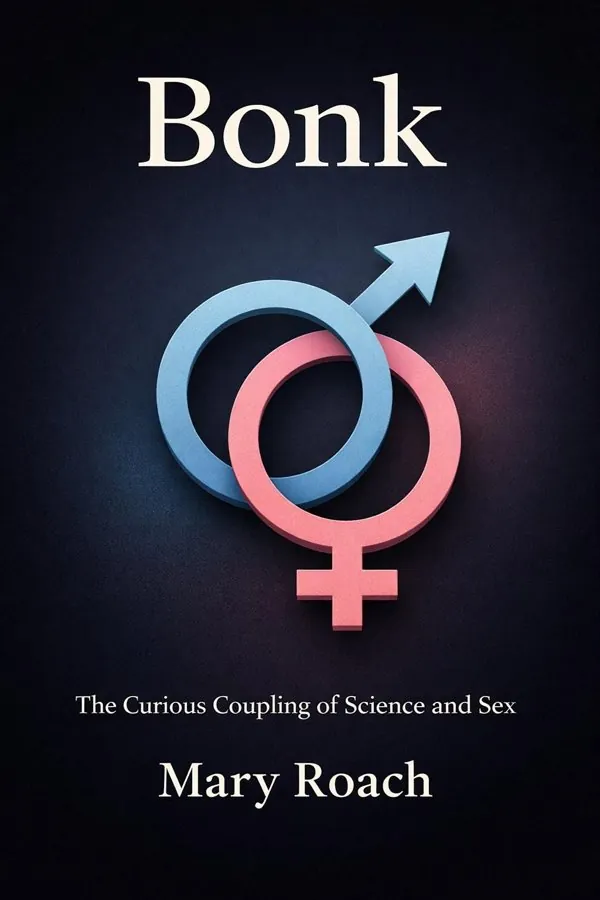
Bonk: The Curious Coupling of Science and Sex
Mary Roach
10 min
First Bite: How We Learn to Eat
Bee Wilson
10 min
In Pursuit Of The Unknown: 17 Equations That Changed The World
Ian Stewart
10 min
Napoleon's Buttons: 17 Molecules That Changed History
Penny Le Couteur and Jay Burreson
10 minBrowse by Category
Ready to read Gulp: Adventures on the Alimentary Canal?
Get the full summary and 100K+ more books with Fizz Moment.