
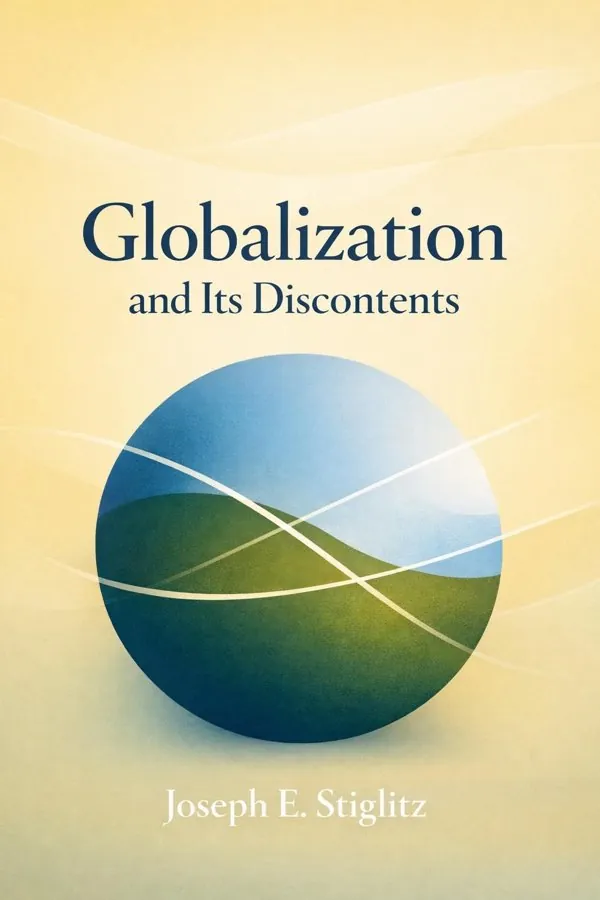
Globalization and Its Discontents: Summary & Key Insights
 10 min10 chaptersAudio available
What Is Globalization and Its Discontents About?
Globalization and Its Discontents by Joseph E. Stiglitz is a economics book spanning 10 pages. In this influential work, Nobel laureate Joseph E. Stiglitz critiques the policies of major international financial institutions such as the International Monetary Fund, the World Bank, and the World Trade Organization. Drawing on his experience as Chief Economist at the World Bank, Stiglitz argues that the way globalization has been managed has often harmed developing countries, exacerbating inequality and instability. The book calls for a more balanced and equitable approach to global economic integration.
This FizzRead summary covers all 10 key chapters of Globalization and Its Discontents in approximately 10 minutes, distilling the most important ideas, arguments, and takeaways from Joseph E. Stiglitz's work. Also available as an audio summary and Key Quotes Podcast.
Globalization and Its Discontents
In this influential work, Nobel laureate Joseph E. Stiglitz critiques the policies of major international financial institutions such as the International Monetary Fund, the World Bank, and the World Trade Organization. Drawing on his experience as Chief Economist at the World Bank, Stiglitz argues that the way globalization has been managed has often harmed developing countries, exacerbating inequality and instability. The book calls for a more balanced and equitable approach to global economic integration.
Who Should Read Globalization and Its Discontents?
This book is perfect for anyone interested in economics and looking to gain actionable insights in a short read. Whether you're a student, professional, or lifelong learner, the key ideas from Globalization and Its Discontents by Joseph E. Stiglitz will help you think differently.
- ✓Readers who enjoy economics and want practical takeaways
- ✓Professionals looking to apply new ideas to their work and life
- ✓Anyone who wants the core insights of Globalization and Its Discontents in just 10 minutes
Want the full summary?
Get instant access to this book summary and 100K+ more with Fizz Moment.
Get Free SummaryAvailable on App Store • Free to download
Key Chapters
When economists speak of globalization, we often begin with its remarkable theoretical potential. Integrated markets can increase efficiency; trade allows nations to specialize and thus produce and consume more; capital flows can bring investment where it is most needed. In such a perfect world, everyone wins. But as I traveled from one developing country to another during my time at the World Bank, the gap between this elegant theory and messy reality became painfully clear.
The promise was captured in the idea that free markets, left to themselves, would ensure prosperity. That belief rested on models assuming perfect information, perfect competition, and the absence of externalities—conditions that simply never exist. Real markets fail in systematic ways. When capital rushes into a small economy, it can quickly overheat the currency and inflate bubbles; when it flees, it can devastate livelihoods overnight. The global economy magnified those forces, and yet its architects pretended otherwise.
I saw this in Latin America, where countries that had faithfully followed IMF programs saw rising unemployment and poverty instead of growth. The opening of markets too rapidly destroyed local industries that had no time to adapt. In Africa, capital liberalization led to chronic instability, while promised foreign investments never arrived. Globalization was supposed to empower these nations, but instead it often constrained them, binding their policy choices in the straitjacket of conditionality. The tragedy is not that integration failed—it is that it was implemented without compassion and without understanding the social and institutional contexts that make markets work.
What globalization required was intelligent management—regulations that protected against volatility, social safety nets that cushioned transitions, and institutions that gave voice to the countries most affected. Without these, globalization’s promise became an illusion, one that masked deepening inequalities and political resentment.
The International Monetary Fund was initially created to ensure global financial stability, to help countries in balance-of-payments trouble avoid the downward spiral of depression and protectionism. But by the 1990s, the IMF had evolved into something quite different—a gatekeeper of the developing world’s economic policies, enforcing a rigid orthodoxy that I came to describe as market fundamentalism. This ideology insisted that financial liberalization, privatization, and fiscal austerity were the universal solutions to every problem.
When a country faced crisis, IMF officials arrived with a standard set of prescriptions—the so-called structural adjustment programs. Regardless of local conditions, they demanded higher interest rates, reduced public spending, and immediate opening of capital markets. These measures might have pleased foreign creditors by assuring repayment, but they crushed domestic economies. Industries closed, unemployment soared, and basic services were cut. The irony is that these programs were supposedly meant to restore confidence. In reality, they often destroyed it.
Behind these policies was a troubling power dynamic. Decision-making within the IMF was heavily dominated by advanced economies, particularly the United States. Developing countries not only lacked influence; they also bore the full cost of policies they had little say in designing. During crisis consultations, I watched as finance ministers from poor nations tried in vain to explain their circumstances, only to be told that they had to follow the formula. The IMF, an institution that prided itself on technical expertise, was too often blind to social consequences and dismissive of alternative perspectives.
The failures were not accidents—they were the result of an institutional culture that valued ideology over evidence. If the IMF had listened more closely to the people it claimed to help, it might have discovered earlier that stability cannot be achieved through austerity alone. True stability rests on growth, employment, and public trust—elements that the IMF’s methods systematically undermined.
+ 8 more chapters — available in the FizzRead app
All Chapters in Globalization and Its Discontents
About the Author
Joseph E. Stiglitz is an American economist and professor at Columbia University. He was awarded the Nobel Memorial Prize in Economic Sciences in 2001 for his analyses of markets with asymmetric information. Stiglitz has served as Chief Economist of the World Bank and Chairman of the U.S. President’s Council of Economic Advisers. He is known for his critical views on unregulated globalization and neoliberal economic policies.
Get This Summary in Your Preferred Format
Read or listen to the Globalization and Its Discontents summary by Joseph E. Stiglitz anytime, anywhere. FizzRead offers multiple formats so you can learn on your terms — all free.
Available formats: App · Audio · PDF · EPUB — All included free with FizzRead
Download Globalization and Its Discontents PDF and EPUB Summary
Key Quotes from Globalization and Its Discontents
“When economists speak of globalization, we often begin with its remarkable theoretical potential.”
“The International Monetary Fund was initially created to ensure global financial stability, to help countries in balance-of-payments trouble avoid the downward spiral of depression and protectionism.”
Frequently Asked Questions about Globalization and Its Discontents
Globalization and Its Discontents by Joseph E. Stiglitz is a economics book that explores key ideas across 10 chapters. In this influential work, Nobel laureate Joseph E. Stiglitz critiques the policies of major international financial institutions such as the International Monetary Fund, the World Bank, and the World Trade Organization. Drawing on his experience as Chief Economist at the World Bank, Stiglitz argues that the way globalization has been managed has often harmed developing countries, exacerbating inequality and instability. The book calls for a more balanced and equitable approach to global economic integration.
More by Joseph E. Stiglitz
The Price of Inequality: How Today's Divided Society Endangers Our Future
Joseph E. Stiglitz
10 min
Globalization and Its Discontents Revisited: Anti-Globalization in the Era of Trump
Joseph E. Stiglitz
10 min
People, Power, and Profits: Progressive Capitalism for an Age of Discontent
Joseph E. Stiglitz
10 minYou Might Also Like

Business Adventures
John Brooks
10 min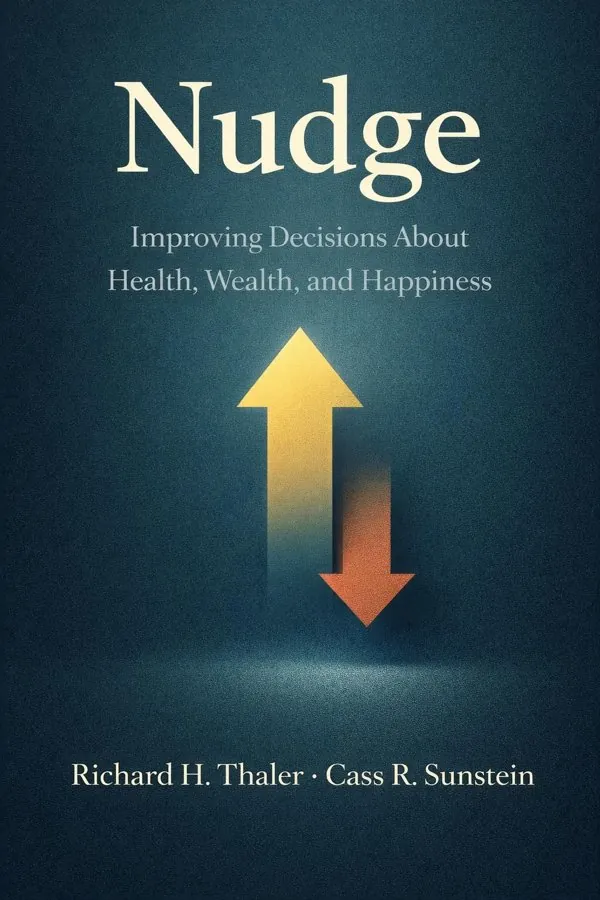
Nudge
Richard H. Thaler, Cass R. Sunstein
10 min
The Hitchhiker"s Guide to the Galaxy
Douglas Adams
10 minThe Muqaddimah
Ibn Khaldun
10 minThe Outsiders
William N. Thorndike
10 min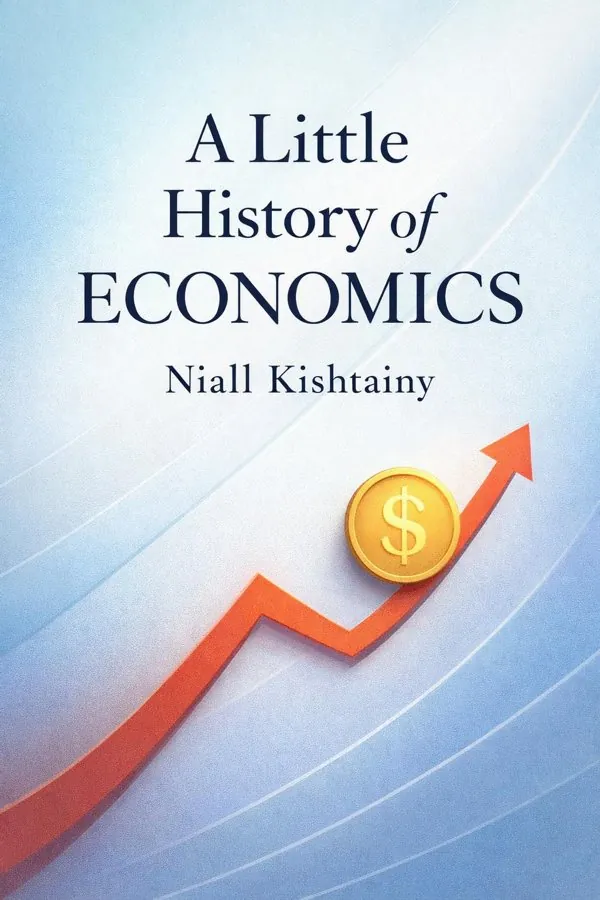
A Little History of Economics
Niall Kishtainy
10 minBrowse by Category
Ready to read Globalization and Its Discontents?
Get the full summary and 100K+ more books with Fizz Moment.