

Get Out of Your Mind and Into Your Life: The New Acceptance and Commitment Therapy: Summary & Key Insights
 10 min4 chaptersAudio available
What Is Get Out of Your Mind and Into Your Life: The New Acceptance and Commitment Therapy About?
Get Out of Your Mind and Into Your Life: The New Acceptance and Commitment Therapy by Steven C. Hayes is a mental_health book spanning 4 pages. This book introduces Acceptance and Commitment Therapy (ACT), a scientifically grounded approach to psychological flexibility. It guides readers through exercises and mindfulness practices to help them accept difficult thoughts and feelings while committing to actions aligned with their values. The program is designed to reduce suffering from anxiety, depression, and other emotional challenges by fostering acceptance and purposeful living.
This FizzRead summary covers all 4 key chapters of Get Out of Your Mind and Into Your Life: The New Acceptance and Commitment Therapy in approximately 10 minutes, distilling the most important ideas, arguments, and takeaways from Steven C. Hayes's work. Also available as an audio summary and Key Quotes Podcast.
Get Out of Your Mind and Into Your Life: The New Acceptance and Commitment Therapy
This book introduces Acceptance and Commitment Therapy (ACT), a scientifically grounded approach to psychological flexibility. It guides readers through exercises and mindfulness practices to help them accept difficult thoughts and feelings while committing to actions aligned with their values. The program is designed to reduce suffering from anxiety, depression, and other emotional challenges by fostering acceptance and purposeful living.
Who Should Read Get Out of Your Mind and Into Your Life: The New Acceptance and Commitment Therapy?
This book is perfect for anyone interested in mental_health and looking to gain actionable insights in a short read. Whether you're a student, professional, or lifelong learner, the key ideas from Get Out of Your Mind and Into Your Life: The New Acceptance and Commitment Therapy by Steven C. Hayes will help you think differently.
- ✓Readers who enjoy mental_health and want practical takeaways
- ✓Professionals looking to apply new ideas to their work and life
- ✓Anyone who wants the core insights of Get Out of Your Mind and Into Your Life: The New Acceptance and Commitment Therapy in just 10 minutes
Want the full summary?
Get instant access to this book summary and 100K+ more with Fizz Moment.
Get Free SummaryAvailable on App Store • Free to download
Key Chapters
Before we can move toward meaningful change, we must first recognize the trap we’ve fallen into. Human beings instinctively try to control discomfort. We push away negative thoughts, suppress unpleasant emotions, and distract ourselves from fear or sadness. This tendency, called experiential avoidance, feels logical; it promises relief. Yet paradoxically, the harder we fight, the more entangled we become. Trying to eliminate pain only amplifies it.
I often tell readers: pain is inevitable, but suffering is optional. The moment we decide that certain emotions are unacceptable or certain experiences must be suppressed, we create a larger problem—the struggle itself. Suppose you tell yourself not to feel anxious before a presentation; that instruction immediately draws attention to anxiety. You begin monitoring every flutter, every thought of failure, and soon, anxiety grows. Experiential avoidance reinforces exactly what you wish to escape.
Cognitive science and basic behavioral research have shown that the mind’s control strategies work poorly when directed inward. They evolved for managing the external world—moving objects, changing environments. Applied to thoughts and feelings, they produce paradoxical results. Hence the reason this book begins with a radical proposition: control is not the cure. Psychological freedom begins with acceptance.
Imagine a tug-of-war against a monster called anxiety. You are pulling with all your strength, trying to drag it into the pit. But the rope binds you both together. To end the struggle, you must drop the rope. ACT invites you to drop it—not to defeat anxiety, but to stop fighting it. The space that opens afterward is not resignation—it is liberation. Once we stop using control as our primary tool, we can begin to notice, breathe, and act in alignment with what matters most. That is the foundational shift this book is designed to create.
Acceptance and Commitment Therapy (ACT) emerged from decades of behavioral research, driven by the question: what causes human suffering, and how can we cultivate lasting well-being? ACT rests on two pillars—acceptance and commitment—and is grounded in modern behavioral psychology, relational frame theory, and mindfulness.
ACT does not aim to reduce symptoms in the traditional sense. Instead, it focuses on increasing psychological flexibility—the ability to be present, open, and engaged in your life according to your values. Flexibility means you can feel fear without letting it dominate you, experience sadness without closing down, and think self-critical thoughts without obeying them. It means living without needing your mind’s permission.
Throughout this book, I show that the goal of ACT is not happiness as we usually conceive it. Genuine happiness comes from living meaningfully, not from eradicating pain. The approach asks you to stop fighting your internal experiences and start embracing your values. This is done through six core processes that work together like gears in a well-oiled system: acceptance, cognitive defusion, being present, self-as-context, values, and committed action.
These processes are not abstract theories. They are skills honed through practice—mindfulness exercises, metaphors, and small behavioral experiments. The work may feel counterintuitive at first; after all, it asks you to open to discomfort rather than fix it. But over time, this approach frees you from needing everything to feel right before acting. ACT teaches that right action can precede right feeling.
The shift from fighting your mind to living your life is not easy, but it is profound. It is a shift from the narrow logic of control to the vast space of awareness and purpose. Once you begin to practice ACT, you start to see that unpleasant thoughts or sensations do not define you; they merely visit you. You learn to coexist with them while continuing to move toward the life you want.
+ 2 more chapters — available in the FizzRead app
All Chapters in Get Out of Your Mind and Into Your Life: The New Acceptance and Commitment Therapy
About the Author
Steven C. Hayes, Ph.D., is a professor of psychology at the University of Nevada, Reno, and the originator of Acceptance and Commitment Therapy (ACT). He has authored numerous books and scientific articles on behavior analysis and cognitive therapy, and is recognized internationally for his contributions to modern behavioral psychology.
Get This Summary in Your Preferred Format
Read or listen to the Get Out of Your Mind and Into Your Life: The New Acceptance and Commitment Therapy summary by Steven C. Hayes anytime, anywhere. FizzRead offers multiple formats so you can learn on your terms — all free.
Available formats: App · Audio · PDF · EPUB — All included free with FizzRead
Download Get Out of Your Mind and Into Your Life: The New Acceptance and Commitment Therapy PDF and EPUB Summary
Key Quotes from Get Out of Your Mind and Into Your Life: The New Acceptance and Commitment Therapy
“Before we can move toward meaningful change, we must first recognize the trap we’ve fallen into.”
“Acceptance and Commitment Therapy (ACT) emerged from decades of behavioral research, driven by the question: what causes human suffering, and how can we cultivate lasting well-being?”
Frequently Asked Questions about Get Out of Your Mind and Into Your Life: The New Acceptance and Commitment Therapy
Get Out of Your Mind and Into Your Life: The New Acceptance and Commitment Therapy by Steven C. Hayes is a mental_health book that explores key ideas across 4 chapters. This book introduces Acceptance and Commitment Therapy (ACT), a scientifically grounded approach to psychological flexibility. It guides readers through exercises and mindfulness practices to help them accept difficult thoughts and feelings while committing to actions aligned with their values. The program is designed to reduce suffering from anxiety, depression, and other emotional challenges by fostering acceptance and purposeful living.
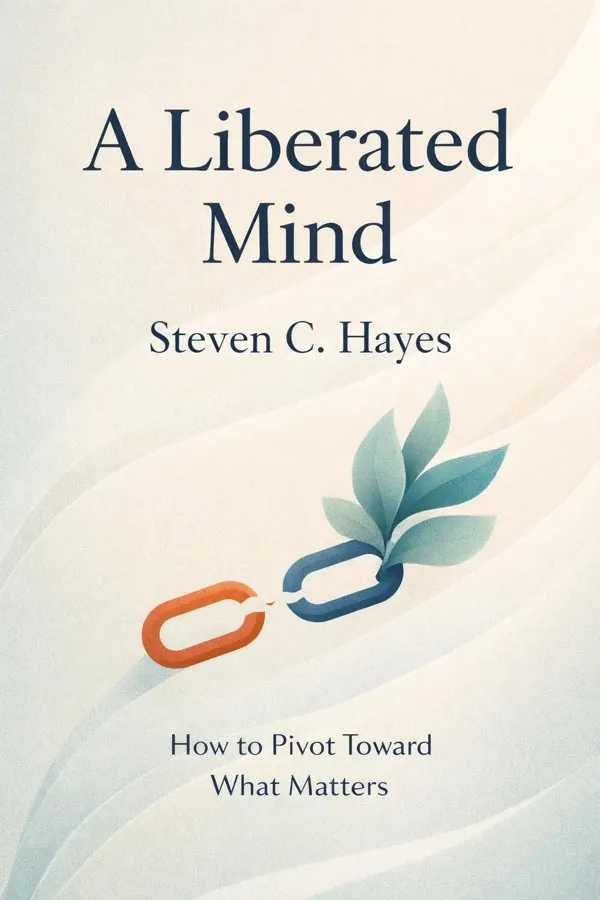
More by Steven C. Hayes
You Might Also Like

Big Feelings: How to Be Okay When Things Are Not Okay
Liz Fosslien, Mollie West Duffy
10 min
Creative Arts Therapies Handbook: Art, Music and Dance Therapy Practices for Wellbeing
Susan I. Buchalter
10 min
Emotional First Aid: Healing Rejection, Guilt, Failure, and Other Everyday Hurts
Guy Winch
10 min
Lost Connections: Why You're Depressed and How to Find Hope
Johann Hari
10 min
No Time to Panic: How to Stop Worrying and Embrace Life
Matt Gutman
10 min
Overcoming Mobbing: A Recovery Guide for Workplace Aggression and Bullying
Maureen Duffy, Len Sperry
10 minBrowse by Category
Ready to read Get Out of Your Mind and Into Your Life: The New Acceptance and Commitment Therapy?
Get the full summary and 100K+ more books with Fizz Moment.