
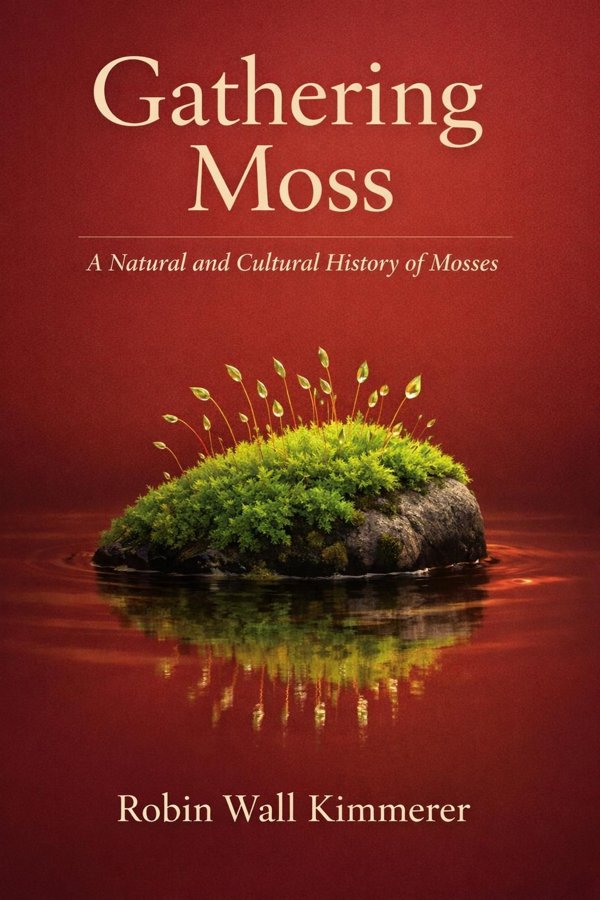
Gathering Moss: A Natural and Cultural History of Mosses: Summary & Key Insights
 10 min8 chaptersAudio available
What Is Gathering Moss: A Natural and Cultural History of Mosses About?
Gathering Moss: A Natural and Cultural History of Mosses by Robin Wall Kimmerer is a environment book spanning 8 pages. Gathering Moss es una colección de ensayos que combina ciencia, historia natural y reflexión personal para explorar el mundo de los musgos. Robin Wall Kimmerer, botánica y miembro de la Nación Potawatomi, entrelaza su conocimiento científico con la sabiduría indígena para revelar cómo estos pequeños organismos reflejan las interconexiones de la vida y la importancia de la atención y el respeto hacia la naturaleza.
This FizzRead summary covers all 8 key chapters of Gathering Moss: A Natural and Cultural History of Mosses in approximately 10 minutes, distilling the most important ideas, arguments, and takeaways from Robin Wall Kimmerer's work. Also available as an audio summary and Key Quotes Podcast.
Gathering Moss: A Natural and Cultural History of Mosses
Gathering Moss es una colección de ensayos que combina ciencia, historia natural y reflexión personal para explorar el mundo de los musgos. Robin Wall Kimmerer, botánica y miembro de la Nación Potawatomi, entrelaza su conocimiento científico con la sabiduría indígena para revelar cómo estos pequeños organismos reflejan las interconexiones de la vida y la importancia de la atención y el respeto hacia la naturaleza.
Who Should Read Gathering Moss: A Natural and Cultural History of Mosses?
This book is perfect for anyone interested in environment and looking to gain actionable insights in a short read. Whether you're a student, professional, or lifelong learner, the key ideas from Gathering Moss: A Natural and Cultural History of Mosses by Robin Wall Kimmerer will help you think differently.
- ✓Readers who enjoy environment and want practical takeaways
- ✓Professionals looking to apply new ideas to their work and life
- ✓Anyone who wants the core insights of Gathering Moss: A Natural and Cultural History of Mosses in just 10 minutes
Want the full summary?
Get instant access to this book summary and 100K+ more with Fizz Moment.
Get Free SummaryAvailable on App Store • Free to download
Key Chapters
To understand mosses, we must first recognize their remarkable simplicity. They are among the earliest plant forms, having thrived on Earth for about 450 million years. Without roots, without flowers, without woody stems, they are nonetheless architects of entire ecosystems. Mosses absorb water directly through their leaves, living at the mercy of rain and humidity. Because of this, they teach us about dependency—not weakness, but adaptation to flux.
Their structure reveals a kind of grace in minimalism. Each leaf is a single layer of cells, translucent, often shaped like tiny cups that catch dew. Under a microscope, the mosaic of these cells seems almost like glass art, shimmering with trapped sunlight. Within their small bodies resides an intimacy with water that few other plants possess. They hold moisture for long moments, allowing forests to stay fertile, giving soil protection against erosion, and nurturing microhabitats for insects and fungi.
Yet mosses ask for nothing in return. They grow on bare stone, transforming what is lifeless into something capable of shelter and regeneration. In this way, they embody the first principle of ecological generosity: they prepare the ground for others. If we had eyes refined enough, we’d see that the green haze covering a rock is a revolution of time—stone becoming soil.
As I studied their textures in the laboratory and in the forest, I came to understand why they have endured so long. Mosses live without excess and endure without competition. Their resilience lies in their acceptance of place. In a world obsessed with growth, they remind us that survival can also mean staying small and steady, content to flourish where one is.
My scientific training taught me to categorize, measure, and label—but the mosses demanded something more intimate. They required slowing down, kneeling, breathing with them. Observation is not just a method—it is an ethic. To look closely at moss is to enter its rhythm, where time stretches and boundaries blur.
Each field day became a meditation. The forest floor, speckled with green tufts, became my laboratory and temple. Attention revealed worlds within worlds: tiny forests where sporophytes rose like miniature trees bearing capsules of potential life. And beneath them, the gametophytes—soft, spongy structures contributing to cycles older than our species.
When I teach my students, I tell them that mosses sharpen not only our sight but our empathy. You cannot understand something you do not pay attention to. In Indigenous ways of knowing, paying attention is a form of respect. It acknowledges the life and agency of others, even those too small to shout. Mosses remind us that everything in existence deserves regard.
Through this attentive practice, I discovered that science need not strip the world of wonder. The microscope, far from distancing me, brought me closer to awe. Each observation became an act of gratitude—a way of saying, 'I see you.' This kind of seeing heals the rift between knowledge and reverence.
+ 6 more chapters — available in the FizzRead app
All Chapters in Gathering Moss: A Natural and Cultural History of Mosses
About the Author
Robin Wall Kimmerer es botánica, profesora de biología ambiental en el SUNY College of Environmental Science and Forestry y miembro de la Nación Potawatomi. Su trabajo combina la ciencia ecológica con la sabiduría indígena, y es reconocida por su escritura que une conocimiento científico y espiritualidad ecológica.
Get This Summary in Your Preferred Format
Read or listen to the Gathering Moss: A Natural and Cultural History of Mosses summary by Robin Wall Kimmerer anytime, anywhere. FizzRead offers multiple formats so you can learn on your terms — all free.
Available formats: App · Audio · PDF · EPUB — All included free with FizzRead
Download Gathering Moss: A Natural and Cultural History of Mosses PDF and EPUB Summary
Key Quotes from Gathering Moss: A Natural and Cultural History of Mosses
“To understand mosses, we must first recognize their remarkable simplicity.”
“My scientific training taught me to categorize, measure, and label—but the mosses demanded something more intimate.”
Frequently Asked Questions about Gathering Moss: A Natural and Cultural History of Mosses
Gathering Moss: A Natural and Cultural History of Mosses by Robin Wall Kimmerer is a environment book that explores key ideas across 8 chapters. Gathering Moss es una colección de ensayos que combina ciencia, historia natural y reflexión personal para explorar el mundo de los musgos. Robin Wall Kimmerer, botánica y miembro de la Nación Potawatomi, entrelaza su conocimiento científico con la sabiduría indígena para revelar cómo estos pequeños organismos reflejan las interconexiones de la vida y la importancia de la atención y el respeto hacia la naturaleza.
More by Robin Wall Kimmerer
You Might Also Like

A Life on Our Planet: My Witness Statement and a Vision for the Future
David Attenborough
10 min
A Sky Full Of Birds
Matt Merritt
10 min
Carbon Zero: Imagining Cities That Can Save the Planet
Alex Steffen
10 min
Eaarth: Making a Life on a Tough New Planet
Bill McKibben
10 min
The Social Contract and Environmental Governance
Various Editors
10 min
The Wild Places
Robert Macfarlane
10 minBrowse by Category
Ready to read Gathering Moss: A Natural and Cultural History of Mosses?
Get the full summary and 100K+ more books with Fizz Moment.