
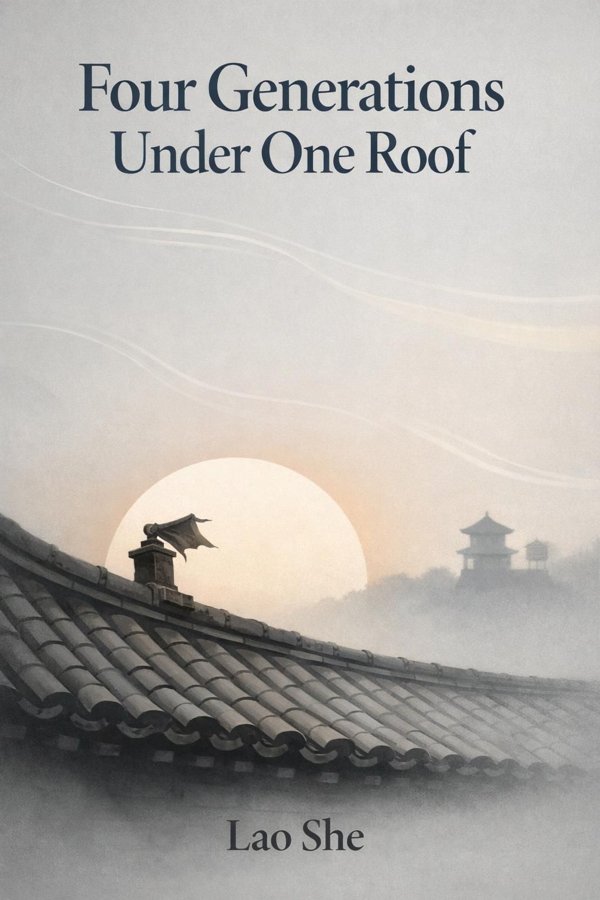
Four Generations Under One Roof: Summary & Key Insights
by Lao She
 10 min5 chaptersAudio available
What Is Four Generations Under One Roof About?
Four Generations Under One Roof by Lao She is a classics book spanning 5 pages. Four Generations Under One Roof is a classic novel by Lao She set in Beijing during the Japanese occupation in World War II. It portrays the lives of the Qi family, spanning four generations, as they struggle to survive and maintain dignity under oppression. The second part focuses on the aftermath of Beijing’s fall, depicting ordinary citizens’ endurance and moral conflicts amid hardship.
This FizzRead summary covers all 5 key chapters of Four Generations Under One Roof in approximately 10 minutes, distilling the most important ideas, arguments, and takeaways from Lao She's work. Also available as an audio summary and Key Quotes Podcast.
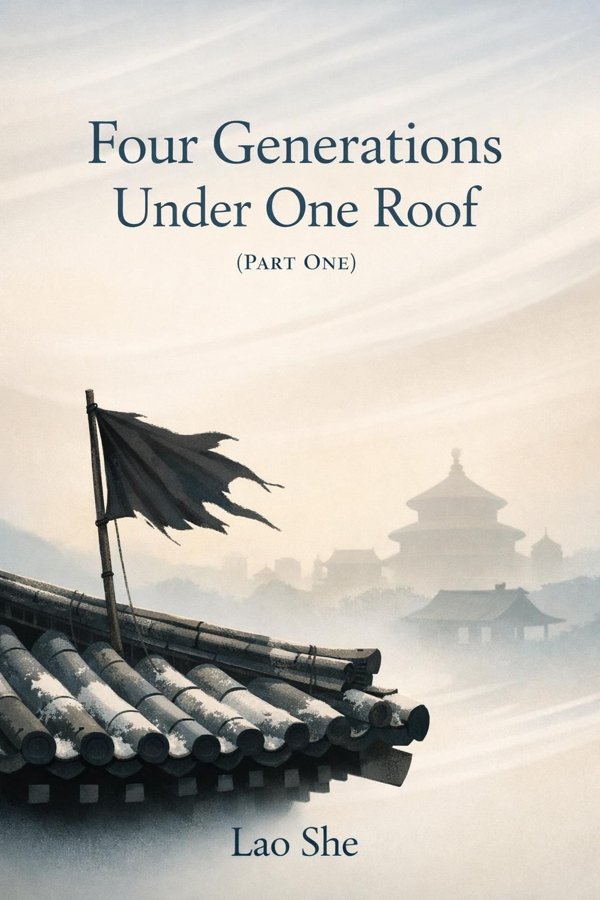
Four Generations Under One Roof
Four Generations Under One Roof is a classic novel by Lao She set in Beijing during the Japanese occupation in World War II. It portrays the lives of the Qi family, spanning four generations, as they struggle to survive and maintain dignity under oppression. The second part focuses on the aftermath of Beijing’s fall, depicting ordinary citizens’ endurance and moral conflicts amid hardship.
Who Should Read Four Generations Under One Roof?
This book is perfect for anyone interested in classics and looking to gain actionable insights in a short read. Whether you're a student, professional, or lifelong learner, the key ideas from Four Generations Under One Roof by Lao She will help you think differently.
- ✓Readers who enjoy classics and want practical takeaways
- ✓Professionals looking to apply new ideas to their work and life
- ✓Anyone who wants the core insights of Four Generations Under One Roof in just 10 minutes
Want the full summary?
Get instant access to this book summary and 100K+ more with Fizz Moment.
Get Free SummaryAvailable on App Store • Free to download
Key Chapters
+ 3 more chapters — available in the FizzRead app
All Chapters in Four Generations Under One Roof
About the Author
Lao She (1899–1966), born Shu Qingchun in Beijing, was a renowned Chinese novelist and playwright. His works, including Rickshaw Boy, Teahouse, and Four Generations Under One Roof, are celebrated for their vivid portrayal of Beijing life and deep social insight. He is regarded as one of China’s greatest modern writers.
Get This Summary in Your Preferred Format
Read or listen to the Four Generations Under One Roof summary by Lao She anytime, anywhere. FizzRead offers multiple formats so you can learn on your terms — all free.
Available formats: App · Audio · PDF · EPUB — All included free with FizzRead
Download Four Generations Under One Roof PDF and EPUB Summary
Key Quotes from Four Generations Under One Roof
“In *Autumn*, the Gao family no longer glimmers with the shallow prosperity seen in *Family*.”
“In *Autumn*, Juehui is no longer the impulsive young rebel from *Family*.”
Frequently Asked Questions about Four Generations Under One Roof
Four Generations Under One Roof by Lao She is a classics book that explores key ideas across 5 chapters. Four Generations Under One Roof is a classic novel by Lao She set in Beijing during the Japanese occupation in World War II. It portrays the lives of the Qi family, spanning four generations, as they struggle to survive and maintain dignity under oppression. The second part focuses on the aftermath of Beijing’s fall, depicting ordinary citizens’ endurance and moral conflicts amid hardship.
More by Lao She
You Might Also Like






Browse by Category
Ready to read Four Generations Under One Roof?
Get the full summary and 100K+ more books with Fizz Moment.