
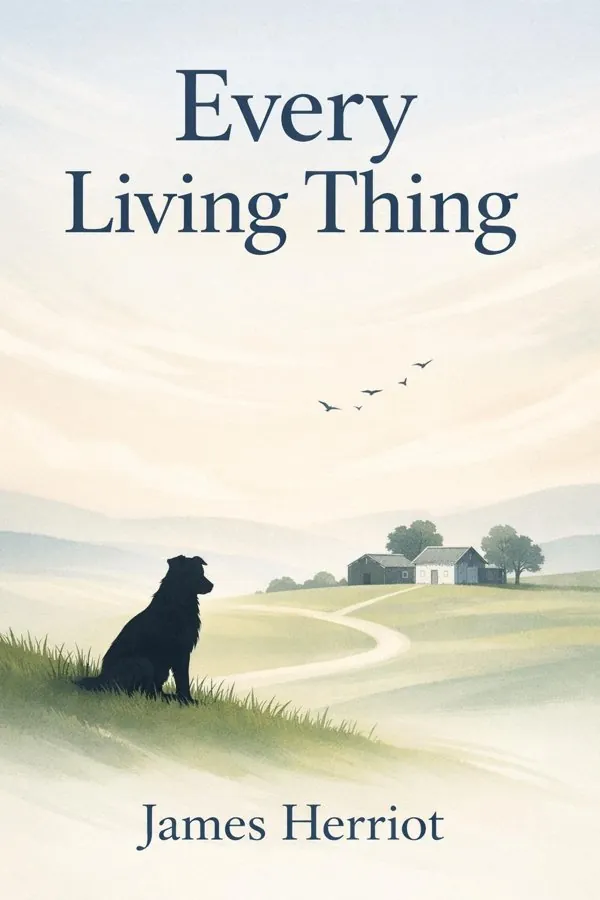
Every Living Thing: Summary & Key Insights
 10 min9 chaptersAudio available
Key Takeaways from Every Living Thing
Progress often arrives quietly, not as a revolution but as a series of small improvements in how people do their work.
Belonging is rarely created through speeches or grand declarations; more often, it grows through dependable acts of care over time.
When an animal lives inside the home, medicine becomes personal in a new way.
Laughter is not a distraction from difficulty; it is often what allows people to endure it.
No profession is learned from manuals alone; it is absorbed from people who model how the work should be done.
What Is Every Living Thing About?
Every Living Thing by James Herriot is a biographies book spanning 8 pages. Every Living Thing is James Herriot’s affectionate, wise, and deeply humane return to the Yorkshire Dales, where the daily work of a country veterinarian becomes a window into character, community, and change. In this volume of his beloved memoirs, Herriot recounts the animals he treats, the farmers and families he serves, and the quiet dramas that unfold across fields, barns, kitchens, and village roads. What makes the book memorable is not only its humor and warmth, but its understanding that caring for animals is inseparable from caring for people. A sick calf, a beloved dog, a difficult lambing, or a late-night emergency each reveals something about responsibility, resilience, and love. The book also captures a profession in transition, as older methods give way to modern veterinary science. Herriot writes with the authority of lived experience: he was not an outside observer inventing rural charm, but a practicing veterinary surgeon who spent decades in this world. The result is a memoir that feels both intimate and universal, celebrating everyday work while honoring the dignity of every living creature.
This FizzRead summary covers all 9 key chapters of Every Living Thing in approximately 10 minutes, distilling the most important ideas, arguments, and takeaways from James Herriot's work. Also available as an audio summary and Key Quotes Podcast.
Every Living Thing
Every Living Thing is James Herriot’s affectionate, wise, and deeply humane return to the Yorkshire Dales, where the daily work of a country veterinarian becomes a window into character, community, and change. In this volume of his beloved memoirs, Herriot recounts the animals he treats, the farmers and families he serves, and the quiet dramas that unfold across fields, barns, kitchens, and village roads. What makes the book memorable is not only its humor and warmth, but its understanding that caring for animals is inseparable from caring for people. A sick calf, a beloved dog, a difficult lambing, or a late-night emergency each reveals something about responsibility, resilience, and love. The book also captures a profession in transition, as older methods give way to modern veterinary science. Herriot writes with the authority of lived experience: he was not an outside observer inventing rural charm, but a practicing veterinary surgeon who spent decades in this world. The result is a memoir that feels both intimate and universal, celebrating everyday work while honoring the dignity of every living creature.
Who Should Read Every Living Thing?
This book is perfect for anyone interested in biographies and looking to gain actionable insights in a short read. Whether you're a student, professional, or lifelong learner, the key ideas from Every Living Thing by James Herriot will help you think differently.
- ✓Readers who enjoy biographies and want practical takeaways
- ✓Professionals looking to apply new ideas to their work and life
- ✓Anyone who wants the core insights of Every Living Thing in just 10 minutes
Want the full summary?
Get instant access to this book summary and 100K+ more with Fizz Moment.
Get Free SummaryAvailable on App Store • Free to download
Key Chapters
Progress often arrives quietly, not as a revolution but as a series of small improvements in how people do their work. One of the most compelling threads in Every Living Thing is Herriot’s account of veterinary medicine changing before his eyes. The rough-and-ready world of earlier country practice, with its improvised tools, inherited habits, and sheer physical grit, begins to give way to a more scientific, precise, and specialized profession. Treatments improve, diagnostics become more reliable, and the expectations placed on a veterinarian grow more sophisticated.
Herriot never romanticizes the past so much that he ignores its limitations. He remembers the old days fondly, but he also recognizes the value of better medicines, better training, and new techniques that reduce suffering and increase the chance of recovery. At the same time, he shows that no amount of modernization eliminates the need for judgment, courage, and experience. A machine or textbook can assist, but the vet still has to make decisions in muddy yards, freezing barns, and anxious homes.
This balance between innovation and instinct applies far beyond veterinary practice. In any profession, new systems can improve outcomes, but they cannot replace empathy, observation, and common sense. Herriot’s stories remind us that expertise is not just technical knowledge; it is the ability to apply knowledge humanely under pressure.
The practical lesson is simple: welcome progress, but do not lose the practical wisdom and personal touch that made the work meaningful in the first place.
Belonging is rarely created through speeches or grand declarations; more often, it grows through dependable acts of care over time. In the Yorkshire Dales of Every Living Thing, Herriot’s veterinary rounds are not merely professional obligations. Each visit deepens his place within a tightly woven rural community where trust is earned through reliability, discretion, and shared hardship. The farmers he serves do not view him as a distant expert dropping in with answers. He becomes part of the fabric of their lives, present at moments of anxiety, relief, loss, and celebration.
Herriot reveals how community is formed through practical usefulness. A successful calving, a reassuring word during a frightening illness, or simply showing up on a miserable night matters because it proves commitment. The relationship between vet and farmer is transactional on the surface, but underneath it is deeply relational. People remember who came when the snow was deep, who stayed late, and who treated their animals with seriousness and respect.
That insight extends to modern life, where many people long for stronger communities but overlook the humble foundation on which they rest. Shared belonging is strengthened by showing up consistently, especially when doing so is inconvenient. Trust accumulates through repeated acts of competence and kindness.
Whether in neighborhoods, workplaces, or friendships, Herriot’s example suggests a practical way to build meaningful connection: be useful, be steady, and let your concern show through action rather than display.
When an animal lives inside the home, medicine becomes personal in a new way. Herriot’s memoir shows how the expanding world of pets and small-animal practice changes both the emotional tone and the practical demands of his work. Farm animals are deeply important, often economically essential, but pets occupy a different place: they are companions, confidants, and beloved members of the family. Treating a dog or cat therefore means caring not only for the creature itself but also for the emotional life of the humans attached to it.
Herriot handles these cases with tenderness and realism. He understands that owners may be anxious, sentimental, overprotective, or occasionally unreasonable, yet these reactions usually arise from love. The rise of pet care also reflects a broader cultural shift. Animals are increasingly valued not merely for utility but for companionship, and that changes the veterinarian’s role from livestock doctor to family counselor, educator, and source of comfort.
The stories demonstrate that technical skill alone is not enough in intimate care settings. One must also communicate clearly, respect attachment, and know when reassurance matters as much as treatment. This remains true in any helping profession. People are more open to guidance when they feel their emotions are acknowledged rather than dismissed.
A practical takeaway emerges from Herriot’s approach: when addressing any problem that affects something people deeply love, speak to both the facts and the feelings. Good care always includes both.
Laughter is not a distraction from difficulty; it is often what allows people to endure it. Herriot fills Every Living Thing with eccentric farmers, stubborn personalities, awkward misunderstandings, and wonderfully comic situations that reveal the earthy humor of rural life. These moments do more than entertain. They show how wit, exaggeration, and affectionate teasing help people navigate an existence shaped by weather, finances, illness, and relentless physical labor.
The humor in Herriot’s world is rarely cruel. Even when he describes odd habits or comical behavior, he writes with generosity. The farmers may be stubborn, suspicious, thrifty, or gloriously unconventional, but they are also competent, resilient, and unmistakably human. Their quirks become a form of identity, and the stories preserve a culture in which individuality is tolerated because everyone understands that survival depends on mutual respect.
Humor also helps Herriot himself. Veterinary work can be exhausting and emotionally demanding, especially when outcomes are uncertain. Comic relief does not erase hardship, but it restores perspective and prevents discouragement from hardening into cynicism. This is an important lesson for anyone in serious work: levity, when used kindly, can protect both morale and relationships.
In practical terms, Herriot invites us to look for humor that connects rather than humiliates. In families, teams, and communities, shared laughter can make difficult duties lighter. The actionable takeaway is to cultivate warmth and amusement as forms of resilience, especially in environments where pressure and fatigue are part of daily life.
No profession is learned from manuals alone; it is absorbed from people who model how the work should be done. Herriot’s memoir highlights the importance of mentorship and the arrival of new generations within veterinary practice. As younger colleagues enter the field, the book explores what it means to pass on more than procedures. Technical instruction matters, but so do tone, habits, judgment, humility, and the ability to remain calm in difficult situations.
Herriot’s world is one in which learning happens in motion: on the road between farms, during emergency calls, in postmortems, surgeries, and quiet conversations after demanding days. A mentor transmits not only knowledge but culture. He teaches when to act decisively, when to wait, how to speak to worried owners, and how to maintain standards without losing kindness. The older generation offers memory and perspective; the younger generation brings energy, updated training, and fresh confidence.
This exchange is healthiest when neither side clings too tightly to superiority. Herriot suggests that the best mentorship is reciprocal. Experience should guide youth, but youth can also challenge stale habits and encourage improvement. That dynamic applies in all fields where practice meets tradition.
The practical application is clear: if you are experienced, teach generously and explain the values behind the techniques. If you are newer, seek mentors who demonstrate integrity as well as competence. The takeaway is to treat learning as an inheritance of character, not just information.
A career becomes a vocation when skill is joined to love. Throughout Every Living Thing, Herriot makes clear that the true center of his work is compassion: for animals in pain, for owners in distress, for exhausted farmers, and for the family members who sustain him. He is not sentimental in a shallow way. He knows that country life includes harsh realities, hard choices, and the inevitability of death. Yet this realism makes his compassion stronger, not weaker. He chooses tenderness while understanding exactly what life demands.
Herriot’s stories repeatedly show that competence without kindness feels incomplete. To heal an animal matters, but so does the way one enters a home, speaks to a worried child, respects a farmer’s pride, or acknowledges grief when a beloved pet cannot be saved. Family also plays a crucial role. The emotional burden of constant calls, irregular hours, and difficult cases is carried not by the vet alone but by the household around him. Herriot honors that invisible support.
In modern terms, this idea speaks to burnout and purpose. Many people become disillusioned when work is reduced to productivity, efficiency, or income alone. Herriot reminds us that meaning often resides in the human quality we bring to our responsibilities. Compassion is not an extra layer added after the real work is done; it is part of the work.
The actionable takeaway is to ask regularly not only whether you are performing well, but whether those affected by your work feel seen, helped, and respected.
The natural world does not bend to human schedules, and that is one reason it remains such a powerful teacher. In Every Living Thing, the Yorkshire landscape is more than scenery. The seasons, weather, breeding cycles, and rhythms of the land shape every aspect of Herriot’s practice. Calvings, lambings, disease outbreaks, recoveries, and losses all occur within a larger cycle that no one fully controls. This constant exposure to nature gives the memoir its quiet philosophical depth.
Herriot sees both beauty and indifference in the countryside. Spring brings renewal, birth, and energy, yet winter imposes hardship and danger. Animals thrive, suffer, heal, age, and die according to forces larger than any one person’s effort. That reality fosters humility. A veterinarian can help, intervene, and sometimes rescue, but he is never master of life itself. He works within limits.
This perspective is valuable in a culture that often prizes control and immediate results. Herriot’s stories suggest that wisdom comes from cooperating with reality rather than pretending to dominate it. People who live close to natural cycles tend to respect timing, patience, and the unpredictability of outcomes. Not every setback is failure, and not every success is entirely earned.
A practical lesson follows: build room in your expectations for uncertainty, and let recurring natural rhythms remind you that life includes phases of growth, decline, waiting, and renewal. The actionable takeaway is to practice patience by seeing your work and worries within a larger cycle rather than as isolated crises.
Animals may be the official patients in Herriot’s memoir, but people are constantly under examination as well. One of the book’s richest insights is that veterinary practice offers a unique view into human nature. Because animals matter deeply to their owners, moments of illness or emergency expose people’s best and worst qualities with unusual clarity. Herriot meets generosity, stubbornness, tenderness, vanity, denial, courage, thrift, panic, and devotion, often all in the same day.
This makes Every Living Thing more than a sequence of charming animal stories. It becomes a study of how people respond when responsibility is immediate and emotions are high. A farmer’s insistence on handling matters his own way may reflect pride, experience, or fear of expense. A pet owner’s fussing may seem excessive until one recognizes the loneliness or affection beneath it. Herriot’s gift is that he notices behavior without flattening people into caricatures. He understands that motives are mixed and that kindness often requires interpretation before judgment.
In everyday life, this is a useful discipline. We regularly encounter difficult behavior without pausing to ask what values, pressures, or vulnerabilities lie underneath it. Herriot models compassionate observation. He sees more because he is curious, patient, and slow to condemn.
The practical application is to become a better reader of people by paying attention to context, not just conduct. The takeaway is to replace quick judgment with informed empathy, especially when others are acting under stress or out of attachment.
The most moving memoirs do not merely recount events; they preserve a world with thanks. In Every Living Thing, Herriot writes with an awareness that the Yorkshire he has known is changing. Methods evolve, communities shift, and many of the people and habits that defined an earlier rural life are passing away. This gives the book a tender undercurrent of farewell. Yet the mood is not bitter nostalgia. Herriot’s dominant note is gratitude.
He is thankful for the privilege of having lived among strong personalities, trusted animals, and landscapes that shaped his identity. Even the inconveniences and hardships become precious in retrospect because they belonged to a life of purpose. Gratitude allows him to remember honestly without becoming sentimental or resentful. He does not deny the strain of the work, but he refuses to let difficulty eclipse the gift of having served.
This idea has broad relevance. Many people recognize the value of a season in life only when it is ending. Herriot suggests a better way: to honor what is passing while still inhabiting it. Gratitude sharpens attention and deepens memory. It also transforms work from burden into legacy.
A practical takeaway is to practice deliberate appreciation for the people, routines, and places that currently seem ordinary. Record them, thank them, and notice them now. The actionable lesson is to live in such a way that when change comes, you can say goodbye with fullness rather than regret.
All Chapters in Every Living Thing
About the Author
James Herriot was the pen name of James Alfred Wight (1916–1995), a British veterinary surgeon whose memoir-inspired books about country practice in Yorkshire became modern classics. Born in Sunderland and raised in Glasgow, he studied at the Glasgow Veterinary College before beginning his career in rural England. Drawing on decades of experience treating farm animals and pets, he created a body of writing celebrated for its warmth, humor, and compassion. Herriot’s stories stand out for their vivid evocation of village life, their affectionate portraits of both people and animals, and their respect for everyday work. His books gained a worldwide readership and inspired major film and television adaptations. He remains one of the most beloved writers to have chronicled the bond between humans, animals, and the countryside.
Get This Summary in Your Preferred Format
Read or listen to the Every Living Thing summary by James Herriot anytime, anywhere. FizzRead offers multiple formats so you can learn on your terms — all free.
Available formats: App · Audio · PDF · EPUB — All included free with FizzRead
Download Every Living Thing PDF and EPUB Summary
Key Quotes from Every Living Thing
“Progress often arrives quietly, not as a revolution but as a series of small improvements in how people do their work.”
“Belonging is rarely created through speeches or grand declarations; more often, it grows through dependable acts of care over time.”
“When an animal lives inside the home, medicine becomes personal in a new way.”
“Laughter is not a distraction from difficulty; it is often what allows people to endure it.”
“No profession is learned from manuals alone; it is absorbed from people who model how the work should be done.”
Frequently Asked Questions about Every Living Thing
Every Living Thing by James Herriot is a biographies book that explores key ideas across 9 chapters. Every Living Thing is James Herriot’s affectionate, wise, and deeply humane return to the Yorkshire Dales, where the daily work of a country veterinarian becomes a window into character, community, and change. In this volume of his beloved memoirs, Herriot recounts the animals he treats, the farmers and families he serves, and the quiet dramas that unfold across fields, barns, kitchens, and village roads. What makes the book memorable is not only its humor and warmth, but its understanding that caring for animals is inseparable from caring for people. A sick calf, a beloved dog, a difficult lambing, or a late-night emergency each reveals something about responsibility, resilience, and love. The book also captures a profession in transition, as older methods give way to modern veterinary science. Herriot writes with the authority of lived experience: he was not an outside observer inventing rural charm, but a practicing veterinary surgeon who spent decades in this world. The result is a memoir that feels both intimate and universal, celebrating everyday work while honoring the dignity of every living creature.
More by James Herriot
You Might Also Like

An American Marriage
Tayari Jones
10 min
Benjamin Franklin: An American Life
Walter Isaacson
10 min
I Know Why The Caged Bird Sings
Maya Angelou
10 min
Long Walk to Freedom
Nelson Mandela
10 min
Persepolis
Marjane Satrapi
10 min
Surely You're Joking, Mr. Feynman!
Richard P. Feynman
10 minBrowse by Category
Ready to read Every Living Thing?
Get the full summary and 100K+ more books with Fizz Moment.