
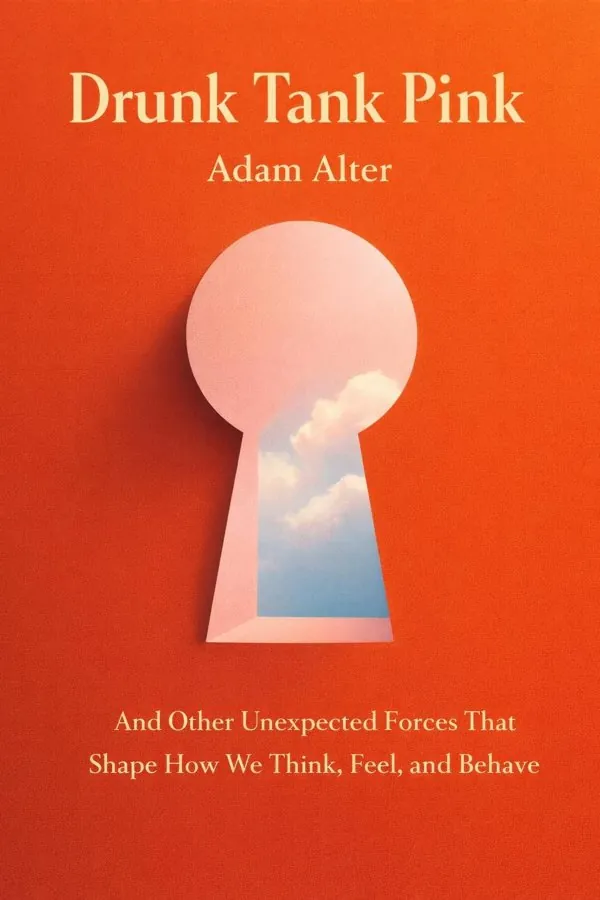
Drunk Tank Pink: And Other Unexpected Forces That Shape How We Think, Feel, and Behave: Summary & Key Insights
by Adam Alter
 10 min7 chaptersAudio available
What Is Drunk Tank Pink: And Other Unexpected Forces That Shape How We Think, Feel, and Behave About?
Drunk Tank Pink: And Other Unexpected Forces That Shape How We Think, Feel, and Behave by Adam Alter is a psychology book spanning 7 pages. Drunk Tank Pink explores the hidden psychological and environmental influences that shape human behavior. Adam Alter examines how factors such as color, names, language, and geography subtly affect our decisions, emotions, and actions, often without our awareness. Drawing on research from psychology, marketing, and behavioral science, the book reveals how context and surroundings can powerfully guide human thought and conduct.
This FizzRead summary covers all 7 key chapters of Drunk Tank Pink: And Other Unexpected Forces That Shape How We Think, Feel, and Behave in approximately 10 minutes, distilling the most important ideas, arguments, and takeaways from Adam Alter's work. Also available as an audio summary and Key Quotes Podcast.
Drunk Tank Pink: And Other Unexpected Forces That Shape How We Think, Feel, and Behave
Drunk Tank Pink explores the hidden psychological and environmental influences that shape human behavior. Adam Alter examines how factors such as color, names, language, and geography subtly affect our decisions, emotions, and actions, often without our awareness. Drawing on research from psychology, marketing, and behavioral science, the book reveals how context and surroundings can powerfully guide human thought and conduct.
Who Should Read Drunk Tank Pink: And Other Unexpected Forces That Shape How We Think, Feel, and Behave?
This book is perfect for anyone interested in psychology and looking to gain actionable insights in a short read. Whether you're a student, professional, or lifelong learner, the key ideas from Drunk Tank Pink: And Other Unexpected Forces That Shape How We Think, Feel, and Behave by Adam Alter will help you think differently.
- ✓Readers who enjoy psychology and want practical takeaways
- ✓Professionals looking to apply new ideas to their work and life
- ✓Anyone who wants the core insights of Drunk Tank Pink: And Other Unexpected Forces That Shape How We Think, Feel, and Behave in just 10 minutes
Want the full summary?
Get instant access to this book summary and 100K+ more with Fizz Moment.
Get Free SummaryAvailable on App Store • Free to download
Key Chapters
Color affects us far beyond aesthetics; it seeps into our biology, emotions, and cognition. One of the most striking examples comes from the shade known as “Drunk Tank Pink.” In the late 1970s, researchers discovered that painting prison cells this particular shade reduced aggression and calmed inmates. The color’s psychological potency isn’t mystical—it interacts with our visual system and nervous responses, subtly altering arousal levels. Pink, it turns out, can pacify even the angriest individuals.
Throughout the research I describe, color emerges as a behavioral lever. Red energizes athletes but increases anxiety in test-takers; blue fosters creativity and cooperation; green restores calm and focus. These effects are so consistent that corporations and governments now deploy color strategically. Think of a fast-food chain’s bright reds and yellows—designed to stimulate appetite and quick turnover—or the soothing blues used by health institutions to signal trust and competence. The power of color resides not just in perception but in association. Across cultures, we’ve coded hues with emotional meanings, and those codes alter physiological reactions almost instantly.
When I first reviewed these studies, I realized how much we underestimate the sensory environment of our lives. We imagine our moods arise from internal states, but the truth is external pigments and shades constantly tug on those emotions. Recognizing this helps us design more mindful spaces—homes, classrooms, and workplaces—where color aids self-regulation instead of undermining it. The trick isn’t to obsess over what hue is ‘correct,’ but to acknowledge that color is never neutral. Every wall, logo, and outfit you encounter has been informed by a long psychological lineage of influence.
Names are linguistic mirrors reflecting expectations, histories, and identities. They seem like mere labels, but research shows names subtly sculpt self-concept and even life outcomes. People with easy-to-pronounce names are often judged more positively; companies bearing resonant names are trusted more readily; and the direction of cultural naming trends tells a deeper story about belonging.
In one example I discuss, individuals with names similar to elite or successful figures perceive themselves—and are perceived by others—as more competent, which shapes opportunities. Even the letters of our initials influence career paths: research revealed an uncanny pattern where people gravitate toward occupations whose initials match their own, like Dennis becoming a dentist. While these effects may sound coincidental, they arise from unconscious affinity—a quiet bias that orients preference and comfort.
But names also operate socially. They signal ethnicity, gender, and class. A résumé with a traditionally African-American name receives fewer callbacks than one with a more familiar Anglo name; a woman changing her surname after marriage may notice subtle shifts in how peers perceive her authority. Brands know this power intuitively. They spend millions crafting names that feel memorable, trustworthy, or innovative, because the phonetic contour of a name can evoke emotional responses faster than any rational argument.
Through exploring these patterns, I hope readers grasp that identity doesn’t begin in the mind alone—it’s a dialogue between inner sense and external signals. A name anchors you in a psychic landscape constructed by culture and expectation. Understanding this relationship helps you navigate how labels shape judgment—and how to reclaim your story even when society tries to write it for you.
+ 5 more chapters — available in the FizzRead app
All Chapters in Drunk Tank Pink: And Other Unexpected Forces That Shape How We Think, Feel, and Behave
About the Author
Adam Alter is an associate professor of marketing at New York University’s Stern School of Business, with an affiliated appointment in the psychology department. His research focuses on judgment, decision-making, and social psychology. He is also the author of Irresistible: The Rise of Addictive Technology and the Business of Keeping Us Hooked.
Get This Summary in Your Preferred Format
Read or listen to the Drunk Tank Pink: And Other Unexpected Forces That Shape How We Think, Feel, and Behave summary by Adam Alter anytime, anywhere. FizzRead offers multiple formats so you can learn on your terms — all free.
Available formats: App · Audio · PDF · EPUB — All included free with FizzRead
Download Drunk Tank Pink: And Other Unexpected Forces That Shape How We Think, Feel, and Behave PDF and EPUB Summary
Key Quotes from Drunk Tank Pink: And Other Unexpected Forces That Shape How We Think, Feel, and Behave
“Color affects us far beyond aesthetics; it seeps into our biology, emotions, and cognition.”
“Names are linguistic mirrors reflecting expectations, histories, and identities.”
Frequently Asked Questions about Drunk Tank Pink: And Other Unexpected Forces That Shape How We Think, Feel, and Behave
Drunk Tank Pink: And Other Unexpected Forces That Shape How We Think, Feel, and Behave by Adam Alter is a psychology book that explores key ideas across 7 chapters. Drunk Tank Pink explores the hidden psychological and environmental influences that shape human behavior. Adam Alter examines how factors such as color, names, language, and geography subtly affect our decisions, emotions, and actions, often without our awareness. Drawing on research from psychology, marketing, and behavioral science, the book reveals how context and surroundings can powerfully guide human thought and conduct.
More by Adam Alter


You Might Also Like

The Body Keeps the Score
Bessel van der Kolk
10 min
Surrounded by Idiots
Thomas Erikson
10 min
Emotional Intelligence
Daniel Goleman
10 min
Attached
Amir Levine
10 min
Why Does He Do That
Lundy Bancroft
10 min
Women Who Run with the Wolves
Clarissa Pinkola Estés
10 minBrowse by Category
Ready to read Drunk Tank Pink: And Other Unexpected Forces That Shape How We Think, Feel, and Behave?
Get the full summary and 100K+ more books with Fizz Moment.