
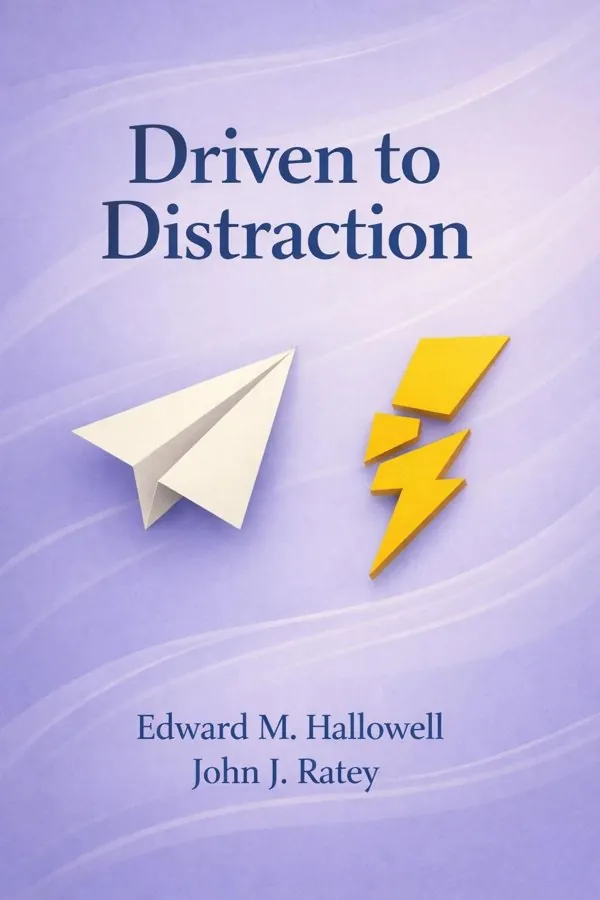
Driven to Distraction: Recognizing and Coping with Attention Deficit Disorder from Childhood Through Adulthood: Summary & Key Insights
by Edward M. Hallowell, John J. Ratey
 10 min13 chaptersAudio available
What Is Driven to Distraction: Recognizing and Coping with Attention Deficit Disorder from Childhood Through Adulthood About?
Driven to Distraction: Recognizing and Coping with Attention Deficit Disorder from Childhood Through Adulthood by Edward M. Hallowell, John J. Ratey is a mental_health book spanning 13 pages. This groundbreaking book explores Attention Deficit Disorder (ADD/ADHD) in both children and adults, offering insights into its symptoms, causes, and treatments. Drawing on clinical experience and research, Hallowell and Ratey provide practical strategies for managing the condition and highlight the strengths often associated with ADD, such as creativity and energy.
This FizzRead summary covers all 13 key chapters of Driven to Distraction: Recognizing and Coping with Attention Deficit Disorder from Childhood Through Adulthood in approximately 10 minutes, distilling the most important ideas, arguments, and takeaways from Edward M. Hallowell, John J. Ratey's work. Also available as an audio summary and Key Quotes Podcast.
Driven to Distraction: Recognizing and Coping with Attention Deficit Disorder from Childhood Through Adulthood
This groundbreaking book explores Attention Deficit Disorder (ADD/ADHD) in both children and adults, offering insights into its symptoms, causes, and treatments. Drawing on clinical experience and research, Hallowell and Ratey provide practical strategies for managing the condition and highlight the strengths often associated with ADD, such as creativity and energy.
Who Should Read Driven to Distraction: Recognizing and Coping with Attention Deficit Disorder from Childhood Through Adulthood?
This book is perfect for anyone interested in mental_health and looking to gain actionable insights in a short read. Whether you're a student, professional, or lifelong learner, the key ideas from Driven to Distraction: Recognizing and Coping with Attention Deficit Disorder from Childhood Through Adulthood by Edward M. Hallowell, John J. Ratey will help you think differently.
- ✓Readers who enjoy mental_health and want practical takeaways
- ✓Professionals looking to apply new ideas to their work and life
- ✓Anyone who wants the core insights of Driven to Distraction: Recognizing and Coping with Attention Deficit Disorder from Childhood Through Adulthood in just 10 minutes
Want the full summary?
Get instant access to this book summary and 100K+ more with Fizz Moment.
Get Free SummaryAvailable on App Store • Free to download
Key Chapters
When we speak of Attention Deficit Disorder, we refer to a condition that affects the way the brain manages attention, impulse control, and activity. It can manifest as distractibility, impulsiveness, restlessness, or inattentiveness. Importantly, ADD is not just a childhood condition – adults live with it too. One of the central misunderstandings about ADD is that it equates to a lack of willpower or discipline. In fact, it reflects a neurological difference, not a moral failing.
ADD exists across a continuum. Some people experience hyperactivity and constant movement; others seem quiet and daydreamy. But the common thread is difficulty sustaining attention on tasks that lack immediate interest. These brains physiologically crave stimulation. As clinicians, we saw that conventional environments – classrooms, offices, even relationships – often fail to provide the kind of engagement that keeps those with ADD focused.
In this book, we take care to distinguish ADD from other conditions such as anxiety disorders, mood disorders, or learning disabilities. Mislabeling is common, and misunderstanding can compound psychological pain. Recognizing ADD for what it truly is allows for more compassionate treatment. As we explain, ADD’s prevalence is higher than many realize, affecting adults long after school years are behind them. By acknowledging this, individuals begin to reclaim power over their attention instead of being dominated by distraction.
Historically, ADD was misunderstood for decades. Before modern psychiatry recognized it as a neurological condition, those who displayed its symptoms were often labeled as lazy, undisciplined, or defiant. Pediatrics literature from the early twentieth century described similar behaviors as 'minimal brain dysfunction,' a term implying vague neurological impairment without clear understanding. Over time, research and clinical observation began to reveal consistent patterns across cases, leading to the modern conception of Attention Deficit Disorder.
In our work as psychiatrists, we observed that many patients only received the diagnosis in adulthood. They had lived through years of frustration, compensating for difficulties in attention and impulse control. The evolution of diagnostic criteria, especially in the 1980s and 1990s, expanded recognition beyond hyperactive children to include those who were primarily inattentive. This shift was crucial: many individuals who had quietly struggled finally found an explanation that fit.
The clinical understanding of ADD now rests on neurological evidence. Advances in imaging and biochemical studies have shown that certain areas of the brain involved in executive function – particularly the prefrontal cortex and its connection to dopamine systems – behave differently in those with ADD. This biological validation relieved many from the guilt and misunderstanding attached to the condition. Understanding its clinical roots also opened pathways for effective treatments – both pharmacological and behavioral – tailored to the individual rather than punitive or moralistic responses.
+ 11 more chapters — available in the FizzRead app
All Chapters in Driven to Distraction: Recognizing and Coping with Attention Deficit Disorder from Childhood Through Adulthood
About the Authors
Edward M. Hallowell, M.D., is a psychiatrist and leading authority on ADHD, known for his work in clinical practice and public education. John J. Ratey, M.D., is a clinical associate professor of psychiatry at Harvard Medical School and an expert in neuropsychiatry and brain function.
Get This Summary in Your Preferred Format
Read or listen to the Driven to Distraction: Recognizing and Coping with Attention Deficit Disorder from Childhood Through Adulthood summary by Edward M. Hallowell, John J. Ratey anytime, anywhere. FizzRead offers multiple formats so you can learn on your terms — all free.
Available formats: App · Audio · PDF · EPUB — All included free with FizzRead
Download Driven to Distraction: Recognizing and Coping with Attention Deficit Disorder from Childhood Through Adulthood PDF and EPUB Summary
Key Quotes from Driven to Distraction: Recognizing and Coping with Attention Deficit Disorder from Childhood Through Adulthood
“When we speak of Attention Deficit Disorder, we refer to a condition that affects the way the brain manages attention, impulse control, and activity.”
“Historically, ADD was misunderstood for decades.”
Frequently Asked Questions about Driven to Distraction: Recognizing and Coping with Attention Deficit Disorder from Childhood Through Adulthood
Driven to Distraction: Recognizing and Coping with Attention Deficit Disorder from Childhood Through Adulthood by Edward M. Hallowell, John J. Ratey is a mental_health book that explores key ideas across 13 chapters. This groundbreaking book explores Attention Deficit Disorder (ADD/ADHD) in both children and adults, offering insights into its symptoms, causes, and treatments. Drawing on clinical experience and research, Hallowell and Ratey provide practical strategies for managing the condition and highlight the strengths often associated with ADD, such as creativity and energy.
More by Edward M. Hallowell, John J. Ratey
Delivered from Distraction: Getting the Most out of Life with Attention Deficit Disorder
Edward M. Hallowell, John J. Ratey
10 min
ADHD 2.0: New Science and Essential Strategies for Thriving with Distraction—from Childhood through Adulthood
Edward M. Hallowell, John J. Ratey
10 minYou Might Also Like
Big Feelings: How to Be Okay When Things Are Not Okay
Liz Fosslien, Mollie West Duffy
10 min
Creative Arts Therapies Handbook: Art, Music and Dance Therapy Practices for Wellbeing
Susan I. Buchalter
10 min
Emotional First Aid: Healing Rejection, Guilt, Failure, and Other Everyday Hurts
Guy Winch
10 min
Lost Connections: Why You're Depressed and How to Find Hope
Johann Hari
10 min
No Time to Panic: How to Stop Worrying and Embrace Life
Matt Gutman
10 min
Overcoming Mobbing: A Recovery Guide for Workplace Aggression and Bullying
Maureen Duffy, Len Sperry
10 minBrowse by Category
Ready to read Driven to Distraction: Recognizing and Coping with Attention Deficit Disorder from Childhood Through Adulthood?
Get the full summary and 100K+ more books with Fizz Moment.