
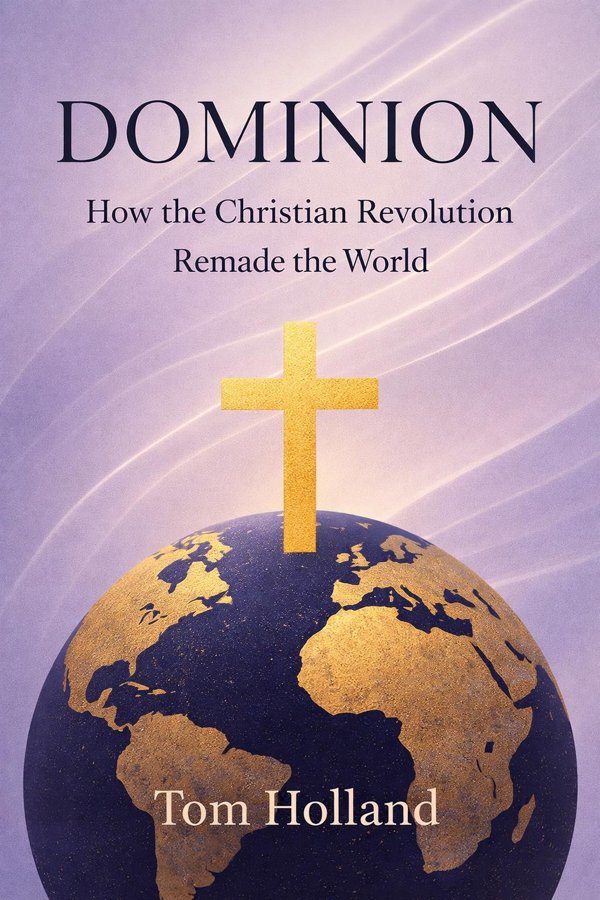
Dominion: How the Christian Revolution Remade the World: Summary & Key Insights
by Tom Holland
 10 min13 chaptersAudio available
What Is Dominion: How the Christian Revolution Remade the World About?
Dominion: How the Christian Revolution Remade the World by Tom Holland is a civilization book spanning 13 pages. Dominion is a sweeping history that explores how the Christian revolution transformed the Western imagination. Historian Tom Holland traces the influence of Christianity from its origins to the modern era, showing how its moral and philosophical values shaped Western civilization, even in its most secular forms.
This FizzRead summary covers all 13 key chapters of Dominion: How the Christian Revolution Remade the World in approximately 10 minutes, distilling the most important ideas, arguments, and takeaways from Tom Holland's work. Also available as an audio summary and Key Quotes Podcast.
Dominion: How the Christian Revolution Remade the World
Dominion is a sweeping history that explores how the Christian revolution transformed the Western imagination. Historian Tom Holland traces the influence of Christianity from its origins to the modern era, showing how its moral and philosophical values shaped Western civilization, even in its most secular forms.
Who Should Read Dominion: How the Christian Revolution Remade the World?
This book is perfect for anyone interested in civilization and looking to gain actionable insights in a short read. Whether you're a student, professional, or lifelong learner, the key ideas from Dominion: How the Christian Revolution Remade the World by Tom Holland will help you think differently.
- ✓Readers who enjoy civilization and want practical takeaways
- ✓Professionals looking to apply new ideas to their work and life
- ✓Anyone who wants the core insights of Dominion: How the Christian Revolution Remade the World in just 10 minutes
Want the full summary?
Get instant access to this book summary and 100K+ more with Fizz Moment.
Get Free SummaryAvailable on App Store • Free to download
Key Chapters
To understand the Christian revolution, we must begin in a world that knew nothing of its ideals. The civilizations of Greece and Rome stood upon pillars of honor and hierarchy. In Rome, the word 'virtue' was tied to masculinity and strength; moral excellence belonged to the powerful, not the weak. Slavery was a natural fact, women were subordinated, and civic virtue demanded public glory above private compassion.
The gods themselves mirrored this structure. They were capricious, proud, and indifferent to human suffering. Mercy was not a virtue — it was weakness. The strong triumphed, and the defeated were despised. I wanted my readers to feel this world’s foreignness because only by doing so can we grasp the magnitude of Christianity’s transformation. The moral habits that seem self-evident to us today — that every human life possesses intrinsic value, that compassion is noble, that the meek deserve care — were inconceivable in pagan moral thought.
The Greco-Roman world of Cicero and Caesar is, in many ways, the foil against which Christianity’s light shines most starkly. It was a civilization of immense achievement but moral limits. Its ethics of reciprocity and reputation could produce order but not mercy. And it is into this environment that a strange new idea — born from Judaism and crystallized in the life and death of one man — began its quiet revolution.
The Jewish people introduced into this Mediterranean world something extraordinary: monotheism intertwined with moral demand. The prophets of Israel did not speak of gods who required flattery or sacrifice for favor. They proclaimed a single, just God who cared for the poor, the widow, and the stranger. History, for them, was the theatre of divine purpose — every person mattered because they were made in God’s image.
For me, this was the origin of Christianity’s subversive strength. Judaism had already broken with pagan fatalism. It envisioned justice not as the privilege of the strong but as the command of a divine moral lawgiver. Christianity would radicalize this insight further — not merely that God demanded justice, but that God Himself would suffer injustice to redeem his creation.
The Jewish heritage taught that morality flowed from divine compassion, not cosmic indifference. In the coming chapters, we will see how this idea, translated into the life and crucifixion of Jesus, overturned the ancient world’s values and became the seedbed of an entirely new moral consciousness.
+ 11 more chapters — available in the FizzRead app
All Chapters in Dominion: How the Christian Revolution Remade the World
About the Author
Tom Holland is a British historian and author known for his works on ancient and medieval history. He has written extensively on Rome, Persia, and Christianity, and is recognized for his accessible yet scholarly narrative style.
Get This Summary in Your Preferred Format
Read or listen to the Dominion: How the Christian Revolution Remade the World summary by Tom Holland anytime, anywhere. FizzRead offers multiple formats so you can learn on your terms — all free.
Available formats: App · Audio · PDF · EPUB — All included free with FizzRead
Download Dominion: How the Christian Revolution Remade the World PDF and EPUB Summary
Key Quotes from Dominion: How the Christian Revolution Remade the World
“To understand the Christian revolution, we must begin in a world that knew nothing of its ideals.”
“The Jewish people introduced into this Mediterranean world something extraordinary: monotheism intertwined with moral demand.”
Frequently Asked Questions about Dominion: How the Christian Revolution Remade the World
Dominion: How the Christian Revolution Remade the World by Tom Holland is a civilization book that explores key ideas across 13 chapters. Dominion is a sweeping history that explores how the Christian revolution transformed the Western imagination. Historian Tom Holland traces the influence of Christianity from its origins to the modern era, showing how its moral and philosophical values shaped Western civilization, even in its most secular forms.
More by Tom Holland
You Might Also Like
The Structure of Scientific Revolutions
Thomas S. Kuhn
10 min
Genius
Harold Bloom
10 min
A Cultural History of the Medieval Age
Various Editors
10 min
A History of God: The 4,000-Year Quest of Judaism, Christianity and Islam
Karen Armstrong
10 min
A History of the World in 10½ Chapters
Julian Barnes
10 min
A Short History of Progress
Ronald Wright
10 minBrowse by Category
Ready to read Dominion: How the Christian Revolution Remade the World?
Get the full summary and 100K+ more books with Fizz Moment.