
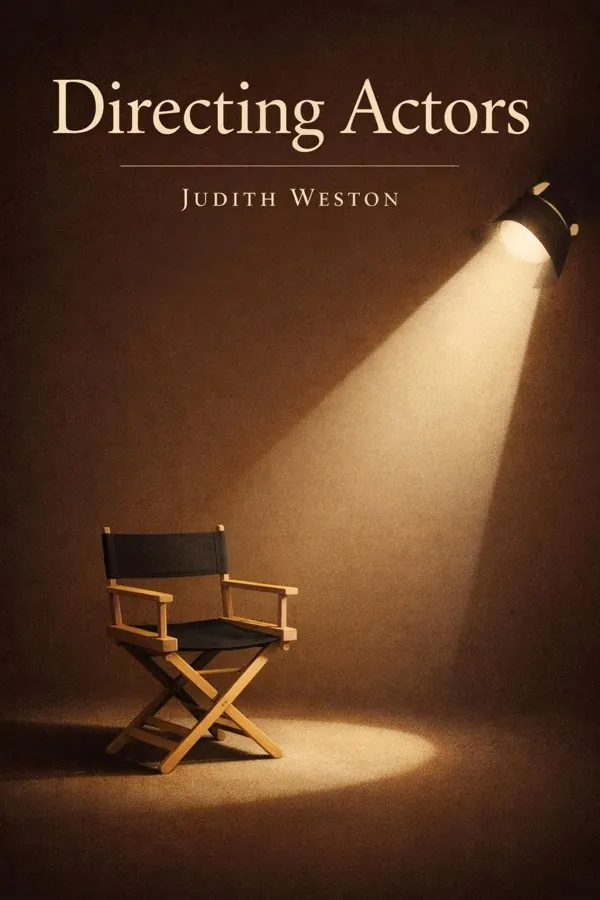
Directing Actors: Creating Memorable Performances for Film and Television: Summary & Key Insights
 10 min13 chaptersAudio available
What Is Directing Actors: Creating Memorable Performances for Film and Television About?
Directing Actors: Creating Memorable Performances for Film and Television by Judith Weston is a performing_arts book spanning 13 pages. Directing Actors is a comprehensive guide for film and television directors on how to communicate effectively with actors to elicit authentic and emotionally resonant performances. Drawing from her experience as a teacher and coach, Judith Weston provides practical tools, exercises, and insights into the actor-director relationship, emphasizing collaboration, trust, and the creative process.
This FizzRead summary covers all 13 key chapters of Directing Actors: Creating Memorable Performances for Film and Television in approximately 10 minutes, distilling the most important ideas, arguments, and takeaways from Judith Weston's work. Also available as an audio summary and Key Quotes Podcast.
Directing Actors: Creating Memorable Performances for Film and Television
Directing Actors is a comprehensive guide for film and television directors on how to communicate effectively with actors to elicit authentic and emotionally resonant performances. Drawing from her experience as a teacher and coach, Judith Weston provides practical tools, exercises, and insights into the actor-director relationship, emphasizing collaboration, trust, and the creative process.
Who Should Read Directing Actors: Creating Memorable Performances for Film and Television?
This book is perfect for anyone interested in performing_arts and looking to gain actionable insights in a short read. Whether you're a student, professional, or lifelong learner, the key ideas from Directing Actors: Creating Memorable Performances for Film and Television by Judith Weston will help you think differently.
- ✓Readers who enjoy performing_arts and want practical takeaways
- ✓Professionals looking to apply new ideas to their work and life
- ✓Anyone who wants the core insights of Directing Actors: Creating Memorable Performances for Film and Television in just 10 minutes
Want the full summary?
Get instant access to this book summary and 100K+ more with Fizz Moment.
Get Free SummaryAvailable on App Store • Free to download
Key Chapters
To direct actors effectively, you must begin with an understanding of what acting really is. Many directors assume acting is imitation or emotional display; in reality, it is behavior under imaginary circumstances. Every actor approaches that task from a specific training lineage: Stanislavski’s system of objectives and actions, Meisner’s concentration on truthful impulses, Strasberg’s emotional memory, Adler’s imagination-driven analysis, and many others. You don’t need to master every school, but you must understand the underlying principle they share: acting is about pursuing objectives moment by moment in response to one’s surroundings and fellow actors.
Too often, directors give what I call “result directions”—telling actors *how* a moment should look or *what* emotion should appear. When you tell an actor to “cry more” or “be more seductive,” you’re forcing them into judgment rather than creative exploration. But if you offer them a precise action—“beg,” “challenge,” “tempt”—you engage their craft. Actions are playable; they lead to behavior rather than posing. Your understanding of that difference marks you as a director who knows the actor’s world.
Actors must cultivate vulnerability; they make themselves emotionally available in profoundly personal ways. As a director, your empathy for their process determines whether you’ll get authentic work or mechanical recitation. The best performances arise when an actor feels safe enough to risk failure. That safety comes from you—the quiet assurance in your manner, the clarity of your communication, and your respect for the mystery of their process.
Trust is the oxygen of the actor-director relationship. Without it, actors protect themselves; they hide behind technique or charm. Your first task, even before blocking a scene, is to create an atmosphere where actors feel seen, not judged. I have found that simple listening—genuine, uninterrupted listening—does more to establish trust than any display of authority.
Good communication depends on learning how to translate your vision into language actors can act upon. Actors think in terms of actions and objectives, not concepts like “motivation” or “tone.” When you can transform your note from “Play it more urgently” to “Make him stay,” everything changes. That small linguistic shift gives the actor a clear action that automatically generates emotion without forcing it.
During rehearsals, ask questions rather than issue orders. “What does your character want in this moment?” encourages ownership. If an actor’s idea surprises you, let it. Collaboration means allowing discovery. When actors sense that their impulses matter, they begin to take creative risks, and your film gains layers you couldn’t have written alone.
+ 11 more chapters — available in the FizzRead app
All Chapters in Directing Actors: Creating Memorable Performances for Film and Television
About the Author
Judith Weston is an American acting coach, author, and teacher known for her influential work with directors and actors in film and television. She has taught workshops internationally and is recognized for her books on directing and performance, which have become essential reading in film schools and professional training programs.
Get This Summary in Your Preferred Format
Read or listen to the Directing Actors: Creating Memorable Performances for Film and Television summary by Judith Weston anytime, anywhere. FizzRead offers multiple formats so you can learn on your terms — all free.
Available formats: App · Audio · PDF · EPUB — All included free with FizzRead
Download Directing Actors: Creating Memorable Performances for Film and Television PDF and EPUB Summary
Key Quotes from Directing Actors: Creating Memorable Performances for Film and Television
“To direct actors effectively, you must begin with an understanding of what acting really is.”
“Trust is the oxygen of the actor-director relationship.”
Frequently Asked Questions about Directing Actors: Creating Memorable Performances for Film and Television
Directing Actors: Creating Memorable Performances for Film and Television by Judith Weston is a performing_arts book that explores key ideas across 13 chapters. Directing Actors is a comprehensive guide for film and television directors on how to communicate effectively with actors to elicit authentic and emotionally resonant performances. Drawing from her experience as a teacher and coach, Judith Weston provides practical tools, exercises, and insights into the actor-director relationship, emphasizing collaboration, trust, and the creative process.
You Might Also Like
Harriet Tubman: Live in Concert
Bob the Drag Queen
10 min
The Art of Stagecraft
Robert Edmond Jones
10 min
The Art of Stop-Motion Animation
Ken A. Priebe
10 min
Thunderstorm
Cao Yu
10 min
Acting In Film: An Actor's Take on Movie Making
Michael Caine
10 min
Character Animation Crash Course!
Eric Goldberg
10 minBrowse by Category
Ready to read Directing Actors: Creating Memorable Performances for Film and Television?
Get the full summary and 100K+ more books with Fizz Moment.