
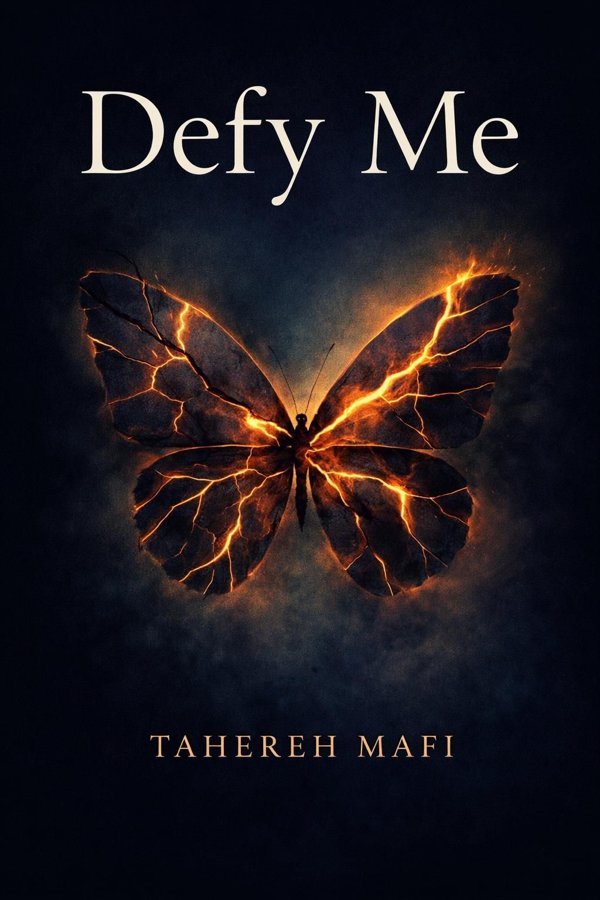
Defy Me: Summary & Key Insights
by Tahereh Mafi
 10 min9 chaptersAudio available
Key Takeaways from Defy Me
Sometimes the most frightening prison is not a physical cell but a mind that can no longer trust its own memories.
The people who appear strongest are often carrying the most carefully hidden fractures.
Humor can be a survival strategy, but it can also conceal exhaustion.
Control becomes nearly absolute when those in power can rewrite not only your future but your past.
Some families pass down love; others pass down damage disguised as power.
What Is Defy Me About?
Defy Me by Tahereh Mafi is a bestsellers book spanning 6 pages. Defy Me, the fifth installment in Tahereh Mafi’s bestselling Shatter Me series, is a turning point disguised as a collapse. The novel begins after betrayal, separation, and psychological damage have pushed Juliette Ferrars to the edge of herself. What follows is not just another dystopian rebellion story, but a deeper confrontation with memory, manipulation, identity, and love under pressure. As Juliette learns devastating truths about her past, her family, and the machinery of the Reestablishment, she is forced to ask a terrifying question: if your history was rewritten for you, who are you really? What makes Defy Me matter is the way it combines high-stakes political conflict with intimate emotional unraveling. Tahereh Mafi excels at turning inner turmoil into narrative momentum, using lyrical prose, fractured perspective, and sharp emotional intensity to explore what happens when power and trauma collide. More than a bridge in an ongoing series, this book expands the mythology of the world while deepening its central relationships. For readers invested in character-driven dystopian fiction, Defy Me offers revelation, heartbreak, and the difficult hope of self-reclamation.
This FizzRead summary covers all 9 key chapters of Defy Me in approximately 10 minutes, distilling the most important ideas, arguments, and takeaways from Tahereh Mafi's work. Also available as an audio summary and Key Quotes Podcast.
Defy Me
Defy Me, the fifth installment in Tahereh Mafi’s bestselling Shatter Me series, is a turning point disguised as a collapse. The novel begins after betrayal, separation, and psychological damage have pushed Juliette Ferrars to the edge of herself. What follows is not just another dystopian rebellion story, but a deeper confrontation with memory, manipulation, identity, and love under pressure. As Juliette learns devastating truths about her past, her family, and the machinery of the Reestablishment, she is forced to ask a terrifying question: if your history was rewritten for you, who are you really?
What makes Defy Me matter is the way it combines high-stakes political conflict with intimate emotional unraveling. Tahereh Mafi excels at turning inner turmoil into narrative momentum, using lyrical prose, fractured perspective, and sharp emotional intensity to explore what happens when power and trauma collide. More than a bridge in an ongoing series, this book expands the mythology of the world while deepening its central relationships. For readers invested in character-driven dystopian fiction, Defy Me offers revelation, heartbreak, and the difficult hope of self-reclamation.
Who Should Read Defy Me?
This book is perfect for anyone interested in bestsellers and looking to gain actionable insights in a short read. Whether you're a student, professional, or lifelong learner, the key ideas from Defy Me by Tahereh Mafi will help you think differently.
- ✓Readers who enjoy bestsellers and want practical takeaways
- ✓Professionals looking to apply new ideas to their work and life
- ✓Anyone who wants the core insights of Defy Me in just 10 minutes
Want the full summary?
Get instant access to this book summary and 100K+ more with Fizz Moment.
Get Free SummaryAvailable on App Store • Free to download
Key Chapters
Sometimes the most frightening prison is not a physical cell but a mind that can no longer trust its own memories. Defy Me opens with Juliette awakening in an unfamiliar place, mentally disoriented and emotionally detached. Her thoughts feel fractured, her reactions delayed, and her sense of self unstable. This confusion is not simply a dramatic plot device; it becomes the emotional core of the novel. Juliette is confronting the possibility that the story she has told herself about who she is may have been constructed, edited, or weaponized by others.
Mafi uses this disorientation to show how identity can be shaped by trauma. Juliette is not merely weak or confused. She is someone whose past has been manipulated so thoroughly that certainty itself has become inaccessible. The novel asks readers to consider how much of identity depends on memory, and what happens when memory can no longer be trusted. That question resonates beyond the fictional world. In real life, people often build themselves around family stories, labels, expectations, and survival habits. When those foundations crack, the result can feel devastating—but it can also create room for a truer self to emerge.
Juliette’s awakening illustrates that healing rarely begins with clarity. It often begins with confusion, with the realization that something is wrong. Before transformation comes, illusion must break. Her collapse is painful, but it also marks the beginning of an honest reckoning.
Actionable takeaway: When you feel uncertain about who you are, do not rush to force certainty. Start by identifying which beliefs about yourself are truly yours and which may have been handed to you by fear, trauma, or other people.
The people who appear strongest are often carrying the most carefully hidden fractures. While Juliette struggles through her mental fog, Warner is driven by fear, grief, and urgency. His search for her is not only an act of love; it is also an act of reckoning. As revelations about his family and Juliette’s past intensify, Warner can no longer rely solely on composure, strategy, and emotional restraint. He is forced to confront truths that destabilize the carefully controlled identity he has spent years constructing.
What makes Warner’s role in Defy Me compelling is that he is not searching only for Juliette. He is also searching for a moral center in a world built on manipulation. Raised under brutality and secrecy, he has learned to survive by mastering himself. But survival and wholeness are not the same thing. The novel shows how emotional control can look like strength while actually concealing wounds that have never been addressed. Warner’s devotion to Juliette becomes meaningful because it is paired with vulnerability. He is not just protective; he is exposed.
This idea applies beyond fiction. Many people learn to become highly competent in environments that reward emotional suppression. They become dependable, sharp, and disciplined, yet still struggle to trust, grieve, or speak honestly about pain. Warner’s arc suggests that love without self-confrontation becomes brittle. True resilience requires both steadiness and emotional truth.
His journey also reinforces an important theme in the series: that people shaped by darkness are not doomed to reproduce it. They can choose differently, though that choice is difficult and ongoing.
Actionable takeaway: If you are always the composed one, ask yourself what emotions your competence may be hiding. Strength grows when you pair capability with honest self-examination.
Humor can be a survival strategy, but it can also conceal exhaustion. Kenji’s perspective brings energy, wit, and emotional realism to Defy Me, yet beneath his jokes is a leader trying to keep a broken resistance from splintering. He represents the ordinary human cost of revolution: the burden of holding people together when morale is fading, plans are failing, and trust has become unstable.
Kenji matters because he grounds the novel’s more dramatic revelations in practical reality. While Juliette and Warner wrestle with identity and family secrets, Kenji deals with the consequences of those struggles on the broader movement. Rebellion is not just about symbolic victories or grand speeches; it requires logistics, communication, and emotional endurance. People must continue choosing one another even after disappointment. Through Kenji, Mafi shows that leadership often means staying present when no one feels confident.
This idea has broad relevance. In any group under pressure—a family, workplace, activist movement, or friend circle—the person who keeps morale alive performs invisible labor. They translate panic into action, tension into laughter, and uncertainty into momentum. Yet those people are often overlooked because they make survival look easier than it is. Kenji’s loyalty is not simplistic optimism. It is disciplined hope.
Defy Me also reminds readers that fractured groups rarely need perfection; they need honesty, adaptability, and people willing to continue despite fear. Kenji embodies that principle. He cannot solve everything, but he refuses to abandon the work of connection.
Actionable takeaway: If you are helping hold others together, make your support visible and sustainable. Name what is hard, ask for help, and remember that maintaining hope is itself a meaningful form of leadership.
Control becomes nearly absolute when those in power can rewrite not only your future but your past. One of Defy Me’s most unsettling contributions to the Shatter Me series is its deeper exploration of memory manipulation. The Reestablishment does not merely govern through violence, surveillance, and fear; it also exerts power through distortion, erasure, and psychological engineering. By tampering with memory, it weakens autonomy at the most intimate level.
For Juliette, this means that her confusion is political as well as personal. She has not simply forgotten things. Her sense of reality has been interfered with by systems and individuals who understood that memory anchors identity. If a person cannot trust what they remember, they become easier to isolate, redirect, and control. This raises the stakes of the novel considerably. The battle is no longer only over territory or leadership. It is over interpretation itself.
Readers can relate to this theme even outside speculative fiction. In everyday life, power often operates by shaping narratives: family members retell events to protect themselves, institutions suppress inconvenient truths, and public discourse can normalize distortions until people doubt their own perceptions. While Defy Me dramatizes this through science-fiction elements, the underlying warning is familiar: whoever controls the story controls the self.
Mafi suggests that reclaiming memory is not just an emotional process but an act of resistance. To remember clearly is to recover agency. To question imposed narratives is to reopen possibility. Juliette’s pain reveals how dangerous it is to surrender narrative authority to people who benefit from your confusion.
Actionable takeaway: Pay attention to the stories that define your life. When something feels inconsistent, investigate it. Reclaiming your perspective is a powerful first step toward reclaiming control.
Some families pass down love; others pass down damage disguised as power. Anderson remains one of the most corrosive forces in the series, and in Defy Me his influence is felt not only through direct threat but through legacy. He represents a system in human form: abusive, controlling, manipulative, and convinced that domination is wisdom. Confronting him is never only about defeating a villain. It is about exposing the logic that made him possible and rejecting the values he planted in those around him.
For Warner especially, Anderson’s shadow is deeply personal. A parent’s cruelty can linger long after physical proximity ends, shaping expectations about authority, worth, and intimacy. Mafi uses this father-son dynamic to show how inherited corruption works. Harm is transmitted through example, through silence, through fear, and through the false belief that ruthlessness is the only path to survival. Anderson thrives because he understands that broken people are easier to control.
Juliette’s confrontation with the truths surrounding Anderson expands this theme further. Families in Defy Me are not safe, stable categories. They are contested spaces filled with secrets, manipulation, and competing versions of loyalty. Yet the novel refuses fatalism. It insists that inheritance influences people but does not fully define them.
This is one of the story’s more practical insights. Many people spend years untangling themselves from family systems that taught them to distrust vulnerability, accept chaos, or equate control with care. Defy Me dramatizes the painful but necessary work of naming those patterns. You cannot break a cycle you refuse to identify.
Actionable takeaway: Examine what forms of fear, silence, or control you may have inherited. Naming unhealthy patterns from your past is a crucial step toward refusing to repeat them.
A hidden name can become a hidden life. One of the novel’s most important revelations is that Juliette Ferrars is also Ella Sommers, and this discovery transforms the story from one of survival into one of reintegration. The point is not simply that she had another identity before. It is that she must now confront the painful fact that Juliette and Ella are not enemies, but fragments of the same person divided by trauma, manipulation, and necessity.
Mafi handles this transformation with emotional complexity. Juliette does not instantly absorb the truth and emerge stronger. She must wrestle with grief for the self she thought she was, fear of the self she may have been, and uncertainty about whether these identities can coexist. This is what makes the idea so resonant. Personal growth rarely involves becoming someone completely new. More often, it involves recovering parts of ourselves we were taught to bury.
The fusion of Juliette and Ella also mirrors a universal experience: people adapt to survive. A child in danger may become quiet, compliant, or disconnected. An ambitious person may become hard and distant. A wounded person may split private truth from public performance. Later, healing requires not shame but integration. The goal is not to erase former selves but to understand why they existed.
In Defy Me, power increases when Juliette stops treating her fractured self as evidence of weakness. Her wholeness emerges not from denial, but from acknowledgment. That is a deeply hopeful message. Identity can be broken apart, but it can also be rebuilt with greater honesty than before.
Actionable takeaway: Instead of rejecting earlier versions of yourself, ask what they were protecting. Integration begins when you treat your past selves with curiosity rather than contempt.
Love sounds simple until fear, secrecy, and power begin to distort it. Defy Me places relationships under extreme pressure, especially the bond between Juliette and Warner. Their connection is no longer sustained by attraction alone. It must survive concealed histories, emotional instability, political danger, and revelations that would break less committed people. In this sense, the novel treats romance not as escape from the plot but as one of its central testing grounds.
What makes their relationship meaningful is not the absence of difficulty but the insistence on honesty. Both characters have reasons to hide, withdraw, or control the narrative. Yet the book shows that intimacy deepens only when people risk being fully known. Juliette must decide whether she can trust Warner even as her reality destabilizes. Warner must decide whether love means protecting Juliette from pain or standing beside her while she faces it. These are mature relational questions disguised within a young adult dystopian framework.
Readers can easily apply this insight to real life. Relationships often struggle not because people lack feeling, but because stress reveals unexamined habits: shutting down, overprotecting, assuming, withholding, or trying to manage the other person’s emotions. Defy Me suggests that trust is not built by avoiding hard truths. It is built by moving through them without abandoning one another.
The novel also challenges the fantasy that love fixes trauma. It does not. But love can create conditions in which healing becomes more possible—when it is rooted in respect, communication, and choice rather than dependency.
Actionable takeaway: In high-stress relationships, do not ask only whether love is present. Ask whether honesty, respect, and mutual courage are present too. Those qualities determine whether love can endure pressure.
Having great power means little if someone else still controls your mind, story, or choices. Juliette has always been marked as extraordinary because of her abilities, but Defy Me sharpens an important distinction: power is not the same as agency. Throughout the novel, she possesses immense potential, yet remains constrained by misinformation, psychological damage, and systems designed to direct her toward others’ goals.
This distinction matters because many stories confuse capacity with freedom. Juliette can do remarkable things, but until she understands who she is and what has been done to her, her power remains unstable. It can be feared, exploited, or misdirected. Mafi therefore frames personal empowerment not as the discovery of strength alone, but as the recovery of authorship. Juliette must become someone who not only has power but can choose how to use it.
That lesson extends beyond the novel. A person may be talented, intelligent, attractive, wealthy, or influential and still lack agency if they are trapped in manipulation, self-doubt, or systems they never consented to. Potential becomes meaningful only when paired with self-knowledge and decision-making power. Defy Me asks readers to think carefully about what liberation really means.
The novel also suggests that agency develops gradually. It emerges through truth, boundaries, and the willingness to challenge imposed roles. Juliette’s evolution is compelling because she is not becoming powerful for the first time; she is learning to own what was always hers.
Actionable takeaway: If you feel capable but stuck, look beyond your strengths and ask where your actual decision-making power is limited. Reclaiming agency often starts with naming where your choices are being shaped by fear or control.
Trust becomes meaningful only when it survives revelation. By the end of Defy Me, nearly every major relationship has been tested by secrets, shifting loyalties, and emotional upheaval. The novel repeatedly returns to a central truth: trust is not a default setting. It is not guaranteed by love, history, or shared goals. It must be actively chosen, rebuilt, and defended.
This theme is especially important in a story filled with manipulation. When memories can be altered and institutions lie as a matter of policy, trust cannot rely on appearances. Characters must learn to evaluate integrity through action, consistency, and vulnerability. Juliette’s journey toward renewed trust is difficult because she has every reason to be suspicious. Yet the novel avoids cynicism. It does not argue that trust is naive. It argues that trust without discernment is dangerous, but trust with awareness is necessary.
That insight has practical force. People often think of trust as a feeling, but Defy Me presents it as a practice. You assess whether someone tells the truth when it is costly, whether they respect your autonomy, whether they remain steady under pressure, and whether they repair harm rather than dismiss it. This moves trust from sentiment to evidence.
Reconciliation in the novel is therefore hard-earned. It does not erase pain or confusion. It creates a path forward by recognizing that fractured relationships can be rebuilt when honesty replaces control. That is a more durable and realistic vision of connection.
Actionable takeaway: Treat trust as something you evaluate through patterns, not promises. Look for honesty, accountability, and respect for your autonomy before you offer deeper belief.
All Chapters in Defy Me
About the Author
Tahereh Mafi is an Iranian-American novelist widely recognized for the bestselling Shatter Me series, which helped establish her as a major voice in young adult speculative fiction. Her work is known for lyrical language, emotionally charged storytelling, and recurring themes of identity, power, trauma, and resilience. Mafi has a distinctive style that combines intimate psychological narration with high-stakes fantasy and dystopian elements, earning her a devoted global readership. Beyond the Shatter Me universe, she has written additional novels for young adult and middle-grade audiences, continuing to explore complex inner lives through imaginative settings. Her stories often center on characters learning to reclaim themselves in worlds designed to silence or control them. Tahereh Mafi lives in California with her husband, fellow author Ransom Riggs.
Get This Summary in Your Preferred Format
Read or listen to the Defy Me summary by Tahereh Mafi anytime, anywhere. FizzRead offers multiple formats so you can learn on your terms — all free.
Available formats: App · Audio · PDF · EPUB — All included free with FizzRead
Download Defy Me PDF and EPUB Summary
Key Quotes from Defy Me
“Sometimes the most frightening prison is not a physical cell but a mind that can no longer trust its own memories.”
“The people who appear strongest are often carrying the most carefully hidden fractures.”
“Humor can be a survival strategy, but it can also conceal exhaustion.”
“Control becomes nearly absolute when those in power can rewrite not only your future but your past.”
“Some families pass down love; others pass down damage disguised as power.”
Frequently Asked Questions about Defy Me
Defy Me by Tahereh Mafi is a bestsellers book that explores key ideas across 9 chapters. Defy Me, the fifth installment in Tahereh Mafi’s bestselling Shatter Me series, is a turning point disguised as a collapse. The novel begins after betrayal, separation, and psychological damage have pushed Juliette Ferrars to the edge of herself. What follows is not just another dystopian rebellion story, but a deeper confrontation with memory, manipulation, identity, and love under pressure. As Juliette learns devastating truths about her past, her family, and the machinery of the Reestablishment, she is forced to ask a terrifying question: if your history was rewritten for you, who are you really? What makes Defy Me matter is the way it combines high-stakes political conflict with intimate emotional unraveling. Tahereh Mafi excels at turning inner turmoil into narrative momentum, using lyrical prose, fractured perspective, and sharp emotional intensity to explore what happens when power and trauma collide. More than a bridge in an ongoing series, this book expands the mythology of the world while deepening its central relationships. For readers invested in character-driven dystopian fiction, Defy Me offers revelation, heartbreak, and the difficult hope of self-reclamation.
More by Tahereh Mafi



You Might Also Like

The Godfather
Mario Puzo
10 min
The Handmaid's Tale
Margaret Atwood
10 min
The Hunger Games
Suzanne Collins
10 min
The Nightingale
Kristin Hannah
10 min
The Seven Husbands of Evelyn Hugo
Taylor Jenkins Reid
10 min
Backwater Justice
Fern Michaels
10 minBrowse by Category
Ready to read Defy Me?
Get the full summary and 100K+ more books with Fizz Moment.