
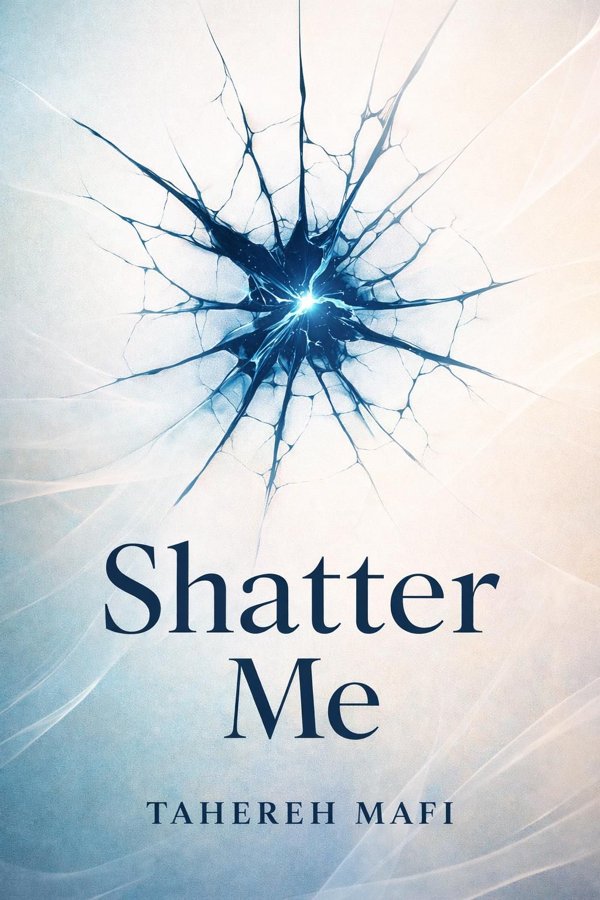
Shatter Me: Summary & Key Insights
by Tahereh Mafi
 10 min8 chaptersAudio available
Key Takeaways from Shatter Me
Sometimes the traits that make us powerful first appear in life as sources of shame.
A mind left alone with fear will often become its own prison.
Oppression rarely introduces itself honestly.
How a story is told can be as important as what happens in it.
One caring relationship cannot erase trauma, but it can interrupt its logic.
What Is Shatter Me About?
Shatter Me by Tahereh Mafi is a general book. What happens when the one thing that makes you extraordinary also makes you untouchable? In Shatter Me, Tahereh Mafi introduces Juliette Ferrars, a teenage girl whose skin is lethal: a single touch can cripple, even kill. Feared by society and imprisoned for her difference, Juliette has spent years believing she is a monster. But in a ruined world controlled by an oppressive regime known as The Reestablishment, her dangerous power suddenly becomes valuable. As political forces close in and old emotions resurface, Juliette must decide whether she will remain the weapon others want her to be or claim ownership of her own life. More than a dystopian romance, Shatter Me is a story about trauma, identity, bodily autonomy, and the struggle to find humanity in a brutal system. Mafi’s lyrical, emotionally charged prose gives the novel a distinctive voice, turning Juliette’s inner chaos into the book’s greatest strength. The result is a compelling first installment that blends high-stakes survival with intimate psychological conflict, making it especially memorable for readers drawn to character-driven speculative fiction.
This FizzRead summary covers all 8 key chapters of Shatter Me in approximately 10 minutes, distilling the most important ideas, arguments, and takeaways from Tahereh Mafi's work. Also available as an audio summary and Key Quotes Podcast.
Shatter Me
What happens when the one thing that makes you extraordinary also makes you untouchable? In Shatter Me, Tahereh Mafi introduces Juliette Ferrars, a teenage girl whose skin is lethal: a single touch can cripple, even kill. Feared by society and imprisoned for her difference, Juliette has spent years believing she is a monster. But in a ruined world controlled by an oppressive regime known as The Reestablishment, her dangerous power suddenly becomes valuable. As political forces close in and old emotions resurface, Juliette must decide whether she will remain the weapon others want her to be or claim ownership of her own life. More than a dystopian romance, Shatter Me is a story about trauma, identity, bodily autonomy, and the struggle to find humanity in a brutal system. Mafi’s lyrical, emotionally charged prose gives the novel a distinctive voice, turning Juliette’s inner chaos into the book’s greatest strength. The result is a compelling first installment that blends high-stakes survival with intimate psychological conflict, making it especially memorable for readers drawn to character-driven speculative fiction.
Who Should Read Shatter Me?
This book is perfect for anyone interested in general and looking to gain actionable insights in a short read. Whether you're a student, professional, or lifelong learner, the key ideas from Shatter Me by Tahereh Mafi will help you think differently.
- ✓Readers who enjoy general and want practical takeaways
- ✓Professionals looking to apply new ideas to their work and life
- ✓Anyone who wants the core insights of Shatter Me in just 10 minutes
Want the full summary?
Get instant access to this book summary and 100K+ more with Fizz Moment.
Get Free SummaryAvailable on App Store • Free to download
Key Chapters
Sometimes the traits that make us powerful first appear in life as sources of shame. That is the emotional core of Juliette’s story. Her lethal touch is not framed as a glamorous gift but as an isolating burden that has severed her from ordinary human intimacy. Before she can see any possibility in her ability, she experiences it as proof that she is dangerous, broken, and undeserving of love. This reversal matters because Shatter Me is not really about discovering a superpower; it is about surviving the psychological damage of being treated like a threat. Juliette’s fear is not only of what she can do to others, but of what others will do to her once they realize she can be used. The novel shows how quickly a society can turn difference into dehumanization. In practical terms, this idea resonates beyond fantasy. Many people experience talents, emotions, identities, or histories that make them feel set apart before they learn how to value them. A person with intense sensitivity may be labeled weak before realizing that sensitivity can also mean empathy and insight. Someone with unusual ambition may be criticized before learning to channel it with discipline. Juliette’s journey reminds readers that self-understanding often begins where shame has taken root. The actionable takeaway is this: examine the part of yourself you most often apologize for, and ask whether it may contain strength that has simply been misnamed.
A mind left alone with fear will often become its own prison. Juliette begins the novel confined physically and emotionally, with almost no human contact and no supportive mirror through which to understand herself. In that vacuum, her thoughts turn fragmented, repetitive, and self-punishing. Mafi’s stylized writing reflects this condition, showing how isolation can splinter identity until a person no longer trusts their own worth. The novel suggests that loneliness is not merely an absence of company; it is an environment that can reshape perception. When no one offers compassion, even false accusations begin to feel like facts. Juliette has internalized the world’s verdict that she is monstrous. This is one of the book’s most important psychological insights. People often think they need confidence before they can reconnect with others, but Shatter Me implies the reverse is frequently true: safe connection helps rebuild confidence. In everyday life, prolonged isolation can intensify anxiety, magnify mistakes, and make future relationships feel more dangerous than they really are. That might look like withdrawing after rejection, assuming others see you as harshly as you see yourself, or losing perspective because you have no one trustworthy to challenge your worst beliefs. The book’s emotional force comes from showing how healing begins when Juliette is finally seen as a person instead of a problem. The actionable takeaway is simple: if isolation has started to define how you see yourself, seek one honest, safe connection that can help restore perspective.
Oppression rarely introduces itself honestly. In Shatter Me, The Reestablishment presents itself as a force of order in a collapsing world, but its true function is control. It weaponizes fear, scarcity, and instability to justify authoritarian power. Juliette becomes useful to this system not because they want to help her, but because they recognize that power over bodies is one of the most efficient ways to dominate society. The novel is sharp in its portrayal of manipulation: if a regime can convince people that cruelty is necessary for safety, many will tolerate the intolerable. This insight extends into the personal relationships in the book as well. Warner’s interest in Juliette is tied to possession and utility long before it resembles care. That tension reveals a larger theme: being valued is not the same as being respected. Someone may desire your abilities, attention, labor, or uniqueness while still denying your autonomy. In real life, this distinction is crucial. A workplace may praise an employee’s performance while ignoring their humanity. A relationship may seem passionate while quietly eroding consent and freedom. Institutions and individuals alike often frame restrictions as necessary for your own good. Shatter Me pushes readers to ask who benefits from those restrictions and whether the person at the center still has choice. The actionable takeaway is this: whenever someone says they are limiting you for your protection, pause and ask whether the arrangement preserves your agency or merely serves their power.
How a story is told can be as important as what happens in it. One of the defining features of Shatter Me is its poetic, fractured narration, including crossed-out lines that expose Juliette’s conflicting thoughts. This stylistic choice is not decorative; it externalizes trauma. Juliette is constantly editing herself, trying to suppress fear, desire, anger, and memory all at once. The language feels unstable because she feels unstable. Mafi uses voice to make the reader inhabit a nervous system shaped by deprivation and danger. This matters because the novel demonstrates that emotional truth often resists neat, polished expression. People under pressure do not think in clean paragraphs. They circle, contradict themselves, deny what they feel, and then feel it anyway. In everyday terms, the book can deepen readers’ empathy for messy communication, especially in people carrying pain. A hesitant speaker, an inconsistent journal entry, or a person who says “I’m fine” while clearly not being fine may not be dishonest; they may be overwhelmed. Shatter Me suggests that fragmented expression can still be deeply truthful. It also reminds writers and readers that style can communicate psychology in ways plot alone cannot. Juliette’s voice becomes an instrument of survival because it preserves complexity in a world trying to reduce her to a weapon. The actionable takeaway is to pay attention not only to what you or others say under stress, but how it is being said; the form often reveals the hidden wound.
One caring relationship cannot erase trauma, but it can interrupt its logic. Juliette’s growing connection with Adam functions this way in Shatter Me. For much of her life, physical closeness has been synonymous with danger and rejection. Adam’s presence complicates that pattern by offering trust, recognition, and the possibility of tenderness without immediate punishment. The emotional significance is larger than romance. Juliette begins to imagine herself as someone who can choose, hope, and act rather than merely endure. This shift is essential: agency is often rebuilt through relational experiences that prove the future can be different from the past. The novel does not present love as a magical cure, but it does show that being genuinely seen can awaken dormant parts of the self. In practical life, this may resemble a friend who reminds you of your strengths, a mentor who entrusts you with responsibility, or a partner who respects your boundaries so consistently that your nervous system finally begins to unclench. Healthy connection can widen the range of what feels possible. At the same time, the book cautions readers not to confuse rescue with empowerment. Juliette’s growth matters most when she starts making choices for herself, not only in response to someone else’s care. The actionable takeaway is this: nurture relationships that increase your sense of choice, dignity, and self-trust, and be wary of bonds that feel intense but leave you smaller.
Some of the most gripping tension in Shatter Me comes from how attraction is entangled with fear. Juliette’s world is one in which touch can wound, authority can seduce, and emotional longing can cloud judgment. Rather than offering simple moral categories, the novel explores how vulnerable people may feel pulled toward what threatens them, especially when power and attention are involved. Warner embodies this complexity: he is charismatic, intrusive, fascinated by Juliette, and deeply connected to the machinery of oppression. This makes him compelling without making him safe. The book understands that danger can be psychologically alluring, particularly to someone starved for recognition. That is a mature insight hidden inside a young adult framework. Many readers will recognize versions of this dynamic outside fiction. Attention can feel intimate even when it is manipulative. Intensity can masquerade as depth. Being wanted can be confused with being loved. Shatter Me does not solve this tension neatly, but it encourages discernment. Emotional chemistry, however powerful, does not erase questions of ethics, freedom, or trust. The novel invites readers to interrogate not only whom they are drawn to, but why. Is the attraction rooted in mutual respect, or in old wounds that make volatility feel familiar? The actionable takeaway is to treat intensity as information, not proof: when a person feels irresistible, examine whether the connection is actually nourishing your well-being or merely activating your unresolved hunger to be chosen.
The central battle in Shatter Me is not only against an external regime but against imposed identity. Juliette has been labeled dangerous, unstable, and inhuman for so long that she initially experiences herself through other people’s fear. The Reestablishment wants to define her as a weapon. Society has defined her as a monster. Even those who care about her are tempted to define her through what she can do rather than who she is. Her deepest challenge, then, is to create a self-concept that is not borrowed from any of these forces. This is why the novel resonates so strongly with readers navigating adolescence, stigma, or recovery. Becoming yourself often means resisting labels that are convenient for others. In ordinary life, this could apply to the student seen only as “the smart one,” the sibling cast as “the difficult one,” or the employee known only for productivity. Labels can simplify social interaction, but they can also become cages. Shatter Me argues that identity is healthiest when it includes complexity: harm and hope, fear and courage, power and tenderness. Juliette’s evolution begins when she stops asking only, “What am I?” and starts asking, “Who do I want to be?” That subtle shift moves identity from fate to authorship. The actionable takeaway is to write down three labels you have inherited from others, then decide which one you need to reject, redefine, or outgrow.
Before revolutions become public, they often begin as private refusals. Juliette’s resistance starts internally, in her gradual unwillingness to accept the definitions and uses imposed on her. She does not begin as a confident rebel ready to overthrow a regime. She begins as someone frightened, uncertain, and psychologically bruised. That makes her development more believable and more useful. Shatter Me suggests that courage is not the absence of fear but the decision to act before certainty arrives. This matters because many people imagine resistance as dramatic, when it is often cumulative. It begins when a person stops consenting inwardly to a lie: that they are worthless, powerless, or obligated to serve structures that harm them. In Juliette’s case, reclaiming the self is the first political act. Once she sees that she has a choice, even a dangerous one, the architecture of control begins to crack. In real life, inner refusal might mean questioning abusive workplace norms, refusing to participate in degrading humor, setting a boundary in a family system, or ceasing to narrate your life through someone else’s expectations. These acts may seem small, but they alter what becomes possible next. The novel’s final energy comes from this movement from paralysis to intention. The actionable takeaway is this: identify one belief or arrangement in your life that depends on your silent compliance, and take one concrete step that signals your refusal to keep surrendering to it.
All Chapters in Shatter Me
About the Author
Tahereh Mafi is an American author known for her bestselling young adult fiction, especially the Shatter Me series. She gained wide recognition for her distinctive prose style, which combines poetic language, emotional intensity, and character-driven storytelling. Her work often explores themes such as identity, isolation, power, trauma, and resilience, making her especially popular with readers who enjoy speculative fiction anchored in strong inner conflict. Beyond Shatter Me, Mafi has written novels for both young adult and middle grade audiences, expanding her reputation as a versatile and imaginative storyteller. Her books have been translated widely and have built an international fan base. Mafi is often praised for creating immersive emotional worlds that feel both intimate and cinematic, helping establish her as a major voice in contemporary commercial fiction.
Get This Summary in Your Preferred Format
Read or listen to the Shatter Me summary by Tahereh Mafi anytime, anywhere. FizzRead offers multiple formats so you can learn on your terms — all free.
Available formats: App · Audio · PDF · EPUB — All included free with FizzRead
Download Shatter Me PDF and EPUB Summary
Key Quotes from Shatter Me
“Sometimes the traits that make us powerful first appear in life as sources of shame.”
“A mind left alone with fear will often become its own prison.”
“Oppression rarely introduces itself honestly.”
“How a story is told can be as important as what happens in it.”
“One caring relationship cannot erase trauma, but it can interrupt its logic.”
Frequently Asked Questions about Shatter Me
Shatter Me by Tahereh Mafi is a general book that explores key ideas across 8 chapters. What happens when the one thing that makes you extraordinary also makes you untouchable? In Shatter Me, Tahereh Mafi introduces Juliette Ferrars, a teenage girl whose skin is lethal: a single touch can cripple, even kill. Feared by society and imprisoned for her difference, Juliette has spent years believing she is a monster. But in a ruined world controlled by an oppressive regime known as The Reestablishment, her dangerous power suddenly becomes valuable. As political forces close in and old emotions resurface, Juliette must decide whether she will remain the weapon others want her to be or claim ownership of her own life. More than a dystopian romance, Shatter Me is a story about trauma, identity, bodily autonomy, and the struggle to find humanity in a brutal system. Mafi’s lyrical, emotionally charged prose gives the novel a distinctive voice, turning Juliette’s inner chaos into the book’s greatest strength. The result is a compelling first installment that blends high-stakes survival with intimate psychological conflict, making it especially memorable for readers drawn to character-driven speculative fiction.
More by Tahereh Mafi
You Might Also Like
Duct Tape Marketing: The World's Most Practical Small Business Marketing Guide
John Jantsch
10 minDusk, Night, Dawn: On Revival and Courage
Anne Lamott
10 minFinish Big: How Great Entrepreneurs Exit Their Companies on Top
Bo Burlingham
10 minFirst As Tragedy, Then As Farce
Slavoj Zizek
10 minFirst Principles: What America's Founders Learned from the Greeks and Romans and How That Shaped Our Country
Thomas E. Ricks
10 minGood Habits, Bad Habits: The Science of Making Positive Changes That Stick
Wendy Wood
10 minBrowse by Category
Ready to read Shatter Me?
Get the full summary and 100K+ more books with Fizz Moment.