
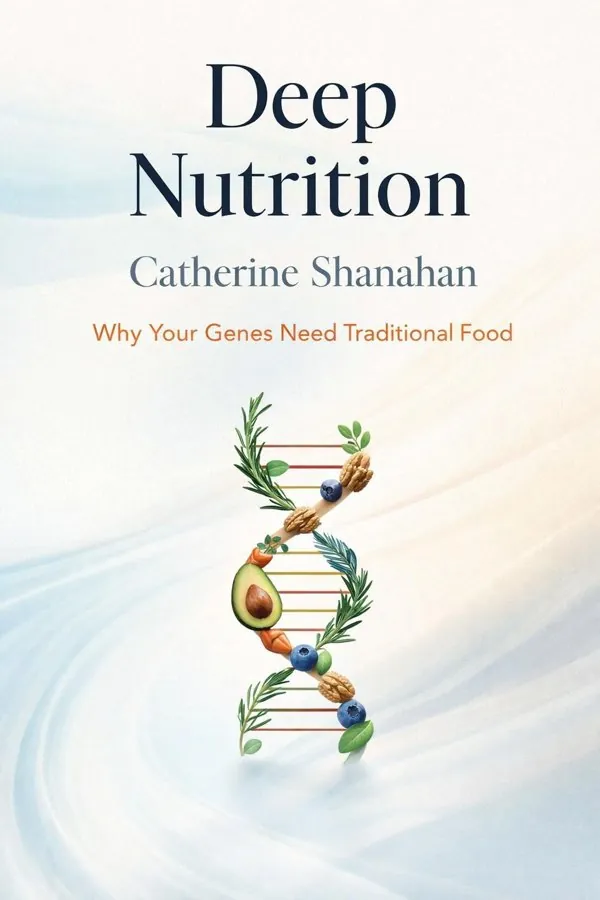
Deep Nutrition: Why Your Genes Need Traditional Food: Summary & Key Insights
 10 min5 chaptersAudio available
What Is Deep Nutrition: Why Your Genes Need Traditional Food About?
Deep Nutrition: Why Your Genes Need Traditional Food by Catherine Shanahan is a nutrition book spanning 5 pages. Deep Nutrition explores how traditional diets rich in natural fats and whole foods shape genetic expression and long-term health. Catherine Shanahan, a physician and biochemist, argues that modern processed foods disrupt cellular function and contribute to chronic disease. The book combines nutritional science, anthropology, and genetics to advocate for ancestral eating patterns that support beauty, strength, and longevity.
This FizzRead summary covers all 5 key chapters of Deep Nutrition: Why Your Genes Need Traditional Food in approximately 10 minutes, distilling the most important ideas, arguments, and takeaways from Catherine Shanahan's work. Also available as an audio summary and Key Quotes Podcast.
Deep Nutrition: Why Your Genes Need Traditional Food
Deep Nutrition explores how traditional diets rich in natural fats and whole foods shape genetic expression and long-term health. Catherine Shanahan, a physician and biochemist, argues that modern processed foods disrupt cellular function and contribute to chronic disease. The book combines nutritional science, anthropology, and genetics to advocate for ancestral eating patterns that support beauty, strength, and longevity.
Who Should Read Deep Nutrition: Why Your Genes Need Traditional Food?
This book is perfect for anyone interested in nutrition and looking to gain actionable insights in a short read. Whether you're a student, professional, or lifelong learner, the key ideas from Deep Nutrition: Why Your Genes Need Traditional Food by Catherine Shanahan will help you think differently.
- ✓Readers who enjoy nutrition and want practical takeaways
- ✓Professionals looking to apply new ideas to their work and life
- ✓Anyone who wants the core insights of Deep Nutrition: Why Your Genes Need Traditional Food in just 10 minutes
Want the full summary?
Get instant access to this book summary and 100K+ more with Fizz Moment.
Get Free SummaryAvailable on App Store • Free to download
Key Chapters
When I first began practicing medicine, I quickly noticed a paradox: our patients followed the latest guidelines—low-fat diets, lots of grains, vegetable oils—and yet, they were sicker than ever. Cholesterol was down, but heart disease persisted. Obesity ballooned, diabetes exploded, and fertility declined. Something deeper was going wrong.
The answer lies in the biochemical reality that not all calories are equal in the eyes of your genes. Modern foods, especially industrial oils and refined carbohydrates, are biologically disruptive. They interfere with how cells build membranes, respond to hormones, and repair damage. The body isn't designed to thrive on these alien molecules. Instead of nourishing regeneration, they provoke inflammation—the silent current beneath almost every chronic illness.
Our ancestors never faced this challenge. Their diets evolved alongside their physiology: wild meats rich in collagen, fermented vegetables dense with beneficial microbes, unrefined fats that carried essential nutrients. Modern factories have dismantled this relationship. By extracting, heating, and chemically treating fats to make them shelf-stable, we’ve exchanged the integrity of our cells for convenience.
In Deep Nutrition, I describe these oils as ‘fragile fats’—polyunsaturated oils from soy, corn, canola, and others—that warp under heat and oxygen. When we consume them daily, they embed into our cellular membranes, making our tissues literally less resilient. It’s as if we’ve replaced the bricks in our biological foundation with styrofoam. Over time, this leads to weakened skin, aching joints, brittle arteries, and chronic fatigue. No wonder the beauty and vitality once celebrated in traditional cultures seem to fade within a single generation of processed eating.
But the most tragic consequence is genetic. Food doesn’t just feed us; it instructs our DNA how to express itself. When that instruction is corrupted, the consequences ripple through every cell, every organ, even down to our children. What’s at stake here isn’t just personal health—it’s the integrity of human biology. That’s the illusion modern nutrition sold us: that convenience could replace heritage. It cannot.
Travel the world and you’ll find astonishing variety in taste, culture, and tradition—and yet, every ancient cuisine shares a common architecture. I call these the Four Pillars of World Cuisine: meat on the bone, fermented and sprouted foods, organ meats, and fresh plant foods.
Each pillar represents a source of nourishment designed to deliver the full spectrum of cellular requirements. Meat on the bone provides collagen and amino acids crucial for structural integrity and joint health. Fermented and sprouted foods restore microbial harmony in the gut, enabling robust digestion and immune balance. Organ meats, once prized across tribes and empires, offer concentrated sources of fat-soluble vitamins—A, D, E, and K2—essential for cellular communication and hormone regulation. And fresh plant foods supply antioxidants and phytonutrients that defend against oxidative stress.
Taken together, these pillars were not born from superstition but from empirical wisdom: the ancestral recognition that to be vibrant, humans must eat from the whole of nature—not from its fragments. When people abandoned these principles in favor of filleted meats, sterile produce, and refined oils, chronic degeneration began. Yet the restoration is just as real: when a family reintroduces broth, bone-in roasts, liver pâté, fermented vegetables, and raw milk into their kitchen, visible transformation follows. Skin firms, energy deepens, moods stabilize, and children develop stronger bones and facial symmetry. These experiences aren’t miraculous; they’re genetic fulfillment.
In my research, I found that the structure of collagen protein—found abundantly in bone broth—actually influences the expression of growth factors in connective tissue. The body reads collagen-rich amino acid patterns as a signal to repair and regenerate. This is the same underlying process that keeps skin elastic and joints flexible. Similarly, the bacterial metabolites in fermented foods communicate directly with our immune cells, recalibrating inflammatory responses. Eating traditionally isn’t nostalgia—it’s molecular precision.
The Four Pillars are not restrictive; they are liberating. They reconnect you to the biological grammar your body understands. Once you eat within this language, health stops feeling like a struggle—it becomes effortless.
+ 3 more chapters — available in the FizzRead app
All Chapters in Deep Nutrition: Why Your Genes Need Traditional Food
About the Author
Catherine Shanahan, M.D., is an American physician and biochemist known for her work in nutritional science and genetics. She trained in biochemistry and medicine and has worked as a family physician and consultant in metabolic health. Her research focuses on how traditional diets influence genetic expression and overall wellness.
Get This Summary in Your Preferred Format
Read or listen to the Deep Nutrition: Why Your Genes Need Traditional Food summary by Catherine Shanahan anytime, anywhere. FizzRead offers multiple formats so you can learn on your terms — all free.
Available formats: App · Audio · PDF · EPUB — All included free with FizzRead
Download Deep Nutrition: Why Your Genes Need Traditional Food PDF and EPUB Summary
Key Quotes from Deep Nutrition: Why Your Genes Need Traditional Food
“When I first began practicing medicine, I quickly noticed a paradox: our patients followed the latest guidelines—low-fat diets, lots of grains, vegetable oils—and yet, they were sicker than ever.”
“Travel the world and you’ll find astonishing variety in taste, culture, and tradition—and yet, every ancient cuisine shares a common architecture.”
Frequently Asked Questions about Deep Nutrition: Why Your Genes Need Traditional Food
Deep Nutrition: Why Your Genes Need Traditional Food by Catherine Shanahan is a nutrition book that explores key ideas across 5 chapters. Deep Nutrition explores how traditional diets rich in natural fats and whole foods shape genetic expression and long-term health. Catherine Shanahan, a physician and biochemist, argues that modern processed foods disrupt cellular function and contribute to chronic disease. The book combines nutritional science, anthropology, and genetics to advocate for ancestral eating patterns that support beauty, strength, and longevity.
You Might Also Like
Eating by the Seasons Cookbook: Seasonal Produce-Focused Recipes
Clare Foster
10 min
From Crook to Cook: Platinum Recipes from Tha Boss Dogg's Kitchen
Snoop Dogg with Ryan Ford
10 min
Juicing for Beginners: The Essential Guide to Juicing Recipes and Juicing for Weight Loss
Rockridge Press
10 min
The Food Therapist: Break Bad Habits, Eat with Intention, and Indulge Without Worry
Shira Lenchewski
10 min
The Mediterranean Diet Meal Plan: A 4-Week Meal Plan for Optimal Health and Weight Loss
Various Contributors
10 min
The Well Plated Cookbook: Simple, Wholesome Recipes for Everyday Meals
Erin Clarke
10 minBrowse by Category
Ready to read Deep Nutrition: Why Your Genes Need Traditional Food?
Get the full summary and 100K+ more books with Fizz Moment.