
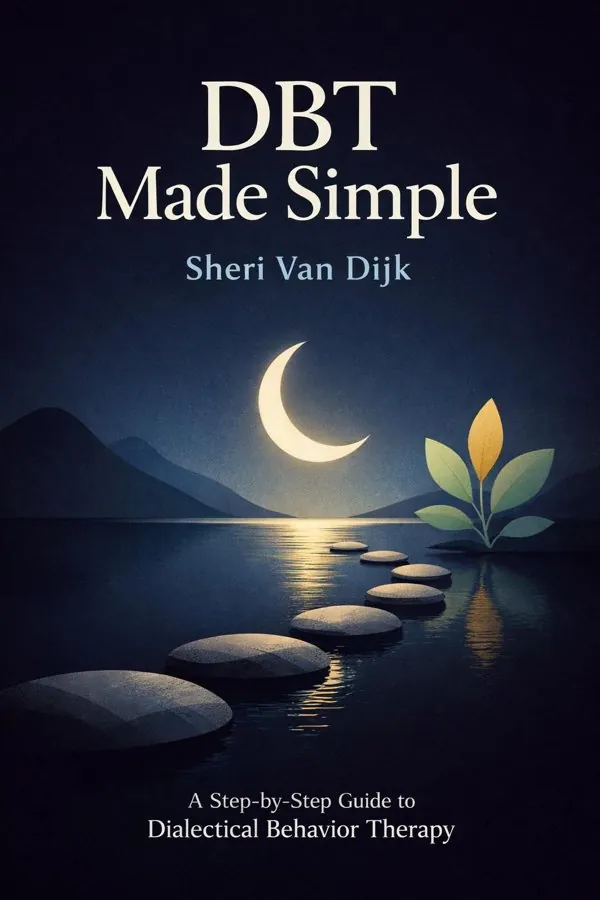
DBT Made Simple: A Step-by-Step Guide to Dialectical Behavior Therapy: Summary & Key Insights
 10 min9 chaptersAudio available
What Is DBT Made Simple: A Step-by-Step Guide to Dialectical Behavior Therapy About?
DBT Made Simple: A Step-by-Step Guide to Dialectical Behavior Therapy by Sheri Van Dijk is a mental_health book spanning 9 pages. DBT Made Simple es una guía práctica que introduce los principios y técnicas de la Terapia Dialéctica Conductual (DBT), un enfoque basado en la evidencia para tratar trastornos emocionales, autolesiones y dificultades en la regulación emocional. El libro ofrece explicaciones claras, ejercicios y ejemplos clínicos para ayudar a terapeutas y pacientes a aplicar las habilidades de DBT en la vida cotidiana.
This FizzRead summary covers all 9 key chapters of DBT Made Simple: A Step-by-Step Guide to Dialectical Behavior Therapy in approximately 10 minutes, distilling the most important ideas, arguments, and takeaways from Sheri Van Dijk's work. Also available as an audio summary and Key Quotes Podcast.
DBT Made Simple: A Step-by-Step Guide to Dialectical Behavior Therapy
DBT Made Simple es una guía práctica que introduce los principios y técnicas de la Terapia Dialéctica Conductual (DBT), un enfoque basado en la evidencia para tratar trastornos emocionales, autolesiones y dificultades en la regulación emocional. El libro ofrece explicaciones claras, ejercicios y ejemplos clínicos para ayudar a terapeutas y pacientes a aplicar las habilidades de DBT en la vida cotidiana.
Who Should Read DBT Made Simple: A Step-by-Step Guide to Dialectical Behavior Therapy?
This book is perfect for anyone interested in mental_health and looking to gain actionable insights in a short read. Whether you're a student, professional, or lifelong learner, the key ideas from DBT Made Simple: A Step-by-Step Guide to Dialectical Behavior Therapy by Sheri Van Dijk will help you think differently.
- ✓Readers who enjoy mental_health and want practical takeaways
- ✓Professionals looking to apply new ideas to their work and life
- ✓Anyone who wants the core insights of DBT Made Simple: A Step-by-Step Guide to Dialectical Behavior Therapy in just 10 minutes
Want the full summary?
Get instant access to this book summary and 100K+ more with Fizz Moment.
Get Free SummaryAvailable on App Store • Free to download
Key Chapters
What makes DBT truly distinctive is its understanding of the term “dialectical.” It isn’t just a philosophical concept—it’s a mindset for living. So often we get trapped in all-or-nothing thinking: either I succeed or I fail, either I’m loved or I’m rejected. Dialectical thinking teaches us that two seemingly opposing truths can exist at once. When I work with clients, I often remind them that it’s possible to feel both “not ready” and “willing to try.” This tension isn’t a flaw; it’s a sign of vitality.
In therapy, I often use this analogy: acceptance is the foundation, and change is the structure built upon it. Without a stable base, our efforts to change may collapse. Without striving for change, acceptance can become passive resignation. We must allow the two to work in harmony so that reason and emotion move together.
I once worked with a young woman named Amy who struggled for years with emotional outbursts and self-harm. At first, she rejected any notion of acceptance, believing it meant giving up. But through DBT practice, she came to see that true acceptance wasn’t surrender—it was facing reality honestly, without wasting energy on denial. Once she acknowledged her emotions rather than suppressing them, she felt more in control and ready to change.
Dialectical thinking gives us flexibility. Even when life isn’t perfect, we can respond with balance and wisdom.
Mindfulness is the heart of DBT. It teaches us to live fully in the present moment, rather than being trapped by the past or anxious about the future. Many people first hear the word “mindfulness” and assume it’s tied to meditation or religion. In DBT, however, it’s a psychological skill—a method of strengthening self-awareness and self-control through focused attention.
In therapy, I encourage people to practice “observing without judgment.” When pain arises, our instinct is to resist, criticize, or avoid it. Instead, mindfulness asks us to simply notice what’s happening. For example, when you feel anger, don’t rush to suppress or condemn it. Just acknowledge: “This is anger arising.” That simple act of naming creates space in the brain—a space in which balance can return.
One of my favorite exercises is the “three-minute breathing practice.” For three quiet minutes, focus only on the rhythm of your breath, feeling the air as it flows in and out. You may be amazed at how even a few minutes of awareness can calm the mind. The goal isn’t to erase problems, but to step back from emotional storms and see them with clarity.
Mindfulness is not instant; it’s a way of living. As you practice daily, it begins to infuse your eating, walking, and conversations. You’ll come to realize that peace was never something the world could give you—it’s something you cultivate within yourself.
+ 7 more chapters — available in the FizzRead app
All Chapters in DBT Made Simple: A Step-by-Step Guide to Dialectical Behavior Therapy
About the Author
Sheri Van Dijk es psicoterapeuta canadiense especializada en Terapia Dialéctica Conductual (DBT) y Terapia Cognitivo-Conductual (TCC). Ha trabajado extensamente con personas que padecen trastornos del estado de ánimo, trastornos de la personalidad y problemas de regulación emocional, y es autora de varios libros sobre DBT y mindfulness.
Get This Summary in Your Preferred Format
Read or listen to the DBT Made Simple: A Step-by-Step Guide to Dialectical Behavior Therapy summary by Sheri Van Dijk anytime, anywhere. FizzRead offers multiple formats so you can learn on your terms — all free.
Available formats: App · Audio · PDF · EPUB — All included free with FizzRead
Download DBT Made Simple: A Step-by-Step Guide to Dialectical Behavior Therapy PDF and EPUB Summary
Key Quotes from DBT Made Simple: A Step-by-Step Guide to Dialectical Behavior Therapy
“What makes DBT truly distinctive is its understanding of the term “dialectical.”
“It teaches us to live fully in the present moment, rather than being trapped by the past or anxious about the future.”
Frequently Asked Questions about DBT Made Simple: A Step-by-Step Guide to Dialectical Behavior Therapy
DBT Made Simple: A Step-by-Step Guide to Dialectical Behavior Therapy by Sheri Van Dijk is a mental_health book that explores key ideas across 9 chapters. DBT Made Simple es una guía práctica que introduce los principios y técnicas de la Terapia Dialéctica Conductual (DBT), un enfoque basado en la evidencia para tratar trastornos emocionales, autolesiones y dificultades en la regulación emocional. El libro ofrece explicaciones claras, ejercicios y ejemplos clínicos para ayudar a terapeutas y pacientes a aplicar las habilidades de DBT en la vida cotidiana.
More by Sheri Van Dijk

You Might Also Like

Big Feelings: How to Be Okay When Things Are Not Okay
Liz Fosslien, Mollie West Duffy
10 min
Creative Arts Therapies Handbook: Art, Music and Dance Therapy Practices for Wellbeing
Susan I. Buchalter
10 min
Emotional First Aid: Healing Rejection, Guilt, Failure, and Other Everyday Hurts
Guy Winch
10 min
Lost Connections: Why You're Depressed and How to Find Hope
Johann Hari
10 min
No Time to Panic: How to Stop Worrying and Embrace Life
Matt Gutman
10 min
Overcoming Mobbing: A Recovery Guide for Workplace Aggression and Bullying
Maureen Duffy, Len Sperry
10 minBrowse by Category
Ready to read DBT Made Simple: A Step-by-Step Guide to Dialectical Behavior Therapy?
Get the full summary and 100K+ more books with Fizz Moment.