
Where the Crawdads Sing vs The Death of Ivan Ilyich: Which Should You Read?
A detailed comparison of Where the Crawdads Sing by Delia Owens and The Death of Ivan Ilyich by Leo Tolstoy. Discover the key differences, strengths, and which book is right for you.
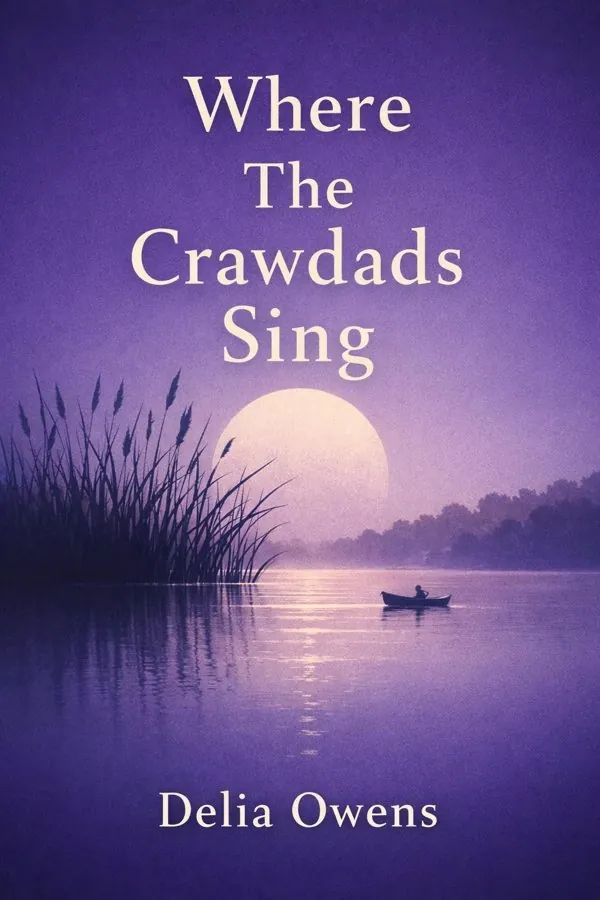

Where the Crawdads Sing
The Death of Ivan Ilyich
In-Depth Analysis
At first glance, Where the Crawdads Sing and The Death of Ivan Ilyich seem to belong to very different literary worlds. Delia Owens’s novel is expansive, atmospheric, and genre-blending, while Tolstoy’s novella is compressed, severe, and philosophical. Yet both books are centrally concerned with isolation, social judgment, and the question of what kind of life can truly be called human. The difference is that Owens approaches these themes through deprivation and survival at the margins, while Tolstoy approaches them through comfort, conformity, and spiritual collapse at the center of respectable society.
Kya Clark and Ivan Ilyich are both, in different ways, abandoned figures. Kya is literally abandoned: first emotionally by her violent father, then physically by family members who leave one by one, until she grows up almost entirely alone in the marsh. Her alienation is external and visible. The town labels her “Marsh Girl,” reducing her to a social myth before it ever tries to know her. Ivan’s abandonment is more insidious. He is surrounded by colleagues, a wife, servants, and doctors, yet when illness overtakes him he discovers that most human relationships in his life have been structured by convenience, status, or irritation rather than love. Kya suffers neglect from the beginning; Ivan realizes, too late, that he has constructed a life in which genuine intimacy scarcely exists.
This leads to the books’ most important contrast: their visions of society. In Where the Crawdads Sing, society is often predatory, contemptuous, and class-bound. Kya is judged for her poverty, her lack of schooling, and her otherness. Even when she becomes a skilled observer of shells, birds, and marsh ecology, her intellect is not naturally recognized by the town; it must be discovered by outsiders or by the few who look beyond social prejudice, especially Tate. The courtroom scenes bring this dynamic into the open. Kya is not merely on trial for Chase Andrews’s death; the town’s assumptions about class, femininity, sexuality, and respectability are on trial too.
In The Death of Ivan Ilyich, society is not openly cruel in the same way, but it is spiritually hollow. Tolstoy begins with Ivan’s colleagues discussing his death chiefly in terms of promotions and inconvenience. That opening establishes the novella’s merciless thesis: bourgeois society treats death not as a spiritual event but as an administrative disruption. Ivan himself has long participated in this system. He chose his career, marriage, furnishings, and habits according to what was “proper” and socially approved. Unlike Kya, he is not excluded by society; he is one of its successful products. His tragedy is that social success has insulated him from truth.
The natural world plays dramatically different roles in the two books. In Owens’s novel, the marsh is not just setting but parent, teacher, and moral counterweight. Kya learns to read the world through feathers, tides, mussels, and bird behavior before she learns to read books. Nature offers pattern where human life has offered rupture. Owens repeatedly aligns Kya’s emotional states with ecological processes, suggesting that the marsh is a realm of harshness but also coherence. Predation exists there, but it is not hypocritical. This matters because Kya’s understanding of survival comes partly from watching the nonhuman world.
Tolstoy’s novella largely removes such environmental consolation. Ivan’s world is interior, urban, upholstered, and suffocating. His famous attention to drawing rooms, curtains, and proper furnishings underscores how artificial his life has been. Even medicine, which should connect him to embodied reality, becomes a theater of euphemism. Doctors speak in technicalities while refusing the existential truth Ivan needs acknowledged: he is dying. In Owens, the physical world can steady the self; in Tolstoy, social and material environments intensify estrangement.
Their treatments of love are equally revealing. Tate’s importance in Where the Crawdads Sing lies not simply in romance but in recognition. He teaches Kya to read and validates the intelligence that abandonment had nearly buried. Chase, by contrast, brings desire entangled with social danger, deceit, and male entitlement. Through these relationships, Owens explores how vulnerable people may hunger for connection while lacking the defenses to assess risk. Tolstoy’s treatment of marriage is colder and more diagnostic. Ivan’s marriage to Praskovya is never grounded in mutual moral understanding; it becomes a mechanism of irritation and appearance. Only Gerasim, the servant who calmly acknowledges death and offers compassionate care, represents authentic human love in the novella. That choice is crucial: truth comes not from Ivan’s social equals but from someone outside the polished world he valued.
Structurally, the books guide readers toward different forms of revelation. Owens uses delayed disclosure, alternating timelines, and the mystery of Chase Andrews’s death to create suspense. The eventual ending reframes Kya not simply as victim but as a figure of agency and opacity. Tolstoy, by contrast, reveals the ending from the title onward. There is no whodunit and no external puzzle. The question is not what will happen, but whether Ivan will understand what is happening before it is too late. This gives the novella a stripped, almost surgical intensity.
Ultimately, Where the Crawdads Sing is more generous toward survival. It suggests that beauty, intelligence, and a sustaining bond with place can help a person endure even catastrophic abandonment. The Death of Ivan Ilyich is less consoling but arguably more radical. It insists that a socially acceptable life may still be a moral failure, and that death exposes every evasion. Owens asks how a neglected person becomes herself; Tolstoy asks whether a successful person has ever become himself at all. Together, the two books form a powerful diptych on human loneliness: one shaped by exclusion from society, the other by false belonging within it.
Side-by-Side Comparison
| Aspect | Where the Crawdads Sing | The Death of Ivan Ilyich |
|---|---|---|
| Core Philosophy | Where the Crawdads Sing argues that identity is formed through abandonment, resilience, and one’s relationship to place. Kya’s bond with the marsh becomes an alternative moral and emotional education when human society fails her. | The Death of Ivan Ilyich centers on mortality and the terror of realizing too late that one has lived falsely. Ivan’s illness strips away social illusions and forces a reckoning with what makes a life authentic. |
| Writing Style | Delia Owens writes in lush, sensory prose, using the North Carolina marsh as both setting and emotional mirror. The novel moves fluidly between lyrical nature writing, romance, and courtroom suspense. | Tolstoy writes with compressed precision and moral clarity, relying less on scenic lushness than on psychological and spiritual exactness. The novella’s style is austere, sharp, and relentlessly focused on Ivan’s inner unraveling. |
| Practical Application | Its practical value lies in how it illuminates trauma, loneliness, class prejudice, and the human need to be seen. Readers may draw lessons about self-reliance, emotional neglect, and the restorative power of intellectual encouragement through Tate’s mentorship. | Its practical force is existential rather than behavioral, pushing readers to examine whether their routines, ambitions, and relationships are genuine. Ivan’s terror becomes a warning against living for status, propriety, and external approval. |
| Target Audience | This novel suits readers who enjoy emotionally immersive fiction with crossover appeal: coming-of-age narrative, romance, mystery, and strong atmosphere. It is especially accessible for contemporary readers who want plot momentum alongside character depth. | Tolstoy’s novella is ideal for readers drawn to philosophical fiction, classic literature, and meditations on death and conscience. It especially rewards those willing to sit with discomfort and introspection rather than suspense-driven plotting. |
| Scientific Rigor | Though a novel, it reflects Delia Owens’s background in zoology through detailed observations of shells, tides, feather taxonomy, and marsh ecosystems. Its natural descriptions feel researched and embodied, even when they operate symbolically. | The novella has no scientific agenda, though its depiction of illness and medical uncertainty remains psychologically convincing. Tolstoy is less interested in diagnosis than in how medicine can become a language of denial and social performance. |
| Emotional Impact | Where the Crawdads Sing evokes tenderness, heartbreak, and suspense by making readers inhabit Kya’s isolation from childhood onward. The scenes of abandonment, her fragile trust in Tate, and the trial’s exposure of local prejudice create a broad emotional range. | The Death of Ivan Ilyich delivers a more concentrated and devastating emotional effect, moving from irritation and social satire to dread, panic, and a final glimmer of release. Ivan’s fear of dying alone and unlived pierces with unusual force. |
| Actionability | Its insights are indirect but usable: cherish environments that sustain you, notice overlooked people, and understand how deprivation shapes behavior. Kya’s self-education also models the transformative power of literacy and close observation. | The novella offers fewer concrete steps but greater moral urgency: reevaluate priorities now, before illness or crisis makes honesty unavoidable. It invites immediate reflection on work, marriage, social ambition, and the habits of self-deception. |
| Depth of Analysis | Owens explores layered questions of class, gendered vulnerability, social ostracism, and the natural world as refuge, but she embeds them in a highly readable plot. Its analysis is substantial yet often mediated through narrative momentum and symbolism. | Tolstoy reaches deeper into metaphysical and ethical territory, dissecting not just one man’s life but the structures of bourgeois respectability themselves. The novella is a compact study in spiritual crisis, bad faith, and the fear of meaninglessness. |
| Readability | The novel is highly readable, with short scenes, strong atmosphere, and genre hooks that keep pages turning. Even readers who do not usually read literary fiction can enter through the mystery and romance elements. | The novella is brief and clear but emotionally and philosophically denser. Its readability depends less on sentence difficulty than on a reader’s willingness to engage with mortality and moral exposure. |
| Long-term Value | It lingers through its imagery, memorable heroine, and morally ambiguous ending, inviting discussion about justice, survival, and whether nature can substitute for society. Many readers return to it for atmosphere and emotional catharsis. | It has exceptional long-term value because its central questions only deepen with age: What counts as a true life, and what remains when social identity collapses? Readers often revisit it at different stages of life and find it newly unsettling. |
Key Differences
Isolation by Exile vs Isolation within Society
Kya is isolated because society excludes and stereotypes her from childhood; her loneliness is visible and materially real. Ivan is isolated despite being fully integrated into respectable society, which makes his loneliness more psychologically and spiritually ironic.
Nature as Refuge vs Interior Life as Trap
In Where the Crawdads Sing, the marsh teaches Kya how to survive and gives her a language for understanding life through shells, feathers, and animal behavior. In The Death of Ivan Ilyich, domestic interiors and professional spaces feel claustrophobic, exposing the emptiness of a life built on appearances.
Genre-Blending Novel vs Philosophical Novella
Owens combines coming-of-age fiction, romance, social critique, and murder mystery, especially through the trial surrounding Chase Andrews’s death. Tolstoy strips narrative down to an existential study of dying, with virtually every scene serving Ivan’s moral awakening.
Recognition through Love vs Revelation through Suffering
Kya grows partly because Tate recognizes her intelligence and helps her enter literacy and scholarship. Ivan grows only when suffering shatters his self-image and forces him to see the falseness of his marriage, careerism, and social habits.
Social Prejudice vs Social Hypocrisy
Owens focuses on how class and reputation condemn Kya before evidence does, especially in the town’s treatment of the so-called Marsh Girl. Tolstoy focuses on hypocrisy: colleagues thinking about promotions after Ivan’s death and doctors speaking evasively while avoiding human truth.
Ambiguous Justice vs Spiritual Resolution
Where the Crawdads Sing ends with a morally provocative revelation that reopens the question of justice in relation to Kya, Chase, and survival. The Death of Ivan Ilyich resolves not through legal or social judgment but through Ivan’s final inner release and altered relation to death.
Expansive Emotional Range vs Compressed Existential Force
Owens moves across tenderness, desire, fear, wonder, and suspense over a long narrative arc. Tolstoy compresses dread, denial, rage, and revelation into a short work whose emotional intensity is more concentrated than varied.
Who Should Read Which?
Readers who want an emotionally gripping, plot-forward literary novel
→ Where the Crawdads Sing
This is the better fit for readers who like strong atmosphere, suspense, and character attachment. Kya’s life story, the marsh setting, and the mystery surrounding Chase Andrews create immediate momentum while still exploring trauma and prejudice.
Readers interested in mortality, meaning, and classic philosophical fiction
→ The Death of Ivan Ilyich
Tolstoy’s novella is ideal for readers who want literature to ask hard questions about how to live. Its treatment of illness, fear, and spiritual honesty is compact but extraordinarily penetrating.
Book club readers looking for discussion-rich fiction
→ Where the Crawdads Sing
It offers multiple entry points for discussion: abandonment, class bias, romance, the ethics of the ending, and the symbolism of the marsh. While Tolstoy is arguably deeper, Owens’s novel tends to generate more varied group conversation because of its broader plot and ambiguity.
Which Should You Read First?
If you are deciding which to read first, begin with Where the Crawdads Sing and follow it with The Death of Ivan Ilyich. Owens’s novel is more immediately absorbing: the marsh setting, Kya’s childhood abandonment, her relationships with Tate and Chase, and the murder-trial structure create strong narrative momentum. It eases you into serious themes—loneliness, class judgment, gendered vulnerability, and justice—without demanding philosophical concentration from the first page. Reading Tolstoy second then feels like a deepening rather than a shift into difficulty for its own sake. After Owens’s outward story of exclusion, The Death of Ivan Ilyich offers an inward story of moral exposure. The pairing becomes especially powerful in that order because you move from a heroine society never truly welcomed to a man society fully rewarded, yet both arrive at profound loneliness. If you are already a seasoned classics reader or specifically seeking existential fiction, you could reverse the order. But for most readers, Owens first and Tolstoy second provides the best progression from emotional immersion to philosophical severity.
Want the full summary?
Get instant access to this book summary and 100K+ more with Fizz Moment.
Get Free SummaryAvailable on App Store • Free to download
Frequently Asked Questions
Is Where the Crawdads Sing better than The Death of Ivan Ilyich for beginners?
For most beginners, Where the Crawdads Sing is the easier entry point. Its contemporary prose, strong sense of place, and built-in mystery plot make it highly approachable even for readers who do not usually read literary fiction. The Death of Ivan Ilyich is short and stylistically clear, but its emotional power depends on a willingness to engage directly with death, spiritual crisis, and moral self-examination. If by “better for beginners” you mean more immediately immersive and plot-driven, Owens’s novel usually wins. If you want a brief classic that can change how you think about life, Tolstoy may be more rewarding despite the heavier existential demands.
Which book is more emotionally devastating: Where the Crawdads Sing or The Death of Ivan Ilyich?
They devastate in different ways. Where the Crawdads Sing hurts through accumulated abandonment: Kya watching her family disappear, her hunger for trust, and the way the town turns her into an object of rumor. Its pain is narrative and relational. The Death of Ivan Ilyich is more existentially devastating because it confronts the terror that one might live an outwardly respectable life and still discover, at the edge of death, that it was fundamentally false. Owens breaks the heart through loneliness and yearning; Tolstoy attacks the soul through dread, hypocrisy, and final reckoning. Readers often cry more at Kya’s story but feel more haunted by Ivan’s.
Should I read The Death of Ivan Ilyich or Where the Crawdads Sing if I want philosophical fiction?
If your priority is overt philosophical depth, The Death of Ivan Ilyich is the stronger choice. Tolstoy does not merely tell a story about illness; he uses Ivan’s dying process to interrogate status, marriage, work, self-deception, and the meaning of a good life. Where the Crawdads Sing certainly raises philosophical questions about identity, justice, and whether nature can offer a truer moral order than society, but it does so through a broader commercial-novel structure involving romance and courtroom suspense. Owens is reflective; Tolstoy is relentlessly probing. For philosophical fiction in the strict sense, Tolstoy is the clearer recommendation.
How do Where the Crawdads Sing and The Death of Ivan Ilyich compare on themes of isolation?
Both books are about isolation, but they stage it from opposite social positions. Kya’s isolation is literal, geographic, and class-coded: she grows up physically apart from town life in the marsh and is socially branded as the “Marsh Girl.” Ivan’s isolation is existential: he occupies the center of respectable society, yet when illness comes he realizes his relationships are hollow and that no one truly accompanies him into death except Gerasim. Owens shows what it means to be denied belonging from childhood; Tolstoy shows the horror of discovering that belonging was always superficial. Together they suggest that loneliness can arise both from exclusion and from conformity.
Which has more literary depth, Where the Crawdads Sing or The Death of Ivan Ilyich?
The Death of Ivan Ilyich generally has greater literary depth in the traditional critical sense. Its compression, structural inevitability, moral seriousness, and psychological precision allow Tolstoy to say an extraordinary amount in very little space. Where the Crawdads Sing is richer in atmosphere and more expansive in genre pleasures, combining nature writing, romance, social drama, and mystery. It offers meaningful themes and memorable symbolism, especially through the marsh and Kya’s self-education, but it does not sustain the same level of metaphysical and ethical intensity throughout. If you are asking which book invites deeper philosophical rereading, Tolstoy has the edge.
Is Where the Crawdads Sing or The Death of Ivan Ilyich more worth rereading later in life?
Both reward rereading, but for different reasons and at different life stages. Where the Crawdads Sing often gains depth on reread because readers notice how carefully Owens plants clues about Kya, Chase Andrews, and the final revelation, while also better appreciating the marsh as symbolic refuge and moral framework. The Death of Ivan Ilyich tends to deepen even more dramatically with age because its central concerns—careerism, marital fatigue, bodily decline, fear of death, and spiritual honesty—become more immediate over time. Younger readers may admire Tolstoy; older readers often recognize themselves in him. For lifelong reread value, Tolstoy is usually the more inexhaustible book.
The Verdict
If you want the more immersive, emotionally varied, and accessible reading experience, choose Where the Crawdads Sing. Delia Owens gives you a vividly realized setting, a memorable protagonist, and a narrative that combines coming-of-age pain, romantic longing, social prejudice, and legal suspense. It is the more inviting book for readers who value atmosphere, plot, and a strong emotional arc. Kya’s life in the marsh is easy to enter and difficult to forget. If you want the more profound, concentrated, and intellectually unsettling work, choose The Death of Ivan Ilyich. Tolstoy’s novella is one of literature’s sharpest examinations of mortality and self-deception. It offers fewer narrative comforts than Owens’s novel, but its insight into social performance, fear, and spiritual awakening is extraordinary. Ivan’s crisis does not merely tell a story; it interrogates the reader. Taken purely as literary achievement, The Death of Ivan Ilyich is the stronger book. It is more disciplined, philosophically deeper, and more universally piercing. But as a recommendation for broad readership, Where the Crawdads Sing may satisfy more readers because it marries serious themes to narrative momentum. The best choice depends on whether you want emotional immersion in a story of survival or a bracing confrontation with the meaning of life and death. Read Owens for attachment and atmosphere; read Tolstoy for truth without anesthesia.
Related Comparisons

Want to read both books?
Get AI-powered summaries of both Where the Crawdads Sing and The Death of Ivan Ilyich in just 20 minutes total.