
The Death of Ivan Ilyich vs A Man Called Ove: Which Should You Read?
A detailed comparison of The Death of Ivan Ilyich by Leo Tolstoy and A Man Called Ove by Fredrik Backman. Discover the key differences, strengths, and which book is right for you.
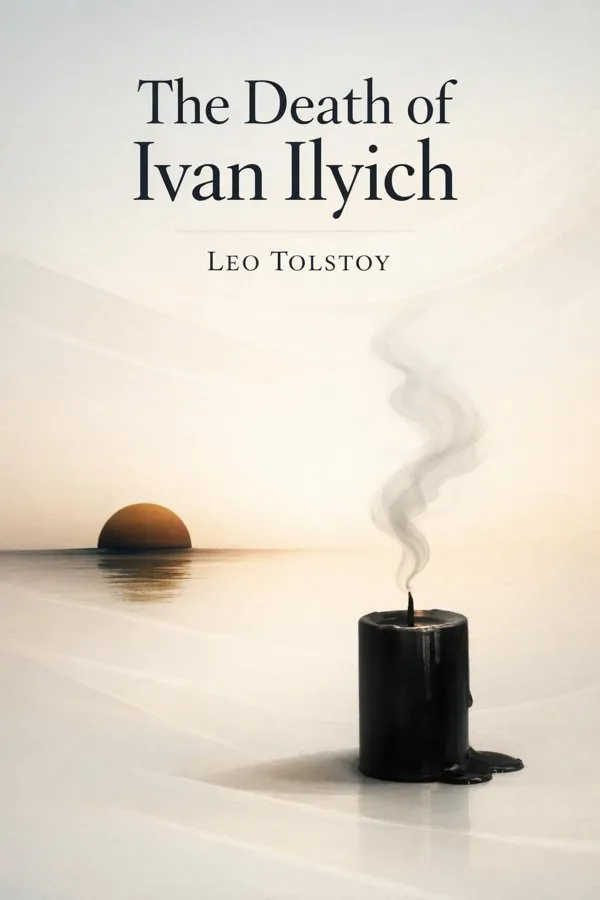
The Death of Ivan Ilyich
A Man Called Ove
In-Depth Analysis
At first glance, The Death of Ivan Ilyich and A Man Called Ove seem like companion texts: both center on an older man who is socially difficult, emotionally constrained, and forced into a confrontation with the meaning of his life. Yet the resemblance is only partial. Tolstoy’s novella is an austere spiritual autopsy; Backman’s novel is a redemptive social comedy-drama. One proceeds by stripping away illusion until only mortality remains, while the other gradually rebuilds a wounded life through community. Put simply, Tolstoy asks what it means to die truthfully; Backman asks what it means to keep living after one’s deepest reason for living seems gone.
Tolstoy’s opening is crucial to understanding the difference. The Death of Ivan Ilyich begins not with Ivan’s living presence but with news of his death and the reactions of his colleagues, who immediately think of promotions, inconveniences, and social obligations. This framing is brutally diagnostic: society responds to death not with reverence but with administrative self-interest. From there, Tolstoy reconstructs Ivan’s life as one shaped by correctness rather than sincerity. He chooses a career, marriage, home, and habits that are “proper,” socially approved, and materially comfortable. His marriage to Praskovya is not a partnership of souls but a conventional arrangement that decays into irritation and strategic coexistence. The point is not that Ivan is uniquely wicked; rather, he is terrifyingly ordinary. He has lived exactly as respectable society taught him to live.
Backman’s Ove is also rigid and socially abrasive, but his rigidity is framed differently. Ove’s routines, judgments, and irritation with incompetence are not signs of moral emptiness in the Tolstoyan sense. They are defenses built around grief, especially the loss of his wife Sonja. Unlike Ivan, Ove has loved deeply. The novel’s recurring movement between present action and flashbacks gradually reveals that the man who appears merely cantankerous is in fact a bereaved husband whose identity was organized around loyalty, work, and care. If Ivan discovers too late that he has not lived authentically, Ove already has lived authentically in love, but cannot imagine life after that love’s apparent end.
This leads to the books’ major divergence in their treatment of isolation. Ivan’s isolation is metaphysical and terminal. Once illness enters his life—beginning with what seems like a minor injury, then becoming chronic pain and existential dread—he recognizes that almost everyone around him prefers the decorum of denial. Doctors speak in technical ambiguities; family members resent disruption; visitors perform concern. Only Gerasim, the peasant servant, offers genuine comfort by acknowledging the reality of suffering and death. Gerasim’s role is decisive because he embodies the moral truth the bourgeois world avoids: that compassion begins with honesty. Ivan is isolated because his society cannot bear truth.
Ove, by contrast, is isolated in ways that are emotional and social, but not absolute. He repeatedly attempts to seal himself off through routine and even suicide, yet the world keeps intruding in comic, stubborn, life-giving ways. Parvaneh and her family, the neighborhood’s practical crises, the stray cat, and a range of local misfits force Ove back into relation. Backman’s insight is that usefulness can become a bridge back to life. Ove may not initially seek companionship, but he cannot resist repairing a problem, teaching a skill, or defending someone vulnerable. In Tolstoy, suffering strips away social illusion; in Backman, social entanglement interrupts private despair.
Stylistically, the difference is just as stark. Tolstoy writes with compression and moral severity. The famous inward cry—Ivan’s repeated sense that “it cannot be right” that he should die—captures both childish protest and philosophical terror. The prose traps readers inside a consciousness that is losing all its usual defenses. Backman, meanwhile, uses repetition, comic contrast, and delayed revelation. Ove is first presented through his annoyances—rules, parking, incompetence, technology—so that the later disclosures of grief reframe earlier scenes. The result is a novel that earns sentiment by first flirting with caricature. Where Tolstoy narrows toward the essential, Backman expands outward into a web of relationships.
The emotional trajectories also differ profoundly. The Death of Ivan Ilyich is not consoling in any conventional way. Its power lies in forcing readers to imagine the horror of recognizing, too late, that one has lived falsely. Yet Tolstoy does grant a form of redemption. In the final movement, Ivan’s resistance begins to yield to pity—especially pity for his family—and this moral shift transforms his relation to death. The revelation is spiritual: by ceasing to cling to the ego’s terror, he enters a different understanding of suffering. It is one of the most compressed and devastating deathbed conversions in literature.
A Man Called Ove offers a more worldly redemption. Ove is not saved by mystical insight but by being needed. The people around him do not deliver philosophical arguments; they create obligations, affections, and inconveniences that tether him to life. The novel insists that community is often built not through grand declarations but through repeated interruptions: driving lessons, childcare, home repairs, arguments, shared meals. In this respect, Backman is less interested in the problem of death than in the problem of survivable grief.
If one asks which book is deeper, Tolstoy probably wins on philosophical concentration. Few works so efficiently expose the links among social ambition, self-deception, bodily decline, and spiritual crisis. But Backman has a different kind of depth: he understands how lonely people become legible only in context, through history, habit, and relation. Tolstoy offers an x-ray of the soul under mortal pressure; Backman offers a neighborhood map of wounded belonging.
Ultimately, the two books complement rather than cancel each other. The Death of Ivan Ilyich warns against mistaking conventional success for a meaningful life. A Man Called Ove reminds us that even damaged, stubborn lives can still be rejoined to others through ordinary acts of care. One is a reckoning; the other, a reprieve.
Side-by-Side Comparison
| Aspect | The Death of Ivan Ilyich | A Man Called Ove |
|---|---|---|
| Core Philosophy | Tolstoy’s novella argues that a socially successful life can still be spiritually fraudulent. Ivan Ilyich’s illness exposes how status, propriety, and self-deception collapse in the face of death, forcing a search for authentic compassion and moral truth. | A Man Called Ove centers on the idea that grief can harden into ritual and isolation, but community can restore purpose. Ove’s rigid principles are gradually transformed through accidental relationships, suggesting that meaning is made through care, usefulness, and connection. |
| Writing Style | The Death of Ivan Ilyich uses compressed, unsentimental prose with sharp psychological precision. Tolstoy moves from social satire to existential interiority, especially in the passages describing Ivan’s terror, denial, and final revelation. | Backman writes in a more accessible, warm, and often comic style, balancing melancholy with humor. The novel alternates between Ove’s prickly present-day encounters and flashbacks that reveal the emotional logic behind his stern exterior. |
| Practical Application | Its application is reflective rather than procedural: it invites readers to examine whether they are living by convention rather than conviction. The novella is particularly useful for readers thinking about mortality, ethical living, and the emotional evasions of modern professional life. | Backman’s novel offers more visible day-to-day lessons about grief, neighborliness, and the dignity of ordinary acts. Readers can readily connect Ove’s story to practical themes like intergenerational friendship, caring for vulnerable people, and finding purpose after loss. |
| Target Audience | This book suits readers interested in classics, philosophical fiction, Russian literature, and existential themes. It especially rewards those willing to engage with discomfort, death, and spiritual self-interrogation. | A Man Called Ove appeals to a broader contemporary audience, including readers who enjoy emotionally driven character fiction with humor. It is often a strong choice for book clubs because it combines sadness, redemption, and memorable supporting characters. |
| Scientific Rigor | As a work of fiction, it is not scientifically rigorous, though its depiction of illness and medical helplessness is psychologically convincing. Tolstoy is more concerned with the moral experience of dying than with medical exactitude. | This novel likewise does not aim for scientific rigor, focusing instead on emotional realism. Its strength lies in social observation and character behavior rather than researched technical detail. |
| Emotional Impact | The emotional effect is severe, claustrophobic, and ultimately purgative. Ivan’s loneliness—especially the falseness of those around him contrasted with Gerasim’s simple kindness—creates a devastating portrait of suffering and late awakening. | Backman aims for a more mixed emotional register, combining laughter, irritation, tenderness, and grief. Ove’s repeated suicide attempts, interrupted by the demands of neighbors, create a pattern in which sorrow is gradually turned toward human attachment. |
| Actionability | The book is actionable mainly as a moral mirror: it pushes readers to reconsider how they define success, intimacy, and truthfulness. Its lessons are profound but indirect, requiring contemplation rather than immediate behavioral steps. | Its insights are easier to translate into action: be present for others, let routine serve people rather than replace them, and recognize hidden suffering in difficult personalities. The novel encourages concrete forms of generosity and social participation. |
| Depth of Analysis | Tolstoy offers greater philosophical density in a shorter space, dissecting vanity, fear, and spiritual crisis with unusual intensity. The novella’s inward focus gives it a depth disproportionate to its length. | Backman’s depth is rooted less in abstract philosophy than in layered character revelation. The novel broadens its analysis through social interactions, showing how private grief intersects with neighborhood life and contemporary loneliness. |
| Readability | Although brief, the novella can feel demanding because of its emotional bleakness and relentless focus on dying. Its structure is straightforward, but its moral and psychological seriousness can slow readers down. | A Man Called Ove is generally easier to read, with brisk chapters, recurring jokes, and a plot built around escalating neighborly incidents. Its emotional accessibility makes it friendlier to casual readers. |
| Long-term Value | The Death of Ivan Ilyich has exceptional re-read value because readers tend to encounter it differently at different ages. Its confrontation with mortality, compromise, and authenticity remains timeless. | Backman’s novel also endures, particularly as a reminder of how grief and usefulness shape identity. Its long-term value lies in emotional comfort, memorable characterization, and its humane view of difficult people. |
Key Differences
Mortality as Reckoning vs Mortality as Background Pressure
In The Death of Ivan Ilyich, death is the central engine of the book: Ivan’s illness drives every psychological and moral revelation. In A Man Called Ove, mortality matters deeply, but it is filtered through bereavement and suicidal ideation rather than a terminal-illness narrative; death hovers over the plot instead of fully structuring it.
False Life vs Broken Life
Ivan’s tragedy is that he has lived according to social approval rather than genuine feeling or ethical clarity. Ove’s tragedy is not falseness but damage: he has loved truly, then become emotionally frozen after loss, which makes his path one of recovery rather than exposure.
Satirical Society vs Healing Community
Tolstoy uses colleagues, doctors, and family to reveal hypocrisy, self-interest, and the emptiness of polite conventions around suffering. Backman uses neighbors and local conflicts to show how irritating, intrusive social life can also become the very thing that saves someone.
Compression and Severity vs Warmth and Expansion
The Death of Ivan Ilyich is highly compressed, with almost no narrative excess; every scene intensifies Ivan’s inward crisis. A Man Called Ove is broader and more episodic, using recurring side characters, flashbacks, and comic set pieces to build emotional sympathy over time.
Spiritual Revelation vs Social Reintegration
Ivan’s final transformation is spiritual and interior, marked by a shift from fear to compassion in the face of death. Ove’s transformation is social and practical, visible in his renewed participation in the lives of neighbors, children, and vulnerable community members.
Kindness as Exception vs Kindness as Network
In Tolstoy, Gerasim stands out precisely because authentic kindness is rare in Ivan’s world; his honesty is morally luminous because nearly everyone else is evasive. In Backman, kindness emerges cumulatively across many relationships, showing how a network of imperfect people can carry someone back toward life.
Classic Existential Intensity vs Contemporary Sentimental Realism
Tolstoy writes with existential urgency and moral gravity, aiming at universal questions of death and truth. Backman writes in a contemporary sentimental-realist mode, using humor and emotional reversals to make readers reconsider a seemingly impossible man.
Who Should Read Which?
Reader interested in classics, philosophy, and existential fiction
→ The Death of Ivan Ilyich
Tolstoy offers extraordinary philosophical density in a short form, making the novella ideal for readers who value moral seriousness over narrative comfort. It is especially rewarding if you enjoy books that interrogate success, self-deception, and the meaning of death.
Reader seeking an emotional but accessible novel about grief and human connection
→ A Man Called Ove
Backman combines sadness with humor and gives readers a character who becomes lovable through context rather than instant charm. It is a strong fit for those who want catharsis, memorable side characters, and a story that affirms community.
Book club or discussion-oriented reader who wants both emotional engagement and clear themes
→ A Man Called Ove
Its structure, supporting cast, and tonal shifts make it easy to discuss from multiple angles, including grief, aging, masculinity, and belonging. While Tolstoy may yield deeper philosophical debate, Ove usually generates broader participation and emotional consensus.
Which Should You Read First?
For most readers, the best reading order is A Man Called Ove first, then The Death of Ivan Ilyich. Backman’s novel opens the emotional terrain gently: you encounter grief, loneliness, and mortality through humor, neighborhood conflict, and gradual character revelation. That makes it an inviting way to begin thinking about what gives life purpose after loss. Once those questions are active in your mind, Tolstoy’s novella lands with even greater force, because it strips away the consolations that Backman still allows. That said, there is a strong case for the reverse order if you prefer classics or want maximum philosophical intensity from the outset. Reading Tolstoy first gives you the starkest possible formulation of the problem: how can a socially successful life be spiritually empty? After that, Ove can feel like a humane counterpoint, showing what daily redemption and renewed belonging might look like in practice. So the default order is Ove then Ivan for accessibility, while Ivan then Ove is best for readers seeking a progression from existential severity to emotional repair.
Want the full summary?
Get instant access to this book summary and 100K+ more with Fizz Moment.
Get Free SummaryAvailable on App Store • Free to download
Frequently Asked Questions
Is The Death of Ivan Ilyich better than A Man Called Ove for beginners?
For most beginners, A Man Called Ove is the easier starting point. Its contemporary voice, humor, and episodic neighborhood plot make it more immediately accessible, even though it deals with grief and suicide. The Death of Ivan Ilyich is short, but its emotional intensity and philosophical focus on dying can make it feel heavier than its length suggests. If by “better for beginners” you mean easier to finish and discuss, Backman usually wins. If you want a first classic that is brief but profound, Tolstoy is an excellent choice, provided you are open to a more severe reading experience.
Which book handles grief and loneliness more realistically: The Death of Ivan Ilyich or A Man Called Ove?
They portray different forms of realism. The Death of Ivan Ilyich is psychologically realistic about denial, fear, and the loneliness of terminal illness; Ivan’s rage at medical evasions and social falseness feels painfully true. A Man Called Ove is more realistic about grief as it appears in daily life: routines, irritability, attachment to objects, and the way bereaved people can appear rude when they are actually disoriented by loss. Tolstoy captures existential isolation with unmatched force, while Backman captures the social texture of mourning. Readers facing illness may find Tolstoy sharper; readers thinking about bereavement may find Backman more recognizable.
Is A Man Called Ove similar to The Death of Ivan Ilyich in theme?
Yes, but only at a high level. Both novels feature older men confronting emptiness, isolation, and mortality, and both ask what makes a life meaningful. However, Tolstoy’s central theme is the exposure of a false life through the crisis of dying, while Backman’s is the restoration of connection after devastating loss. Ivan’s journey is inward, spiritual, and terminal; Ove’s is outward, relational, and restorative. So if you are searching for books like The Death of Ivan Ilyich and A Man Called Ove, expect overlap in seriousness and emotional depth, but very different tonal and philosophical outcomes.
Which is more emotionally devastating: The Death of Ivan Ilyich or A Man Called Ove?
The Death of Ivan Ilyich is more devastating in a concentrated, existential sense. Tolstoy traps the reader inside bodily decline and the dawning recognition that social success may conceal moral bankruptcy. A Man Called Ove can certainly make readers cry, especially through its revelations about Sonja and Ove’s repeated attempts to die, but it repeatedly offsets pain with humor and human warmth. In short, Tolstoy devastates by confrontation; Backman devastates by tenderness. If you want emotional severity, choose Ivan Ilyich. If you want a cathartic balance of sorrow and comfort, choose Ove.
Which book is better for a book club: The Death of Ivan Ilyich or A Man Called Ove?
A Man Called Ove is usually better for a general book club because it offers a wider emotional range and more immediately discussable supporting characters. Readers can talk about Ove’s habits, Sonja’s role in his life, the neighbors’ intrusions, and the novel’s blend of comedy with pain. The Death of Ivan Ilyich is superb for a more philosophically inclined group, especially one interested in mortality, religion, bourgeois values, and narrative irony. If your club likes classics and moral debate, Tolstoy may generate deeper discussion. If your club wants emotional accessibility and broad appeal, Backman is the safer recommendation.
Should I read The Death of Ivan Ilyich or A Man Called Ove first if I want meaningful fiction about mortality?
If you want the most direct, uncompromising confrontation with mortality, read The Death of Ivan Ilyich first. It gets to the central question quickly: what remains when the structures of career, decorum, and self-justification fail before death? If you would rather begin with a more humane, socially textured novel that approaches mortality through grief, memory, and community, start with A Man Called Ove. A useful strategy is to read Ove first if you need emotional openness, then Tolstoy for philosophical depth. Read Tolstoy first if you want the hardest, clearest version of the question before moving to a gentler answer.
The Verdict
If you want the more profound and philosophically enduring work, The Death of Ivan Ilyich is the stronger book. Tolstoy does in a short novella what many longer novels cannot: he exposes the spiritual emptiness that can hide beneath respectable success, then turns a dying man’s terror into a final, piercing glimpse of moral truth. It is harsher, more concentrated, and more transformative for readers willing to confront mortality without sentimental cushioning. If you want the more approachable and emotionally generous reading experience, A Man Called Ove is the better choice. Backman offers a moving portrait of grief softened by humor, neighborhood chaos, and the gradual rediscovery of purpose through ordinary usefulness. Its insights are less metaphysical than Tolstoy’s, but they are often more immediately felt in daily life. So the recommendation depends on what kind of depth you want. Choose Tolstoy if you are looking for a classic that interrogates how one ought to live before one dies. Choose Backman if you want a contemporary novel about loneliness, love, and the redemptive nuisance of other people. Read together, the books form an illuminating pair: Tolstoy warns against living falsely, while Backman shows how even a broken life can still be reconnected to meaning. If forced to pick just one on literary merit, I would choose The Death of Ivan Ilyich; if recommending to the widest range of readers, I would choose A Man Called Ove.
Related Comparisons
Want to read both books?
Get AI-powered summaries of both The Death of Ivan Ilyich and A Man Called Ove in just 20 minutes total.