
Lessons in Chemistry vs The Death of Ivan Ilyich: Which Should You Read?
A detailed comparison of Lessons in Chemistry by Bonnie Garmus and The Death of Ivan Ilyich by Leo Tolstoy. Discover the key differences, strengths, and which book is right for you.
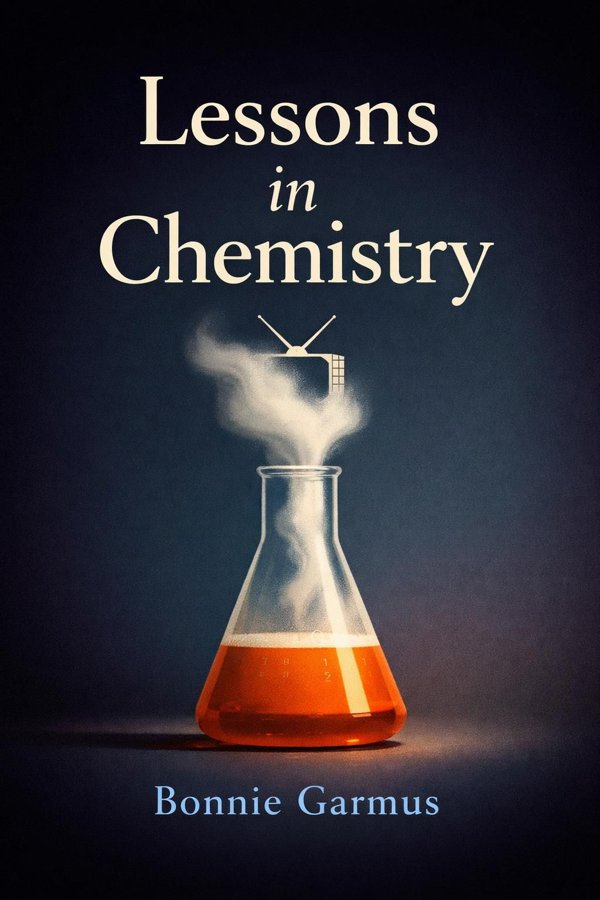
Lessons in Chemistry
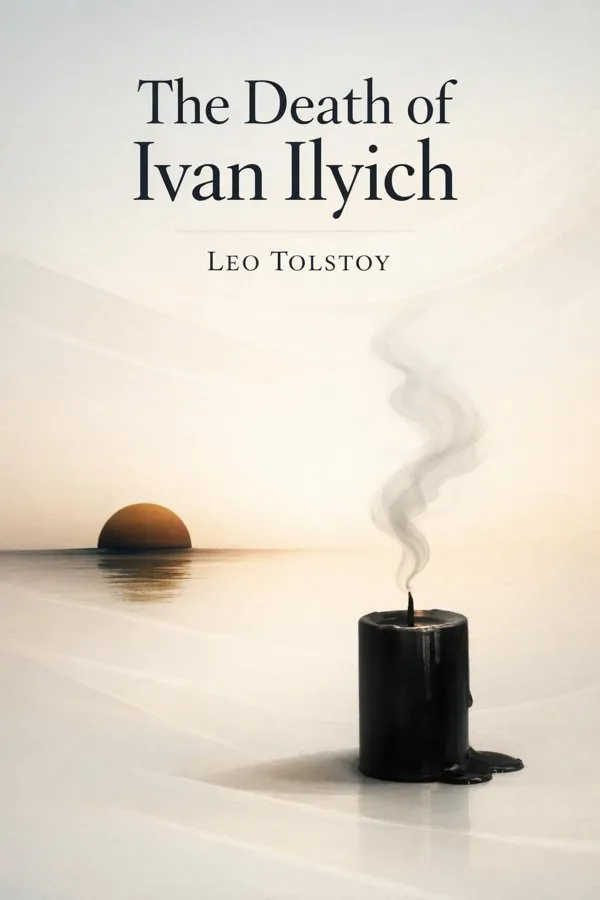
The Death of Ivan Ilyich
In-Depth Analysis
Although Lessons in Chemistry and The Death of Ivan Ilyich emerge from radically different literary traditions, they can be read together as companion studies in how social systems distort human life. Bonnie Garmus’s novel is outward-facing, satirical, and reformist; Leo Tolstoy’s novella is inward-facing, austere, and metaphysical. One centers on a woman refusing to be diminished by the institutions around her, while the other follows a man who has allowed those institutions to define him almost completely. Put side by side, they illuminate opposite moral trajectories: Elizabeth Zott fights against a false life imposed from without, whereas Ivan Ilyich awakens to the false life he has willingly inhabited.
Elizabeth Zott’s world at the Hastings Research Institute is shaped by exclusion masquerading as professionalism. She is not merely underestimated; she is structurally blocked, patronized, and forced to navigate a scientific culture that treats male authority as natural. Her response is not to seek approval but to persist in her own standards of rigor and clarity. That posture becomes especially important when she later hosts Supper at Six, a cooking show that refuses the usual sentimental domestic script. Elizabeth does not tell women to smile more or make pleasing meals for husbands; she explains emulsions, transformations, and chemical reactions. Cooking, in her hands, becomes a public demonstration that knowledge belongs everywhere and that women’s everyday labor can be intellectually honored rather than trivialized.
Tolstoy’s Ivan Ilyich occupies a nearly inverse position. He has benefited from a system organized around rank, propriety, and career advancement. His life has been shaped by what is considered "proper," from his legal career to his marriage to Praskovya, which is founded less on love than on social suitability. What Tolstoy reveals with merciless clarity is that conformity can feel like success for a very long time. Ivan’s taste, manners, house furnishings, and professional habits all reassure him that he is living correctly. Yet once illness begins, these external validations become grotesquely inadequate. The doctors mirror the legal bureaucracy he once served: they classify, posture, and evade. Medical language, instead of delivering certainty, becomes another social performance unable to answer the only question that matters to Ivan—whether his life has been good and true.
The books also differ sharply in how they treat suffering. In Lessons in Chemistry, suffering is real but narratively metabolized into resistance, adaptation, and influence. Calvin Evans’s death is devastating, and Elizabeth’s subsequent life as a single mother is not romanticized. Yet grief does not collapse her consciousness inward; it enlarges her responsibilities and forces new forms of invention. Madeline becomes not just a dependent child but a figure through whom inquiry, love, and unconventional family identity are reframed. The novel therefore treats pain as part of a larger social and relational field. It matters not simply what Elizabeth feels, but what she builds despite what she feels.
In The Death of Ivan Ilyich, suffering strips away every buffer. Tolstoy narrows the frame until pain becomes epistemological: Ivan’s physical agony teaches him what his social life concealed. The most moving contrast in the novella is between the falseness of respectable society and the sincerity of Gerasim, the servant who cares for Ivan without euphemism. Gerasim accepts that Ivan is dying, and this acceptance is itself a form of mercy. Family members and colleagues, by contrast, keep trying to preserve appearances. Tolstoy suggests that social polish is often a defense against the deepest human truths, whereas genuine compassion requires directness.
Another illuminating contrast lies in each book’s treatment of language. Garmus uses language to empower. Elizabeth’s explanations of chemistry challenge the assumption that women need simplification or condescension. Her speech is often a refusal of rhetorical femininity as culturally prescribed in the 1960s. Tolstoy, on the other hand, uses language to expose evasion. Official speech in the novella—legal, medical, domestic—frequently obscures reality instead of clarifying it. Where Elizabeth speaks precisely to make life more intelligible, Ivan is surrounded by people whose precise-sounding words hide moral emptiness.
Yet there is a surprising common ground. Both books distrust institutions that confuse form with substance. Hastings values hierarchy over merit; Ivan’s social world values propriety over sincerity. Both books ask what it means to live truthfully within systems designed to reward performance. They also insist that private life is never merely private. Elizabeth’s fight for intellectual dignity changes the women who watch her on television. Ivan’s death, meanwhile, becomes an indictment of an entire class culture that has normalized emotional dishonesty.
As reading experiences, the books offer different rewards. Lessons in Chemistry gives readers momentum, indignation, humor, and hope. It is built to engage a wide audience and to make critique feel energizing. The Death of Ivan Ilyich offers no such buoyancy. Its power lies in compression, severity, and the unbearable honesty of its central question: what if the life that looks successful from the outside has missed the point? Garmus asks how a person can resist being reduced by society. Tolstoy asks what remains when society’s definitions collapse entirely.
If read together, the books form a striking dialogue between social justice and existential truth. Elizabeth Zott shows how to retain one’s integrity against external diminishment. Ivan Ilyich shows the catastrophe of discovering integrity too late. One novel is about claiming a life; the other is about judging a life at its end. Both are unforgettable because both insist that reality—whether chemical, social, or mortal—cannot be evaded forever.
Side-by-Side Comparison
| Aspect | Lessons in Chemistry | The Death of Ivan Ilyich |
|---|---|---|
| Core Philosophy | Lessons in Chemistry argues that intelligence, dignity, and ambition should not be constrained by gender or social convention. Elizabeth Zott treats scientific thinking as a way of living truthfully, and the novel frames resistance to sexist institutions as both moral and practical necessity. | The Death of Ivan Ilyich examines the spiritual bankruptcy of a life lived according to status, decorum, and public approval. Tolstoy’s central claim is that authenticity, compassion, and moral awakening matter more than worldly success, especially when death strips away illusion. |
| Writing Style | Bonnie Garmus writes in a brisk, accessible, often witty contemporary style, despite the 1960s setting. The prose mixes satire, emotional uplift, and sharp social observation, with memorable set pieces such as Elizabeth’s television show, Supper at Six. | Tolstoy’s novella uses controlled, economical prose with psychological precision and moral seriousness. Its style is quieter but more devastating, especially in scenes where Ivan confronts his pain, his family’s evasions, and the falseness of social rituals around illness. |
| Practical Application | Readers can draw immediate lessons about intellectual self-respect, workplace sexism, parenting, and communicating complex ideas clearly. Elizabeth’s insistence on explaining cooking through chemistry models a concrete way to democratize knowledge and challenge patronizing expectations. | Its application is less behavioral and more existential: it prompts readers to examine whether they are living by habit, vanity, or genuine conviction. Ivan’s suffering becomes a tool for self-audit, particularly around careerism, performative domesticity, and fear of mortality. |
| Target Audience | This novel suits readers who enjoy character-driven historical fiction, feminist themes, and emotionally engaging narratives with humor and momentum. It is especially appealing to readers who want social critique without sacrificing readability or narrative pleasure. | Tolstoy’s novella is ideal for readers interested in classics, philosophy, religion, and psychological realism. It particularly rewards those willing to sit with discomfort and ambiguity rather than seek reassurance or triumph. |
| Scientific Rigor | Science is central to Elizabeth’s identity and the novel repeatedly uses chemistry as metaphor and method, though its primary aim is thematic rather than technical accuracy. The scientific language helps establish credibility and dramatize the absurdity of excluding capable women from research spaces. | Scientific rigor is not a concern of Tolstoy’s work, though medicine is portrayed with striking skepticism. Doctors’ jargon and procedural confidence underscore not real knowledge but the limits of professional systems when confronted with death. |
| Emotional Impact | The novel balances grief, injustice, humor, and hope, making Calvin’s death and Elizabeth’s single motherhood painful without turning the book bleak. Its emotional power comes from seeing a brilliant woman persist and influence others, including Madeline and her television audience. | The emotional force is harsher and more claustrophobic, built from Ivan’s escalating pain, isolation, and terror. The final movement, especially his recognition of others’ suffering and his altered relation to death, delivers a profound and unsettling catharsis. |
| Actionability | Lessons in Chemistry is highly actionable in the sense that it encourages readers to question gatekeeping, claim expertise, and speak directly rather than apologetically. Its lessons can be translated into workplace behavior, parenting attitudes, and self-advocacy. | The Death of Ivan Ilyich offers fewer outward actions but stronger inward imperatives: simplify, tell the truth about your life, and stop outsourcing meaning to institutions. Its effect tends to be reflective rather than programmatic. |
| Depth of Analysis | Garmus offers layered commentary on sexism, media, motherhood, and the public reception of female expertise, but she does so through a broadly accessible and sometimes stylized narrative frame. The analysis is sharp, though often directed toward clear social targets. | Tolstoy reaches deeper into metaphysical and ethical terrain, questioning not just bad social systems but the structure of self-deception itself. Ivan’s interior collapse is analyzed with extraordinary subtlety, making the novella one of literature’s most penetrating studies of denial. |
| Readability | This is the more immediately readable book for most contemporary audiences: fast-moving, funny, emotionally direct, and easy to enter. Even its serious material is carried by strong plot momentum and vivid characterization. | Tolstoy is concise rather than difficult, but the subject matter and emotional density make it a heavier read. The novella is short, yet its psychological compression demands slower and more contemplative attention. |
| Long-term Value | Its long-term value lies in its memorable protagonist, cultural critique, and capacity to inspire readers facing dismissal or institutional bias. It is likely to remain a popular recommendation for readers seeking feminist historical fiction with heart. | Its long-term value is canonical and philosophical: the novella continues to matter because mortality and self-deception never go out of date. Readers often return to it at different ages and find that its meaning deepens as their own lives become more entangled with loss and compromise. |
Key Differences
Resistance vs Recognition
Lessons in Chemistry is about actively resisting unjust structures in real time. Elizabeth Zott confronts sexism in the lab and repurposes television into an educational platform, whereas Ivan Ilyich spends most of Tolstoy’s novella recognizing, too late, that he has been shaped by hollow values.
Social Critique vs Existential Judgment
Garmus focuses on how institutions, especially scientific and media culture, constrain women’s lives and voices in the 1960s. Tolstoy goes beyond social critique to ask whether an entire life built on ambition, decorum, and approval can be morally false even if society praises it.
Expansive Plot vs Compressed Crisis
Lessons in Chemistry covers multiple stages of Elizabeth’s life, including research work, romance with Calvin Evans, single motherhood, and television fame. The Death of Ivan Ilyich is far more compressed, concentrating on Ivan’s illness and the retrospective collapse of the life he thought was successful.
Hopeful Momentum vs Claustrophobic Intensity
Even in sorrow, Garmus keeps the story moving toward reinvention and influence, especially through Supper at Six and Elizabeth’s effect on viewers. Tolstoy deliberately narrows emotional space, making readers inhabit Ivan’s pain, his family’s distance, and the shrinking horizon of death.
Knowledge as Empowerment vs Knowledge as Failure
In Lessons in Chemistry, scientific thinking empowers Elizabeth and becomes a democratic tool when she teaches chemistry through cooking. In Tolstoy’s novella, professional knowledge—especially medicine—fails spectacularly, serving more to preserve appearances than to confront truth.
Family as Ongoing Formation vs Family as Revealed Strain
Elizabeth’s bond with Madeline becomes part of her reconstruction of self after loss, and family is shown as unconventional but generative. Ivan’s marriage to Praskovya is exposed under pressure as emotionally thin, revealing how much of his domestic life rested on convenience and performance.
Contemporary Accessibility vs Classical Severity
Garmus writes in a style calibrated for broad modern readership, with humor, brisk pacing, and direct emotional cues. Tolstoy’s prose is lucid but severe, relying on psychological accumulation and moral pressure rather than charm or uplift.
Who Should Read Which?
Reader seeking an inspiring, character-driven novel about ambition and injustice
→ Lessons in Chemistry
Elizabeth Zott is an energizing protagonist whose battles with sexism, grief, and public reinvention are emotionally involving without becoming despairing. This book is ideal if you want sharp social commentary paired with humor, momentum, and a strong sense of personal agency.
Reader interested in mortality, philosophy, and the moral evaluation of a life
→ The Death of Ivan Ilyich
Tolstoy’s novella is one of the most penetrating literary studies of death and self-deception ever written. It is the better choice if you want a brief but intellectually and spiritually demanding work that lingers long after you finish it.
Reader returning to fiction after a long break and wanting substance without difficulty
→ Lessons in Chemistry
Although it handles serious themes, it is more immediately readable than Tolstoy and offers stronger narrative propulsion. It gives you meaningful ideas about identity, expertise, and resilience without requiring prior familiarity with classic literature or philosophical fiction.
Which Should You Read First?
Read Lessons in Chemistry first if you want to build momentum and confidence before moving into darker philosophical territory. Garmus offers a more welcoming entry point: the prose is contemporary, the structure is expansive, and Elizabeth Zott’s story provides both outrage and uplift. Beginning there lets you engage questions of social constraint, integrity, and meaning in a vivid, accessible way. Then read The Death of Ivan Ilyich as a deepening and darkening counterpoint. After seeing a protagonist struggle to preserve her selfhood against external forces, Tolstoy’s novella asks a sharper inward question: what if the self has already been surrendered to convention? The transition works well because the books start to speak to each other. Elizabeth demonstrates how truth can be lived publicly and defiantly; Ivan reveals what happens when truth is delayed until the end. If you prefer the reverse order, only do so if you are comfortable beginning with death, pain, and spiritual crisis. For most readers, Garmus first and Tolstoy second creates the richest contrast.
Want the full summary?
Get instant access to this book summary and 100K+ more with Fizz Moment.
Get Free SummaryAvailable on App Store • Free to download
Frequently Asked Questions
Is Lessons in Chemistry better than The Death of Ivan Ilyich for beginners?
For most beginners, Lessons in Chemistry is the easier entry point. Its pacing is faster, its prose is contemporary, and its central conflicts—sexism at work, grief, single motherhood, and public reinvention—are presented in a highly readable narrative. The Death of Ivan Ilyich is short, but not necessarily beginner-friendly in emotional terms: it asks readers to engage with mortality, self-deception, and spiritual crisis without much comfort. If by “better for beginners” you mean more accessible and plot-driven, Garmus wins. If you want a compact classic that introduces profound moral questions immediately, Tolstoy is stronger but more intense.
Which book has deeper themes: Lessons in Chemistry or The Death of Ivan Ilyich?
Both books are thematically rich, but The Death of Ivan Ilyich ultimately reaches deeper into metaphysical territory. Lessons in Chemistry explores gender inequity, scientific identity, media, grief, and motherhood with intelligence and force, especially through Elizabeth Zott’s refusal to play a socially acceptable role. Tolstoy, however, asks more foundational questions: what makes a life authentic, why do people cling to social fictions, and how does the approach of death expose moral failure? Garmus is broader in social critique; Tolstoy is more radical in existential inquiry. So if “deeper” means social relevance, they compete closely, but if it means philosophical depth, Tolstoy has the edge.
Should I read Lessons in Chemistry or The Death of Ivan Ilyich if I want a book about grief and loss?
Choose based on what kind of grief narrative you want. Lessons in Chemistry treats loss as part of an ongoing life: Calvin Evans’s death reshapes Elizabeth’s future, but the novel remains interested in survival, parenting Madeline, and converting pain into public and personal purpose. The Death of Ivan Ilyich is not about grief after loss; it is about the consciousness of dying itself. Ivan experiences terror, denial, anger, and eventual moral recognition from inside terminal illness. If you want resilience after bereavement, pick Garmus. If you want one of literature’s most penetrating depictions of the psychological experience of death, choose Tolstoy.
How do Lessons in Chemistry and The Death of Ivan Ilyich compare in writing style?
The difference in style is dramatic. Lessons in Chemistry uses a modern, often witty and cinematic prose style, with sharp dialogue, satirical social commentary, and emotionally legible characterization. It is designed to be engaging and broadly readable, even when addressing injustice. The Death of Ivan Ilyich is spare, disciplined, and psychologically exact. Tolstoy’s style accumulates force through understatement and repetition, particularly in scenes involving illness, social discomfort, and interior dread. Readers looking for warmth, momentum, and humor will likely prefer Garmus; readers drawn to moral precision and concentrated seriousness will likely prefer Tolstoy.
Is The Death of Ivan Ilyich more meaningful than Lessons in Chemistry?
That depends on what you mean by “meaningful.” The Death of Ivan Ilyich often feels more universally philosophical because it addresses death, falsity, suffering, and the search for genuine life at the most fundamental level. Many readers experience it as a book that reorders their thinking about success and morality. Lessons in Chemistry is meaningful in a different but equally valid register: it speaks powerfully to readers navigating sexism, intellectual dismissal, and the challenge of preserving selfhood under social pressure. Tolstoy may produce a deeper existential shock, but Garmus may feel more immediately meaningful to readers seeking courage, validation, and social critique.
Which is more emotionally intense: Lessons in Chemistry or The Death of Ivan Ilyich?
The Death of Ivan Ilyich is more emotionally intense in a concentrated, oppressive way. Its emotional architecture is built around mounting pain, isolation, humiliation, and the fear of annihilation, with very little relief. Lessons in Chemistry contains grief and injustice, especially around Elizabeth’s treatment in science and Calvin’s death, but it balances those experiences with humor, momentum, and scenes of empowerment such as the development of Supper at Six. In other words, Garmus offers emotional range; Tolstoy offers emotional compression. If you want a moving but ultimately energizing novel, choose Lessons in Chemistry. If you want a devastating confrontation with mortality, choose Tolstoy.
The Verdict
These books are excellent for different reasons, and the better choice depends less on quality than on what kind of reading experience you want. If you want a novel that is engaging, funny, socially pointed, and emotionally resilient, Lessons in Chemistry is the stronger recommendation. Elizabeth Zott is a compelling protagonist because her intelligence is not merely decorative; it structures the whole novel’s challenge to sexism, domestic expectation, and the public diminishment of women’s authority. The book is especially effective for readers who value accessibility and a sense of momentum alongside serious themes. If, however, you want the more profound and enduringly unsettling work of art, The Death of Ivan Ilyich is the superior book. Tolstoy achieves extraordinary depth in a short space, exposing how status, habit, and respectability can hollow out a life. Ivan’s illness is not just a plot device but a revelation mechanism, forcing questions that most people avoid until it is too late. Few works portray denial, suffering, and moral awakening with equal precision. My overall recommendation: choose Lessons in Chemistry for inspiration, readability, and feminist social critique; choose The Death of Ivan Ilyich for philosophical intensity and lasting moral challenge. If you can read only one for immediate enjoyment, pick Garmus. If you can read only one for literary and existential depth, pick Tolstoy.
Related Comparisons

Want to read both books?
Get AI-powered summaries of both Lessons in Chemistry and The Death of Ivan Ilyich in just 20 minutes total.