
Where the Crawdads Sing vs The Midnight Library: Which Should You Read?
A detailed comparison of Where the Crawdads Sing by Delia Owens and The Midnight Library by Matt Haig. Discover the key differences, strengths, and which book is right for you.
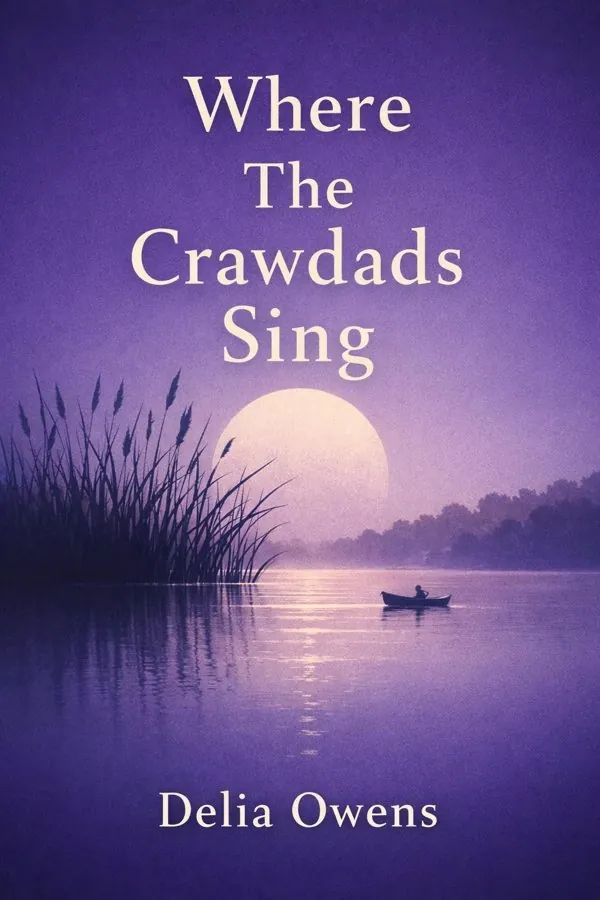

Where the Crawdads Sing
The Midnight Library
In-Depth Analysis
Where the Crawdads Sing and The Midnight Library are both bestselling contemporary novels about damaged protagonists searching for a reason to live, yet they approach that search from radically different narrative and philosophical directions. Delia Owens grounds her novel in the physical world: mud, feathers, tides, shell patterns, isolation, and the social cruelty of a small coastal town. Matt Haig, by contrast, builds an explicitly metaphysical structure, placing Nora Seed in an infinite library between life and death, where each book allows her to inhabit a life shaped by a different decision. One novel asks how a person survives being abandoned in a specific place; the other asks how a person survives the burden of imagined alternatives.
Kya Clark and Nora Seed are both lonely women, but their loneliness has different textures. Kya’s isolation is externally imposed and materially severe. Abandoned first by her mother, then her siblings, and finally left effectively parentless, she must learn how to feed, shelter, and educate herself in the marsh. Her alienation is not merely emotional; it is social, economic, and bodily. When townspeople dismiss her as the “Marsh Girl,” the novel exposes how class prejudice and misogyny turn vulnerability into spectacle. Nora, on the other hand, begins from an interior collapse. She has housing and a modern social world, but she experiences her life as a ledger of failures: a broken engagement, career disappointments, a dead cat, strained family ties, and a pervasive belief that she has chosen wrongly at every turn. Kya is trying to endure a life no one made safe for her; Nora is trying to assess whether a life full of regrets is worth continuing.
This difference shapes each novel’s emotional architecture. Owens builds feeling through accumulation. Every abandonment deepens Kya’s mistrust; every act of tenderness becomes fragile and therefore precious. Tate’s role matters because he recognizes Kya’s intelligence and teaches her to read, opening not just literacy but personhood. That education enables her later work collecting and illustrating marsh specimens, turning the environment that sheltered her into the basis of expertise and self-definition. Chase Andrews, in contrast, embodies the danger of entering the social world on unequal terms. His charm and status expose Kya’s vulnerability to manipulation, and the eventual murder case makes visible how quickly the town is willing to believe the worst of a woman it never understood. In Owens’s novel, intimacy is dangerous because society has already judged who Kya is allowed to be.
Haig’s novel works more like a philosophical sequence of experiments. In the Midnight Library, Nora tries on lives in which she pursued elite swimming, stayed with her fiancé, became a glaciologist, achieved musical fame, or followed other roads not taken. The power of these episodes lies in their deflation of fantasy. Each seemingly superior life contains hidden losses, emotional dislocations, or forms of incompleteness. Haig’s central claim is not that every life is equally good, but that regret is a poor narrator. We construct alternate selves as if they would have delivered coherence, status, love, or peace, yet Nora repeatedly discovers that pain, trade-offs, and contingency persist across lives. The novel therefore functions as an argument against counterfactual idealization.
Stylistically, Owens and Haig pursue opposite strengths. Owens writes with sensuous descriptive intensity. The marsh is never background; it is Kya’s first language, moral education, and surrogate family. Natural details carry symbolic weight without becoming purely decorative: shells, birds, mating habits, and tidal rhythms often mirror the novel’s human patterns of attraction, defense, and survival. Because Owens has a zoological eye, Kya’s later scientific accomplishments feel earned rather than sentimental. Haig’s prose is intentionally plainer, built for clarity and movement. The Midnight Library favors concise emotional statements and highly legible scenes that make its philosophical message accessible. Where Owens persuades through immersion, Haig persuades through conceptual repetition and variation.
Their treatment of justice also sharply diverges. Where the Crawdads Sing stages formal justice in the courtroom, but it keeps asking whether legal judgment can ever be disentangled from social bias. Kya is prosecuted not only on evidence but on reputation; the trial reveals how thoroughly the town has defined her as strange, suspect, and lesser. The ending complicates moral certainty even further, suggesting that survival and justice may not align neatly. The Midnight Library, by contrast, has no courtroom because its arena is existential rather than civic. Nora is not on trial before society but before her own regrets. Her verdict emerges when she stops asking which life would make her flawless and starts recognizing the possibility of meaning in the life she actually has.
For readers, this creates different kinds of aftereffects. Owens leaves behind images, tensions, and moral unease. The novel stays with you because Kya’s life is so bound to place, and because the ending resists simple exoneration or condemnation. Haig leaves behind a framework: when you imagine that another decision would have saved you, what are you overlooking about the complexity of any life? That framework can be immediately consoling, especially for readers wrestling with depression or paralyzing self-comparison.
If read together, the books form an illuminating pair. Both reject the idea that a human being can be understood superficially. Both insist that hidden interior worlds matter. Yet Where the Crawdads Sing is more rooted, ambiguous, and socially textured, while The Midnight Library is more direct, therapeutic, and universalizing. Owens gives us a singular life shaped by mud, hunger, desire, and stigma. Haig gives us many possible lives in order to defend the value of the one we have. One teaches through atmosphere and moral complexity; the other through allegory and emotional reframing. Their shared question is how to continue living after suffering. Their answers are different: for Kya, survival emerges through attachment to the natural world and fierce self-preservation; for Nora, it comes through relinquishing fantasy and choosing life as it is.
Side-by-Side Comparison
| Aspect | Where the Crawdads Sing | The Midnight Library |
|---|---|---|
| Core Philosophy | Where the Crawdads Sing argues that identity is formed through abandonment, environment, and the slow, painful creation of selfhood. Kya’s bond with the marsh suggests that nature can become both parent and moral witness when human society fails. | The Midnight Library centers on regret, possibility, and the idea that meaning comes less from a perfect life than from accepting one’s imperfect real one. Nora’s alternate lives repeatedly show that fulfillment cannot be engineered by eliminating every mistake. |
| Writing Style | Delia Owens writes in lush, sensory prose, using the marsh as a living presence and often layering natural observation with emotional symbolism. The novel also shifts between lyrical coming-of-age passages and tighter courtroom suspense. | Matt Haig uses clear, accessible, idea-driven prose that favors emotional directness over stylistic ornament. The novel’s speculative premise gives it a fable-like structure, with each alternate life functioning as a compact thought experiment. |
| Practical Application | Its practical value is indirect: readers may reflect on resilience, class prejudice, loneliness, and the consequences of neglect. It offers insight into how social exclusion shapes behavior, but it does so through narrative immersion rather than explicit guidance. | The Midnight Library has immediate takeaway value for readers struggling with regret, perfectionism, or depressive thinking. Nora’s experiences provide a more overt invitation to reassess one’s own 'if only' narratives and sources of meaning. |
| Target Audience | This novel suits readers who enjoy literary-commercial crossover fiction, Southern atmosphere, murder mystery, and emotionally intense character studies. It especially appeals to those drawn to survival narratives and place-based storytelling. | This book is ideal for readers who like accessible philosophical fiction, mental health themes, and speculative premises without dense world-building. It works well for readers who want a fast, reflective novel with clear emotional stakes. |
| Scientific Rigor | Although a work of fiction, it is enriched by Owens’s background in zoology, and its marsh ecology often feels closely observed and credible. The natural world is rendered with enough specificity to give Kya’s scientific curiosity real texture. | Its speculative library between life and death is metaphysical rather than scientifically grounded, and the book does not aim for rigorous realism in psychology or physics. Its framework is primarily allegorical, designed to dramatize regret and choice. |
| Emotional Impact | Where the Crawdads Sing builds emotion through cumulative neglect, fragile love, and Kya’s desperate self-protection, making its heartbreak slow-burning and deeply rooted. The trial and final revelations intensify feelings of injustice, fear, and bittersweet vindication. | The Midnight Library produces a more immediate emotional response by beginning at Nora’s lowest point and then offering glimpses of better-seeming lives that prove incomplete. Its effect is often comforting, hopeful, and therapeutic rather than tragic. |
| Actionability | Its lessons are interpretive: readers may come away thinking about empathy toward outsiders, the long shadow of childhood trauma, and the way communities construct guilt. It is less a guide to action than a prompt for moral and emotional reflection. | Its themes are highly actionable because readers can directly apply its critique of regret, comparison, and imagined ideal lives. Many will finish it wanting to reframe disappointments, reconnect with others, or value ordinary life more fully. |
| Depth of Analysis | The novel allows layered readings involving class, gendered vulnerability, natural belonging, social stigma, and the ambiguity of justice. Kya is psychologically complex because her fierce independence is inseparable from her fear of abandonment. | Haig’s novel is philosophically rich in a more explicit and streamlined way, examining identity through alternate choices and counterfactual lives. Its analysis is broad and resonant, though sometimes less psychologically intricate than Owens’s character study. |
| Readability | Despite its lyrical passages, it remains very readable because its mystery structure and romantic tension keep momentum high. Some readers may find the shifts between poetic nature writing and legal drama slightly uneven, but it is broadly accessible. | The Midnight Library is extremely readable, with short chapters, a clean premise, and rapidly changing scenarios that sustain curiosity. It is especially approachable for readers who want emotionally weighty fiction without stylistic density. |
| Long-term Value | It tends to linger because of its vivid sense of place, its morally charged ending, and the memorable figure of Kya as both naturalist and outcast. Readers often return to it for atmosphere, character, and the unresolved tension between justice and survival. | Its long-term value lies in its quotable insights about regret and its usefulness during periods of personal doubt or transition. While its speculative mechanism may feel simpler on reread, its core message can remain deeply reassuring. |
Key Differences
Place-Based Realism vs Metaphysical Premise
Where the Crawdads Sing is rooted in the concrete ecology of the North Carolina marsh, where tides, feathers, and isolation shape Kya’s entire identity. The Midnight Library unfolds in a symbolic in-between realm, using the infinite library and alternate lives as a philosophical device rather than a realistic setting.
Survival Story vs Regret Story
Kya’s arc is fundamentally about survival after abandonment: learning to feed herself, evade social cruelty, and build a life from almost nothing. Nora’s arc is about confronting regret and discovering that no alternative life would erase uncertainty, grief, or compromise.
Social Judgment vs Self-Judgment
Owens focuses heavily on how a community defines and misreads an outsider, especially during the murder investigation of Chase Andrews. Haig emphasizes Nora’s internal condemnation, showing how her own regret distorts the value of her life more than public opinion does.
Lyrical Atmosphere vs Conceptual Clarity
Owens relies on lush, often poetic description, making the marsh feel like a character and using natural imagery to reflect emotional states. Haig writes in a simpler, more transparent style so the ideas about choice, possibility, and acceptance remain easy to grasp.
Romantic and Legal Tension vs Episodic Thought Experiments
Where the Crawdads Sing sustains tension through Kya’s relationships with Tate and Chase and through the eventual courtroom case. The Midnight Library is structured as a sequence of alternate-life episodes, each testing a different version of Nora’s “if only” beliefs.
Ambiguous Morality vs Therapeutic Resolution
Owens leaves readers with difficult ethical questions, especially regarding justice, guilt, and what survival may demand from a person who has been cornered by life. Haig moves toward a more overtly healing conclusion, emphasizing renewed willingness to live rather than moral uncertainty.
Character Specificity vs Universal Relatability
Kya is highly specific: a marsh-raised outcast, amateur naturalist, and socially stigmatized woman shaped by a unique environment. Nora is constructed more universally, as someone whose regrets and imagined alternate selves are meant to mirror the anxieties of many readers.
Who Should Read Which?
Readers seeking comfort after burnout, regret, or a difficult life transition
→ The Midnight Library
Matt Haig’s novel speaks directly to feelings of failure, missed opportunities, and emotional exhaustion. Nora’s alternate lives help readers reframe the belief that one wrong choice ruined everything, making the book especially effective as a hopeful, restorative read.
Readers who love immersive settings, strong heroines, and emotionally layered mysteries
→ Where the Crawdads Sing
Delia Owens offers a much richer sense of place and a more intricate blend of coming-of-age fiction, romance, and legal suspense. Kya’s bond with the marsh and her outsider status create a character study that feels both intimate and expansive.
Book club readers who want a discussion-heavy novel with moral ambiguity
→ Where the Crawdads Sing
The novel invites debate about justice, gender, class bias, trauma, and the ethics of its ending in a way that encourages sustained conversation. While The Midnight Library sparks personal reflection, Owens’s book typically generates more varied interpretive arguments.
Which Should You Read First?
Read The Midnight Library first if you want a quick, accessible novel that opens up big questions about regret, depression, and the fantasy of perfect choices. Its short chapters and clean speculative premise make it easier to enter, and its hopeful trajectory can create a reflective lens for reading more emotionally complex fiction afterward. It is especially good as a first read if you are coming out of a slump or want something philosophically engaging without heavy stylistic demands. Read Where the Crawdads Sing first if you prefer being pulled into a richly textured world and don’t mind slower emotional accumulation. Because it is more atmospheric and morally layered, some readers may appreciate approaching it when they have more attention for setting, character psychology, and ambiguity. As a pairing, however, Haig first and Owens second often works best: The Midnight Library asks broad questions about how to value a life, and Where the Crawdads Sing then shows what those questions look like when filtered through class stigma, abandonment, desire, and a very particular place.
Want the full summary?
Get instant access to this book summary and 100K+ more with Fizz Moment.
Get Free SummaryAvailable on App Store • Free to download
Frequently Asked Questions
Is Where the Crawdads Sing better than The Midnight Library for beginners?
It depends on what kind of beginner you mean. If you are new to contemporary fiction and want a very fast, concept-driven, emotionally clear read, The Midnight Library is usually the easier entry point because its prose is straightforward and its chapters move quickly through alternate-life scenarios. If, however, you enjoy strong atmosphere, mystery, romance, and courtroom drama, Where the Crawdads Sing may be the more gripping first read. It is slightly denser in style because Delia Owens spends more time on setting and emotional buildup, but its plot hooks are powerful. For absolute beginners who want immediate readability, Haig often has the edge; for beginners who want immersive storytelling, Owens may be more rewarding.
Which book is more emotional: Where the Crawdads Sing or The Midnight Library?
Where the Crawdads Sing is generally the more devastating and layered emotional experience, because Kya’s suffering unfolds over years of abandonment, humiliation, and precarious love. Her emotional life is shaped by concrete deprivation and repeated rejection, so readers often feel a deep protective attachment to her. The Midnight Library is emotional in a different way: it begins from suicidal despair and moves toward hope, making it more immediately affecting for readers who relate to regret, burnout, or depression. Owens tends to produce ache, tension, and bittersweet sorrow; Haig tends to produce recognition, comfort, and relief. The stronger emotional impact depends on whether you respond more to survival trauma or to existential regret.
Is The Midnight Library or Where the Crawdads Sing better for readers interested in mental health themes?
The Midnight Library is the more direct choice for readers specifically seeking mental health themes, because Nora’s depression, hopelessness, and regret are central from the opening pages. The novel’s entire speculative framework is designed to examine suicidal thinking, self-blame, and the fantasy that another version of life would have solved everything. Where the Crawdads Sing also explores psychological damage, especially the effects of childhood abandonment, social exclusion, and trauma, but it does so more indirectly through behavior and relationships rather than explicit reflection on mental health. If you want a book that openly engages despair and recovery, choose Haig. If you want trauma explored through story, setting, and character formation, choose Owens.
Which has better writing style: Delia Owens’s Where the Crawdads Sing or Matt Haig’s The Midnight Library?
If by “better” you mean more lyrical, vivid, and image-rich, Where the Crawdads Sing is the stronger stylistic achievement. Owens writes the marsh with tactile precision and often lets natural imagery deepen the emotional meaning of scenes, especially in Kya’s solitary observations and developing scientific work. If by “better” you mean cleaner, simpler, and more immediately digestible, The Midnight Library may be preferable. Haig’s prose is intentionally transparent so the philosophical premise stays front and center. In literary terms, Owens is usually more atmospheric and textured; in accessibility terms, Haig is more streamlined. The choice comes down to whether you value aesthetic immersion or conceptual clarity.
Should I read Where the Crawdads Sing or The Midnight Library if I want a book club discussion pick?
Both work well for book clubs, but they generate different kinds of conversations. Where the Crawdads Sing tends to produce richer debate about class prejudice, gendered vulnerability, the symbolism of nature, the ethics of the ending, and whether the justice system ever saw Kya clearly. It gives readers a lot to argue over. The Midnight Library is often better for personally reflective discussions, because people naturally connect Nora’s regrets and alternate choices to their own lives. If your book club prefers plot, character, and moral ambiguity, Owens is the better choice. If your group likes accessible philosophy and emotionally open conversation about “roads not taken,” Haig is ideal.
Which book offers more long-term value: Where the Crawdads Sing vs The Midnight Library?
Where the Crawdads Sing often has stronger long-term literary value because of its memorable setting, morally complex ending, and the singularity of Kya as a character. Readers frequently remember the marsh, the trial, and the uneasy final revelations long after finishing the book. The Midnight Library offers a different kind of long-term value: it becomes a book people revisit mentally during periods of regret, transition, or disappointment. Its message about accepting the imperfection of life can remain personally useful, even if the plot mechanics are less haunting than Owens’s. For re-reading as literature, Owens may endure more strongly; for re-reading as emotional reassurance, Haig may.
The Verdict
If you want the stronger novel as a work of fiction, Where the Crawdads Sing is the more fully realized achievement. Delia Owens creates a vivid world, a haunting protagonist, and a story that operates successfully as coming-of-age tale, romance, social critique, and courtroom mystery. Kya’s life in the marsh is rendered with such sensory conviction that the setting becomes inseparable from the book’s deepest questions about belonging, abandonment, and justice. It is also the more ambiguous and discussable book, especially in the way it handles social prejudice and the meaning of its ending. That said, The Midnight Library may be the better recommendation for many contemporary readers in moments of emotional struggle. Matt Haig’s novel is less intricate but more immediately usable. Its central idea—that imagined alternate lives are often fantasies built from regret rather than truth—lands quickly and accessibly. Nora’s journey can feel genuinely comforting, especially for readers dealing with depression, disappointment, or the pressure to have made perfect choices. So the final recommendation is this: choose Where the Crawdads Sing if you want richer characterization, more atmospheric writing, and a novel that lingers as literature. Choose The Midnight Library if you want clarity, hope, and a fast-moving reflective read with direct emotional application. If possible, read both: Owens for depth and Haig for perspective.
Related Comparisons

Want to read both books?
Get AI-powered summaries of both Where the Crawdads Sing and The Midnight Library in just 20 minutes total.