
The Alchemist vs Siddhartha: Which Should You Read?
A detailed comparison of The Alchemist by Paulo Coelho and Siddhartha by Hermann Hesse. Discover the key differences, strengths, and which book is right for you.
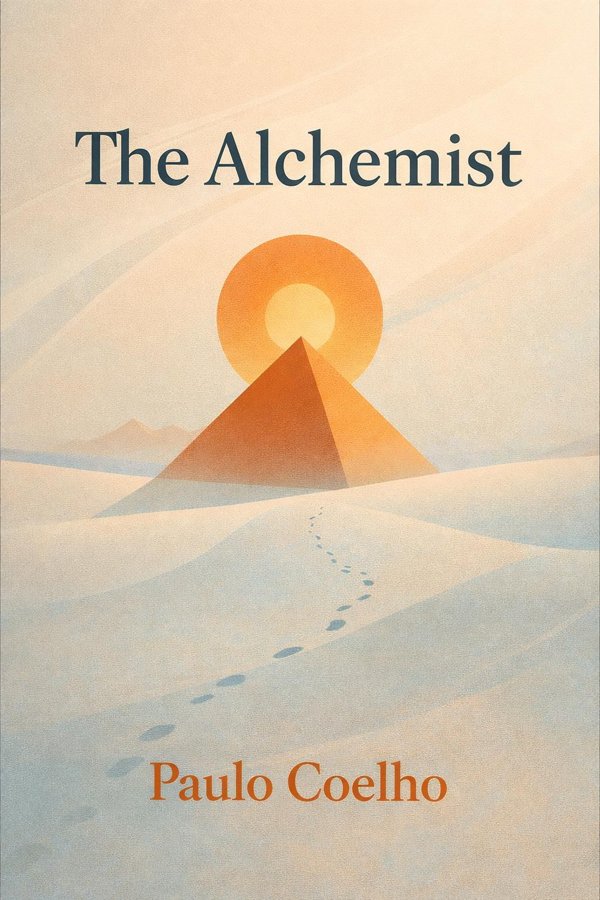

The Alchemist
Siddhartha
In-Depth Analysis
Paulo Coelho’s 'The Alchemist' and Hermann Hesse’s 'Siddhartha' are both celebrated for their spiritual themes, yet they offer fundamentally different approaches to self-discovery and enlightenment. At their core, both novels chart a protagonist’s journey toward a higher understanding, but the nature of that journey, its philosophical underpinnings, and its practical implications diverge significantly.
Coelho’s 'The Alchemist' is structured as a classic quest narrative. Santiago, a young shepherd, is galvanized by a recurring dream of a treasure at the Egyptian pyramids. The story unfolds as a series of encounters—with Melchizedek, the Englishman, the Alchemist, and Fatima—each imparting a lesson about destiny, fear, and faith. The central motif is the 'Personal Legend,' a concept that blends existential purpose with spiritual calling: "When you want something, all the universe conspires in helping you to achieve it." Coelho’s methodology is didactic; every episode is engineered to reinforce the book’s core message. The writing style is intentionally simple, almost parabolic, with clear symbolism—the alchemy of lead into gold mirrors Santiago’s own transformation. The effect is immediate and motivating, designed to inspire readers to pursue their own dreams and heed the omens in their lives.
In contrast, Hesse’s 'Siddhartha' employs a more reflective and philosophical structure. Siddhartha’s journey is not linear but cyclical, echoing the Eastern philosophies it explores. The novel is divided into distinct stages: Siddhartha’s dissatisfaction as a Brahmin’s son, his renunciation with the Samanas, his meeting with the Buddha (Gotama), his immersion in sensuality and wealth with Kamala and Kamaswami, and his ultimate despair and awakening by the river. Unlike Santiago, Siddhartha is skeptical of external teachings and insists on personal experience as the only path to truth. This is crystallized in his refusal to accept the Buddha’s doctrine, despite respecting the Buddha’s serenity: "Knowledge can be communicated, but not wisdom."
Hesse’s methodology is existential and phenomenological. Rather than teaching through allegory or parable, he immerses the reader in Siddhartha’s consciousness, tracing the evolution of his understanding through internal struggle and external circumstance. The prose is poetic and meditative, often lingering on sensory detail and the rhythm of the river, which becomes a metaphor for the unity and continuity of existence. The lessons are not prescriptive; Siddhartha’s enlightenment comes from embracing the totality of life—pleasure and pain, gain and loss—rather than seeking to escape or transcend it. This culminates in the realization that time is an illusion and that all life is interconnected.
Philosophically, 'The Alchemist' leans toward a Westernized, motivational spirituality, accessible to a broad readership. Its lessons are actionable: trust your dreams, embrace change, learn from setbacks. The Alchemist character, for instance, instructs Santiago to listen to his heart and recognize that fear is the greatest obstacle. In contrast, 'Siddhartha' is steeped in Buddhist and Vedantic thought, interrogating the very nature of desire, suffering, and enlightenment. Siddhartha’s journey is arduous and involves repeated failures—his time as an ascetic leaves him empty, while his years of indulgence bring only disillusionment. It is only through the acceptance of life’s contradictions that he achieves peace.
Practically, 'The Alchemist' provides clear, uplifting guidance suitable for readers seeking motivation and direction. Its lessons are easy to absorb and apply: seize opportunities, don’t be deterred by setbacks, and trust the process. 'Siddhartha,' however, offers no easy answers; its practical implications are subtler, demanding patience and introspection. The book encourages readers to look beyond external teachings and to find meaning through their own lived experience, a process that can be unsettling but ultimately more transformative.
In sum, while both novels address the universal quest for meaning, they do so from very different vantage points. 'The Alchemist' is a fable of hope and determination, ideal for those at life’s crossroads, whereas 'Siddhartha' is a meditative exploration of spiritual maturity, suited for readers drawn to philosophical depth and existential inquiry.
Side-by-Side Comparison
| Aspect | The Alchemist | Siddhartha |
|---|---|---|
| Core Philosophy | The Alchemist centers around the pursuit of one’s 'Personal Legend'—the idea that everyone has a destined path or dream, and true fulfillment comes from pursuing it fearlessly. | Siddhartha delves into the search for enlightenment and the realization that true wisdom comes from direct experience, self-awareness, and the unity of all existence. |
| Writing Style | Coelho employs a simple, parable-like prose with repetitive motifs and direct symbolism, making the narrative accessible and allegorical. | Hesse’s writing is lyrical, meditative, and introspective, combining narrative clarity with philosophical dialogue and poetic imagery. |
| Narrative Structure | The Alchemist follows a linear hero’s journey, punctuated by episodic encounters that impart lessons and guide Santiago toward self-discovery. | Siddhartha unfolds in distinct phases—childhood, asceticism, indulgence, despair, and enlightenment—mirroring the cyclical nature of spiritual growth. |
| Emotional Impact | The Alchemist evokes hope, optimism, and a sense of wonder, encouraging readers to trust in omens and personal intuition. | Siddhartha elicits a more contemplative and sometimes somber mood, inviting readers to grapple with suffering, doubt, and eventual serenity. |
| Practical Application | Themes are actionable, urging readers to pursue their dreams, listen to their hearts, and embrace change, with clear moral takeaways. | The lessons are subtler, focusing on acceptance, patience, and the limitations of prescriptive teachings; practical application requires deeper reflection. |
| Philosophical Depth | Philosophy is broad and universal, blending elements of mysticism, spirituality, and self-help, but remains relatively surface-level. | Hesse’s work is rooted in Buddhist and Vedantic thought, exploring the paradoxes of knowledge and the ineffability of enlightenment with greater nuance. |
| Cultural Context | Coelho draws from Western, especially Iberian and Middle Eastern, mythologies and spiritual traditions, making it broadly relatable. | Siddhartha is deeply embedded in Indian spiritual traditions and the historical milieu of the Buddha, requiring more cultural and philosophical context. |
| Character Development | Santiago’s growth is externalized through his journey and interactions, with personal change tied to events and revelations. | Siddhartha’s transformation is internal and psychological, tracing subtle shifts in consciousness and self-perception over time. |
| Audience Accessibility | Highly accessible to general readers, including young adults, due to its fable-like simplicity and positive message. | Best suited for readers open to introspective, philosophical literature and those with patience for abstract, existential themes. |
| Long-term Value | Offers enduring inspiration and encouragement, especially for those at crossroads or seeking motivation. | Provides profound insights that deepen with re-reading, inviting lifelong reflection on the nature of self and existence. |
Key Differences
Philosophical Approach
'The Alchemist' presents a straightforward, universal spirituality focused on personal destiny and external omens, while 'Siddhartha' is rooted in Eastern philosophy, emphasizing internal experience and the paradoxes of enlightenment.
Narrative Style
Coelho uses a simple, allegorical style with clear moral lessons, making the story accessible and motivational. Hesse’s prose is poetic, introspective, and often abstract, demanding more engagement from the reader.
Character Growth
Santiago’s transformation is largely shaped by external mentors and experiences; his journey is about pursuing and achieving a goal. Siddhartha’s evolution is internal, resulting from self-doubt, reflection, and acceptance of life’s complexities.
Cultural Context
'The Alchemist' draws from Western and Middle Eastern traditions, making it broadly relatable, while 'Siddhartha' is deeply embedded in Indian spiritual and historical context, requiring more cultural awareness.
Target Audience
'The Alchemist' is suitable for a general audience, including young adults and readers seeking motivation. 'Siddhartha' is best for mature, philosophically inclined readers ready for existential and spiritual inquiry.
Practicality vs. Reflection
'The Alchemist' offers actionable life lessons and clear takeaways, whereas 'Siddhartha' encourages deep reflection and may leave readers with more questions than answers.
Who Should Read Which?
The Motivated Seeker
→ The Alchemist
If you are looking for actionable inspiration and a motivational boost to pursue your dreams, 'The Alchemist' offers a clear, optimistic narrative that encourages you to follow your heart and trust the journey.
The Philosophical Explorer
→ Siddhartha
For readers who relish deep, existential questioning and appreciate literature that challenges them to reflect on the nature of self and reality, 'Siddhartha' delivers a meditative, richly layered exploration of enlightenment.
The Literary Novice
→ The Alchemist
Newcomers to spiritual or philosophical fiction will find 'The Alchemist' approachable and rewarding due to its simple style, universal themes, and uplifting message, making it an ideal starting point.
Which Should You Read First?
For most readers, starting with 'The Alchemist' is recommended. Its accessible style, universal messages, and clear narrative make it an excellent entry point into spiritual fiction and philosophical literature. The book’s optimism and actionable advice are especially valuable for those at transitional stages in life or new to contemplative works. Once readers are comfortable with the themes of self-discovery, destiny, and personal growth, they can approach 'Siddhartha' with greater appreciation for its philosophical depth and cultural context. For readers already familiar with Eastern philosophy or who prefer introspective, layered narratives, reading 'Siddhartha' first can provide a more immersive and challenging experience. Ultimately, reading both in sequence—beginning with 'The Alchemist' for inspiration, followed by 'Siddhartha' for deeper reflection—offers a comprehensive journey through two distinct yet complementary visions of self-realization.
Want the full summary?
Get instant access to this book summary and 100K+ more with Fizz Moment.
Get Free SummaryAvailable on App Store • Free to download
Frequently Asked Questions
Is The Alchemist better than Siddhartha for beginners in spiritual fiction?
Yes, 'The Alchemist' is generally more accessible for beginners. Its straightforward narrative, clear allegories, and motivational tone make it easy to grasp for readers new to spiritual fiction. Coelho's use of simple language and universal themes means the book can be enjoyed without prior knowledge of specific philosophical or religious traditions. In contrast, 'Siddhartha' requires more patience and familiarity with introspective, philosophical exploration, making it better suited to readers ready for a deeper dive.
Which book offers more practical life lessons: The Alchemist or Siddhartha?
'The Alchemist' provides more direct and actionable life lessons, such as following your dreams, trusting your heart, and learning from setbacks. It encourages readers to take risks and pursue their personal goals. 'Siddhartha,' on the other hand, offers subtler guidance, focusing on acceptance, self-knowledge, and the importance of experience over doctrine. If you prefer clear, motivational takeaways, 'The Alchemist' is the stronger choice; if you value profound reflection, 'Siddhartha' will resonate more.
Does Siddhartha require background knowledge of Buddhism or Indian philosophy?
While 'Siddhartha' can be appreciated without in-depth knowledge of Buddhism or Indian philosophy, familiarity with these traditions enriches the reading experience. Hesse references concepts like samsara, nirvana, and the teachings of the Buddha, and the protagonist's journey mirrors key elements of Indian spiritual narratives. Readers lacking this background may miss some nuances, but the book's core messages about self-discovery and unity are still accessible.
How do the protagonists of The Alchemist and Siddhartha differ?
Santiago, the protagonist of 'The Alchemist,' is guided by external signs, mentors, and a sense of destiny, and his growth is driven by pursuit and achievement. Siddhartha, by contrast, is introspective and skeptical of external teachings; his journey is marked by internal questioning, disillusionment, and gradual realization. Santiago's transformation is catalyzed by events, while Siddhartha's is the result of deep, personal reflection and acceptance.
Which book is more suitable for young adults?
'The Alchemist' is particularly suitable for young adults due to its optimistic, empowering narrative and straightforward message. Its emphasis on dreams, adventure, and self-belief aligns well with the challenges and aspirations of young readers. 'Siddhartha,' while rewarding, is more demanding in its philosophical depth and slower pacing, making it better suited for mature readers or those with a strong interest in existential themes.
Can The Alchemist and Siddhartha be read together for comparative study?
Absolutely. Reading both books together offers a rich comparative study in spiritual journeys from different cultural and philosophical perspectives. 'The Alchemist' provides a Westernized, action-oriented approach to personal fulfillment, while 'Siddhartha' explores Eastern concepts of enlightenment and the limitations of dogma. Together, they highlight contrasting yet complementary paths to self-realization.
The Verdict
Both 'The Alchemist' and 'Siddhartha' are enduring works that speak to the universal quest for meaning, but their appeal and utility depend greatly on the reader’s background and expectations. 'The Alchemist' is ideal for those seeking inspiration, clarity, and actionable guidance. Its allegorical style and uplifting tone make it especially suitable for young adults, readers at a crossroads, or anyone needing encouragement to pursue their dreams. The narrative’s accessibility ensures it resonates with a wide audience, regardless of philosophical background. 'Siddhartha,' by contrast, is a deeper, more meditative exploration of enlightenment, doubt, and self-knowledge. It is best suited for readers prepared to engage with complex, sometimes ambiguous philosophical ideas and who appreciate gradual, internal character development. Those interested in Eastern philosophies or existential literature will find Hesse’s novel rewarding and thought-provoking. In summary, choose 'The Alchemist' for motivation and practical life lessons, especially if you are new to spiritual fiction or prefer clear parables. Opt for 'Siddhartha' if you seek profound philosophical reflection and are willing to immerse yourself in its contemplative, sometimes challenging journey. Both books are valuable, but your choice should reflect your current needs and literary preferences.
Related Comparisons





Want to read both books?
Get AI-powered summaries of both The Alchemist and Siddhartha in just 20 minutes total.