
Meditations vs Siddhartha: Which Should You Read?
A detailed comparison of Meditations by Marcus Aurelius and Siddhartha by Hermann Hesse. Discover the key differences, strengths, and which book is right for you.

Meditations
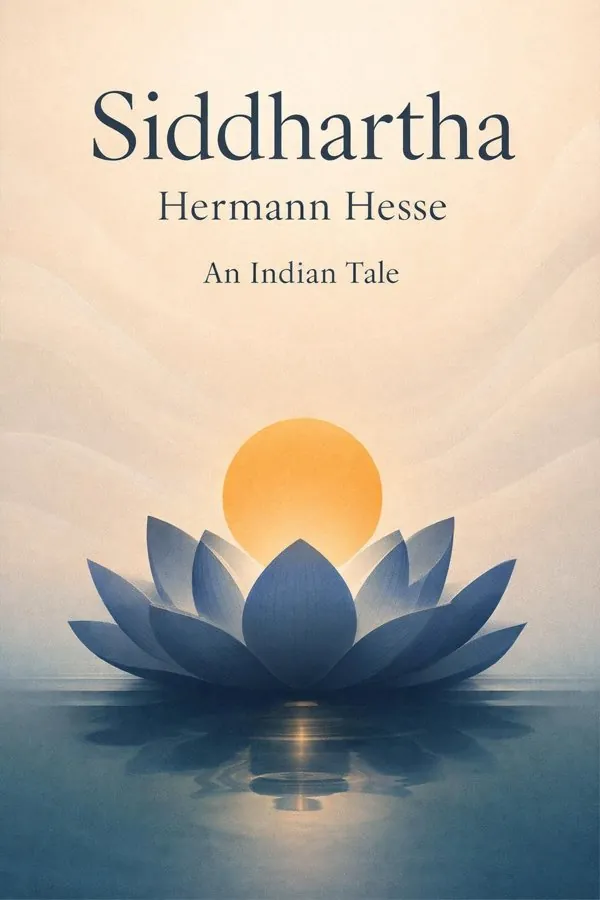
Siddhartha
In-Depth Analysis
Comparing Marcus Aurelius’s Meditations and Hermann Hesse’s Siddhartha reveals two profound approaches to the enduring questions of meaning, morality, and personal growth. Though separated by nearly two millennia and arising from distinct intellectual traditions, both works continue to resonate with readers seeking wisdom and guidance.
Meditations is a series of private reflections by a Roman emperor, composed while grappling with the burdens of leadership and the uncertainties of existence. Its methodology is rooted in the Stoic tradition: Marcus repeatedly counsels himself to accept fate, to align actions with nature, and to cultivate an inner fortress of rationality. For instance, in Book II, he counsels: “You have power over your mind—not outside events. Realize this, and you will find strength.” This sentiment encapsulates the Stoic belief that suffering arises not from external conditions but from our judgments about them. Marcus’s writing is terse and practical, often resembling reminders or exercises; he rarely indulges in elaborate argumentation, focusing instead on actionable aphorisms.
Siddhartha, by contrast, is a philosophical novel—a narrative journey in search of enlightenment. Hesse’s protagonist, Siddhartha, begins as a dissatisfied Brahmin, yearning for deeper truth than prescribed rituals offer. The book’s structure mirrors a spiritual odyssey: Siddhartha joins the ascetic Samanas, meets the Buddha, explores sensuality with Kamala, and plunges into despair before finding awakening by the river. Unlike Meditations, Siddhartha’s methodology is experiential and narrative. Readers witness the evolution of Siddhartha’s understanding through concrete episodes, such as his realization that intellectual teachings alone cannot yield true wisdom. In the river’s “final teaching,” Siddhartha perceives the unity of all existence, a realization articulated through poetic imagery: “The river is everywhere… it is at the same time present, yesterday, today, tomorrow.”
Philosophically, the books diverge sharply. Meditations espouses Stoic detachment, advocating for disciplined indifference to pleasure and pain, and a focus on duty. Marcus’s reflections on mortality, such as “Do not act as if you were going to live ten thousand years,” urge readers to act with urgency and virtue. His emphasis is on self-mastery and the acceptance of one’s role in the rational order of the universe. Siddhartha, on the other hand, rejects rigid doctrine in favor of experiential learning. When Siddhartha leaves the Buddha, despite acknowledging his greatness, he asserts that enlightenment cannot be taught—it must be lived and directly experienced. Hesse’s work absorbs and transcends Eastern philosophies, blending them with Western existentialism: Siddhartha’s journey is both a spiritual and existential quest, culminating in the realization that dualities (joy/sorrow, self/world) are ultimately illusory.
Practically, Meditations lends itself to daily application. Its Stoic exercises—reminding oneself of impermanence, visualizing adversity, and practicing gratitude—are concrete tools for readers. Marcus’s advice is particularly useful for those facing stress, ethical dilemmas, or emotional turmoil. Siddhartha, while less prescriptive, offers a model for those seeking to craft their own path. Its lessons are absorbed through identification with the protagonist, encouraging readers to value personal insight over received wisdom.
The writing styles further distinguish the two. Meditations’s fragmented, aphoristic structure reflects its origin as a private notebook: its power lies in its unfiltered honesty and brevity. Siddhartha, by contrast, unfolds with lush prose and narrative grace, drawing on parable, symbolism, and scenic description. The river, a recurring motif, serves as both literal and metaphorical teacher, illustrating Hesse’s belief in the world as a living, interconnected whole.
Historically, the books also address different crises. Marcus writes amid political instability and the threat of death, seeking composure and moral clarity. Hesse, writing after World War I, interrogates the limitations of Western rationalism and religious dogma, offering a synthesis that embraces doubt, suffering, and transcendence. Both works, however, address perennial human concerns: how to live meaningfully, how to endure suffering, and how to attain peace.
In sum, Meditations and Siddhartha offer complementary yet distinct visions. Marcus Aurelius provides practical, actionable wisdom for daily life, rooted in a philosophy of rational acceptance and virtue. Hesse’s Siddhartha invites readers on an inward journey, championing personal experience and the unity underlying apparent opposites. Their continued relevance attests to the universality of their insights, even as their methods and conclusions diverge.
Side-by-Side Comparison
| Aspect | Meditations | Siddhartha |
|---|---|---|
| Core Philosophy | Meditations is grounded in Stoic philosophy, emphasizing rationality, acceptance of fate, and self-discipline. Marcus Aurelius promotes a life aligned with reason and virtue, urging the reader to accept what cannot be changed and to focus on moral integrity. | Siddhartha is rooted in Eastern philosophies, particularly those related to Buddhism and Hinduism, exploring the quest for enlightenment through personal experience, unity, and transcendence of ego. Hesse’s protagonist undergoes a journey from asceticism to sensory indulgence to spiritual realization. |
| Writing Style | Marcus Aurelius writes in a direct, succinct, and meditative style, using aphorisms and personal reflections. The tone is introspective, sometimes terse, and often reads like a private journal addressed to himself. | Hesse’s prose is lyrical, symbolic, and narrative-driven. The novel employs rich imagery and allegory to trace Siddhartha’s journey, with dialogue and descriptive passages that evoke the atmosphere of ancient India. |
| Practical Application | Meditations offers actionable guidance for daily conduct, focusing on how to manage emotions, face adversity, and live ethically. Its principles are meant to be practiced in ordinary life, especially amid challenges. | Siddhartha’s lessons are less prescriptive and more experiential, encouraging readers to seek their own path. The narrative illustrates philosophies rather than explicitly instructing, emphasizing personal discovery over rules. |
| Target Audience | Best suited for readers interested in Stoicism, self-improvement, and practical moral philosophy. It appeals to those seeking guidance on resilience and ethical living. | Ideal for readers interested in spiritual exploration, Eastern philosophies, and literary fiction. It resonates with those drawn to existential questions and the search for meaning. |
| Emotional Impact | Meditations is often emotionally restrained, reflecting Stoic ideals, but its honesty about suffering, mortality, and self-doubt can be deeply moving in its simplicity. | Siddhartha is emotionally evocative, capturing the protagonist’s moments of despair, joy, and enlightenment. Its narrative arc elicits empathy and reflection on the human condition. |
| Actionability | Highly actionable: readers can directly apply its Stoic exercises and maxims to their own lives, such as journaling, negative visualization, and mindful acceptance. | More contemplative than actionable; its insights are internalized gradually and encourage personal interpretation rather than direct implementation. |
| Depth of Analysis | Meditations achieves depth through concise reflections, intertwining Stoic doctrine with personal experience. Its brevity can occasionally limit exploration of complex topics. | Siddhartha offers a layered analysis of spiritual growth, using narrative progression to probe ideas of suffering, desire, and enlightenment across diverse life stages. |
| Long-term Value | Meditations endures as a perennial manual for living, with advice that remains relevant across centuries and cultures. | Siddhartha holds lasting value as a literary and philosophical classic, offering new meanings upon each rereading as readers grow and change. |
| Readability | Accessible, though some archaic references and the fragmented structure may challenge modern readers. | Generally easy to read, with flowing narrative and vivid storytelling, though its philosophical depth may require slower, thoughtful reading. |
| Historical Context | Written by a Roman emperor in the 2nd century CE, Meditations reflects the concerns of a ruler confronting mortality and responsibility in a turbulent empire. | Written in early 20th-century Germany by Hesse, Siddhartha draws on Western fascination with the East and reflects post-WWI existential anxieties. |
Key Differences
Philosophical Tradition
Meditations is rooted in Roman Stoicism, emphasizing rational control and virtue, while Siddhartha synthesizes Eastern spiritual traditions, especially Buddhism and Hinduism, focusing on enlightenment and personal experience.
Form and Structure
Meditations is a collection of personal notes and aphorisms, without a narrative arc, whereas Siddhartha is a novel with a clear storyline, character development, and symbolic motifs (e.g., the river).
Practicality vs. Contemplation
Meditations delivers directly applicable advice for daily life, while Siddhartha offers a contemplative, narrative-driven model of spiritual growth, encouraging readers to find their own path.
Emotional Tone
Meditations maintains emotional restraint, reflecting Stoic ideals, whereas Siddhartha delves into the protagonist’s emotional highs and lows, creating a more immersive emotional experience.
Cultural Context
Meditations reflects the concerns of a Roman emperor in the 2nd century, focusing on leadership and duty, while Siddhartha addresses 20th-century existential uncertainty and the cross-pollination of Eastern and Western thought.
Actionability
Readers can implement Stoic practices from Meditations immediately, while Siddhartha’s lessons are more abstract, requiring personal reflection and interpretation.
Narrative Engagement
Siddhartha engages readers through storytelling and rich symbolism, while Meditations relies on the intimate, reflective power of direct address.
Who Should Read Which?
The Busy Professional
→ Meditations
This reader seeks concise, practical advice for managing stress and making ethical decisions. Meditations’ aphoristic format and focus on actionable Stoic principles make it ideal for those with limited time who want tools they can apply immediately.
The Seeker of Meaning
→ Siddhartha
This reader is engaged in a deeper search for personal meaning and spiritual understanding. Siddhartha’s narrative journey and exploration of existential questions resonate with those interested in self-discovery and the nature of enlightenment.
The Literary Enthusiast
→ Siddhartha
Appreciating rich storytelling, symbolism, and character development, this reader will find Siddhartha’s lyrical prose and allegorical narrative deeply satisfying, while Meditations may feel too sparse or utilitarian.
Which Should You Read First?
The best reading order depends on the reader’s background and interests. For those new to philosophy or seeking practical guidance for everyday challenges, beginning with Meditations is advantageous. Its short, accessible reflections and actionable advice provide immediate value and introduce core philosophical concepts without the need for prior background knowledge. This foundation in self-discipline and rational acceptance can help readers approach more abstract or narrative explorations with greater clarity. Readers interested in spiritual exploration, literary fiction, or Eastern philosophies should consider starting with Siddhartha. Its narrative format is engaging and provides a gradual immersion into complex ideas through the protagonist’s journey. For those who wish to explore both, reading Meditations first can ground the reader in practical wisdom, allowing for a deeper appreciation of Siddhartha’s more contemplative, experiential approach to enlightenment. Ultimately, both books complement each other, and the order can be tailored to the reader’s current intellectual and emotional needs.
Want the full summary?
Get instant access to this book summary and 100K+ more with Fizz Moment.
Get Free SummaryAvailable on App Store • Free to download
Frequently Asked Questions
Is Meditations better than Siddhartha for beginners in philosophy?
Meditations is generally more accessible for beginners in philosophy, especially those interested in practical ethics and self-improvement. Its concise, aphoristic format allows readers to absorb wisdom in small doses, and its focus on actionable advice makes it immediately relevant. However, some may find the text’s historical context or terse style challenging. Siddhartha, while narrative and engaging, requires readers to reflect deeply on symbolic themes and the subtleties of spiritual growth, which might be less straightforward for absolute beginners.
Which book offers more actionable guidance for everyday life: Meditations or Siddhartha?
Meditations provides more direct, actionable guidance for everyday life. Marcus Aurelius’s Stoic exercises—such as focusing only on what is within your control and practicing acceptance of fate—are designed for immediate implementation. Siddhartha, although inspiring, is more contemplative and focuses on internal transformation through experience, offering lessons that are absorbed through reflection rather than direct prescription.
How do Meditations and Siddhartha differ in their approach to suffering and adversity?
In Meditations, suffering is acknowledged as an inevitable part of life, but Marcus advocates for rational acceptance and emotional discipline as the means to overcome it. The focus is on changing one’s attitude rather than circumstances. In contrast, Siddhartha’s journey embraces suffering as a necessary pathway to wisdom; the protagonist learns through direct experience and ultimately transcends suffering by realizing the unity of all life, moving beyond dualistic thinking.
Which book is more suitable for readers interested in Eastern philosophy?
Siddhartha is the clear choice for readers interested in Eastern philosophy. Hesse’s novel draws heavily on Buddhist and Hindu teachings, exploring themes like the nature of desire, the illusion of the self, and the path to enlightenment. Meditations is rooted in Western Stoicism and has little engagement with Eastern traditions.
Does Meditations or Siddhartha offer a more emotional reading experience?
Siddhartha generally provides a more emotional reading experience due to its narrative form and depiction of the protagonist’s inner struggles, joys, and epiphanies. The reader journeys alongside Siddhartha through despair and awakening. Meditations, while deeply personal, is emotionally restrained and values equanimity, though moments of vulnerability can resonate powerfully with readers attuned to its tone.
Can I read Siddhartha without prior knowledge of Buddhism?
Absolutely. While Siddhartha draws on Buddhist ideas, Hesse’s narrative is accessible to readers without prior knowledge of Buddhism. The story is structured as a universal quest for meaning, and its themes—self-discovery, suffering, and unity—are presented in ways that resonate broadly, regardless of religious background.
The Verdict
Both Meditations and Siddhartha are enduring and influential works, but they serve different purposes and audiences. Meditations excels as a practical handbook for those seeking resilience, ethical clarity, and self-mastery in daily life. Its concise, actionable wisdom makes it ideal for readers facing personal or professional challenges, and for those drawn to Stoic philosophy. Siddhartha, on the other hand, is a literary and spiritual journey, better suited to readers interested in existential questions, personal transformation, and the interplay between East and West. Its narrative depth and evocative prose make it a rewarding read for those willing to reflect deeply and engage with ambiguity. For readers seeking immediate tools for self-improvement or grappling with stress, Meditations is the recommended starting point. For those on a quest for deeper meaning, who appreciate narrative and symbolic exploration, Siddhartha offers profound rewards. While both can be read independently, together they provide a rich dialogue between action and contemplation, rationality and mysticism. Ultimately, the best choice depends on the reader’s current needs and philosophical inclinations.
Related Comparisons

Want to read both books?
Get AI-powered summaries of both Meditations and Siddhartha in just 20 minutes total.