
Lessons in Chemistry vs A Man Called Ove: Which Should You Read?
A detailed comparison of Lessons in Chemistry by Bonnie Garmus and A Man Called Ove by Fredrik Backman. Discover the key differences, strengths, and which book is right for you.
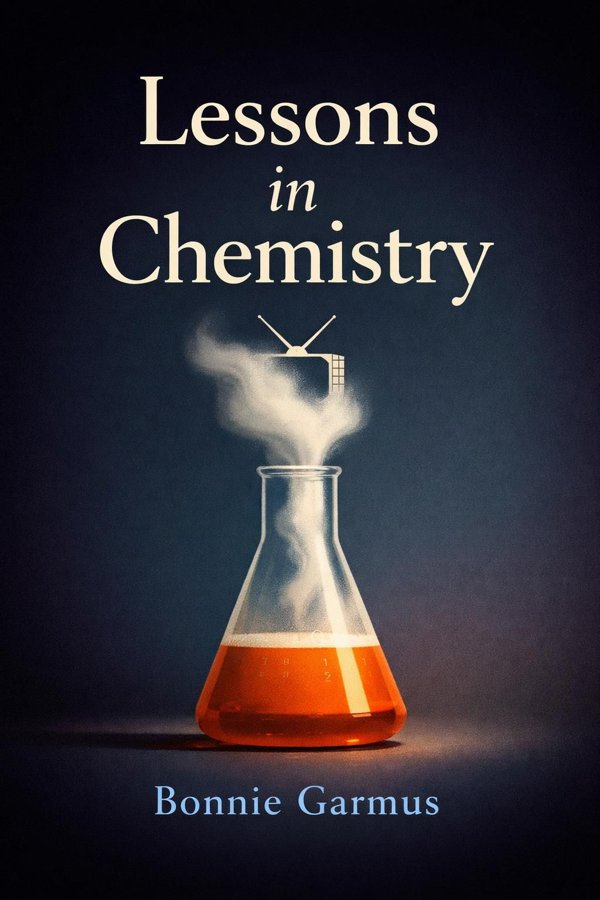

Lessons in Chemistry
A Man Called Ove
In-Depth Analysis
"Lessons in Chemistry" by Bonnie Garmus and "A Man Called Ove" by Fredrik Backman are both popular contemporary novels built around unconventional protagonists who do not fit comfortably into the worlds around them. Yet they move in strikingly different directions. Garmus gives us Elizabeth Zott, a brilliant chemist in early-1960s America whose rationality and refusal to perform femininity make her a threat to the institutions around her. Backman gives us Ove, an older Swedish widower whose rigidity, bluntness, and devotion to order initially present him as a comic curmudgeon. Both novels ask what happens when a person who seems socially incompatible is forced into deeper contact with others. The difference is that "Lessons in Chemistry" frames this conflict primarily as a battle against systemic sexism, while "A Man Called Ove" frames it as a drama of grief, isolation, and reluctant reintegration into community.
Elizabeth Zott is defined by competence. She does not merely believe in science; she thinks scientifically, applying precision, skepticism, and causal reasoning to human behavior. Her work at Hastings Research Institute establishes the book’s central tension: a woman whose intellectual gifts are undeniable is nevertheless treated as anomalous, suspect, or useful only within limits set by men. The novel’s critique becomes especially sharp in the transition from laboratory to television. Elizabeth’s cooking show, "Supper at Six," is not just a plot twist but a conceptual inversion. A medium designed to reinforce domestic femininity becomes a platform for scientific literacy and female self-assertion. She does not perform cheerful submission; she teaches chemistry while cooking and implies that women deserve lives larger than serving dinner.
Ove, by contrast, is defined not by aspiration but by withdrawal. At the start of Backman’s novel, he appears as a man reduced to routines, inspections, and irritation at everyone else’s incompetence. But Backman’s structure is key: Ove is gradually explained through flashbacks, especially his relationship with Sonja. These scenes recontextualize his harshness. What looks like misanthropy is partly grief fossilized into habit. His attachment to rules is not just personality but a means of holding together a world shattered by loss. Where Elizabeth’s conflict is externalized through sexist institutions, Ove’s conflict is internalized through mourning. His society frustrates him, but it has not denied his humanity in the way Elizabeth’s has denied hers.
This difference affects each book’s emotional register. "Lessons in Chemistry" often produces anger before tenderness. The reader is invited to recognize how absurd and cruel the barriers around Elizabeth are: dismissive male colleagues, assumptions about women’s proper roles, and a culture eager to package female intelligence as novelty rather than authority. Calvin Evans complicates this dynamic because he sees Elizabeth’s intellect clearly and loves her without trying to reduce it. His death therefore does more than create plot tragedy; it removes the rare relationship in which Elizabeth was fully recognized. Her subsequent single motherhood intensifies the book’s central inquiry: how does a woman maintain integrity when every structure around her pushes her toward compromise?
"A Man Called Ove" reverses that sequence. It begins in comic irritation and only later reveals sorrow. Much of the novel’s power lies in how Backman manipulates first impressions. Neighbors who first seem chaotic or intrusive gradually become the agents of Ove’s reluctant rescue from self-erasure. Parvaneh, in particular, disrupts his isolation not through ideology but through persistence, need, and irreverent affection. Community in Backman’s novel is messy, inconvenient, and life-saving. Ove does not give a speech about interdependence; he keeps being dragged into it, and in doing so he becomes visible again.
In thematic terms, Garmus is more polemical and Backman more parabolic. "Lessons in Chemistry" makes arguments. It wants to expose the historical containment of female genius and to insist that domestic life, scientific inquiry, and personal dignity should not be segregated into separate spheres. Even the recurring chemistry metaphors support this intellectual architecture: reactions, bonds, pressure, balance. Some readers find this directness exhilarating; others may find it less subtle. Backman, meanwhile, builds his themes through accumulation. "A Man Called Ove" is less interested in explicit social critique than in moral re-seeing. Its core lesson is that every abrasive person may contain a hidden history of love, loss, and disappointed loyalty.
The prose styles reflect these priorities. Garmus writes with sharp comedic timing and a contemporary feminist sensibility that colors the historical setting. The effect is lively and accessible, though sometimes intentionally heightened. Backman’s style is gentler, looping, and anecdotal, using repetition to turn habits into emotional clues. If Garmus excels at converting indignation into momentum, Backman excels at converting irritation into sympathy.
Ultimately, the stronger book depends on what a reader wants from fiction. If you want a novel that dramatizes talent constrained by patriarchy and transforms domestic space into a site of rebellion, "Lessons in Chemistry" is the more conceptually forceful and socially charged choice. If you want a novel about grief softened by neighbors, with a masterful arc from comic surface to emotional depth, "A Man Called Ove" is likely to feel more universally humane. Both novels are about outsiders, but Elizabeth changes the world by refusing to conform, while Ove is changed by finally allowing the world back in. That distinction defines the reading experience of each book.
Side-by-Side Comparison
| Aspect | Lessons in Chemistry | A Man Called Ove |
|---|---|---|
| Core Philosophy | "Lessons in Chemistry" argues that intellect, autonomy, and truth-telling can become tools of resistance against sexist social structures. Elizabeth Zott insists that science is not separate from daily life, and that women should not have to diminish themselves to be accepted. | "A Man Called Ove" centers on grief, duty, and the hidden tenderness beneath rigid routines. Ove’s worldview begins in order, rules, and self-sufficiency, but the novel gradually shows that community and unexpected human connection give life meaning. |
| Writing Style | Bonnie Garmus writes with brisk wit, satirical edge, and an intentionally anachronistic feminist sharpness. The prose often balances emotional pain with comic timing, especially in scenes involving the television show "Supper at Six" and Elizabeth’s deadpan logic. | Fredrik Backman uses a deceptively simple, conversational style that blends humor with melancholy. His chapters often alternate between present-day comic friction and flashbacks that slowly reveal the emotional architecture of Ove’s bitterness. |
| Practical Application | The novel offers practical inspiration around self-respect, critical thinking, and rejecting limiting gender roles. Readers may come away encouraged to question workplace inequities, domestic expectations, and the false split between professional and personal identity. | Its practical value lies in emotional and relational insight rather than external ambition. It encourages patience with difficult people, attentiveness to loneliness, and an understanding that acts of service can be a profound language of love. |
| Target Audience | This book best suits readers who enjoy feminist historical fiction, workplace injustice narratives, and stories about women claiming authority in hostile systems. It also appeals to readers who like intelligent heroines and a blend of social critique with heart. | This novel fits readers drawn to character-driven literary-commercial fiction, bittersweet humor, and redemptive community stories. It is especially resonant for readers interested in aging, bereavement, and the gap between outward abrasiveness and inner vulnerability. |
| Scientific Rigor | Science is central to Elizabeth’s identity and to the book’s metaphorical structure, with chemistry used to explain relationships, change, and resilience. While the novel invokes scientific language and laboratory culture effectively, its priority is symbolic and thematic rather than technical precision. | Scientific rigor is largely irrelevant to "A Man Called Ove," which is grounded instead in social realism and emotional observation. Its authority comes from psychological credibility, not disciplinary expertise. |
| Emotional Impact | The book delivers anger, sorrow, and uplift, particularly through Elizabeth’s professional marginalization, Calvin Evans’s death, and her struggle as a single mother raising Madeline. Its emotional effect often comes from watching competence repeatedly collide with misogyny. | Backman’s novel tends to hit harder on grief and loneliness, especially as Ove’s losses are revealed in stages through memories of Sonja. What first appears comic and cranky gradually becomes deeply moving as the reader understands the pain behind his routines. |
| Actionability | Readers can more readily translate its themes into action: speak plainly, value expertise, resist condescension, and redefine roles imposed by society. Elizabeth’s example models intellectual confidence and principled noncompliance. | Its lessons are subtler but still actionable: check on neighbors, practice compassion, and avoid reducing people to their worst surface traits. The book’s moral application lies in interpersonal generosity rather than social defiance. |
| Depth of Analysis | It engages deeply with gender, labor, motherhood, media, and the cultural containment of female genius in the 1960s. However, its thematic delivery can sometimes be overt, with satire taking precedence over ambiguity. | It offers rich insight into masculinity, mourning, aging, and belonging, often through gradual revelation rather than direct statement. Its emotional and ethical complexity emerges from structure and backstory rather than overt argument. |
| Readability | Highly readable, with energetic pacing, vivid premises, and an accessible blend of intellect and humor. Even when discussing chemistry, the narrative keeps concepts emotionally legible. | Also highly readable, though it begins more repetitively by design as Ove’s habits and irritations are established. Readers who stay with it are rewarded by increasing warmth and narrative payoff. |
| Long-term Value | Its long-term value lies in its memorable protagonist, quotable defiance, and relevance to ongoing conversations about sexism and women’s authority. It is likely to stay with readers as a culturally resonant empowerment novel. | Its durability comes from universal themes of grief, love, and found family. Ove’s transformation and the novel’s compassion for flawed people give it strong reread value across different stages of life. |
Key Differences
Conflict Type: System vs Self
"Lessons in Chemistry" is driven by Elizabeth’s collision with sexist institutions, from the research environment to television culture. "A Man Called Ove" is driven more by interior grief and how that grief shapes Ove’s interactions with neighbors and daily life.
Protagonist Arc
Elizabeth Zott remains fundamentally consistent: brilliant, direct, and resistant to social performance, even as her circumstances change. Ove undergoes a clearer emotional opening, moving from isolated routine toward renewed participation in a community he never expected to need.
Use of Humor
Garmus uses humor as satire, often highlighting the absurdity of the sexism surrounding Elizabeth and the incongruity of chemistry discourse in domestic settings. Backman uses humor as emotional softening, making Ove’s irritability funny before revealing its sadness.
Treatment of Love
In "Lessons in Chemistry," Elizabeth and Calvin’s relationship functions as a rare meeting of intellectual equals, making his absence central to the novel’s later emotional stakes. In "A Man Called Ove," Ove’s love for Sonja is the hidden foundation of the entire narrative and the key to understanding his behavior.
Social Message
"Lessons in Chemistry" advances a direct cultural argument about women’s intelligence, labor, and autonomy in a patriarchal era. "A Man Called Ove" delivers a broader ethical message about compassion, neighborliness, and not mistaking brusqueness for emptiness.
Narrative Structure
Garmus follows Elizabeth through successive public and private roles, building momentum around reinvention and resistance. Backman relies heavily on alternating timelines, using flashbacks to slowly revise the reader’s judgment of Ove.
Emotional Aftertaste
"Lessons in Chemistry" leaves many readers feeling energized, indignant, and inspired by Elizabeth’s refusal to shrink. "A Man Called Ove" more often leaves readers softened and reflective, with a lingering sense of sadness transformed into communal warmth.
Who Should Read Which?
Readers who enjoy feminist fiction and ambitious heroines
→ Lessons in Chemistry
Elizabeth Zott is ideal for readers who want a protagonist defined by intellect, self-possession, and resistance to sexist expectations. The novel combines historical setting, workplace injustice, motherhood, and media satire in a way that feels both entertaining and politically charged.
Readers looking for an emotional story about grief and healing
→ A Man Called Ove
Ove’s story is best for readers who respond to quiet heartbreak, difficult personalities, and the redemptive force of everyday human connection. The novel’s portrait of widowhood and reluctant belonging often creates a stronger cathartic effect than more plot-driven fiction.
Book club readers who want a balance of humor and serious themes
→ A Man Called Ove
Although both novels work well for discussion, Backman’s book tends to produce especially rich conversation about first impressions, masculinity, aging, and community. Its mixture of comic scenes and emotional backstory gives groups multiple entry points for interpretation.
Which Should You Read First?
For most readers, it makes sense to read "Lessons in Chemistry" first and "A Man Called Ove" second. Garmus’s novel has a more immediately arresting premise: a brilliant female chemist in the 1960s becomes an unexpected television cooking host while challenging sexism at every level of society. Its pacing, wit, and high-concept setup create quick engagement, making it an easy entry point. It also sends readers out with intellectual energy and a sense of defiance. Then read "A Man Called Ove" as a tonal counterpoint. Backman’s novel starts more quietly and repetitively on purpose, but it opens into a deeply affecting meditation on grief, marriage, and community. After the outward social battles of Elizabeth Zott’s story, Ove’s inward emotional landscape can feel even richer. This order also creates a satisfying progression: first a novel about resisting a world that misjudges you, then a novel about learning to look again at someone you may have misjudged yourself. If you prefer tearjerkers over social critique, you could reverse the order, but for general readability, Garmus first works best.
Want the full summary?
Get instant access to this book summary and 100K+ more with Fizz Moment.
Get Free SummaryAvailable on App Store • Free to download
Frequently Asked Questions
Is Lessons in Chemistry better than A Man Called Ove for beginners?
"Lessons in Chemistry" is often better for beginners who want a fast, high-concept novel with a clear premise and immediate thematic stakes. Elizabeth Zott’s journey from chemist to television host is easy to latch onto, and the mix of humor, injustice, and empowerment keeps the pages turning. "A Man Called Ove" is also accessible, but its emotional rewards arrive more gradually because Ove’s personality can feel repetitive or abrasive at first. If a beginner prefers social critique and a more outwardly dynamic plot, Garmus may be the stronger starting point. If they enjoy slow-burn character revelation, Backman is an excellent choice.
Which book is more emotional: Lessons in Chemistry or A Man Called Ove?
Both novels are emotional, but they aim at different feelings. "Lessons in Chemistry" provokes anger, admiration, grief, and eventual uplift as Elizabeth faces sexism, loses Calvin Evans, and raises Madeline under enormous pressure. "A Man Called Ove" usually lands harder as a pure tearjerker because it steadily uncovers the depth of Ove’s grief for Sonja and his painful retreat from life. Backman’s emotional strategy is cumulative: what starts as comedy becomes heartbreak and then warmth. If you want righteous indignation mixed with inspiration, choose Garmus. If you want grief, tenderness, and catharsis, choose Backman.
Is A Man Called Ove better than Lessons in Chemistry for book clubs?
"A Man Called Ove" is often slightly better for book clubs because it invites broad discussion about loneliness, aging, marriage, neighborhood dynamics, and how we misread difficult people. Different readers may disagree about when Ove becomes sympathetic, which can produce rich conversation. That said, "Lessons in Chemistry" is arguably better if your group wants to discuss feminism, workplace bias, motherhood, media, and the historical treatment of women’s expertise. In practice, the better book club pick depends on whether your group prefers interpersonal ethics and grief or structural critique and social change.
Which novel has stronger character development, Lessons in Chemistry or A Man Called Ove?
"A Man Called Ove" arguably has the stronger central transformation because the entire structure is built around revising our understanding of Ove. He changes not by becoming a different person altogether but by redirecting his stubbornness into care for others. "Lessons in Chemistry" offers a different kind of arc: Elizabeth Zott is less transformed internally than progressively revealed as someone whose integrity survives hostile conditions. Her development is about adapting circumstances without surrendering identity. So if you want dramatic emotional softening, Backman wins; if you want steadfast character under pressure, Garmus may feel more satisfying.
Should I read Lessons in Chemistry or A Man Called Ove if I want an uplifting fiction book?
Choose based on the kind of uplift you want. "Lessons in Chemistry" is uplifting in an empowering sense: it celebrates female intellect, resilience, and the refusal to accept a diminished life. Even its domestic scenes carry a rebellious charge because Elizabeth reframes what women are allowed to be. "A Man Called Ove" is uplifting in a healing sense: it reassures readers that connection can return even after devastating loss, and that community can restore meaning. If you want to feel energized and defiant, start with Garmus. If you want comfort, compassion, and emotional release, start with Backman.
How do Lessons in Chemistry and A Man Called Ove compare in humor and sadness?
Both books use humor to make sadness more bearable, but they deploy that balance differently. In "Lessons in Chemistry," humor often comes from Elizabeth’s literal-minded intelligence, her refusal to play social games, and the absurdity of sexist expectations around her. The comedy has an edge because it exposes injustice. In "A Man Called Ove," humor grows out of Ove’s crankiness, neighborhood chaos, and the mismatch between his stern rules and other people’s disorder. Backman’s humor is softer and more humane, designed to lower the reader’s guard before the novel reveals its grief. Garmus satirizes; Backman melts.
The Verdict
If you are choosing between these two novels, the best recommendation depends less on quality than on emotional and thematic preference. "Lessons in Chemistry" is the stronger pick for readers who want a bold protagonist, a sharply defined social critique, and a story that connects private life to public structures of power. Elizabeth Zott is memorable because she does not learn to become palatable; instead, the novel asks why brilliance in a woman is so often treated as disruption. It is witty, purposeful, and particularly satisfying for readers interested in feminism, professional identity, and resistance to cultural limitations. "A Man Called Ove," however, is the stronger recommendation for readers seeking emotional intimacy, gradual revelation, and a deeply humane portrait of grief. Backman excels at turning a seemingly difficult man into one of contemporary fiction’s most sympathetic figures. The novel’s power lies in how it teaches readers to reconsider first impressions and to see love hidden inside duty, routine, and stubbornness. Overall, if you want an intellectually charged, socially conscious, and energizing read, choose "Lessons in Chemistry." If you want a warmer, more cathartic, and universally resonant story about loss and connection, choose "A Man Called Ove." For many readers, Backman’s novel may prove more emotionally lasting, while Garmus’s may feel more immediately galvanizing.
Related Comparisons

Want to read both books?
Get AI-powered summaries of both Lessons in Chemistry and A Man Called Ove in just 20 minutes total.