
Extreme Ownership vs Leaders Eat Last: Which Should You Read?
A detailed comparison of Extreme Ownership by Jocko Willink and Leaders Eat Last by Simon Sinek. Discover the key differences, strengths, and which book is right for you.
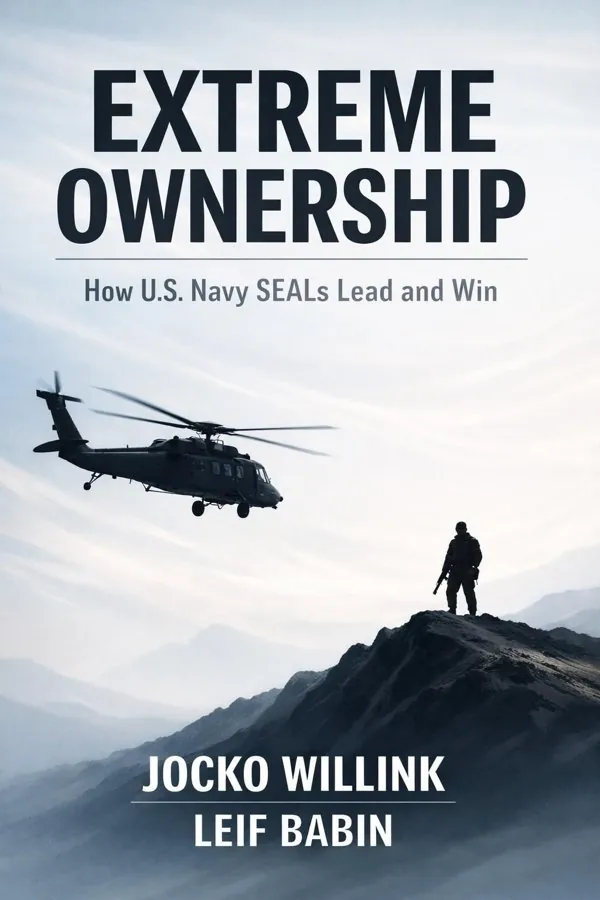
Extreme Ownership
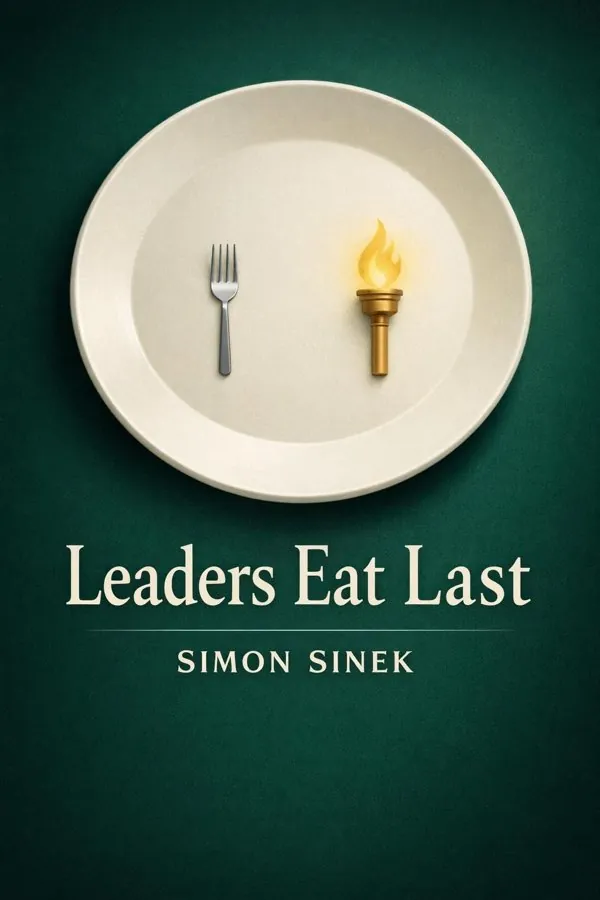
Leaders Eat Last
In-Depth Analysis
Extreme Ownership and Leaders Eat Last belong to the same broad leadership shelf, but they diagnose organizational failure from different angles. Jocko Willink’s book begins with the premise that the leader must look inward first: if the team is confused, underperforming, fragmented, or hesitant, the leader owns that reality. Simon Sinek begins elsewhere: if people are anxious, politically defensive, or disengaged, the culture has failed to provide safety, and leaders must build the conditions for trust. Both books reject leadership as mere authority. But where Willink focuses on disciplined responsibility, Sinek emphasizes protective stewardship.
The clearest difference appears in each book’s signature concept. In Extreme Ownership, the title principle is the message. Willink and Babin argue that leaders must take responsibility for everything in their world, which includes poor communication, weak morale, bad planning, and failed execution. This is reinforced through battlefield stories from Ramadi, where miscommunication or ego could get people killed. One of the book’s strongest companion ideas, “No Bad Teams, Only Bad Leaders,” sharpens the claim further: performance is not just a matter of talent but of leadership quality. Even if a team is uneven, the leader must train, clarify, and align it.
Leaders Eat Last offers a less accusatory but equally demanding ideal. Sinek’s “Circle of Safety” argues that effective leaders reduce internal threats so teams can direct energy outward toward external challenges. Rather than asking first, “What did the leader fail to own?” Sinek asks, “What kind of environment has the leader created?” His answer is shaped by biology: cortisol rises under chronic stress, while trust and connection are reinforced by chemicals like oxytocin and serotonin. This biological framing gives his argument a social and emotional depth that Extreme Ownership largely leaves implicit.
That difference in framing matters in practice. Extreme Ownership is strongest when an organization has an execution problem. If goals are missed, roles are blurry, priorities are competing, and leaders are blaming subordinates, Willink’s model is clarifying. Principles such as “Believe,” “Check the Ego,” and “Prioritize and Execute” convert quickly into behavior. “Believe” insists that leaders cannot convincingly lead missions they do not understand or accept; if they do not buy in, they must push for clarification upward until they do. “Check the Ego” addresses one of the hidden causes of failure: leaders who would rather protect status than adapt. These ideas are practical because they force leaders to change what they say and do immediately.
Leaders Eat Last is strongest when an organization has a culture problem rather than a purely operational one. Sinek is less interested in tactical decision cycles than in the emotional architecture of institutions. Why do some teams become internally competitive, suspicious, and siloed? Why do people burn out, disengage, or stop taking risks? His answer is that leaders often fail to make people feel safe from internal politics, humiliation, and arbitrary pressure. In this sense, Sinek’s book addresses preconditions for healthy performance. A team may execute poorly because its leader is unclear, as Willink would say; but it may also execute poorly because people are afraid, isolated, and unrewarded for cooperation, as Sinek would say.
The books also differ in how they use examples. Willink’s authority rests on combat credibility. The Ramadi stories are not decorative; they are the engine of persuasion. The life-and-death stakes make his principles feel non-negotiable. When he translates those lessons into business case studies, the effect is to import battlefield seriousness into corporate life. That can be motivating, but it can also feel overstated for readers in lower-stakes environments. Sinek, by contrast, triangulates among military examples, corporate stories, and scientific explanation. He wants readers to understand not only that trust matters, but why humans are wired to need it. His examples are less intense but more varied, which broadens his relevance.
In terms of style, Extreme Ownership is a command voice book. It reads like a corrective intervention: stop blaming, simplify the plan, explain the mission, take ownership. The repetition is intentional, drilling accountability into the reader. Leaders Eat Last is more expansive and interpretive. Sinek spends more time persuading readers of the moral and biological logic of servant leadership. As a result, Willink is often more immediately actionable, while Sinek is more likely to reshape a reader’s worldview.
Neither book is complete on its own. Extreme Ownership can underplay structural and systemic issues by placing such heavy emphasis on individual responsibility. In some organizations, failures really are shaped by incentives, bureaucracy, or top-level strategy beyond a middle manager’s control. Sinek’s framework helps here by showing how systems and cultures alter behavior. Yet Sinek can feel less concrete when a reader needs specific tools for tomorrow’s difficult meeting or failing project. In those moments, Willink’s rules are easier to apply.
The deepest insight from comparing them is that they operate at different levels of leadership. Extreme Ownership is about the behavior of the leader in the moment of responsibility. Leaders Eat Last is about the environment the leader creates over time. One asks leaders to own outcomes; the other asks them to protect people. The most effective leadership probably requires both. A leader who takes ownership without creating safety may produce compliance but not trust. A leader who creates safety without demanding accountability may produce warmth without excellence. Read together, the books form a productive tension: disciplined execution on one side, human-centered culture on the other. That tension is not a contradiction but a fuller model of leadership.
Side-by-Side Comparison
| Aspect | Extreme Ownership | Leaders Eat Last |
|---|---|---|
| Core Philosophy | Extreme Ownership argues that the leader is ultimately responsible for everything affecting mission success within their sphere of influence. Its philosophy is built around accountability, disciplined execution, and the idea that leadership failures usually explain team failures. | Leaders Eat Last centers on the claim that great leadership creates a "Circle of Safety" in which people feel protected, trusted, and motivated to cooperate. Its philosophy emphasizes service, empathy, and the leader’s duty to put the team’s well-being ahead of personal status. |
| Writing Style | Willink writes in a blunt, high-pressure, militaristic style, often using combat stories from Ramadi to illustrate each principle before translating them into business settings. The prose is direct and forceful, with little softness or ambiguity. | Sinek uses a more conversational, expansive, and idea-driven style, blending storytelling with explanations from biology, anthropology, and organizational psychology. The tone is motivational and reflective rather than confrontational. |
| Practical Application | Extreme Ownership is highly operational, offering principles like "Prioritize and Execute," "Decentralized Command," and "Check the Ego" that can be immediately used in team management and crisis decision-making. It is especially strong when readers need frameworks for performance under pressure. | Leaders Eat Last is practical in a more cultural and relational sense, helping leaders think about trust, loyalty, morale, and how organizational environments shape behavior. Its applications are strongest for culture-building, retention, and long-term team cohesion. |
| Target Audience | This book is best suited to managers, founders, military-minded readers, operations leaders, and anyone facing high-stakes execution problems. Readers comfortable with command language and personal accountability will get the most from it. | Sinek’s book speaks well to people leaders, HR-minded managers, executives, educators, and readers interested in workplace culture. It is often more accessible for those drawn to human-centered leadership rather than performance-first leadership. |
| Scientific Rigor | Extreme Ownership relies primarily on battlefield anecdotes and leadership lessons drawn from experience rather than formal research. Its authority comes from lived credibility, not extensive empirical evidence. | Leaders Eat Last makes a more explicit attempt to ground leadership in biology, discussing dopamine, oxytocin, serotonin, endorphins, and cortisol. While some readers may find the science simplified, it presents a broader theoretical base than Book 1. |
| Emotional Impact | The emotional force comes from life-and-death combat narratives, which make the consequences of poor leadership feel immediate and severe. It tends to provoke urgency, self-examination, and sometimes discomfort. | Sinek aims for moral and relational resonance, encouraging readers to think about loneliness, mistrust, and the human need for safety and belonging at work. Its emotional effect is less intense but often more compassionate and inspiring. |
| Actionability | Book 1 is more prescriptive, with principles that can be translated into behaviors quickly: brief clearly, own mistakes publicly, simplify plans, and delegate authority. It often reads like a field manual for leading teams. | Book 2 offers action through mindset shifts and organizational design rather than step-by-step tactics. Leaders may come away with clearer values, but implementation often requires interpretation and patience. |
| Depth of Analysis | Extreme Ownership goes deep on individual leadership responsibility and execution mechanics, but it is narrower in scope, focusing less on systems, incentives, and wider institutional psychology. Its depth lies in repetition and reinforcement of a few core principles. | Leaders Eat Last examines leadership across biology, culture, and institutions, giving it a broader conceptual range. It sometimes sacrifices operational precision for thematic breadth, but it offers a richer theory of why people follow leaders. |
| Readability | The chapter pattern—combat story, principle, business application—makes it easy to follow and memorable. Readers who appreciate concise, tough-minded prose will find it very readable. | Sinek is accessible and engaging, though his broader discussions can feel more discursive and less tightly structured than Willink’s. Readers interested in ideas and storytelling will likely find it smooth and inviting. |
| Long-term Value | Its lasting value lies in the durability of accountability-based leadership habits; readers often return to it when teams underperform or crises expose weak ownership. It remains especially useful as a reset for leaders drifting into excuse-making. | Its long-term value comes from shaping how readers think about trust, culture, and sustainable leadership over time. It is the kind of book that influences how an organization is designed, not just how a problem is solved. |
Key Differences
Accountability vs. Safety
Extreme Ownership is built on radical accountability: the leader owns failures, confusion, and team performance. Leaders Eat Last is built on psychological and social safety: the leader protects people from internal threats so they can collaborate and perform.
Tactical Framework vs. Cultural Framework
Willink gives readers highly operational principles such as "Prioritize and Execute" and "Check the Ego," which are useful in meetings, projects, and crises. Sinek provides a cultural lens, especially through the Circle of Safety, to explain why trust-rich organizations outperform fear-based ones over time.
Combat Authority vs. Biological Explanation
Extreme Ownership derives credibility from combat experience in Ramadi, where leadership errors had immediate, life-or-death consequences. Leaders Eat Last supplements military stories with explanations involving oxytocin, cortisol, serotonin, and dopamine to show how leadership affects human behavior.
Directness vs. Reflection
Willink’s tone is blunt, compressed, and corrective, often telling readers exactly what leaders must stop doing. Sinek is more reflective and interpretive, inviting readers to reconsider assumptions about work, trust, and what leadership is for.
Immediate Execution vs. Long-term Culture
If a team is failing to deliver, Extreme Ownership offers clearer immediate interventions: better briefing, stronger buy-in, clearer authority, less ego. If a company suffers from turnover, distrust, or disengagement, Leaders Eat Last offers a better explanation of the long-term cultural roots of those symptoms.
Narrow Intensity vs. Broad Scope
Extreme Ownership is narrower but more intense, repeatedly driving home a core set of leadership disciplines. Leaders Eat Last covers more terrain, including evolution, workplace systems, social cohesion, and organizational examples, giving it wider scope but sometimes less tactical sharpness.
Leader Behavior vs. Organizational Environment
Willink focuses primarily on what the individual leader must do differently, especially under pressure. Sinek is more concerned with the environment leaders design, arguing that people’s behavior changes dramatically depending on whether they feel safe, recognized, and supported.
Who Should Read Which?
New manager trying to build trust with a team
→ Leaders Eat Last
This reader needs to understand how teams respond to safety, recognition, and care before focusing on hard-edged accountability. Sinek provides a strong foundation for building trust and avoiding the common mistake of treating leadership as authority alone.
Operations leader, founder, or project manager under performance pressure
→ Extreme Ownership
This reader likely needs actionable tools for execution, communication, and accountability. Willink’s principles are easier to implement immediately when team performance is inconsistent and leadership clarity is urgently needed.
Executive or culture-focused leader redesigning an organization
→ Leaders Eat Last
A senior leader shaping systems, incentives, and workplace norms will benefit more from Sinek’s emphasis on trust, internal safety, and long-term cohesion. The book is especially useful for thinking beyond individual management behavior toward organizational design.
Which Should You Read First?
Read Leaders Eat Last first if you want to understand why leadership matters at the human level before learning how to practice it under pressure. Sinek gives you the moral and cultural foundation: leadership is responsibility, trust is built intentionally, and people perform best when they feel protected. That framework makes Willink’s tougher message easier to absorb, because you see that accountability is not punishment; it is part of caring for the team. Read Extreme Ownership first if your current problem is execution. If your team is missing deadlines, avoiding responsibility, or struggling with clarity, Willink’s principles will feel more immediately useful. The book gives you a language for correcting leadership behavior right away. For most readers, the best sequence is Leaders Eat Last followed by Extreme Ownership. That order moves from philosophy to practice, from culture to execution, and from understanding people to directing action. Together, they create a more balanced leadership model: first learn to build trust, then learn to own results without excuse.
Want the full summary?
Get instant access to this book summary and 100K+ more with Fizz Moment.
Get Free SummaryAvailable on App Store • Free to download
Frequently Asked Questions
Is Extreme Ownership better than Leaders Eat Last for beginners?
For many beginners, Leaders Eat Last is easier to enter because Simon Sinek introduces leadership through trust, safety, and human behavior rather than through command-pressure scenarios. His style is more conversational, and the core idea that leaders should care for their people is intuitively accessible. That said, Extreme Ownership may be better for beginners who want a clear, no-excuses framework they can apply immediately at work. If you are new to leadership and want practical behavioral rules, Willink has the edge. If you are new and want to understand the moral and cultural foundations of leadership first, Sinek is the stronger starting point.
Which book is more practical for managers: Extreme Ownership or Leaders Eat Last?
Extreme Ownership is generally more practical for day-to-day managers who need direct guidance on communication, accountability, delegation, and decision-making under pressure. Principles like "Believe," "Check the Ego," and "Prioritize and Execute" can be translated into concrete actions in meetings, project planning, and team coaching. Leaders Eat Last is practical in a broader organizational sense, especially for managers trying to improve trust, morale, and culture over time. In short, if your problem is immediate execution, choose Extreme Ownership; if your problem is disengagement, internal fear, or weak team cohesion, Leaders Eat Last may be more useful.
What are the main differences between Extreme Ownership and Leaders Eat Last?
The main difference is the level at which each book explains leadership. Extreme Ownership focuses on what the leader must do: take responsibility, communicate clearly, remove excuses, and guide execution. Leaders Eat Last focuses on what the leader must create: an environment of safety, belonging, and mutual trust. Willink’s evidence comes mainly from battlefield leadership in Ramadi and business translations of those lessons. Sinek pulls from military examples too, but also leans on biology and corporate culture. One is a manual for responsibility under pressure; the other is a theory of why people thrive under caring, trustworthy leadership.
Is Leaders Eat Last too theoretical compared with Extreme Ownership?
Some readers will experience Leaders Eat Last as more theoretical because Sinek spends more time discussing biology, social behavior, and the systemic conditions of trust than providing tactical instructions. Compared with Willink’s chapter structure—combat story, principle, business application—Sinek’s style is less procedural and more explanatory. But calling it merely theoretical would be unfair. Its practical value lies in helping leaders diagnose culture problems that tactical fixes alone cannot solve. If a team’s issue is fear, cynicism, or political infighting, a more conceptual framework can actually be the more useful one. It simply requires more interpretation from the reader.
Which book should I read if I want to improve company culture: Leaders Eat Last or Extreme Ownership?
If your primary goal is improving company culture, Leaders Eat Last is usually the better choice. Its core idea, the Circle of Safety, directly addresses how leaders reduce internal fear and create trust, loyalty, and cooperation. Sinek is especially useful for organizations dealing with burnout, disengagement, or transactional management. However, Extreme Ownership still matters for culture because accountability and humility shape trust as well. A culture of blame is toxic, and Willink’s insistence that leaders own failures can significantly improve team morale. The best answer is that Sinek leads on culture design, while Willink strengthens the accountability norms that make healthy culture credible.
Are the military examples in Extreme Ownership and Leaders Eat Last still relevant to civilian workplaces?
Yes, but in different ways. In Extreme Ownership, the military examples are intense and often function as extreme-case demonstrations of universal leadership truths: unclear communication, ego, and lack of ownership cause failure everywhere, even if the stakes differ. Some civilian readers may find the translation a little forceful, but the principles are usually transferable. In Leaders Eat Last, military examples support the idea of sacrifice, trust, and protection within teams, and they are often paired with corporate examples that soften the gap. Both books use military settings to clarify leadership under pressure, but Sinek generally does more to connect those lessons to ordinary organizational life.
The Verdict
If you want the sharper tool, choose Extreme Ownership. If you want the broader philosophy, choose Leaders Eat Last. Willink’s book is more immediately useful when leadership failure shows up as confusion, excuses, weak standards, poor delegation, or missed execution. Its principles are memorable, concrete, and difficult to misinterpret. For managers leading projects, operations, or crisis-prone teams, it often delivers faster behavioral change. Sinek’s book is stronger when the deeper issue is culture: low trust, disengagement, fear, internal competition, or a workplace where people no longer feel valued. Leaders Eat Last helps readers understand why human beings respond so strongly to safety, belonging, and service-oriented leadership. It is less like a checklist and more like a framework for building organizations people actually want to remain in. The best recommendation depends on the reader’s need. For first-time managers, people leaders, and those trying to create healthier organizational culture, Leaders Eat Last may be the more welcoming and expansive entry point. For executives, team leads, founders, and anyone responsible for performance in demanding conditions, Extreme Ownership is more actionable and urgent. Overall, if forced to pick one for pure leadership usefulness, Extreme Ownership narrowly wins because its lessons are easier to implement immediately. But for a fuller understanding of leadership, the two books complement each other exceptionally well: Willink teaches responsibility; Sinek teaches protection. Great leaders need both.
Related Comparisons
Want to read both books?
Get AI-powered summaries of both Extreme Ownership and Leaders Eat Last in just 20 minutes total.