
Start With Why vs Leaders Eat Last: Which Should You Read?
A detailed comparison of Start With Why by Simon Sinek and Leaders Eat Last by Simon Sinek. Discover the key differences, strengths, and which book is right for you.
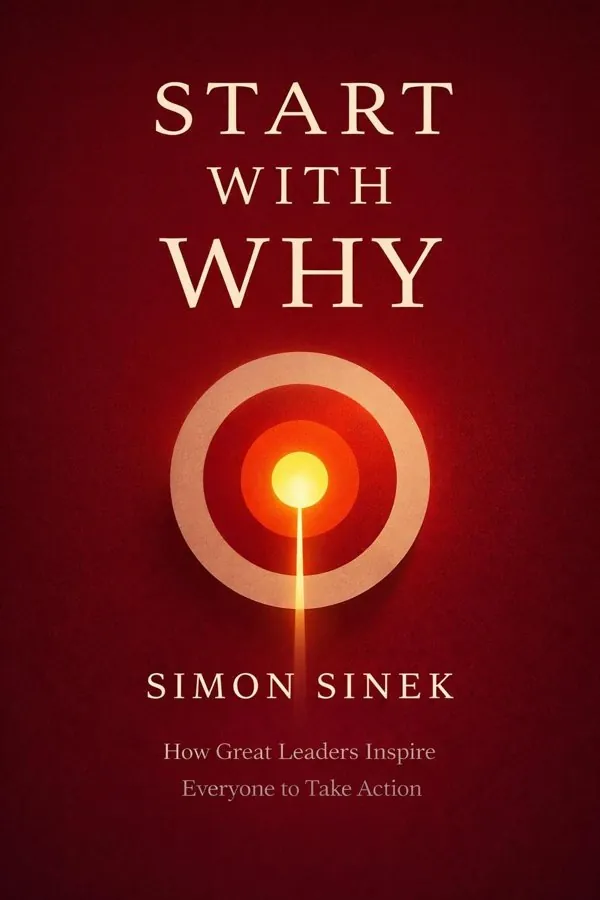
Start With Why
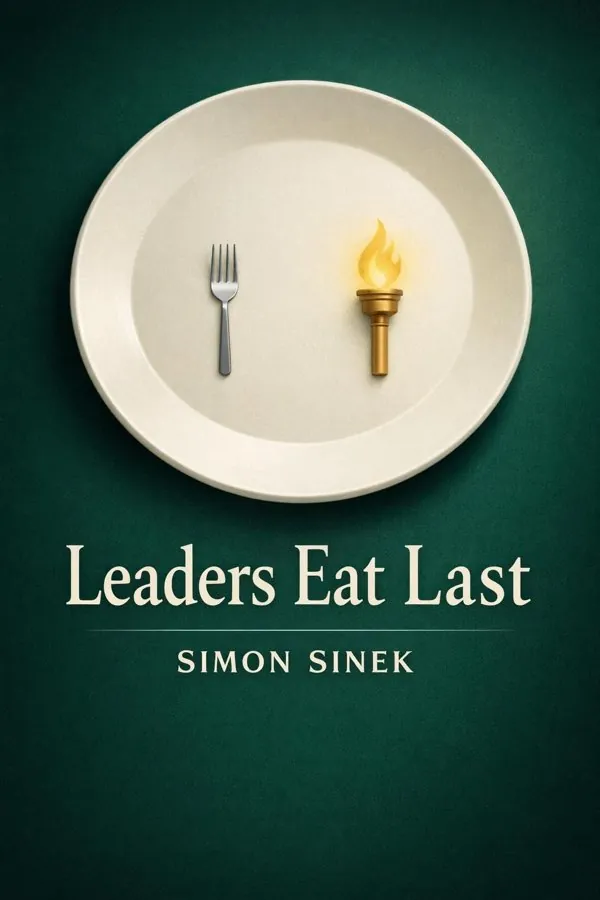
Leaders Eat Last
In-Depth Analysis
Simon Sinek’s 'Start With Why' and 'Leaders Eat Last' are both seminal works in the contemporary leadership canon, but they approach the subject from markedly different angles, reflect distinct philosophical underpinnings, and offer contrasting practical implications for readers seeking to become more effective leaders.
'Start With Why' is best understood as a manifesto urging individuals and organizations to identify, clarify, and communicate their fundamental purpose. Sinek introduces the 'Golden Circle' model, which posits that most organizations operate from the outside in, beginning with 'what' they do and 'how' they do it, but the most successful and influential leaders and brands start with 'why'—their core belief or purpose. He famously distills this into the phrase: 'People don’t buy what you do; they buy why you do it.' Throughout the book, Sinek highlights case studies such as Apple’s relentless focus on challenging the status quo, Martin Luther King Jr.’s inspirational vision, and the Wright Brothers’ passion for flight. These examples serve to illustrate his core assertion: when people are inspired by a shared sense of purpose, they become loyal customers, employees, and followers. However, the book is primarily conceptual. While it is clear and compelling in its vision, it spends less time on granular, operational advice. The 'how' of operationalizing a 'why' is left largely to the reader’s initiative, making this book especially powerful at the level of vision but less so at the level of day-to-day leadership tactics.
By contrast, 'Leaders Eat Last' shifts the lens from purpose to practice. Here, Sinek explores the conditions under which trust and cooperation flourish within organizations. Drawing from examples in the military—such as the U.S. Marine Corps practice where leaders literally eat after their subordinates—he demonstrates how servant leadership builds strong, resilient teams. Sinek delves into the biology of leadership, invoking scientific research on hormones like oxytocin (associated with bonding and trust) and cortisol (linked to stress). He argues that leaders who prioritize the well-being of their teams create what he calls a 'Circle of Safety,' an environment in which individuals feel valued and secure, thus enabling them to perform at their best. The book is filled with practical advice and real-world examples, from corporate stories of trust and betrayal to evolutionary biology’s insights into group dynamics. Sinek provides a more detailed blueprint for leaders: how to act, what to prioritize, and why these behaviors matter not just for performance but for human fulfillment.
Methodologically, the books differ in their evidentiary base and analytical style. 'Start With Why' is more anecdotal, relying on high-profile case studies and persuasive rhetoric. Its arguments are intuitive and emotionally resonant, but not always empirically grounded. 'Leaders Eat Last,' on the other hand, incorporates findings from neuroscience, endocrinology, and evolutionary psychology, enhancing its scientific rigor. For instance, Sinek explains how chronic workplace stress elevates cortisol levels, undermining trust and collaboration, and contrasts this with environments where oxytocin is fostered through acts of empathy and reciprocity.
Philosophically, 'Start With Why' is existential: it asks readers to consider their deepest motivations and to align their actions accordingly. It is a call to authenticity, suggesting that inspiration is more sustainable than manipulation (e.g., relying on price cuts or promotions). 'Leaders Eat Last' is ethical and communal: it posits that genuine leadership is not about personal advancement, but about service, sacrifice, and cultivating environments where people can thrive. The leader’s value is measured by the health and cohesion of the group, not by personal accolades.
Practically, the implications for readers are distinct. 'Start With Why' is ideal for those at inflection points—founders, entrepreneurs, or anyone seeking to reinvent themselves or their organizations. It offers a foundation for crafting mission statements, brand identities, and visionary communications. Since it offers limited tactical guidance, its impact is greatest when paired with other resources on execution. 'Leaders Eat Last,' in contrast, is a handbook for managers and team leaders seeking to build trust, increase engagement, and reduce turnover. Its detailed exploration of organizational culture, stress management, and social dynamics makes it particularly relevant to those leading teams or navigating complex workplace environments.
In sum, while both books champion the power of purpose and people-centric leadership, 'Start With Why' provides the 'north star' of vision and inspiration, while 'Leaders Eat Last' offers the 'road map' of practical strategies rooted in science and empathy. Together, they represent complementary facets of effective leadership: inspiration and implementation.
Side-by-Side Comparison
| Aspect | Start With Why | Leaders Eat Last |
|---|---|---|
| Core Philosophy | Start With Why centers on the idea that leadership and motivation stem from understanding and communicating an organization’s or individual’s purpose—the 'why' behind actions. | Leaders Eat Last focuses on the responsibility of leaders to create a safe, trusting environment, arguing that true leadership is about serving and protecting the group rather than achieving personal gain. |
| Methodology | Sinek introduces the Golden Circle model ('Why', 'How', 'What') and draws on case studies from business and history to illustrate how starting with 'why' leads to lasting influence. | Leaders Eat Last blends real-world examples, especially from the military, with scientific insights from biology and neuroscience to explain how leaders can foster cooperation and loyalty. |
| Practical Application | The book provides a conceptual framework for individuals and organizations aiming to clarify their purpose and communicate it effectively, but offers fewer detailed steps for implementation. | Leaders Eat Last is rich with actionable advice for managers, focusing on specific behaviors and cultural shifts—such as establishing a 'Circle of Safety'—to enhance team cohesion. |
| Scientific Rigor | Start With Why is more anecdotal, relying heavily on business stories (e.g., Apple, Southwest Airlines) and intuitive reasoning rather than scientific research. | Leaders Eat Last integrates findings from biology and neuroscience, referencing hormones like oxytocin and cortisol to underpin its arguments about safety, stress, and trust in organizations. |
| Writing Style | Sinek’s prose is straightforward and persuasive, aiming to inspire through repetition and memorable slogans (e.g., 'People don’t buy what you do; they buy why you do it'). | The writing is more reflective and narrative-driven, employing storytelling from diverse contexts—military, corporate, historical—and weaving in scientific explanations. |
| Target Audience | Start With Why appeals to entrepreneurs, brand strategists, and anyone seeking to clarify their mission or spark innovation. | Leaders Eat Last is especially relevant for current or aspiring managers, team leaders, and executives interested in fostering healthy workplace cultures. |
| Emotional Impact | The book motivates readers to reflect on their own purpose and can spark a sense of inspiration and ambition. | Leaders Eat Last evokes empathy, focusing on the leader’s duty of care and the positive emotional results of supportive leadership. |
| Long-term Value | Its core message—finding and communicating your 'why'—has enduring relevance, particularly for new ventures or organizations undergoing change. | The principles of trust-building and service-oriented leadership have lasting applicability, especially as organizations navigate evolving workplace dynamics. |
| Actionability | While conceptually strong, Start With Why often leaves readers to derive their own next steps beyond articulating their 'why.' | Leaders Eat Last offers practical frameworks—like building the Circle of Safety—and concrete behaviors leaders can adopt immediately. |
| Depth of Analysis | The analysis is broad but sometimes repetitive, focusing on the central 'why' concept across various industries. | Sinek delves deeper into the psychological and biological mechanisms behind workplace dynamics, offering a more nuanced exploration of leadership. |
Key Differences
Philosophical Focus
'Start With Why' is about finding and communicating a core purpose, while 'Leaders Eat Last' emphasizes the ethical responsibility of leaders to prioritize the well-being of their teams. The former is existential and motivational; the latter is ethical and communal.
Methodological Approach
'Start With Why' relies on persuasive anecdotes and high-profile business examples, whereas 'Leaders Eat Last' incorporates scientific research from biology and neuroscience to support its claims about trust and group dynamics.
Practicality
While 'Start With Why' offers a compelling conceptual model (the Golden Circle), it is less prescriptive and actionable compared to 'Leaders Eat Last,' which provides concrete frameworks and advice for leaders.
Intended Audience
'Start With Why' is aimed at visionaries, entrepreneurs, and those seeking to define or redefine purpose, while 'Leaders Eat Last' targets managers, team leaders, and anyone responsible for group dynamics and organizational culture.
Use of Case Studies
'Start With Why' focuses on a few iconic organizations (e.g., Apple, Southwest Airlines), using them to reinforce its central idea. 'Leaders Eat Last' draws from a broader range of environments—military, corporate, and biological—to provide nuanced illustrations.
Scientific Rigor
'Leaders Eat Last' stands out for its integration of biological and psychological research, such as the roles of oxytocin and cortisol in leadership, while 'Start With Why' bases its arguments more on intuition and observation.
Emotional Resonance
'Start With Why' seeks to inspire and energize readers by connecting them to a sense of higher purpose. 'Leaders Eat Last' evokes empathy by focusing on the human needs of trust, safety, and belonging.
Who Should Read Which?
The Visionary Entrepreneur
→ Start With Why
Entrepreneurs seeking to define or communicate the purpose behind their venture will find 'Start With Why' invaluable. Its focus on clarity of mission and inspirational leadership aligns perfectly with the challenges of building a compelling brand or organizational identity from the ground up.
The Established Manager
→ Leaders Eat Last
Managers responsible for team performance and workplace culture will benefit most from 'Leaders Eat Last.' Its actionable advice and scientific insights offer practical solutions for fostering trust and loyalty within established organizations.
The Team Player
→ Leaders Eat Last
Individual contributors who want to understand or influence the culture around them will appreciate the focus on group dynamics, trust, and well-being in 'Leaders Eat Last.' The book’s principles are applicable at all levels, not just for formal leaders.
Which Should You Read First?
For most readers, starting with 'Start With Why' is advisable, especially for those who are early in their leadership journey or in the process of launching a new project, business, or career. This book lays the groundwork for understanding the importance of purpose and provides a powerful framework for defining what truly motivates you or your organization. Once you have articulated your 'why,' moving on to 'Leaders Eat Last' allows you to translate that vision into everyday practice. This second book is particularly beneficial for managers, team leaders, or anyone involved in shaping organizational culture, as it delves into the science and behaviors that foster trust, engagement, and performance. However, experienced leaders seeking immediate, actionable strategies for improving team cohesion may benefit from reading 'Leaders Eat Last' first, especially if their organizational purpose is already well established.
Want the full summary?
Get instant access to this book summary and 100K+ more with Fizz Moment.
Get Free SummaryAvailable on App Store • Free to download
Frequently Asked Questions
Is 'Start With Why' better than 'Leaders Eat Last' for beginners in leadership?
'Start With Why' is often more accessible for beginners because it focuses on foundational concepts—the importance of purpose and vision in leadership. Its clear framework (the Golden Circle) and compelling stories resonate with those new to the field. However, beginners seeking actionable steps on team management or organizational culture may find 'Leaders Eat Last' more immediately practical, as it provides concrete examples and advice for day-to-day leadership challenges.
Which book offers more practical tools: 'Start With Why' or 'Leaders Eat Last'?
'Leaders Eat Last' offers more practical tools and actionable advice. It explores specific behaviors, structures, and strategies leaders can implement to foster trust and safety, such as building the 'Circle of Safety' or recognizing the impact of stress hormones on team dynamics. 'Start With Why' is more conceptual, focusing on the articulation of purpose rather than operational tactics.
How do the scientific foundations of 'Leaders Eat Last' compare to 'Start With Why'?
'Leaders Eat Last' is grounded in biology and neuroscience, referencing studies on oxytocin, cortisol, and evolutionary group behavior to support its arguments. Sinek uses science to explain why certain leadership styles succeed or fail. 'Start With Why' relies more on business anecdotes and logical reasoning, with less emphasis on empirical data or scientific research.
Should a company read 'Start With Why' or 'Leaders Eat Last' first when redefining its culture?
Companies seeking to redefine their culture should consider reading 'Start With Why' first, as it helps clarify and align the organization’s core purpose and values. This foundation makes the cultural and behavioral recommendations in 'Leaders Eat Last'—such as fostering trust and prioritizing employee well-being—more effective and coherent. Reading both in sequence maximizes impact.
Does 'Start With Why' or 'Leaders Eat Last' provide better case studies for leadership?
'Leaders Eat Last' provides a wider variety of case studies, drawing from the military, corporate, and biological contexts, and often delves deeper into the nuances of each example. 'Start With Why' features fewer but more iconic business cases, such as Apple and Southwest Airlines, primarily to illustrate the central 'why' concept. For diverse, in-depth scenarios, 'Leaders Eat Last' is superior.
Is 'Leaders Eat Last' suitable for non-managers or individual contributors?
Absolutely. While 'Leaders Eat Last' is especially useful for managers and leaders, its insights into trust, safety, and group dynamics apply to anyone working in teams. Individual contributors can gain a better understanding of healthy organizational cultures and learn how to support or advocate for more empathetic leadership in their workplaces.
The Verdict
Both 'Start With Why' and 'Leaders Eat Last' are essential reads for anyone interested in leadership, but they serve different needs and stages of the leadership journey. 'Start With Why' is best for those seeking to clarify their vision, ignite passion, or realign an organization or personal career around a powerful sense of purpose. Its strength lies in inspiring readers and helping them articulate the deeper motivations behind their work. However, readers looking for concrete, scientifically-backed strategies for managing people, building trust, and shaping workplace culture will find 'Leaders Eat Last' more directly useful. For aspiring leaders, entrepreneurs, and anyone facing a strategic pivot, 'Start With Why' should be the first stop, as it lays a strong foundation for meaningful, purpose-driven action. For current managers, team leaders, or those dealing with organizational challenges, 'Leaders Eat Last' provides the practical tools needed to create environments where people thrive. Ultimately, reading both books in sequence offers the greatest benefit: begin with 'why' to establish vision, and follow with 'Leaders Eat Last' to translate vision into culture. If choosing only one, select based on whether your immediate need is inspiration or implementation.
Related Comparisons

Want to read both books?
Get AI-powered summaries of both Start With Why and Leaders Eat Last in just 20 minutes total.