
Extreme Ownership vs The 21 Irrefutable Laws of Leadership: Which Should You Read?
A detailed comparison of Extreme Ownership by Jocko Willink and The 21 Irrefutable Laws of Leadership by John Maxwell. Discover the key differences, strengths, and which book is right for you.
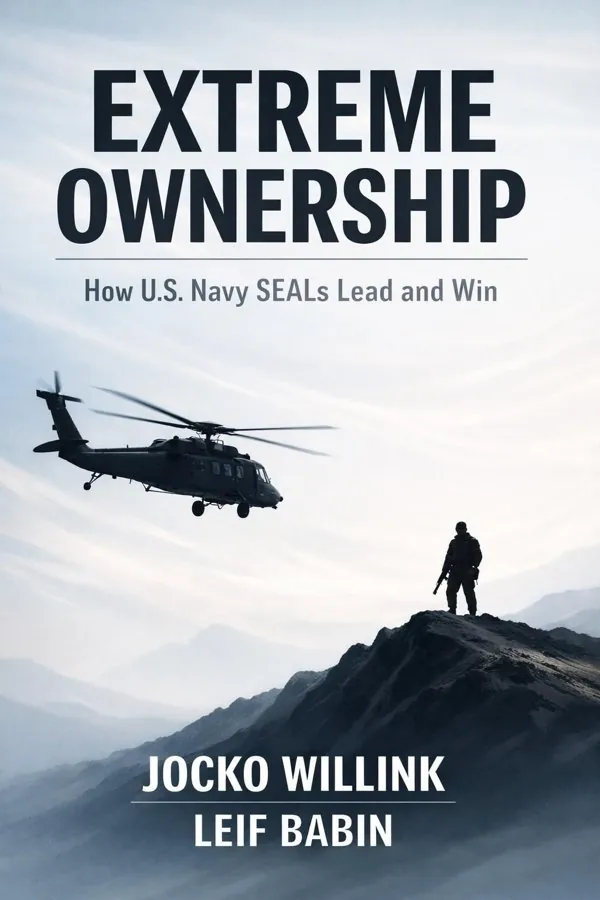
Extreme Ownership
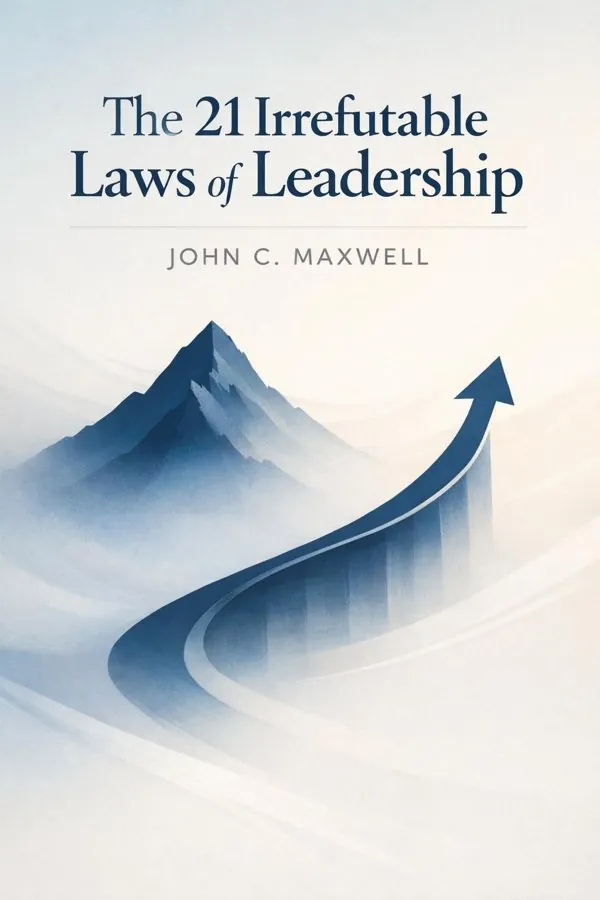
The 21 Irrefutable Laws of Leadership
In-Depth Analysis
Extreme Ownership and The 21 Irrefutable Laws of Leadership occupy the same broad genre, but they approach leadership from strikingly different angles. Jocko Willink and Leif Babin build their case from the brutal immediacy of combat, while John Maxwell constructs a more expansive leadership philosophy from decades of examples across business, politics, sports, and personal development. The result is not merely a difference in tone, but a difference in what each book assumes leadership fundamentally is.
At the center of Extreme Ownership is a singular moral demand: the leader must take responsibility for everything in his or her world. This is not a vague call for integrity. It is operationalized through specific principles such as “No Bad Teams, Only Bad Leaders,” “Believe,” and “Check the Ego.” The idea is that when a plan fails, a team underperforms, or communication breaks down, the first move of a leader is not explanation but ownership. That principle gains unusual force because it is introduced through Ramadi battlefield stories where confusion, ego, or poor prioritization could get people killed. When Willink and Babin discuss decentralized command or the need to keep plans simple, they are not speaking theoretically. They are describing conditions where complexity and ambiguity had immediate consequences.
Maxwell, by contrast, offers a framework of twenty-one principles rather than one controlling doctrine. The Law of the Lid argues that leadership ability determines a person’s level of effectiveness. The Law of Influence insists that true leadership is measured by followership rather than title. The Law of Process emphasizes gradual development: leadership grows daily, not instantly. This makes Maxwell’s book broader and often more flexible. It helps readers think about leadership as a system of capacities rather than a test of accountability alone. If Extreme Ownership asks, “What are you failing to own?”, Maxwell more often asks, “What dimension of leadership have you not yet developed?”
This difference matters in practice. Extreme Ownership is strongest when teams are already in motion and something is breaking: a missed deadline, lack of trust, poor execution, unclear priorities, a culture of excuses. The principle of “Believe” is a good example. Willink and Babin argue that if a leader does not truly understand and believe in the mission, he or she cannot convincingly explain it to subordinates. In a company setting, this translates directly to strategic communication. A manager cannot merely repeat executive directives; they must internalize the rationale deeply enough to answer objections and align the team. Maxwell certainly values communication and buy-in, but his framework is less sharply focused on this kind of chain-of-command transmission problem.
Meanwhile, Maxwell is often stronger for readers trying to understand leadership holistically, especially at earlier stages. The Law of the Lid gives beginners a memorable insight: technical competence alone does not scale effectiveness. A highly skilled individual contributor may hit a ceiling if they cannot lead. The Law of Influence similarly corrects a common misunderstanding by distinguishing real leadership from positional authority. These ideas are not as dramatic as Willink and Babin’s battlefield lessons, but they are conceptually clarifying. Maxwell gives readers a vocabulary to diagnose leadership issues across many contexts, including ones less intense than crisis operations.
The books also differ in emotional texture. Extreme Ownership is confrontational in the best and worst senses. Its insistence on total ownership can be electrifying because it strips away passivity. Readers often feel challenged by the claim that leaders should not blame circumstances, subordinates, or peers. But the same strength can feel overstated in complex environments where outcomes are influenced by structural constraints, market shifts, or senior leadership failures outside one manager’s control. The book’s argument is most persuasive as a stance of agency, less so if read as a literal explanation for every failure.
Maxwell’s emotional register is more invitational. He encourages growth rather than demanding self-indictment. This makes The 21 Irrefutable Laws of Leadership more approachable for readers who might resist the severity of Extreme Ownership. However, that accessibility comes with a tradeoff: Maxwell can feel more like a seasoned teacher offering wisdom than a field commander delivering necessity. His examples are useful, but they often lack the existential stakes that make Willink and Babin unforgettable.
In terms of structure, Extreme Ownership benefits from a disciplined chapter pattern: combat scenario, extracted principle, business application. That architecture repeatedly proves that the authors know how to bridge military and civilian contexts. Maxwell’s modular law-by-law structure is easier to dip into and revisit selectively. It works well as a reference text, especially for coaches, mentors, and developing leaders who want categories to discuss. But because it spans twenty-one laws, some chapters inevitably feel more aphoristic than deeply argued.
Neither book is especially academic. Both rely on anecdote, experience, and persuasive examples rather than formal leadership research. Yet each has a kind of authority: Willink and Babin derive theirs from extreme consequence and tested performance; Maxwell derives his from long observation, synthesis, and teaching influence. Readers looking for evidence-based organizational psychology will need supplementation either way.
Ultimately, these books serve different but overlapping purposes. Extreme Ownership is a corrective book: it is best when a reader or team needs sharper discipline, clearer accountability, and better execution. The 21 Irrefutable Laws of Leadership is a formation book: it is best when a reader wants a broad, durable understanding of what leadership entails over time. If Maxwell builds the map, Willink and Babin teach you how to move when the terrain turns hostile. The strongest leaders will likely benefit from both: Maxwell for range, Willink and Babin for rigor.
Side-by-Side Comparison
| Aspect | Extreme Ownership | The 21 Irrefutable Laws of Leadership |
|---|---|---|
| Core Philosophy | Extreme Ownership argues that leadership begins with radical personal accountability: leaders must own failures, clarify missions, and remove excuses. Its governing premise is that team outcomes are primarily a reflection of the leader’s behavior and standards. | The 21 Irrefutable Laws of Leadership presents leadership as a set of enduring principles that govern effectiveness, influence, growth, timing, and team-building. Maxwell’s philosophy is broader and more developmental, treating leadership as a lifelong practice shaped by multiple interlocking laws. |
| Writing Style | Willink and Babin write in a blunt, disciplined, high-intensity style shaped by military storytelling. Chapters often move from battlefield narrative to leadership principle to business application, creating a forceful and memorable structure. | Maxwell’s style is conversational, motivational, and teaching-oriented, often built around short illustrative anecdotes from business, sports, politics, and church leadership. The tone is less confrontational and more encouraging, designed to persuade through accessibility rather than urgency. |
| Practical Application | Extreme Ownership is highly actionable for managers facing operational breakdowns, misalignment, or accountability gaps; principles like 'Believe,' 'Check the Ego,' and decentralized command translate directly into meetings, decision-making, and crisis response. Its advice is especially strong when execution matters more than inspiration. | Maxwell offers practical application through frameworks like the Law of the Lid, Law of Influence, and Law of Process, helping readers diagnose why leadership ceilings exist and how to grow over time. The applications are wider-ranging but sometimes less procedural than Willink and Babin’s. |
| Target Audience | This book fits readers who lead teams under pressure: executives, military personnel, founders, operations managers, and anyone responsible for outcomes in volatile environments. It also appeals to readers who respond well to toughness, discipline, and direct feedback. | Maxwell’s audience is broader, including aspiring leaders, students, nonprofit workers, pastors, mid-level managers, and readers new to leadership literature. It is particularly useful for people who want a comprehensive introduction rather than a high-pressure leadership doctrine. |
| Scientific Rigor | Extreme Ownership relies more on experiential authority than on formal research, drawing legitimacy from combat experience and leadership outcomes rather than academic studies. Its claims feel compelling, but they are often asserted as principles rather than empirically tested theories. | The 21 Irrefutable Laws of Leadership is also not a research-heavy book; it is built mainly on observation, case examples, and Maxwell’s accumulated teaching experience. Compared with Book 1, it sounds more like a synthesized philosophy than a field manual, but it is similarly light on formal evidence. |
| Emotional Impact | The combat stories from Ramadi give Extreme Ownership an unusual emotional force, making leadership feel tied to survival, trust, and moral seriousness. Its pressure-filled scenarios can provoke self-examination because the cost of poor leadership is portrayed as immediate and severe. | Maxwell’s emotional effect comes from aspiration rather than intensity; he encourages readers to grow, influence others, and expand their effectiveness. The book inspires confidence and ambition, but it rarely reaches the visceral urgency of Willink and Babin’s battlefield lessons. |
| Actionability | Its principles are easy to convert into daily behavior: brief clearly, prioritize and execute, avoid blame, and ensure every team member understands the mission. Many readers can apply a chapter the same day in one-on-ones, project reviews, or after-action debriefs. | Maxwell’s laws are actionable in a developmental sense, especially for self-assessment and long-term growth planning, but some laws function more as lenses than step-by-step instructions. Readers often need to translate his ideas into their own systems or habits. |
| Depth of Analysis | Extreme Ownership goes deep on a smaller set of interrelated principles, repeatedly showing how ownership, humility, belief, and simplicity affect execution. Its analytical strength lies in pressure-tested coherence rather than breadth. | Maxwell covers more conceptual territory by offering twenty-one distinct laws, which gives the reader breadth and a rich vocabulary for leadership. The tradeoff is that individual concepts may receive less sustained scrutiny than Willink and Babin give their core doctrines. |
| Readability | The alternating structure of war story, principle, and business takeaway makes the book engaging, though its intensity and repetition can feel heavy for some readers. It is readable, but not always gentle. | Maxwell is generally easier for a wide audience to read because chapters are modular, examples are varied, and the prose is straightforward. It works well in small portions, which suits readers who prefer digestible lessons. |
| Long-term Value | Extreme Ownership has enduring value for leaders who revisit it during failure, conflict, or organizational drift; its lessons tend to sharpen under stress. It is especially durable as a corrective text when accountability weakens. | The 21 Irrefutable Laws of Leadership offers long-term value as a reference map of leadership development, especially for readers building a leadership worldview over years. Its laws provide reusable categories for mentoring, self-evaluation, and teaching others. |
Key Differences
Single Doctrine vs Multi-Law Framework
Extreme Ownership builds nearly everything around one central commandment: take responsibility for all outcomes within your sphere of influence. Maxwell, by contrast, offers twenty-one distinct laws, such as the Law of the Lid and the Law of Influence, giving readers a broader but more distributed model of leadership.
Combat-Tested Urgency vs Teaching-Based Breadth
Willink and Babin ground their principles in Ramadi combat, where miscommunication and ego had life-or-death consequences. Maxwell uses examples from business, politics, sports, and personal development, which broadens applicability but reduces the visceral urgency that defines Extreme Ownership.
Execution Focus vs Development Focus
Extreme Ownership is fundamentally about getting teams to execute through clarity, humility, and accountability. The 21 Irrefutable Laws of Leadership is more about growing as a leader over time, emphasizing concepts like process, influence, and capacity-building rather than immediate operational correction.
Confrontational Tone vs Encouraging Tone
Extreme Ownership often challenges the reader directly, especially through ideas like 'No Bad Teams, Only Bad Leaders,' which can feel bracing or even uncomfortable. Maxwell’s tone is more affirming and mentorship-driven, making difficult lessons easier to accept for readers who dislike command-style writing.
Scenario-to-Principle Method vs Principle-to-Example Method
Willink and Babin usually begin with a battlefield story, extract the leadership lesson, and then apply it to business. Maxwell typically starts with a stated law and supports it with illustrative stories, making his book feel more like a curriculum than an operational debrief.
Narrower Depth vs Broader Coverage
Extreme Ownership explores a smaller set of interconnected ideas with substantial repetition and reinforcement, which helps internalization. Maxwell covers a wider landscape of leadership concepts, useful for orientation, but some laws necessarily receive less analytical depth than Willink and Babin give their core themes.
Best for Crisis Leadership vs Best for Foundational Leadership
Extreme Ownership excels when teams are struggling, trust is fraying, or performance is inconsistent. The 21 Irrefutable Laws of Leadership is often better for readers building a leadership foundation, mentoring others, or trying to understand the field before confronting a specific crisis.
Who Should Read Which?
New manager or aspiring leader with little prior exposure to leadership books
→ The 21 Irrefutable Laws of Leadership
Maxwell gives a wider introduction to core leadership concepts such as influence, growth, and effectiveness. The structure is accessible, the tone is encouraging, and the lessons are easier to absorb without prior management experience.
Operations leader, military professional, founder, or manager responsible for execution under pressure
→ Extreme Ownership
This book is built for situations where results matter immediately and accountability cannot be vague. Its lessons on ownership, belief in the mission, ego control, and clear communication are especially useful for high-stakes teams.
Coach, mentor, teacher, or leadership trainer looking for a reusable framework
→ The 21 Irrefutable Laws of Leadership
Maxwell’s law-based structure makes it easy to teach, discuss, and revisit across different contexts. It provides a common vocabulary that works well in mentoring conversations and leadership development programs.
Which Should You Read First?
For most readers, the best reading order is to start with The 21 Irrefutable Laws of Leadership and then move to Extreme Ownership. Maxwell provides a broad conceptual base: leadership is influence, it develops through process, and it determines the ceiling of effectiveness. Those ideas help readers understand what leadership is before they are asked to confront the harsher discipline of total accountability. Because the book is modular and accessible, it is especially helpful for beginners and for readers who want a general framework they can return to. Then read Extreme Ownership as the intensifier. Once Maxwell has given you the map, Willink and Babin show what leadership looks like when consequences are high and excuses are no longer acceptable. Their principles sharpen and operationalize ideas that can otherwise remain abstract. If, however, you are already leading a team in a high-pressure environment and need immediate performance improvement, reversing the order makes sense: begin with Extreme Ownership for action, then use Maxwell to broaden your leadership philosophy.
Want the full summary?
Get instant access to this book summary and 100K+ more with Fizz Moment.
Get Free SummaryAvailable on App Store • Free to download
Frequently Asked Questions
Is Extreme Ownership better than The 21 Irrefutable Laws of Leadership for beginners?
It depends on what kind of beginner you are. If you are new to leadership and need a broad, accessible overview of foundational concepts, The 21 Irrefutable Laws of Leadership is usually the easier starting point because Maxwell defines leadership through multiple lenses such as influence, process, and effectiveness. If, however, you are already managing people and facing real execution problems, Extreme Ownership may be more useful immediately. Its lessons on responsibility, clarity, and ego give beginners a sharper behavioral standard. In short, Maxwell is better for conceptual orientation, while Willink and Babin are better for immediate accountability and performance.
Which book is more practical for managers: Extreme Ownership or The 21 Irrefutable Laws of Leadership?
For day-to-day management problems, Extreme Ownership is generally more practical. Its principles are tied to concrete behaviors: simplify plans, make sure people believe in the mission, avoid blaming others, and take responsibility for communication failures. A manager can apply those ideas in project reviews, team meetings, and conflict resolution almost at once. The 21 Irrefutable Laws of Leadership is practical in a broader developmental sense, helping managers think about influence, growth, timing, and team-building over the long term. So if your question is about immediate managerial execution, Extreme Ownership has the edge; if it is about becoming a more rounded leader over years, Maxwell offers more breadth.
What are the biggest differences between Extreme Ownership and The 21 Irrefutable Laws of Leadership?
The biggest difference is focus. Extreme Ownership centers leadership on radical accountability and execution under pressure, often illustrated through Ramadi combat stories and translated into business settings. The 21 Irrefutable Laws of Leadership is broader, presenting twenty-one principles that explain how leadership works across many domains, from influence to development to effectiveness ceilings. The tone also differs sharply: Willink and Babin are intense, blunt, and disciplined; Maxwell is encouraging, instructional, and widely accessible. Finally, Extreme Ownership goes deeper on fewer core ideas, while Maxwell provides greater conceptual range but less sustained analysis of any single principle.
Should I read Extreme Ownership or The 21 Irrefutable Laws of Leadership first if I want to become a better leader at work?
If you want an overall framework for understanding leadership at work, start with The 21 Irrefutable Laws of Leadership. Maxwell will help you see that leadership is not merely authority; it includes influence, growth, timing, and the capacity to raise effectiveness. If you already understand those basics but struggle with underperforming teams, miscommunication, or a culture of excuses, start with Extreme Ownership. It is especially powerful when you need to tighten standards and improve execution quickly. Many readers benefit most from reading Maxwell first for structure and then Willink and Babin second for discipline and operational clarity.
Is The 21 Irrefutable Laws of Leadership too general compared with Extreme Ownership?
That criticism is partly fair, but it misses Maxwell’s purpose. The 21 Irrefutable Laws of Leadership is more general because it aims to provide a comprehensive framework that applies across industries, roles, and stages of leadership development. Compared with Extreme Ownership, it offers fewer high-pressure operational scenarios and fewer direct behavioral imperatives. However, its generality is also a strength: laws like the Law of the Lid, Law of Influence, and Law of Process give readers enduring categories that remain useful over time. Extreme Ownership is more specific and urgent; Maxwell is more panoramic and foundational.
Which leadership book has more long-term value: Extreme Ownership or The 21 Irrefutable Laws of Leadership?
For long-term value, the answer depends on how you reread leadership books. The 21 Irrefutable Laws of Leadership often has greater shelf life as a reference because its twenty-one laws create a reusable vocabulary for mentoring, self-assessment, and leadership development. Extreme Ownership, however, can be more transformative during specific periods of stress, failure, or organizational drift because it forces leaders to confront their own excuses. In that sense, Maxwell may have broader long-term educational value, while Willink and Babin may have stronger long-term corrective value. Both endure, but they endure for different reasons.
The Verdict
If you want one book that can immediately change how you lead under pressure, Extreme Ownership is the stronger pick. Its doctrine of radical accountability is memorable, demanding, and unusually effective at exposing the habits that undermine teams: blame, ego, unclear communication, and weak commitment to the mission. It is especially valuable for managers, founders, operators, and team leaders responsible for execution. Few leadership books make responsibility feel so concrete. If you want a broader, more accessible foundation in leadership, The 21 Irrefutable Laws of Leadership is the better starting point. Maxwell gives readers a larger framework for thinking about influence, growth, effectiveness, and the development of leadership over time. It is less intense, more modular, and easier for beginners or general readers to absorb. The decisive difference is not quality but use case. Extreme Ownership is the better operational leadership book; The 21 Irrefutable Laws of Leadership is the better survey of leadership principles. Read Maxwell if you need a map. Read Willink and Babin if you need a standard. For most serious readers, the ideal solution is not choosing one forever, but using them sequentially: Maxwell to understand the terrain of leadership, then Extreme Ownership to sharpen personal discipline and team execution.
Related Comparisons
Want to read both books?
Get AI-powered summaries of both Extreme Ownership and The 21 Irrefutable Laws of Leadership in just 20 minutes total.