
Extreme Ownership vs Turn the Ship Around: Which Should You Read?
A detailed comparison of Extreme Ownership by Jocko Willink and Turn the Ship Around by L. David Marquet. Discover the key differences, strengths, and which book is right for you.
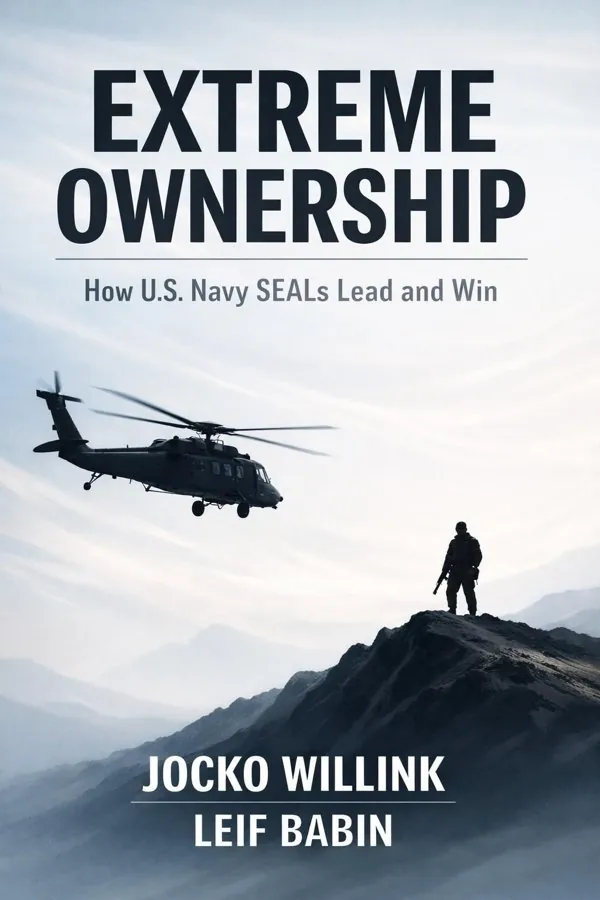
Extreme Ownership
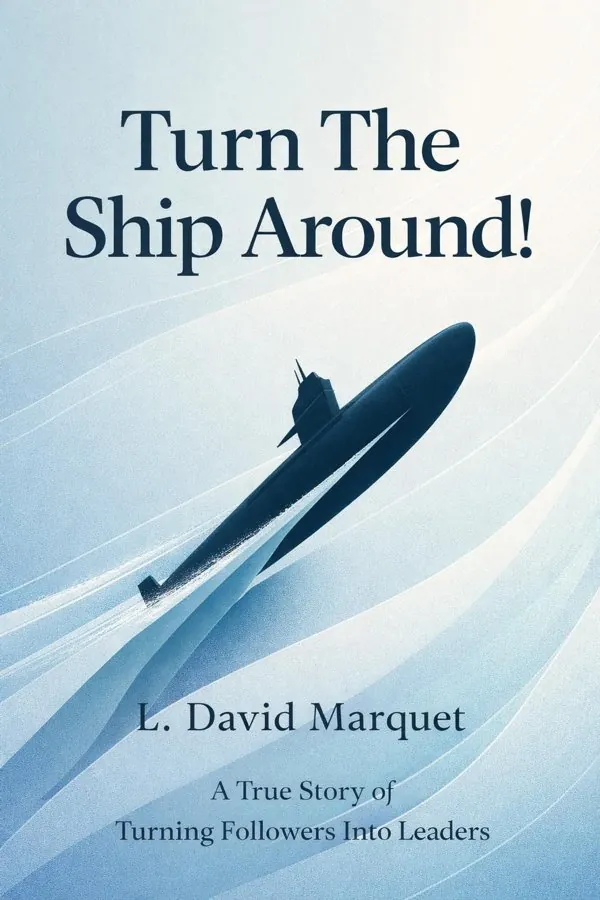
Turn the Ship Around
In-Depth Analysis
Both 'Extreme Ownership' by Jocko Willink (with Leif Babin) and 'Turn the Ship Around' by L. David Marquet tackle the challenges of leadership, yet their methodologies, philosophical assumptions, and practical implications diverge sharply. Willink’s 'Extreme Ownership' is rooted in the crucible of urban warfare in Ramadi, Iraq, where the cost of failure is measured in lives. The book’s core message—leaders must own everything in their world—permeates every chapter. For example, in recounting a friendly-fire incident, Willink describes how he stood before his superiors and team, assuming full responsibility rather than shifting blame. This act of 'extreme ownership' not only preserved the integrity of his team but set a tone of total accountability. The book draws clear lines between good and bad leadership, often equating team performance directly with the leader’s willingness to accept responsibility. Each chapter follows a structured format: combat narrative, leadership principle, and business application, ensuring lessons are accessible and actionable. However, the approach presumes a command hierarchy and the leader’s authority to implement change—an assumption that fits well in military or traditional corporate settings but less so in flatter, knowledge-driven organizations.
By contrast, Marquet’s 'Turn the Ship Around' begins from a position of vulnerability: taking command of the USS Santa Fe, a submarine he was unprepared to lead in terms of technical expertise. This initial deficit catalyzed a radical shift from the conventional 'leader-follower' model to a 'leader-leader' paradigm. Marquet’s insight was that distributed authority—allowing crew members to declare their intent and make decisions—could unlock collective intelligence and accountability. The book provides concrete tools, like the 'I intend to…' communication formula, which operationalizes empowerment at every level. The narrative unfolds as a process of cultural transformation, with Marquet reflecting on missteps, gradual buy-in, and the resulting dramatic improvements in performance and morale. The underlying philosophical difference is significant: where Willink sees leadership as a burden of responsibility borne by individuals, Marquet views it as a shared function, cultivated through trust and competence. This is evident in his emphasis on building technical knowledge at all ranks, so that autonomy is both safe and effective.
Methodologically, 'Extreme Ownership' relies on high-stakes case studies, distilling principles from moments of crisis. Its lessons, while universally framed, are best suited to environments where clear lines of authority exist. The discipline and decisiveness valued in military operations are mapped onto business scenarios—such as a CEO holding themselves accountable for a failed product launch—illustrating the universality of the core principle but also its limits in collaborative, less hierarchical settings. 'Turn the Ship Around' is more process-driven, recounting not just the outcomes but the mechanisms of change: how language, systems, and training enable distributed leadership. Marquet references organizational psychology and draws on management literature, providing a bridge to academic research. The book’s practical guidance is granular, making it possible for even lower-level employees to initiate cultural change through shifts in communication and responsibility.
The emotional texture of the books also differs. 'Extreme Ownership' is adrenaline-fueled, leveraging the life-or-death stakes of combat to make its lessons visceral. The stories are intended to inspire courage and clarity in moments of crisis. In contrast, 'Turn the Ship Around' is more subtle, its emotional impact stemming from the transformation of a demoralized crew into a high-performing team. The focus is on growth, trust, and the satisfaction of shared achievement.
In terms of long-term value, Willink’s emphasis on accountability remains relevant wherever individuals lead teams and bear responsibility for outcomes. However, Marquet’s distributed leadership model anticipates the future of work, where adaptability, empowerment, and shared ownership are increasingly essential. For readers in established hierarchies, 'Extreme Ownership' offers a powerful call to accountability. For those seeking to transform organizational culture or empower teams, 'Turn the Ship Around' provides a detailed, evidence-based roadmap.
Side-by-Side Comparison
| Aspect | Extreme Ownership | Turn the Ship Around |
|---|---|---|
| Core Philosophy | Extreme Ownership centers on the idea that leaders must take full responsibility for their team's outcomes, regardless of circumstances, advocating for absolute accountability and proactive problem-solving. | Turn the Ship Around emphasizes distributed leadership, advocating for a 'leader-leader' model where authority and responsibility are shared, empowering all team members to act as leaders. |
| Writing Style | Willink’s narrative is direct, action-oriented, and often dramatic, weaving intense battlefield anecdotes with clear leadership lessons. | Marquet's style is reflective and analytical, drawing on personal stories aboard the USS Santa Fe and building lessons gradually with a focus on process and transformation. |
| Practical Application | The book offers after-action reviews and bullet-pointed principles at the end of each chapter, facilitating immediate application, especially in high-stakes, hierarchical environments. | Marquet provides actionable scripts (like 'I intend to…') and frameworks that encourage autonomy, making it especially practical for organizations seeking cultural change. |
| Target Audience | Ideal for readers in traditional leadership roles, military, or high-pressure business contexts who value discipline and accountability. | Best suited for leaders in knowledge-driven or creative industries, or anyone aiming to foster empowerment and innovation within teams. |
| Scientific Rigor | Primarily anecdotal, relying on combat experience and personal interpretation rather than empirical research or organizational theory. | Builds on organizational psychology principles, integrating lessons with contemporary leadership research and referencing broader management literature. |
| Emotional Impact | The high-stakes combat scenarios create a sense of urgency and intensity, making the lessons emotionally resonant and memorable. | The narrative focuses on personal growth and team transformation, fostering inspiration through gradual, collective improvement. |
| Actionability | Each chapter concludes with clear, implementable leadership principles, though some may require hierarchical authority to fully enact. | Offers step-by-step behavioral changes and communication shifts that can be adopted at various levels, even by non-managers. |
| Depth of Analysis | Focuses on a handful of core principles, deeply reinforced through multiple combat and business case studies. | Delves into nuanced organizational dynamics, exploring the psychological effects of authority and the structural changes needed for lasting empowerment. |
| Readability | Fast-paced and gripping, though the military terminology and intensity may be overwhelming for some. | Clear, logical, and accessible to readers from diverse professional backgrounds, with less jargon and more emphasis on clarity. |
| Long-term Value | Extreme Ownership’s principles of accountability have enduring relevance, especially in roles where leadership is closely tied to responsibility. | The concepts of distributed leadership and empowerment are increasingly vital in modern workplaces, suggesting strong long-term applicability. |
Key Differences
Leadership Structure
Extreme Ownership emphasizes a traditional, hierarchical structure where the leader bears ultimate responsibility. Turn the Ship Around advocates for a flattened hierarchy, distributing leadership and decision-making throughout the team.
Philosophical Foundation
Willink’s book is grounded in the belief that individual accountability drives team success, while Marquet believes that collective empowerment and shared authority produce the best results.
Narrative Approach
Extreme Ownership uses high-stakes combat stories to dramatize principles, while Turn the Ship Around tells the story of a submarine’s transformation through gradual process change and empowerment.
Practical Tools
Turn the Ship Around offers specific scripts and daily behaviors (e.g., 'I intend to…'), making its advice actionable at all levels. Extreme Ownership provides leadership maxims and after-action reviews, best suited for those with formal authority.
Scope of Application
Extreme Ownership’s principles are universal but most effective in environments where leaders have clear authority. Turn the Ship Around’s frameworks are adaptable to a wider range of modern, collaborative workplaces.
Emotional Tone
Willink’s tone is urgent, intense, and often confrontational, reflecting the life-and-death stakes of combat. Marquet’s is reflective, optimistic, and focused on collective growth.
Support for Non-Managers
Turn the Ship Around empowers every team member to act as a leader, while Extreme Ownership’s lessons are more tailored to those in formal leadership roles.
Who Should Read Which?
The Traditional Leader
→ Extreme Ownership
Readers who hold formal authority and operate in structured, hierarchical settings will benefit most from the clear principles of accountability and decisive leadership outlined in Extreme Ownership. The book’s military context aligns well with their leadership challenges.
The Change Agent
→ Turn the Ship Around
Those aiming to transform organizational culture, foster empowerment, or lead in flat, innovative teams will find Marquet’s frameworks directly applicable. Turn the Ship Around provides practical steps for spreading leadership and changing behaviors at all levels.
The Aspiring Leader
→ Turn the Ship Around
Individuals without formal authority, new managers, or team members looking to lead from any position will appreciate Marquet’s tools for empowerment and intent-based leadership, which are accessible regardless of official title.
Which Should You Read First?
For readers new to leadership or those in traditional organizations (e.g., military, law enforcement, established corporations), starting with 'Extreme Ownership' provides a foundational understanding of accountability and decisive action. The book’s dramatic stories and clear-cut principles establish the bedrock of individual leadership responsibility. After internalizing these lessons, readers can progress to 'Turn the Ship Around' to learn how to adapt and distribute leadership, making teams more resilient, innovative, and autonomous. For readers in knowledge-driven, creative, or agile environments, or those interested in cultural transformation, begin with 'Turn the Ship Around.' Its tools and frameworks will be immediately applicable. 'Extreme Ownership' can then be read afterward to reinforce the importance of personal responsibility within empowered teams. Ultimately, the optimal reading order depends on your current context: start where your greatest leadership gap lies.
Want the full summary?
Get instant access to this book summary and 100K+ more with Fizz Moment.
Get Free SummaryAvailable on App Store • Free to download
Frequently Asked Questions
Is Extreme Ownership better than Turn the Ship Around for beginners to leadership?
Extreme Ownership is highly accessible and its core principle—total responsibility—is quickly grasped by beginners. The military anecdotes are gripping, though the hierarchical context may not map perfectly to all workplaces. For absolute beginners who need foundational lessons in accountability and decisiveness, it offers a powerful starting point. However, those seeking to understand modern, collaborative leadership may find Turn the Ship Around’s approach easier to implement in less traditional environments.
Which book is more actionable for middle managers: Extreme Ownership or Turn the Ship Around?
Turn the Ship Around provides practical scripts and step-by-step frameworks that middle managers can apply immediately, such as the 'I intend to…' method for empowering staff. While Extreme Ownership offers clear principles, its implementation often assumes top-down authority. Marquet’s book is generally more actionable for managers who must influence without absolute power or who work in matrixed or knowledge-driven organizations.
How do the leadership philosophies in Extreme Ownership and Turn the Ship Around differ?
Extreme Ownership argues that leaders must own every outcome, focusing on personal accountability, discipline, and direct responsibility. Turn the Ship Around, in contrast, advocates for distributing authority and creating a culture where everyone acts as a leader, emphasizing empowerment, trust, and collective responsibility. The former is rooted in command-and-control, while the latter is based on shared leadership and autonomy.
Which book is more suitable for transforming organizational culture?
Turn the Ship Around is specifically designed to address deep cultural transformation. It offers detailed, practical advice on shifting from a leader-follower to a leader-leader culture, making it invaluable for organizations seeking to foster innovation, engagement, and distributed decision-making. Extreme Ownership, while powerful, is more about personal leadership and accountability than systemic change.
Does Extreme Ownership or Turn the Ship Around provide more support for non-managers or team members?
Turn the Ship Around is more accessible and relevant to non-managers, as its principles of empowerment and 'leader-leader' thinking can be adopted at any level. Marquet’s focus on intent-based leadership encourages everyone to take initiative. Extreme Ownership’s lessons are valuable but often presume formal leadership authority.
Are the lessons from Extreme Ownership applicable outside of military or high-pressure environments?
While Extreme Ownership is rooted in military experience, its core message about accountability and ownership is broadly applicable. Many readers have found the principles valuable in business, sports, and personal life. However, some lessons may need adaptation where authority is less clear-cut or where collaborative decision-making is prioritized.
The Verdict
Both 'Extreme Ownership' and 'Turn the Ship Around' are modern leadership classics, but their strengths cater to different needs. 'Extreme Ownership' is a must-read for those in traditional or hierarchical organizations—military, emergency services, high-stakes business leaders—where responsibility and decisive action are paramount. Its stories and principles resonate strongly with readers who appreciate clarity, discipline, and unambiguous standards of accountability. However, its approach can be limiting in flatter or more collaborative environments. Conversely, 'Turn the Ship Around' is essential for leaders and organizations seeking cultural transformation, empowerment, and agility. Its practical frameworks are directly applicable to knowledge-driven industries, creative teams, and anyone eager to foster distributed leadership. Marquet’s process-oriented approach demystifies empowerment and provides tools for sustainable change at all organizational levels. In summary, choose 'Extreme Ownership' if you need to strengthen personal accountability and command presence; choose 'Turn the Ship Around' if you want to build empowered, self-sustaining teams. Many readers will benefit from reading both, but their order and emphasis should depend on your leadership context and goals.
Related Comparisons


Want to read both books?
Get AI-powered summaries of both Extreme Ownership and Turn the Ship Around in just 20 minutes total.