
Educated vs Greenlights: Which Should You Read?
A detailed comparison of Educated by Tara Westover and Greenlights by Matthew McConaughey. Discover the key differences, strengths, and which book is right for you.
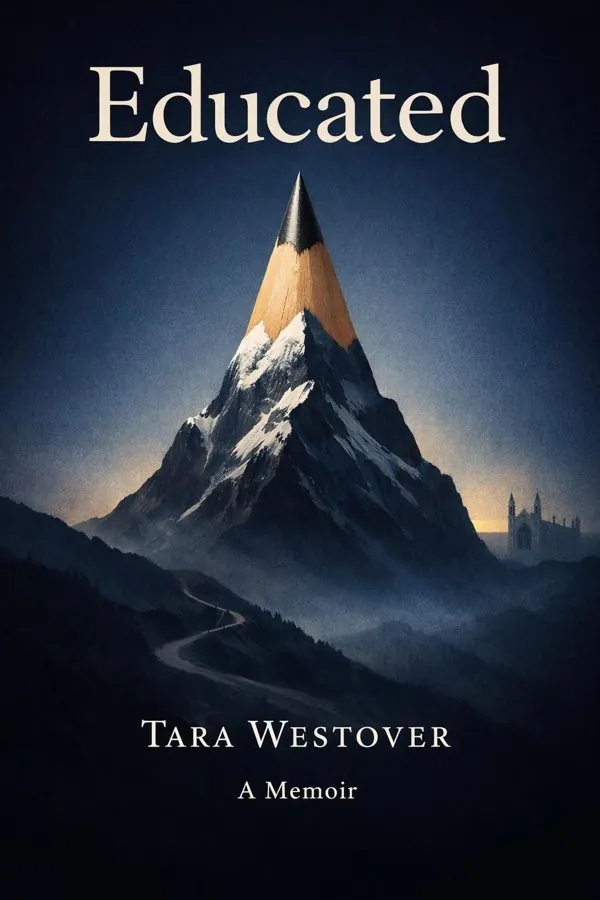
Educated
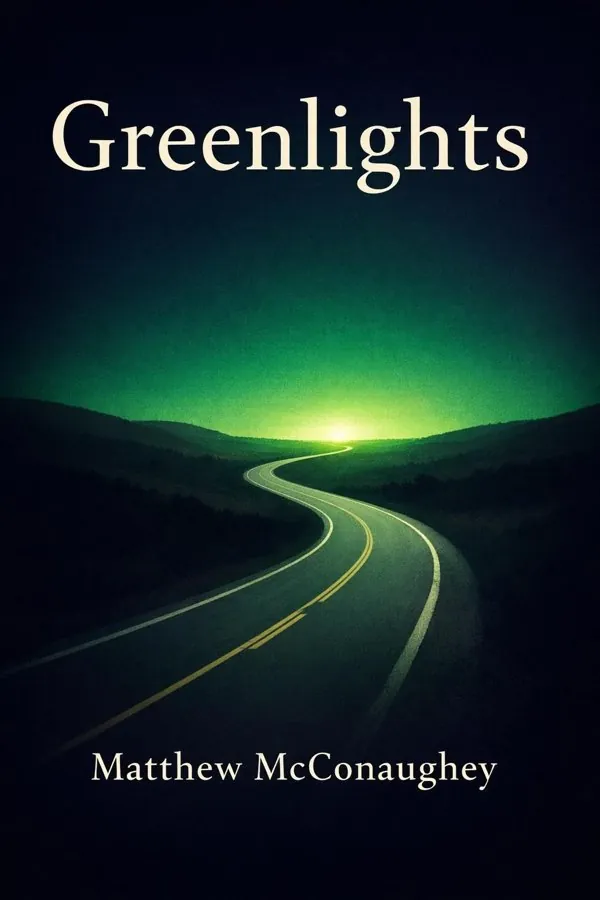
Greenlights
In-Depth Analysis
Tara Westover’s Educated and Matthew McConaughey’s Greenlights are both memoirs about self-creation, but they differ radically in stakes, method, and moral atmosphere. At the broadest level, each book asks how a person becomes himself or herself in the face of inherited expectations. Yet Westover frames that question as a struggle for reality under conditions of isolation, violence, and epistemic control, while McConaughey frames it as an adventurous search for alignment, authenticity, and momentum. One memoir is structured around rupture; the other around flow.
Educated begins in a survivalist Mormon household in rural Idaho where formal institutions are mistrusted and often treated as enemies. The mountain, Buck’s Peak, is not merely geographic background but a system of meaning. Westover’s father interprets the world through prophecy, suspicion, and patriarchal certainty, and this interpretation governs whether the children receive medical care, schooling, or even the vocabulary needed to recognize abuse. When Westover works in the junkyard, the scenes are unforgettable not only because of the physical danger but because danger itself has been normalized. Broken bones, burns, and concussions are absorbed into family life as if they were tests of faith or toughness. Westover’s eventual movement toward BYU and then Cambridge is therefore not a conventional success story but a battle to acquire language, context, and intellectual permission.
Greenlights, by contrast, opens not with deprivation but with excess: a Texas family culture full of force, storytelling, physicality, and contradiction. McConaughey’s father and mother loom as outsized influences, but they are rendered through anecdote and affection rather than the tightening pressure of trauma. His life path is shaped by pivots—moving from law toward acting, navigating Hollywood fame, reassessing romantic-comedy typecasting, and developing a personal philosophy from journals kept over decades. If Westover’s central drama is, “Can I trust my own mind against the people who made me?”, McConaughey’s is closer to, “How do I keep my center while life speeds up, tempts me, or knocks me sideways?”
This difference produces two distinct memoir structures. Educated is cumulative and escalating. Each educational step outward raises the emotional cost inward. Her first days at BYU expose shocking gaps in her knowledge—historical references, social norms, classroom assumptions—that dramatize how thoroughly she has been cut off. Cambridge intensifies this process. There, intellectual achievement is not just validation; it is destabilization. The more she learns, the less tenable her family’s version of events becomes. The memoir’s deepest conflict is not simply whether she can succeed academically, but whether she can survive the consequences of believing her own memory.
Greenlights is looser and more modular. It reads like a curated life notebook: travel episodes, industry stories, family moments, romantic reflections, spiritual musings, and punchy formulations about success and surrender. McConaughey’s concept of “greenlights” is broad by design. A green light can be an opportunity, but it can also be the transformation of a setback into a future advantage. That makes the book immediately applicable and quotable. However, it also means the memoir sacrifices some of the psychological density that gives Educated its force. McConaughey often interprets events quickly and confidently; Westover lingers in uncertainty, contradiction, and the instability of memory.
The books also differ sharply in voice. Westover’s prose is controlled, lucid, and often devastating because it refuses melodrama. She describes extreme circumstances with a calmness that lets the horror emerge through detail. This restraint is especially effective in scenes involving her brother’s abuse and the family’s refusal to name it honestly. McConaughey’s voice, in contrast, is exuberant, charismatic, and self-consciously performative. He writes as a raconteur, comfortable turning experience into parable. Readers who want a memoir that feels like an intimate, hard-won reckoning will likely prefer Westover; readers who want one that feels like a campfire conversation with a seasoned optimist will likely prefer McConaughey.
In terms of intellectual ambition, Educated reaches further. It is deeply concerned with epistemology: who has authority to define truth, how memory gets contested, and how education changes not just what one knows but what one can perceive. Westover’s degrees matter less than the internal shift that allows her to interpret her own life independently. Greenlights contains insight, but it is more philosophical than analytical. Its wisdom tends to arrive in compressed lessons about persistence, timing, or acceptance rather than in extended examination of systems, power, or trauma.
For many readers, the biggest practical distinction is emotional demand. Educated asks for more and gives more. It can be painful, especially for those familiar with coercive families, religious extremity, or abuse. But its rewards are immense because Westover’s journey is not merely inspiring; it clarifies how identity is formed under pressure and what freedom may cost. Greenlights is easier to enter and easier to recommend broadly. It offers energy, humor, and usable perspective, especially for readers who want motivation without being immersed in darkness.
Ultimately, these memoirs overlap in one crucial way: both reject passive living. Westover seeks education to claim authorship of her own mind. McConaughey seeks greenlights by meeting life with alertness and agency. But where Greenlights teaches readers how to move with life, Educated confronts the more severe question of how to leave a life that has defined you falsely. That is why Educated is the more profound book, while Greenlights is the more immediately companionable one.
Side-by-Side Comparison
| Aspect | Educated | Greenlights |
|---|---|---|
| Core Philosophy | Educated argues that education is not just formal schooling but the painful process of building an independent self capable of naming reality. Tara Westover presents learning as liberation from inherited narratives, especially those enforced by family, religion, and fear. | Greenlights promotes a philosophy of resilience through reframing: obstacles can become opportunities if met with humor, patience, and self-trust. Matthew McConaughey treats life as a sequence of signals to read, adapt to, and ultimately ride with greater authenticity. |
| Writing Style | Westover writes with restraint, precision, and dramatic clarity, often turning memory into scenes of physical danger and psychological tension. Her prose is literary but accessible, especially in episodes involving the junkyard, family violence, and her first bewildering encounters at BYU and Cambridge. | McConaughey’s style is conversational, swaggering, aphoristic, and performative, shaped by decades of journaling and storytelling. The tone shifts easily from comic anecdote to motivational mantra, with a loose, episodic structure that mirrors oral storytelling more than linear memoir. |
| Practical Application | The practical lesson of Educated lies less in step-by-step advice than in its model of critical self-examination: question inherited beliefs, seek language for your experience, and tolerate the loneliness of change. Readers may apply it to family systems, identity formation, and educational ambition. | Greenlights is overtly practical in a self-help-adjacent way, offering repeatable attitudes such as persistence, acceptance, risk-taking, and learning how to turn 'red lights' into 'greenlights.' Its lessons are easier to extract into daily habits, mantras, or mindset shifts. |
| Target Audience | Educated is especially suited to readers interested in memoir, trauma narratives, class mobility, religious isolation, and the psychology of family loyalty. It also strongly appeals to students, educators, and anyone navigating estrangement or reinvention. | Greenlights fits readers who enjoy celebrity memoirs, inspirational life philosophy, masculine self-fashioning narratives, and anecdote-driven reflection. It works well for readers looking for accessible motivation without the heavier emotional demands of a trauma-centered memoir. |
| Scientific Rigor | As a memoir, Educated is not scientific, but it has strong intellectual seriousness: Westover carefully examines memory, competing narratives, and the instability of truth inside abusive systems. Her later academic training adds analytical weight, even when the book remains fundamentally personal. | Greenlights has relatively low rigor in an analytical sense, since its claims are grounded in experience, instinct, and personal philosophy rather than research or sustained argument. Its authority comes from charisma and lived anecdote, not evidence-based reasoning. |
| Emotional Impact | Educated is more devastating and ultimately more transformative emotionally, especially in its depiction of sibling abuse, parental denial, and the psychic cost of telling the truth. The emotional force builds through scenes where Westover must choose between belonging and reality. | Greenlights delivers warmth, amusement, and occasional poignancy rather than sustained emotional devastation. Its emotional register is broad but lighter, emphasizing zest, gratitude, romance, adventure, and self-mythology over prolonged vulnerability. |
| Actionability | Its actionability is indirect but profound: it encourages readers to pursue education, seek outside perspectives, and recognize manipulation in intimate relationships. However, it offers fewer explicit takeaways and more hard-won moral insight. | Greenlights is highly actionable for readers who like quotable frameworks and memorable rules of thumb. McConaughey repeatedly translates experience into lessons about discipline, timing, confidence, and surrender. |
| Depth of Analysis | Educated goes deeper psychologically and structurally, exploring how identity is formed under coercion and how language itself can become a tool of emancipation. The memoir continually revisits the problem of who gets to define what is real. | Greenlights is reflective but less probing, often preferring synthesis and personal credo over unresolved examination. Its insights can be sharp, but they are usually distilled into ethos rather than interrogated at great length. |
| Readability | Despite its difficult material, Educated is highly readable because of its strong narrative momentum and clear prose. Readers are pulled forward by Westover’s educational ascent and the escalating tension with her family. | Greenlights may be even easier for casual readers because of its breezy format, short reflections, and entertaining set pieces. It can be dipped into more casually than Educated, which rewards sustained attention. |
| Long-term Value | Educated has stronger long-term value as a major contemporary memoir because its themes of truth, class, education, patriarchy, and self-invention remain intellectually and emotionally resonant. It invites rereading at different life stages and often deepens on return. | Greenlights offers durable value as a motivational and entertaining memoir, especially for readers drawn to attitude, voice, and life philosophy. Its staying power depends more on whether readers connect with McConaughey’s persona and worldview. |
Key Differences
Education as Survival vs Philosophy as Navigation
In Educated, learning is a matter of psychic and moral survival. Westover studies not just to advance but to escape a worldview that denies her reality. In Greenlights, the central project is not escape but navigation: McConaughey wants to move through fame, love, career changes, and setbacks with better timing and self-knowledge.
High-Stakes Family Conflict vs Mythic Family Anecdote
Westover’s family relationships are the engine of the memoir’s deepest pain, especially where parental authority and sibling abuse distort her sense of truth. McConaughey’s family is also formative, but it is presented more as a source of colorful stories, hard lessons, and emotional texture than as an imprisoning system.
Linear Transformation vs Episodic Reflection
Educated has a strong narrative arc: isolation, awakening, education, estrangement, and self-definition. Greenlights is more episodic, built from journals and memories that accumulate into a worldview rather than a single sharply escalating plot.
Literary Restraint vs Charismatic Performance
Westover’s prose is careful and often understated, which heightens the power of scenes involving injury, fear, and denial. McConaughey writes with showmanship, punchy slogans, and a distinctly oral cadence, making the book feel like a live performance on the page.
Interrogating Truth vs Reframing Experience
A central question in Educated is who gets to define reality when memories conflict and power protects falsehood. Greenlights is less concerned with contested truth and more with the art of interpretation—how to take whatever happens and turn it into a useful signal or a future advantage.
Emotional Excavation vs Motivational Uplift
Educated asks readers to sit inside confusion, grief, and the loneliness of intellectual awakening. Greenlights tends to redirect pain into momentum, offering uplift and philosophical takeaways more quickly after moments of difficulty.
Universal Through Specific Trauma vs Universal Through Persona
Westover reaches universality by detailing an extraordinarily specific upbringing with such honesty that broader questions of identity and freedom emerge naturally. McConaughey reaches universality through personality, making his own voice and attitude the main bridge between private story and reader takeaway.
Who Should Read Which?
Readers interested in trauma, identity, education, religion, or family estrangement
→ Educated
Westover offers a nuanced account of growing up in a survivalist, anti-institutional household and discovering the power of learning to reinterpret one’s own life. The memoir is especially rewarding for readers drawn to psychological complexity and the moral cost of self-definition.
Readers who want motivation, humor, and practical life lessons from a celebrity memoir
→ Greenlights
McConaughey delivers an energetic mix of journaling, storytelling, and mindset advice that is easy to read and easy to revisit. It suits readers who want inspiration they can apply quickly without entering a darker emotional landscape.
Book clubs or discussion-oriented readers looking for the richest conversation
→ Educated
Educated generates deeper discussion about truth, class mobility, abuse, religion, memory, and the purpose of education. Its layered conflicts and ethical ambiguities give groups more to unpack than Greenlights, which is enjoyable but less analytically dense.
Which Should You Read First?
Read Greenlights first if you want an easy, entertaining entry into memoir. Its loose structure, humor, and practical life philosophy make it ideal when you want something energizing and low-friction. Because McConaughey often distills his experiences into direct lessons, the book can prime you to think about self-authorship and resilience in a broad, approachable way. Read Educated first if you are looking for the stronger literary and emotional experience and do not mind heavier material. It demands more concentration, but it also offers a much deeper payoff. In many ways, reading Greenlights after Educated can feel like relief: after Westover’s intense examination of family, truth, and liberation, McConaughey’s voice can seem breezy and restorative. For most readers, the best order is Greenlights followed by Educated if ease matters, and Educated followed by Greenlights if depth matters. If your goal is to compare how two public figures construct identity through memoir, ending with Educated leaves the more lasting impression.
Want the full summary?
Get instant access to this book summary and 100K+ more with Fizz Moment.
Get Free SummaryAvailable on App Store • Free to download
Frequently Asked Questions
Is Educated better than Greenlights for beginners who do not usually read memoirs?
It depends on what kind of beginner you are. If you want a fast, conversational, easy-entry memoir with humor, short reflections, and clear life lessons, Greenlights is usually better for beginners. McConaughey’s journal-based structure makes it easy to read in bursts. If, however, you are open to a more intense and emotionally layered reading experience, Educated is still highly accessible because Tara Westover writes very clearly and builds suspense exceptionally well. For literary beginners, Greenlights is the softer landing; for readers ready for a deeper, more unforgettable memoir, Educated is the stronger choice.
Which memoir is more inspiring: Educated or Greenlights?
Educated is more inspiring in a hard-earned, transformative sense, while Greenlights is more inspiring in a motivational, energy-boosting sense. Westover’s rise from an isolated, unschooled childhood in rural Idaho to BYU and Cambridge feels astonishing because every step requires her to challenge family authority and rebuild her sense of reality. McConaughey inspires through confidence, reinvention, and a flexible mindset that turns setbacks into opportunities. If you define inspiration as courage under extreme pressure, choose Educated. If you define it as momentum, optimism, and practical philosophy for daily life, choose Greenlights.
Is Greenlights or Educated better for readers interested in personal growth and self-discovery?
Both books address personal growth, but they do so through very different models of self-discovery. Educated shows self-discovery as painful separation: learning enough to see your past differently, then accepting the cost of that new knowledge. It is especially powerful for readers interested in identity, family conditioning, and emotional independence. Greenlights presents self-discovery as ongoing calibration—listening to instinct, taking risks, recovering from failure, and refining a personal code. Readers focused on deep psychological growth will likely prefer Educated, while readers wanting a looser, more actionable philosophy of self-development may get more immediate value from Greenlights.
Which book has more emotional depth, Educated or Greenlights?
Educated has substantially more emotional depth. Westover explores family loyalty, abuse, gaslighting, intellectual awakening, and estrangement with unusual nuance. Some of the memoir’s strongest passages come when she realizes that education is forcing her to question not just beliefs but entire emotional bonds. Greenlights certainly includes vulnerable moments involving family, love, career pressure, and loss, but McConaughey’s mode is generally interpretive and upbeat; he turns experience into lessons quickly. If you want a memoir that sits with pain and complexity rather than moving rapidly toward a takeaway, Educated is the richer emotional experience.
Is Educated or Greenlights more useful for life advice?
Greenlights is more directly useful if you are looking for explicit life advice. McConaughey regularly distills stories into memorable principles about timing, persistence, authenticity, and reframing setbacks. It reads partly like a memoir and partly like a personal philosophy handbook. Educated offers life-changing insight, but less in the form of advice. Its value comes from what it reveals about power, truth, self-trust, and the hidden costs of belonging. So if you want quotable guidance you can apply tomorrow, Greenlights is more practical. If you want a book that may permanently alter how you understand family, knowledge, and freedom, choose Educated.
Which is the better audiobook experience: Educated or Greenlights?
Greenlights is often the better audiobook experience for listeners who enjoy strong authorial presence, because McConaughey’s voice, rhythm, and storytelling flair are central to the book’s appeal. His spoken delivery enhances the humor, swagger, and reflective punch of the material. Educated also works very well in audio because of its narrative momentum and emotional intensity, but its strength lies more in the content than in persona. If you want to feel as though the author is talking directly to you, Greenlights usually wins on audio. If you want immersion in a powerful life story, Educated remains excellent.
The Verdict
If you are choosing between these two memoirs as a single read, Educated is the better book in literary quality, psychological depth, and lasting significance. Tara Westover’s memoir does more than recount an unusual life: it examines how a person learns to think independently after being raised in an environment hostile to institutions, inquiry, and dissent. Its movement from Buck’s Peak to BYU to Cambridge is not just geographical or academic; it is an ascent into selfhood. The result is a memoir that stays with readers because it wrestles seriously with memory, truth, family loyalty, and the cost of freedom. That said, Greenlights is the better choice for readers seeking momentum, entertainment, and practical mindset advice. Matthew McConaughey offers a charismatic, highly readable blend of memoir and philosophy, full of stories that convert setbacks into usable lessons. It is less emotionally demanding and more immediately shareable, especially for readers who like journal wisdom, bold personality, and self-help adjacent reflection. So the recommendation is simple: choose Educated if you want a profound, unforgettable memoir with major emotional and intellectual rewards. Choose Greenlights if you want an energetic, accessible, often funny book that may improve your attitude and sharpen your sense of personal agency. Read both if possible, but if only one, Educated is the more essential work.
Related Comparisons
Want to read both books?
Get AI-powered summaries of both Educated and Greenlights in just 20 minutes total.