
Educated vs Born a Crime: Which Should You Read?
A detailed comparison of Educated by Tara Westover and Born a Crime by Trevor Noah. Discover the key differences, strengths, and which book is right for you.
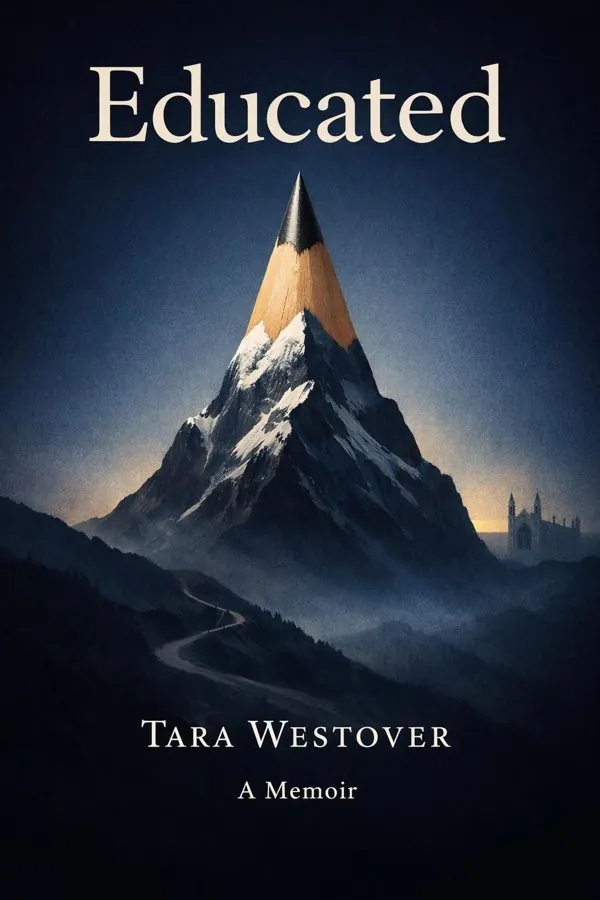
Educated
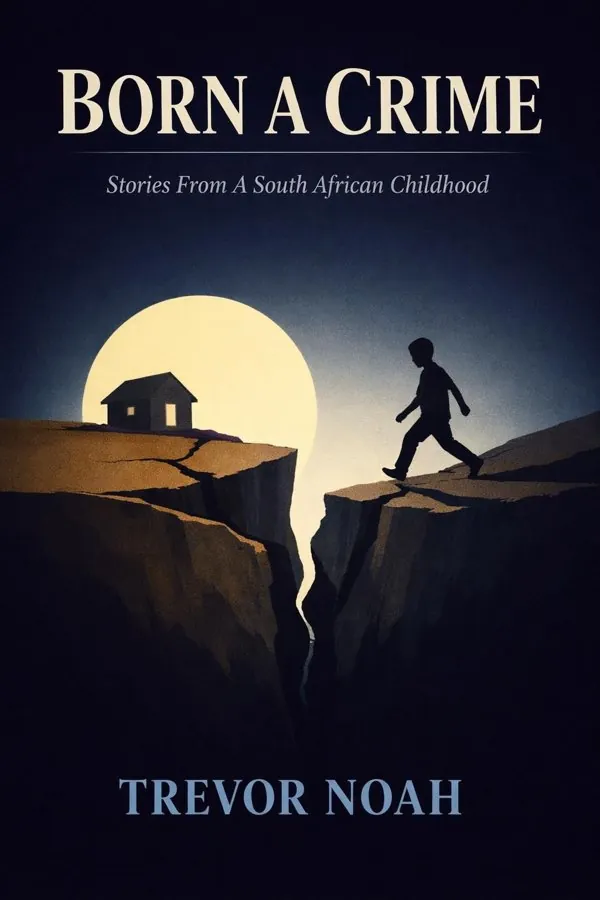
Born a Crime
In-Depth Analysis
Tara Westover's Educated and Trevor Noah's Born a Crime are both memoirs of improbable self-making, but they differ sharply in the kind of pressure each narrator must survive and in the literary tools used to make that survival legible. Both books begin with a child shaped by a world already hostile to their existence. Westover is raised in a survivalist Mormon household in rural Idaho where formal education, medicine, and government are treated as corrupting threats. Noah is born under apartheid in South Africa as the child of a black mother and white father, his very birth criminalized by law. In both cases, the narrator's earliest lesson is that ordinary social belonging is unavailable. Yet where Educated is driven by epistemic captivity, Born a Crime is driven by legal and racial absurdity.
The most important difference lies in what each memoir means by freedom. In Educated, freedom emerges through the difficult acquisition of language, history, and interpretive independence. Westover's central struggle is not merely poverty or exclusion but the ability to trust her own perceptions when those closest to her relentlessly redefine reality. Her father's apocalyptic worldview and her brother Shawn's abuse create a family culture in which knowledge itself is unstable. One of the memoir's deepest achievements is showing that education is not synonymous with information; it is the capacity to name what is happening to you. Westover's arrival at BYU dramatizes this powerfully. She does not know basic historical facts, and her ignorance about topics such as the Holocaust is not played for embarrassment alone. It becomes evidence of how total isolation produces not just gaps in knowledge but a damaged relation to the shared world.
Noah's freedom, by contrast, is less about escaping an enclosed epistemology than about learning to navigate a fragmented society. Born a Crime repeatedly shows him moving between identities, neighborhoods, and linguistic communities. One of the memoir's most memorable insights is Noah's claim that language can open doors race cannot. By speaking Zulu, Xhosa, Tswana, or Afrikaans, he can cross social boundaries and disarm suspicion. This is not simply a charming observation; it is Noah's theory of survival under a system built on rigid categorization. If Westover's education teaches her to separate truth from familial myth, Noah's education teaches him how to move fluidly through mutually suspicious publics.
Their mothers are central in both memoirs, but they function differently. In Born a Crime, Patricia Noah is the book's animating moral force. She is daring, funny, uncompromising, and spiritually fierce. Noah's portrait of her gives the memoir both coherence and emotional depth. Her insistence on faith, mobility, and aspiration creates a counterworld to apartheid's confinement. The later account of her surviving Abel's attempted murder reframes the entire memoir: her resilience is not a sentimental trait but a form of radical endurance. In Educated, maternal presence is more tragic and ambiguous. Westover's mother is capable, entrepreneurial, and at times caring, yet increasingly unable or unwilling to protect Tara from the father's extremism and Shawn's violence. That ambiguity is crucial. Westover refuses the easier narrative of a wholly evil family, and this refusal makes the memoir more painful. Love exists, but it does not prevent betrayal.
Structurally, the books also diverge. Educated builds cumulative intensity. The mountain, the junkyard, the injuries, the suppression of memory, and the eventual move through BYU to Cambridge all deepen one central conflict: whether Westover can become intelligible to herself without losing everyone who first defined her. The memoir gains force through recurrence, especially in scenes where physical danger mirrors psychological domination. The junkyard accidents are not isolated episodes; they dramatize a household where recklessness is normalized and care is ideologically suspect.
Born a Crime is more episodic and picaresque. Noah moves from story to story: being hidden from police, attending multiple churches, hustling CDs, navigating schoolyard politics, and learning how language alters power. This structure reflects the book's worldview. Whereas Westover's narrative moves toward severance, Noah's moves through adaptation. His anecdotes often begin in comedy and end in revelation. The scene of being thrown from a moving car by his mother is both terrifying and darkly absurd, capturing the memoir's tonal signature: danger processed through wit.
In literary terms, Westover is the more introspective and philosophically probing writer. She lingers over memory, shame, and the splitting of self required to survive abuse. Her Cambridge sections, in particular, show how intellectual growth can destabilize personal identity rather than simply enhance it. Noah is the more immediately charismatic narrator, stronger at compression, social explanation, and tonal balance. His historical contextualization of apartheid is elegant because it never feels like a textbook interruption; it arises naturally from lived episodes.
For readers, the choice depends on what kind of memoir they want. Educated is the stronger book on the intimate cost of claiming reality against coercive love. It is devastating, psychologically layered, and unusually sophisticated about how knowledge changes a life. Born a Crime is the stronger book on social navigation, structural injustice, and the role of humor in making pain speakable. It is broader in scope, more accessible in style, and often more immediately quotable. Both books are about becoming visible to oneself in a world that prefers distortion. But Westover's story asks what truth costs when your family owns your language, while Noah's asks how to invent a workable self when the state has already classified you as impossible.
Side-by-Side Comparison
| Aspect | Educated | Born a Crime |
|---|---|---|
| Core Philosophy | Educated argues that education is not just schooling but the painful creation of an independent self. Tara Westover presents learning as a route to moral and psychological autonomy, especially when family and ideology distort reality. | Born a Crime sees survival as an art of improvisation shaped by race, language, humor, and maternal love. Trevor Noah frames identity as flexible and relational, showing how wit and adaptability can become forms of freedom under oppressive systems. |
| Writing Style | Westover writes with controlled intensity, layering memory, reflection, and emotional precision. Her prose is often lyrical and stark, especially in scenes on Buck's Peak, in the junkyard, and during confrontations over memory and truth. | Noah uses an episodic, highly conversational style that blends storytelling, social commentary, and comedy. Even when discussing apartheid, domestic abuse, or poverty, he often deploys timing and irony to make difficult material vivid and accessible. |
| Practical Application | Educated offers practical value mainly as a model for intellectual self-invention and boundary-setting. Readers may draw lessons about seeking mentorship, questioning inherited beliefs, and recognizing abuse, though the book is not instructional in a direct sense. | Born a Crime provides practical insight into navigating social systems through language, observation, and emotional intelligence. Noah repeatedly shows how code-switching, entrepreneurship, and humor can help one move across rigid social boundaries. |
| Target Audience | This memoir is especially compelling for readers interested in trauma narratives, family systems, religion, and the transformative power of education. It also resonates with students or first-generation learners who have felt intellectually out of place. | This book suits readers who want memoir mixed with history, humor, and sharp cultural analysis. It is especially appealing to those interested in apartheid, mixed-race identity, and stories of resilience shaped by a charismatic narrator. |
| Scientific Rigor | As a memoir, Educated is not scientifically rigorous, but it is intellectually serious in its treatment of memory, subjectivity, and epistemic conflict. Westover repeatedly acknowledges uncertainty, especially when family members dispute key events. | Born a Crime is likewise not a research-driven work, but Noah gives strong contextual explanations of apartheid's legal and social categories. His explanatory passages on race, language, and governance are clear and historically grounded for a general audience. |
| Emotional Impact | Educated delivers a slow-building and often devastating emotional effect. The abuse by Shawn, the father's paranoia, and Westover's eventual estrangement create a profound sense of grief tied to the cost of self-definition. | Born a Crime is emotionally rich but more tonally varied, moving from hilarity to terror with remarkable speed. The story of Noah's mother, especially the later account of her surviving attempted murder by Abel, gives the memoir its deepest emotional force. |
| Actionability | Its actionability is inward rather than procedural: it encourages readers to examine who authored their beliefs and what truths they have been trained not to see. The book is especially useful for readers confronting denial, family loyalty, or educational shame. | Noah's memoir is more outwardly actionable because it models social adaptability in concrete ways. His use of multiple languages, hustles, and cultural fluency demonstrates repeatable habits of resilience, curiosity, and self-presentation. |
| Depth of Analysis | Westover offers exceptional depth on the psychological mechanics of control, memory, and self-division. Her reflections on how an abusive family can monopolize truth give the memoir philosophical weight beyond its plot. | Noah's analysis is broader than deeper, often connecting personal anecdotes to systems like apartheid, patriarchy, and poverty. While less inwardly excavating than Educated, it excels at showing how public structures shape intimate life. |
| Readability | Educated is highly readable but emotionally demanding, with recurring scenes of injury, intimidation, and mental unmooring. Its narrative momentum is strong, yet readers may need pauses because of the intensity. | Born a Crime is exceptionally readable thanks to its short chapters, tonal agility, and comic momentum. It is often the easier entry point for readers who want a memoir with substantial themes but a lighter narrative touch. |
| Long-term Value | Educated has lasting value as a memoir about knowledge, selfhood, and the ethics of leaving. It invites rereading because its meaning shifts as readers reconsider education, class, religion, and the politics of memory. | Born a Crime endures as both a coming-of-age story and an accessible account of apartheid's afterlives. Its long-term value lies in how memorably it links structural injustice with everyday ingenuity and maternal devotion. |
Key Differences
Private Tyranny vs Public Oppression
Educated focuses on coercion within the family, where Tara Westover must struggle against a father's paranoia and a brother's abuse to claim her own reality. Born a Crime centers more on a society structured by apartheid, where Trevor Noah's existence is politically illegal before it is personally interpreted.
Education as Self-Definition vs Adaptation as Survival
For Westover, education means acquiring the language and confidence to reinterpret her life, from her ignorance at BYU to the intellectual expansion of Cambridge. For Noah, survival depends less on formal education than on flexibility, especially his ability to move between communities through language and humor.
Narrative Intensity vs Episodic Momentum
Educated builds like a psychological drama, with recurring scenes in the junkyard, on Buck's Peak, and in family confrontations increasing the pressure over time. Born a Crime moves through memorable episodes, such as church marathons, hustling schemes, and linguistic navigation, creating a brisker, more modular reading experience.
Trauma Processed Through Reflection vs Through Comedy
Westover often revisits traumatic material in a meditative, destabilizing way, asking how memory itself can be manipulated. Noah frequently filters pain through wit, using humor to expose the absurdity of apartheid and the resourcefulness required to live under it.
Ambiguous Family Love vs Heroic Maternal Center
In Educated, family love is real but compromised, especially in the mother's failure to protect Tara when truth becomes too costly. In Born a Crime, Patricia Noah stands as a clear moral and emotional anchor, pushing Trevor toward possibility even amid danger.
Intellectual Awakening vs Social Fluency
Westover's major turning points come through books, classrooms, mentors, and the shock of encountering histories she was denied. Noah's turning points often come through reading people and situations correctly, whether in school, on the street, or across language groups.
Estrangement as End Point vs Continuity Through Change
Educated ultimately confronts the painful necessity of distance from family in order to preserve selfhood. Born a Crime, despite its violence and instability, retains a stronger sense of relational continuity, especially through Noah's lasting bond with his mother.
Who Should Read Which?
Readers interested in trauma, family dynamics, and the psychology of selfhood
→ Educated
This reader will likely value Westover's close attention to gaslighting, denial, shame, and the costs of separating from a controlling family system. The memoir offers unusually rich insight into how education can become a way of reclaiming language and reality.
Readers who want memoir mixed with history, humor, and strong narrative momentum
→ Born a Crime
Noah combines personal storytelling with lucid explanations of apartheid, race, and language in a way that feels energetic rather than heavy. His voice is witty, highly readable, and especially effective for readers who want substance without emotional relentlessness.
Book club readers or general nonfiction readers looking for an accessible but meaningful memoir
→ Born a Crime
It is easier to enter, easier to discuss, and full of vivid episodes that spark conversation about identity, parenting, religion, poverty, and resilience. While Educated may provoke deeper analysis, Born a Crime tends to work better for mixed-experience groups.
Which Should You Read First?
If you are deciding which book to read first, Born a Crime is usually the better entry point. Its chapters are shorter, its tone is more varied, and Trevor Noah's humor makes the serious material feel immediately accessible. You get historical insight into apartheid, vivid scenes of childhood, and a strong emotional core through Patricia Noah without being dropped into the same sustained psychological intensity that Educated demands. Then read Educated second, when you are ready for a more inward and unsettling memoir. Westover's story rewards a reader who can slow down and sit with ambiguity, especially around memory, family loyalty, and the meaning of truth. Reading Born a Crime first also creates a useful contrast: Noah shows how adaptability can help a child survive a broken society, while Westover shows how formal learning can help a woman escape a broken private world. Together, in that order, the books move from social navigation to existential self-definition.
Want the full summary?
Get instant access to this book summary and 100K+ more with Fizz Moment.
Get Free SummaryAvailable on App Store • Free to download
Frequently Asked Questions
Is Educated better than Born a Crime for beginners?
For most beginners to memoir, Born a Crime is the easier starting point. Trevor Noah writes in short, vivid, often funny chapters, and he gives clear historical context about apartheid without becoming dense. Educated is also compelling, but it is emotionally heavier and more psychologically intense, especially in its depictions of family control, physical danger, and gaslighting. If by "better for beginners" you mean more accessible and fast-moving, Born a Crime usually wins. If you want a deeper inward study of trauma, memory, and self-education, Educated may ultimately feel more rewarding, even if it is the more demanding read.
Which memoir is more emotionally powerful: Educated or Born a Crime?
Educated is generally the more emotionally devastating memoir because its pain accumulates through betrayal, denial, and estrangement within the family itself. Tara Westover's accounts of abuse by Shawn and her struggle to trust her own memory create a lingering, intimate anguish. Born a Crime is also moving, especially in its depiction of Patricia Noah and the violence she endures, but it balances grief with humor and buoyancy. So if you are asking which memoir is more emotionally powerful in a raw, unsettling way, Educated likely has the greater impact. If you want emotional range rather than sustained intensity, Born a Crime may affect you more broadly.
Is Born a Crime or Educated better for understanding identity and belonging?
Both are excellent, but they approach identity from different angles. Born a Crime is stronger on social identity: race, language, class mobility, and belonging in apartheid and post-apartheid South Africa. Trevor Noah repeatedly shows how being mixed-race made him both visible and unplaceable, and how language gave him access across divisions. Educated is stronger on internal identity: how a person separates from family ideology and learns to define truth independently. If your interest is public identity and social belonging, start with Born a Crime. If your interest is private identity and psychological self-formation, Educated goes deeper.
Which book has more educational value: Educated vs Born a Crime?
That depends on what kind of educational value you want. Educated has profound value for readers interested in the meaning of learning itself. It shows how education can become a way to challenge inherited beliefs, recognize abuse, and construct an independent moral vocabulary. Born a Crime offers more direct historical and cultural education for general readers, especially on apartheid, language politics, and everyday life in South Africa. In a classroom focused on psychology, family systems, or epistemology, Educated may offer more depth. In a course on race, colonial history, or social identity, Born a Crime may be more immediately useful.
Should I read Educated or Born a Crime first if I like memoirs about resilience?
If resilience is your main interest, read Born a Crime first if you prefer resilience shown through humor, hustle, and social intelligence. Noah's storytelling emphasizes adaptability: selling pirated CDs, speaking multiple languages, and learning how to move through hostile environments. Read Educated first if you are drawn to resilience as intellectual awakening and emotional survival. Westover's resilience is less performative and more existential, involving the painful rejection of family narratives and the rebuilding of self-trust. Both books are outstanding memoirs about resilience, but they satisfy different reader expectations about what survival looks like.
Which is more readable for book clubs: Educated or Born a Crime?
Born a Crime is often the stronger book club choice because it combines serious themes with humor, short chapters, and many memorable discussion points about race, language, religion, poverty, and Patricia Noah's parenting. It tends to generate lively conversation without overwhelming readers. Educated can produce even deeper discussion, especially about memory, abuse, education, and family loyalty, but it may be a harder emotional experience for some groups. If your book club wants broad accessibility and energetic debate, choose Born a Crime. If it wants a more intense conversation about truth, estrangement, and transformation, choose Educated.
The Verdict
If you want the more psychologically penetrating memoir, choose Educated. Tara Westover transforms a story of isolation into a profound examination of how a person learns to think against the authority that formed her. Its greatest strength is not just the drama of moving from a survivalist childhood in Idaho to BYU and Cambridge, but the deeper question beneath that journey: what does it cost to name reality when love, loyalty, and memory are all contested? It is the more haunting and philosophically ambitious of the two books. If you want the more immediately accessible and socially expansive memoir, choose Born a Crime. Trevor Noah's account of growing up mixed-race under apartheid and after it offers rich insight into language, race, poverty, and improvisational survival. The book is funnier, more episodic, and easier to recommend to a broad readership, yet it never sacrifices seriousness. Patricia Noah is one of the great parental figures in contemporary memoir. On balance, Educated is the stronger literary achievement, while Born a Crime is the more universally approachable reading experience. Neither book is merely inspirational; both are sharply observant accounts of how oppressive systems shape the self. Read Educated for depth and inward transformation. Read Born a Crime for breadth, wit, and cultural insight. Ideally, read both.
Related Comparisons

Want to read both books?
Get AI-powered summaries of both Educated and Born a Crime in just 20 minutes total.