
When Breath Becomes Air vs Educated: Which Should You Read?
A detailed comparison of When Breath Becomes Air by Paul Kalanithi and Educated by Tara Westover. Discover the key differences, strengths, and which book is right for you.
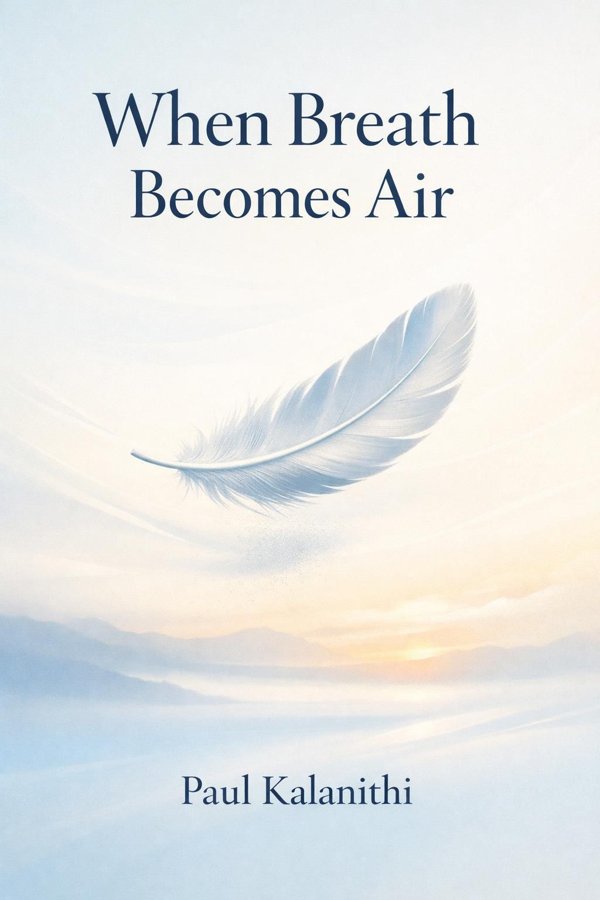

When Breath Becomes Air
Educated
In-Depth Analysis
Paul Kalanithi’s When Breath Becomes Air and Tara Westover’s Educated are both memoirs of self-formation, but they move in opposite narrative directions. Kalanithi writes from the end of a life toward meaning; Westover writes from the beginning of a constrained life toward freedom. One is structured by terminal illness, the other by escape from epistemic captivity. Read together, they form a powerful diptych on identity: who we are when our body fails, and who we become when the world we inherited proves false.
Kalanithi’s memoir is fundamentally a book about mortality under conditions of extreme intelligence. Before cancer, he is already obsessed with the question of what makes human life meaningful. The Arizona desert of his youth gives him a sense of scale and insignificance; literature gives him language for inner life; Cambridge sharpens his interest in consciousness and the relationship between matter and self. Neurosurgery then becomes the practical arena where these questions stop being theoretical. He is literally cutting into the brain, the organ through which personality, memory, and agency are expressed. This gives the memoir a rare doubleness: Kalanithi is both thinker and technician, philosopher and operator. When he becomes a patient with stage IV lung cancer, that doubleness collapses into a painful reversal. The doctor who once explained prognoses must now live inside one.
Westover’s memoir, by contrast, begins with a self that has scarcely been allowed to form independently. Her childhood on Buck’s Peak is not only geographically isolated but epistemologically enclosed. She grows up in a survivalist family suspicious of hospitals, public schools, and state authority; knowledge is filtered through her father’s apocalyptic worldview. The result is not merely ignorance in the ordinary sense, but a radical instability in what counts as reality. Injuries are treated at home, history is distorted, and abuse is normalized. The junkyard scenes are especially important because they show that danger in Educated is not exceptional; it is ambient. Westover’s education begins not in a classroom but in the gradual recognition that the world she has inherited may be built on falsehoods.
One of the most illuminating contrasts between the books is their treatment of knowledge. In When Breath Becomes Air, knowledge is deep but incomplete. Kalanithi knows medicine, but that knowledge cannot save him. His clinical understanding gives shape to his suffering without removing it. There is a haunting humility in this: science can describe prognosis and treatment, but it cannot answer what makes a dying life worth living. In Educated, knowledge is scarce at first and then explosively liberating. Westover’s entry into BYU is not simply academic advancement; it is the beginning of an epistemic revolution. Learning about history, music, and politics means discovering that facts exist outside the family’s authority. If Kalanithi shows the limits of expertise, Westover shows the emancipatory power of acquiring it.
Their prose styles reflect these differences. Kalanithi writes in a compressed, elegant register marked by literary allusion and philosophical poise. Even his grief is disciplined. The emotional power comes partly from what he refuses to overstate. When he describes facing a prognosis, returning to surgery, or deciding to have a child with his wife Lucy, the restraint intensifies the pathos. Westover’s style is more novelistic in momentum. She builds scenes with tactile clarity—the mountain, the junkyard, the violence of family conflict—and carries the reader through escalating realizations. Her memoir is more dramatic in plot, but no less serious in thought. In fact, some of its sharpest insights concern memory itself: who gets to define what happened, and what it costs to insist on one’s own version of events.
Both books also explore the price of identity. For Kalanithi, the central loss is vocational. He has spent years becoming a neurosurgeon, only to confront the possibility that the future he trained for will disappear. Illness forces him to ask whether he is still himself without the operating room, without the long arc of a medical career. Yet the memoir suggests that identity can be reconstituted through love, writing, and fatherhood even as the body declines. Westover faces a different cost: to become herself, she must risk losing her family. Education in her story is inseparable from estrangement. Every new level of intellectual independence creates greater conflict with the people who formed her. Her transformation is therefore not triumphalist. It is liberation shadowed by grief.
Another key difference lies in scale. Kalanithi’s conflict is cosmic and intimate at once: one man, one diagnosis, the universal fact of death. Westover’s conflict is familial and cultural: patriarchy, religious extremity, abuse, and the gatekeeping of truth inside a household. This makes Educated more explicitly social and political, while When Breath Becomes Air remains more existential and metaphysical. Readers looking for analysis of systems—family systems, gender roles, anti-institutional ideology—will likely find Westover’s memoir richer in that domain. Readers drawn to questions of consciousness, vocation, and mortality may find Kalanithi’s more piercing.
In the end, neither book is merely inspirational, and that is part of their greatness. Kalanithi does not “beat” cancer, and Westover does not recover a healed family. Both reject easy redemption. Instead, they offer harder truths: that meaning may survive even when the future does not, and that education may require severing oneself from cherished illusions. When Breath Becomes Air is the more meditative and philosophically distilled work; Educated is the more expansive and narratively propulsive one. Together, they show two different forms of awakening—one under the pressure of death, the other under the pressure of truth.
Side-by-Side Comparison
| Aspect | When Breath Becomes Air | Educated |
|---|---|---|
| Core Philosophy | When Breath Becomes Air asks how a person should live when death is no longer abstract but immediate. Kalanithi treats meaning as something discovered at the intersection of vocation, love, literature, and mortality rather than through comfort or certainty. | Educated argues that education is not merely the acquisition of credentials but the painful reconstruction of selfhood. Westover presents learning as a moral and psychological act of separating truth from inherited narratives. |
| Writing Style | Kalanithi writes with compressed elegance, blending clinical precision, philosophical reflection, and lyrical prose. His sentences often carry the cadence of someone trained equally by anatomy labs and by literature seminars. | Westover’s prose is vivid, clear, and scene-driven, with a strong narrative pull. She uses concrete childhood memories—junkyard injuries, mountain winters, domestic volatility—to build momentum toward intellectual awakening. |
| Practical Application | Its practical value is existential rather than procedural: it helps readers think about mortality, caregiving, vocation, and what makes life meaningful under pressure. It is especially useful for doctors, patients, and anyone facing serious illness. | Its practical application is more social and developmental, especially for readers navigating family pressure, educational reinvention, or identity change. Westover’s story offers a model for questioning inherited beliefs and pursuing self-formation. |
| Target Audience | This memoir best suits readers drawn to medicine, philosophy, end-of-life reflection, or literary nonfiction. It also speaks powerfully to readers interested in how professional identity changes when the body fails. | Educated reaches a broader general audience, including readers interested in trauma, family systems, feminism, religion, and first-generation education. It is especially accessible for those who prefer a dramatic coming-of-age arc. |
| Scientific Rigor | Kalanithi’s medical background gives the book unusual authority when describing cancer, neurosurgery, and the doctor-patient relationship. Even when he turns philosophical, the memoir remains grounded in firsthand clinical experience. | Westover is intellectually rigorous in a different register: she is less focused on formal science and more on epistemology, memory, and historical correction. Her rigor lies in examining how knowledge is formed, distorted, and contested. |
| Emotional Impact | The emotional force comes from restraint: Kalanithi does not sensationalize his terminal diagnosis, which makes scenes about prognosis, fatherhood, and unfinished ambition even more devastating. The awareness of his death outside the text shadows every page. | Westover’s emotional impact comes through accumulation of danger, betrayal, and self-division. The pain of abuse and family estrangement creates a sustained tension that often feels more volatile and dramatic than Kalanithi’s quieter tragedy. |
| Actionability | It offers few step-by-step lessons, but it can change how readers prioritize time, relationships, and meaningful work. Its actionability lies in clarifying values rather than prescribing habits. | Educated is more actionable for readers seeking courage to leave constricting environments or pursue formal learning late. It implicitly encourages concrete acts: studying, seeking mentors, testing assumptions, and building an independent worldview. |
| Depth of Analysis | Kalanithi frequently moves from event to metaphysical inquiry, asking what consciousness is, what the self becomes under illness, and how medicine mediates between biology and meaning. The memoir is short, but intellectually dense. | Westover’s analysis is strongest in its treatment of memory, power, and the politics of truth within families. Her reflections are less abstractly philosophical than Kalanithi’s but more sustained in showing how identity is socially produced. |
| Readability | The book is highly readable but occasionally demanding because of its philosophical references and medical vocabulary. Its brevity helps, though some readers may pause over its reflective passages. | Educated is more conventionally page-turning, with a stronger chronological plot and immediate stakes. Its language is straightforward, and the dramatic family scenes make it especially approachable for memoir beginners. |
| Long-term Value | When Breath Becomes Air tends to stay with readers as a book to revisit at different life stages—early career, parenthood, illness, grief. Its meditations on mortality deepen as one’s own sense of time changes. | Educated has long-term value as a memoir about intellectual emancipation and the cost of telling the truth. It remains especially relevant for readers rethinking family loyalty, ideology, and the meaning of education across adulthood. |
Key Differences
Mortality vs Self-Education
Kalanithi’s central conflict is how to live well while dying; the memoir is shaped by diagnosis, prognosis, and the shrinking horizon of time. Westover’s central conflict is how to educate herself out of an inherited reality, moving from ignorance and control toward intellectual autonomy.
Professional Identity vs Family Identity
When Breath Becomes Air is deeply invested in vocation, especially what it means for a neurosurgeon to lose the career that defined his purpose. Educated is more focused on family belonging and the cost of separating from a household that demands obedience over truth.
Philosophical Compression vs Narrative Momentum
Kalanithi writes in a concise, essayistic mode, often pausing events to ask abstract questions about consciousness, selfhood, and meaning. Westover favors a stronger scene-based drive, using escalating episodes—junkyard accidents, classroom revelations, confrontations at home—to propel the memoir forward.
Clinical Authority vs Epistemic Awakening
Kalanithi’s authority comes from being both doctor and patient, allowing him to show how medicine changes when lived from the inside. Westover’s authority comes from dramatizing the awakening of critical thought: she learns to compare claims, revise memory, and distrust totalizing narratives.
Quiet Tragedy vs Volatile Conflict
The emotional texture of When Breath Becomes Air is controlled, solemn, and anticipatory; readers feel grief gathering in the spaces between measured reflections. Educated is emotionally more explosive, with scenes of danger, abuse, denial, and rupture that generate immediate tension.
Universal Death vs Social Systems
Kalanithi’s subject is universal in the broadest sense: everyone must confront death, finitude, and the search for meaning. Westover’s memoir engages more directly with social structures—patriarchy, religious extremity, anti-institutional suspicion, and the politics of education.
Value Clarification vs Concrete Reinvention
When Breath Becomes Air changes readers mainly by sharpening their sense of what matters—time, love, work, and dignity. Educated more visibly models reinvention through action: studying independently, entering college underprepared, finding mentors, and remaking a worldview.
Who Should Read Which?
Readers interested in medicine, ethics, and existential questions
→ When Breath Becomes Air
Kalanithi’s perspective as both neurosurgeon and terminal patient gives the memoir unusual depth on mortality, consciousness, and the meaning of work. It is ideal for readers who want a reflective rather than plot-driven reading experience.
Readers drawn to family trauma, resilience, and the transformative power of education
→ Educated
Westover offers a powerful account of growing up in ideological isolation and fighting for intellectual independence. The memoir is especially resonant for readers interested in identity formation, abuse, and the cost of telling the truth.
Book club readers or memoir newcomers looking for discussion-rich nonfiction
→ Educated
Its vivid storytelling and clear external conflicts make it highly accessible, while its themes of truth, loyalty, religion, and self-invention generate substantial discussion. It is generally easier to enter than Kalanithi’s more philosophical memoir.
Which Should You Read First?
For most readers, the best order is Educated first, then When Breath Becomes Air. Westover’s memoir is more immediately gripping: its childhood isolation, junkyard danger, and dramatic movement into formal education create strong narrative momentum. Beginning there gives you a vivid story of becoming, of building a self through learning and separation. Once you have that outward, socially grounded memoir in mind, Kalanithi’s book lands with even greater force because it turns from self-construction to the fragility of all such construction. Reading When Breath Becomes Air second also creates a meaningful emotional progression. Educated asks how a person escapes the worldview that shaped them; Kalanithi asks what remains when even a carefully built life is taken away. Together, that sequence moves from liberation to mortality, from acquiring a future to confronting its limits. That said, if you are currently dealing with illness, caregiving, or questions about vocation and death, reverse the order. Kalanithi is shorter, more meditative, and may meet you more directly where you are.
Want the full summary?
Get instant access to this book summary and 100K+ more with Fizz Moment.
Get Free SummaryAvailable on App Store • Free to download
Frequently Asked Questions
Is When Breath Becomes Air better than Educated for beginners?
For most memoir beginners, Educated is usually the easier starting point because it has a stronger chronological plot, more immediate external conflict, and highly accessible prose. Westover’s movement from an isolated Idaho childhood to BYU and Cambridge gives the book a clear narrative engine. When Breath Becomes Air is also short and readable, but it is more reflective, philosophical, and medically inflected. If you want a page-turning memoir about family, identity, and learning, start with Educated. If you prefer a quieter, more contemplative memoir about mortality and purpose, Kalanithi may be the better beginner choice for your taste.
Which memoir is more emotionally devastating: When Breath Becomes Air or Educated?
They devastate in different ways. When Breath Becomes Air is tragic because readers know from the outset that Kalanithi is writing in the shadow of terminal cancer; moments involving his medical career, marriage, and decision to become a father feel heartbreakingly finite. Educated is devastating through cumulative trauma: childhood neglect, injuries, abuse, gaslighting, and eventual family estrangement. Kalanithi’s memoir tends to produce grief, tenderness, and existential reflection, while Westover’s often creates shock, anger, and a painful sense of self-division. If you are asking which memoir is more emotionally devastating, the answer depends on whether mortality or betrayal affects you more deeply.
What should I read first: Educated or When Breath Becomes Air?
If you want momentum and immersion, read Educated first. Its dramatic family scenes, survivalist setting, and educational transformation make it a compelling entry point, and then When Breath Becomes Air can deepen the experience by shifting from social struggle to existential reflection. If, however, you are currently interested in medicine, grief, or end-of-life questions, start with Kalanithi. His memoir is shorter and more distilled, and it can prepare you for reading Westover with greater attention to how identity is shaped by pressure. In general, Educated first is the more accessible route; When Breath Becomes Air first is the more philosophically intense route.
Which book is better for readers interested in philosophy, medicine, and mortality?
When Breath Becomes Air is clearly the stronger choice for readers specifically seeking philosophy, medicine, and mortality. Kalanithi’s training in neuroscience, literature, and philosophy shapes nearly every chapter, especially his reflections on consciousness, the physician’s duty, and the meaning of a life cut short. The scenes from residency and neurosurgery are not decorative background; they are central to the book’s moral argument. Educated does contain major philosophical questions—especially about truth, memory, and selfhood—but it is less explicitly concerned with medicine and death as metaphysical problems. For this readerly interest, Kalanithi is the more direct and rewarding fit.
Is Educated or When Breath Becomes Air more useful for readers dealing with family trauma and identity?
Educated is generally more useful for readers processing family trauma, coercive environments, or the painful work of building an identity apart from one’s upbringing. Westover’s memoir closely examines loyalty, abuse, denial, and the emotional cost of rejecting family myths. It is especially powerful for readers who know what it means to outgrow the worldview that raised them. When Breath Becomes Air can still help with identity, particularly if your questions involve career, illness, or what remains when plans collapse. But if you want the memoir that most directly addresses family trauma and identity reconstruction, Educated is the more relevant book.
Which memoir has more literary value and re-read potential: When Breath Becomes Air or Educated?
Both have strong re-read potential, but for different reasons. When Breath Becomes Air may yield more on rereading for readers interested in literary craft, philosophy, and the layering of medical and existential insight. Its brevity and density mean that a second reading often reveals structural elegance and subtler thematic echoes. Educated, meanwhile, rewards rereading through its treatment of memory, perspective, and the evolving interpretation of early scenes. You notice more clearly how Westover constructs the tension between experience and explanation. If by literary value you mean stylistic compression and meditative depth, Kalanithi may have the edge; if you mean narrative architecture and psychological complexity, Westover is equally formidable.
The Verdict
If you want the more philosophically profound meditation on mortality, vocation, and meaning, choose When Breath Becomes Air. It is the rarer book in intellectual texture: a neurosurgeon facing terminal cancer, writing with literary grace about consciousness, identity, and how to live when time collapses. Its emotional power comes not from melodrama but from precision and restraint. This is the stronger recommendation for readers interested in medicine, ethics, grief, and existential reflection. If you want the more narratively gripping and broadly accessible memoir, choose Educated. Westover’s journey from an isolated survivalist childhood to elite academic life has the propulsion of a novel, but its real achievement lies in showing how education can become a struggle over truth itself. It is especially compelling for readers interested in family trauma, self-invention, religion, gender, and the costs of intellectual independence. As works of memoir, both are exceptional, but they excel in different registers. When Breath Becomes Air is narrower in scope yet deeper in metaphysical inquiry. Educated is wider in social relevance and more dramatic in lived experience. If forced to recommend just one for the average reader, Educated probably has the broader appeal. But if the question is which book may linger longer in the conscience, When Breath Becomes Air often does. Ideally, read both: Westover for liberation through knowledge, Kalanithi for wisdom under the pressure of death.
Related Comparisons



Want to read both books?
Get AI-powered summaries of both When Breath Becomes Air and Educated in just 20 minutes total.