

Common Sense: Summary & Key Insights
by Thomas Paine
 10 min8 chaptersAudio available
What Is Common Sense About?
Common Sense by Thomas Paine is a politics book spanning 8 pages. Common Sense es un panfleto político escrito por Thomas Paine en 1776 que aboga por la independencia de las Trece Colonias de Gran Bretaña. Con un lenguaje claro y directo, Paine argumenta que el gobierno monárquico es corrupto y que los colonos deben establecer una república independiente basada en los derechos naturales y la libertad. El texto tuvo una influencia decisiva en la opinión pública y en el movimiento revolucionario estadounidense.
This FizzRead summary covers all 8 key chapters of Common Sense in approximately 10 minutes, distilling the most important ideas, arguments, and takeaways from Thomas Paine's work. Also available as an audio summary and Key Quotes Podcast.
Common Sense
Common Sense es un panfleto político escrito por Thomas Paine en 1776 que aboga por la independencia de las Trece Colonias de Gran Bretaña. Con un lenguaje claro y directo, Paine argumenta que el gobierno monárquico es corrupto y que los colonos deben establecer una república independiente basada en los derechos naturales y la libertad. El texto tuvo una influencia decisiva en la opinión pública y en el movimiento revolucionario estadounidense.
Who Should Read Common Sense?
This book is perfect for anyone interested in politics and looking to gain actionable insights in a short read. Whether you're a student, professional, or lifelong learner, the key ideas from Common Sense by Thomas Paine will help you think differently.
- ✓Readers who enjoy politics and want practical takeaways
- ✓Professionals looking to apply new ideas to their work and life
- ✓Anyone who wants the core insights of Common Sense in just 10 minutes
Want the full summary?
Get instant access to this book summary and 100K+ more with Fizz Moment.
Get Free SummaryAvailable on App Store • Free to download
Key Chapters
Let us begin with the first principles. Society and government, though often confounded, are not the same. Society is born of our wants, government of our wickedness. The one unites, the other restrains. Society fosters our affections and encourages every virtue; government, even in its best state, is but a necessary evil, and in its worst, an intolerable one.
Consider a small number of people settled in a new land, living peaceably together. They unite to assist one another in labor and safety. In such simplicity there is no need of formal law, for mutual interest guides them. Yet as their numbers grow, disputes arise and partiality leads to injustice. To prevent the ruin of harmony, they appoint representatives—a government—to ensure fairness and protect property. Such is the true origin of all government: not divine ordination nor the claim of kings, but the people's voluntary act of trust.
Government exists for one purpose only: to safeguard freedom and property. When it oversteps that boundary, when it becomes the means of oppression rather than protection, it loses its legitimacy. What I wish my readers to understand is that government is not a parent to whom we owe obedience but a servant answerable to its masters. The British government has forgotten this truth; it has made the colonies its prey rather than its charge. And thus, America must reclaim the principle that all political authority derives from consent, not inheritance.
If we examine monarchy with the eye of reason, it appears an absurdity in the face of nature and a crime in the sight of heaven. Why should one man rule millions merely because he happened to be born first? Kingship is not the child of wisdom but of sin; it sprang from the basest passions of mankind. The first kings were nothing more than military leaders who made themselves masters by force, and their descendants have continued the tyranny under a cloak of divine right.
Scripture itself, to which monarchy often appeals, condemns the idea. It shows that when men demanded a king, they did so in defiance of their Creator’s warnings. History, too, bears witness that hereditary succession produces weak and wicked rulers. Nature disclaims it; she does not distinguish between birth and merit. If heredity were a guarantee of virtue, the world would be full of saints in crowns, yet we find instead fools and tyrants, from whom nations have suffered beyond measure.
England herself has borne this corruption for centuries, sustaining a family of monarchs as though blood alone were a title to wisdom. I appeal to you: can a system that enthrones accident and perpetuates inequality be called just? If one man is born a king, a thousand are born slaves. The very essence of monarchy is contempt for reason and equality; it demands that we bow to the pretension of superiority engraved, not in conduct, but in genealogy. Such a system cannot produce freedom—it exists to extinguish it.
+ 6 more chapters — available in the FizzRead app
All Chapters in Common Sense
About the Author
Thomas Paine (1737–1809) fue un escritor, filósofo político y revolucionario anglo-estadounidense. Es conocido por sus obras influyentes como Common Sense, The American Crisis y The Rights of Man, que promovieron ideas de libertad, democracia y derechos humanos durante las revoluciones estadounidense y francesa.
Get This Summary in Your Preferred Format
Read or listen to the Common Sense summary by Thomas Paine anytime, anywhere. FizzRead offers multiple formats so you can learn on your terms — all free.
Available formats: App · Audio · PDF · EPUB — All included free with FizzRead
Download Common Sense PDF and EPUB Summary
Key Quotes from Common Sense
“Society and government, though often confounded, are not the same.”
“If we examine monarchy with the eye of reason, it appears an absurdity in the face of nature and a crime in the sight of heaven.”
Frequently Asked Questions about Common Sense
Common Sense by Thomas Paine is a politics book that explores key ideas across 8 chapters. Common Sense es un panfleto político escrito por Thomas Paine en 1776 que aboga por la independencia de las Trece Colonias de Gran Bretaña. Con un lenguaje claro y directo, Paine argumenta que el gobierno monárquico es corrupto y que los colonos deben establecer una república independiente basada en los derechos naturales y la libertad. El texto tuvo una influencia decisiva en la opinión pública y en el movimiento revolucionario estadounidense.
More by Thomas Paine

You Might Also Like
Antifa: The Anti-Fascist Handbook
Mark Bray
10 min
Attack from Within: How Disinformation Is Sabotaging America
Barbara McQuade
10 min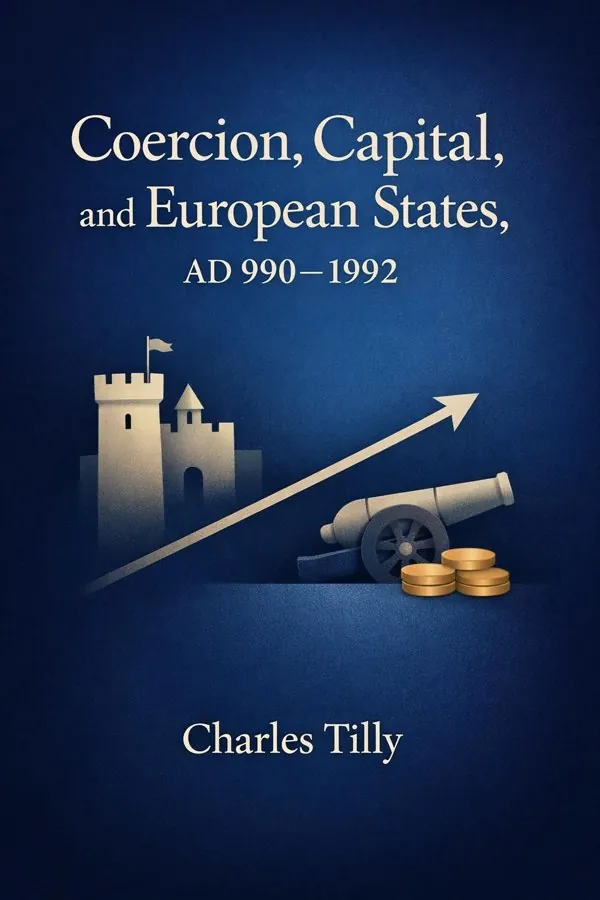
Coercion, Capital, and European States, AD 990–1992
Charles Tilly
10 min
Digital Democracy: Concepts, Methodologies, Tools, and Applications
Various Authors
10 min
Fascism
Stanley G. Payne
10 min
Fire And Fury: Inside The Trump White House
Michael Wolff
10 minBrowse by Category
Ready to read Common Sense?
Get the full summary and 100K+ more books with Fizz Moment.