
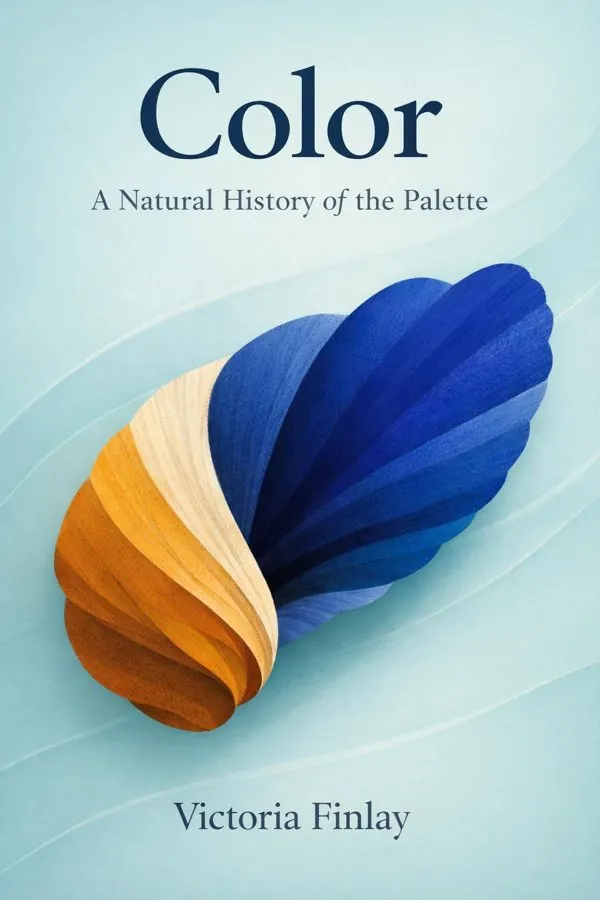
Color: A Natural History of the Palette: Summary & Key Insights
 10 min4 chaptersAudio available
What Is Color: A Natural History of the Palette About?
Color: A Natural History of the Palette by Victoria Finlay is a civilization book spanning 4 pages. A cultural and historical exploration of color, tracing the origins, trade, and symbolism of pigments and dyes across civilizations. The author travels the world to uncover the stories behind colors such as ochre, indigo, and ultramarine, blending art history, anthropology, and personal narrative.
This FizzRead summary covers all 4 key chapters of Color: A Natural History of the Palette in approximately 10 minutes, distilling the most important ideas, arguments, and takeaways from Victoria Finlay's work. Also available as an audio summary and Key Quotes Podcast.
Color: A Natural History of the Palette
A cultural and historical exploration of color, tracing the origins, trade, and symbolism of pigments and dyes across civilizations. The author travels the world to uncover the stories behind colors such as ochre, indigo, and ultramarine, blending art history, anthropology, and personal narrative.
Who Should Read Color: A Natural History of the Palette?
This book is perfect for anyone interested in civilization and looking to gain actionable insights in a short read. Whether you're a student, professional, or lifelong learner, the key ideas from Color: A Natural History of the Palette by Victoria Finlay will help you think differently.
- ✓Readers who enjoy civilization and want practical takeaways
- ✓Professionals looking to apply new ideas to their work and life
- ✓Anyone who wants the core insights of Color: A Natural History of the Palette in just 10 minutes
Want the full summary?
Get instant access to this book summary and 100K+ more with Fizz Moment.
Get Free SummaryAvailable on App Store • Free to download
Key Chapters
The story begins in the earth itself. Ochre is humanity’s oldest color—our first gesture of art and identity. I traveled to the Australian outback, to sacred Aboriginal sites where walls shimmer with ancient handprints. Those prints are whispers from ancestors who ground iron-rich stones into powder, mixing them with water, fat, or blood, and pressed their palms against rock. It was not vanity but ritual—an assertion of being. Across continents, from African caves to Paleolithic Europe, ochre marked burial rites and depictions of animals. Some scientists argue it symbolized fertility; others see it as a link to survival magic. But from all perspectives, it was communication before language.
When I handled a lump of ochre myself, I felt its duality: both earth and fire. Its red tint comes from heated transformation—the iron minerals oxidize, bleeding color from stone. Early humans, experimenting with temperature and mixture, were already practicing chemistry. In that primal curiosity lies the seed of art and science merging. And as I held that pigment, I understood that color was never frivolous for us. It was a bridge between flesh and spirit, an attempt to grasp permanence against transience.
Even today, ochre continues its quiet existence in native ceremonies and modern palettes. It reminds us that the pursuit of color began as an emotional need—to see ourselves mirrored in the world around us. We discovered that we could change the surface of reality; that our fingerprints could last millennia. Ochre is both beginning and philosophy: from the earth, we learned to dream.
Blue
Among all colors, blue has always been the most elusive and revered. It is the color of distance—of heavens and oceans we cannot touch. My pursuit of blue led me to Afghanistan, where the semi-precious stone lapis lazuli births the pigment ultramarine, once more valuable than gold. Centuries ago, merchants carried it across continents to Venice, where art dealers sold it in secrecy to patrons who demanded the Virgin Mary’s robes glow with divinity. What begins as a dull stone in remote mines ends as celestial miracle on canvas.
Chemically, ultramarine is fascinating—it resists fading but demands extraordinary labor to extract. Artists would grind, wash, and filter it repeatedly, coaxing the pure azure from impurities. This labor imbued the color with metaphorical weight: the perfection of heaven is hard-won. In my travels, I realized that every civilization revered blue differently. The Egyptians sought it through copper minerals for funerary adornment; the Chinese mastered indigo dye to drape emperors in calm authority; in medieval Europe, blue became a badge of truth and faith.
Yet blue’s story isn’t only sacred—it’s deeply human. It’s about longing. Throughout history, blue was rare because nature seldom grants it easily. That scarcity gave it mystery. Today, synthetic blues flood our lives—jeans, posters, screens—yet the emotion of blue persists. When people speak of melancholy, they say, “I’m feeling blue.” When we imagine infinity, we see a blue ocean stretching beyond thought.
In discovering blue’s origins, I learned that every desire to capture this color mirrors our desire to grasp the infinite. By grinding rock into powder, we tried to hold the sky.
+ 2 more chapters — available in the FizzRead app
All Chapters in Color: A Natural History of the Palette
About the Author
Victoria Finlay is a British writer and journalist known for her works on art, culture, and history. She has served as arts editor for The South China Morning Post and is recognized for her engaging narrative nonfiction style.
Get This Summary in Your Preferred Format
Read or listen to the Color: A Natural History of the Palette summary by Victoria Finlay anytime, anywhere. FizzRead offers multiple formats so you can learn on your terms — all free.
Available formats: App · Audio · PDF · EPUB — All included free with FizzRead
Download Color: A Natural History of the Palette PDF and EPUB Summary
Key Quotes from Color: A Natural History of the Palette
“Ochre is humanity’s oldest color—our first gesture of art and identity.”
“Among all colors, blue has always been the most elusive and revered.”
Frequently Asked Questions about Color: A Natural History of the Palette
Color: A Natural History of the Palette by Victoria Finlay is a civilization book that explores key ideas across 4 chapters. A cultural and historical exploration of color, tracing the origins, trade, and symbolism of pigments and dyes across civilizations. The author travels the world to uncover the stories behind colors such as ochre, indigo, and ultramarine, blending art history, anthropology, and personal narrative.
More by Victoria Finlay
You Might Also Like
The Structure of Scientific Revolutions
Thomas S. Kuhn
10 min
Genius
Harold Bloom
10 min
A Cultural History of the Medieval Age
Various Editors
10 min
A History of God: The 4,000-Year Quest of Judaism, Christianity and Islam
Karen Armstrong
10 min
A History of the World in 10½ Chapters
Julian Barnes
10 min
A Short History of Progress
Ronald Wright
10 minBrowse by Category
Ready to read Color: A Natural History of the Palette?
Get the full summary and 100K+ more books with Fizz Moment.