
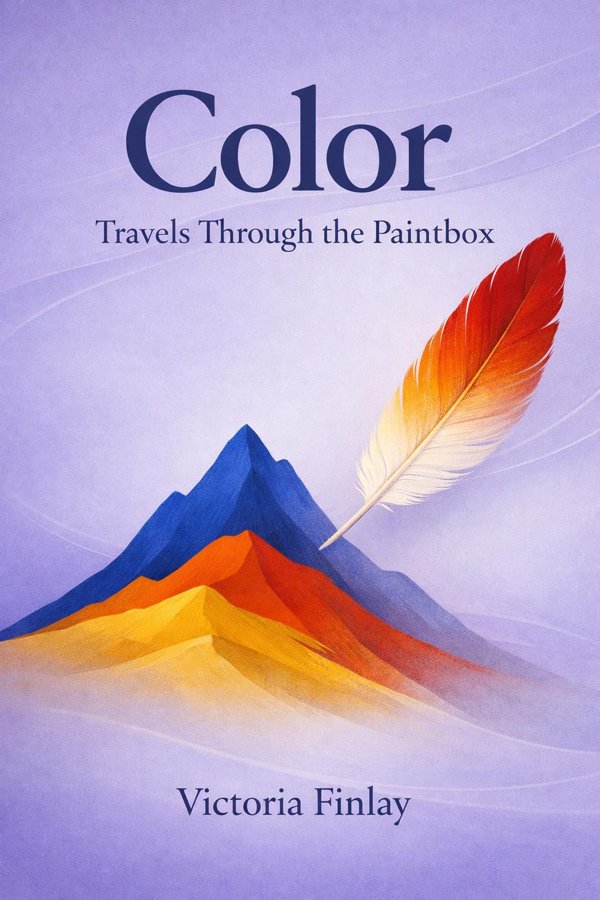
Color: Travels Through the Paintbox: Summary & Key Insights
 10 min9 chaptersAudio available
What Is Color: Travels Through the Paintbox About?
Color: Travels Through the Paintbox by Victoria Finlay is a art_history book spanning 9 pages. A fascinating exploration of the history, culture, and science behind colors, Victoria Finlay’s 'Color: Travels Through the Paintbox' takes readers on a global journey to uncover the origins and stories of pigments and dyes. From the ancient mines of Afghanistan to the cochineal farms of South America, Finlay reveals how color has shaped art, trade, and human imagination throughout history.
This FizzRead summary covers all 9 key chapters of Color: Travels Through the Paintbox in approximately 10 minutes, distilling the most important ideas, arguments, and takeaways from Victoria Finlay's work. Also available as an audio summary and Key Quotes Podcast.
Color: Travels Through the Paintbox
A fascinating exploration of the history, culture, and science behind colors, Victoria Finlay’s 'Color: Travels Through the Paintbox' takes readers on a global journey to uncover the origins and stories of pigments and dyes. From the ancient mines of Afghanistan to the cochineal farms of South America, Finlay reveals how color has shaped art, trade, and human imagination throughout history.
Who Should Read Color: Travels Through the Paintbox?
This book is perfect for anyone interested in art_history and looking to gain actionable insights in a short read. Whether you're a student, professional, or lifelong learner, the key ideas from Color: Travels Through the Paintbox by Victoria Finlay will help you think differently.
- ✓Readers who enjoy art_history and want practical takeaways
- ✓Professionals looking to apply new ideas to their work and life
- ✓Anyone who wants the core insights of Color: Travels Through the Paintbox in just 10 minutes
Want the full summary?
Get instant access to this book summary and 100K+ more with Fizz Moment.
Get Free SummaryAvailable on App Store • Free to download
Key Chapters
I began my journey deep in time — in the age before written language, when our ancestors dipped their fingers into earth and fire to make marks that still speak to us across millennia. Ochre, that humble reddish-brown pigment, was our first gesture of communication through color. In the caves of Lascaux and the cliffs of Australia, I stood before ochre figures drawn tens of thousands of years ago, their lines vivid and haunting. How could a substance so simple last so long, and mean so much? Ochre was more than a tint — it was a symbol. It stood for blood, for life, for ritual. Archaeologists have found burials dusted in red ochre, as if to send the dead into the next world cloaked in vitality. When I held a lump of ochre in my hand in the Australian outback, I felt as if I were touching the beginning of art itself.
Humanity’s use of ochre reveals our first understanding of transformation — how earth could become emotion. People ground stones, mixed them with animal fat or spit, and painted prayers on walls. That simple act marked the dawn of creativity. What fascinated me was that this pigment appears everywhere: in Africa, in Asia, in Europe — wherever humans settled. And the shades vary: from deep blood-reds to luminous golds, mirroring the diversity of the landscapes that produced them. Even today, in some communities, ochre retains its sacred role — used in spiritual ceremonies or as protective paint for the body. In its persistence, ochre tells a quiet truth: that color has always been a language of belonging, a bridge between the earthly and the divine.
Black and brown are the colors of memory, of soil, of ink — the hues that define edges and depth. In exploring them, I discovered that darkness itself has never been merely absence. Charcoal, burned from wood, was one of humanity’s first tools of expression, used for drawing animals that still leap from cave walls today. Later, artists used soot and sepia — pigments born of destruction and decay — to create profound images of light and sorrow. Black is paradoxical: it is both mourning and elegance, humility and mystery. The monks who illuminated medieval manuscripts used black ink made from oak galls — the product of tiny parasitic wasps — transforming nature’s wounds into art.
I found brown to be more elusive. Derived from umber, sienna, and burnt earth, it holds the warmth of humanity — the color of flesh, wood, and home. Yet it also carries austerity: the robes of Franciscans, the shadows of Caravaggio. When I visited the towns of Tuscany from which names like “raw sienna” originate, I realized that these places quite literally gave flesh to art. The hills themselves became paint. There’s poetry in that — how the ground we walk on can become the medium of our imagination. Black and brown remind us that color begins in matter, in the creativity of decay, in the acceptance that beauty often grows from ruin.
+ 7 more chapters — available in the FizzRead app
All Chapters in Color: Travels Through the Paintbox
About the Author
Victoria Finlay is a British writer and journalist known for her works on art, history, and culture. A former arts editor at The South China Morning Post, she has traveled extensively to research the origins of artistic materials. Her books, including 'Color' and 'Jewels', combine travel writing with cultural history.
Get This Summary in Your Preferred Format
Read or listen to the Color: Travels Through the Paintbox summary by Victoria Finlay anytime, anywhere. FizzRead offers multiple formats so you can learn on your terms — all free.
Available formats: App · Audio · PDF · EPUB — All included free with FizzRead
Download Color: Travels Through the Paintbox PDF and EPUB Summary
Key Quotes from Color: Travels Through the Paintbox
“I began my journey deep in time — in the age before written language, when our ancestors dipped their fingers into earth and fire to make marks that still speak to us across millennia.”
“Black and brown are the colors of memory, of soil, of ink — the hues that define edges and depth.”
Frequently Asked Questions about Color: Travels Through the Paintbox
Color: Travels Through the Paintbox by Victoria Finlay is a art_history book that explores key ideas across 9 chapters. A fascinating exploration of the history, culture, and science behind colors, Victoria Finlay’s 'Color: Travels Through the Paintbox' takes readers on a global journey to uncover the origins and stories of pigments and dyes. From the ancient mines of Afghanistan to the cochineal farms of South America, Finlay reveals how color has shaped art, trade, and human imagination throughout history.
More by Victoria Finlay
You Might Also Like
Studies In Impressionism
John Rewald
10 min
Art Since 1900: Modernism, Antimodernism, Postmodernism
Hal Foster, Rosalind E. Krauss, Yve-Alain Bois, Benjamin H. D. Buchloh
10 min
Art Since 1940: Strategies of Being
Jonathan Fineberg
10 min
Color and Meaning: Art, Science, and Symbolism
John Gage
10 min
Curatorial Activism: Towards an Ethics of Curating
Maura Reilly
10 min
How to Read a Painting: From Giotto to Jackson Pollock
Patrick De Rynck
10 minBrowse by Category
Ready to read Color: Travels Through the Paintbox?
Get the full summary and 100K+ more books with Fizz Moment.