
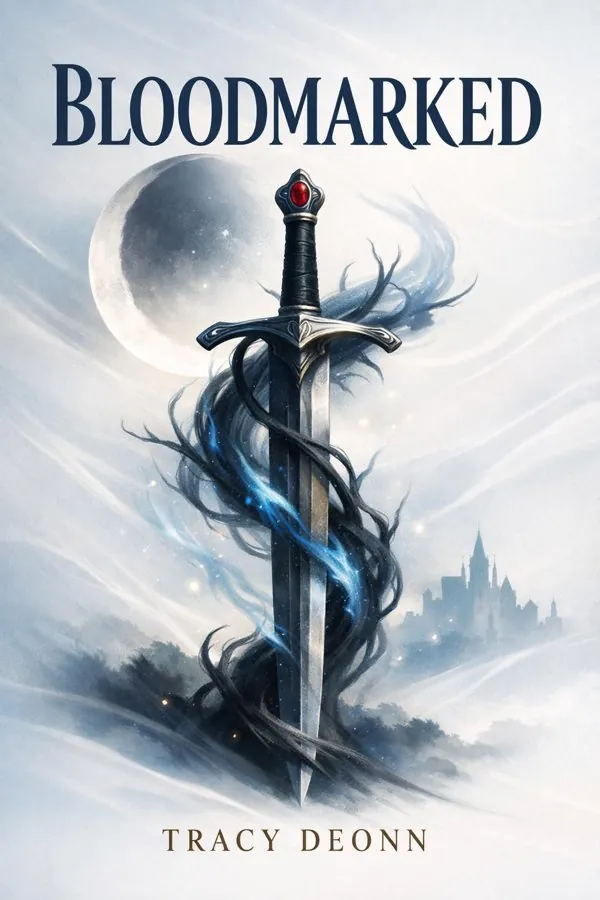
Bloodmarked: Summary & Key Insights
by Tracy Deonn
 10 min9 chaptersAudio available
Key Takeaways from Bloodmarked
One of the novel’s most compelling ideas is that power becomes dangerous when identity is split.
Institutions often claim to value honor until change exposes what they actually protect.
Grief changes when the dead stop feeling distant and start feeling unfinished.
The looming conflict in Bloodmarked is not just a battle between good and evil; it is the eruption of long-ignored damage.
In high-stakes stories, love is often treated as comfort.
What Is Bloodmarked About?
Bloodmarked by Tracy Deonn is a scifi_fantasy book spanning 8 pages. In Bloodmarked, Tracy Deonn takes the foundation she built in Legendborn and turns it into something darker, sharper, and more emotionally demanding. Bree Matthews is no longer just discovering a hidden magical world tied to Arthurian legend; she is living inside its consequences. As the newly revealed Scion of Arthur and the inheritor of Rootcraft power through her family line, Bree stands at the center of a conflict that is political, spiritual, and deeply personal. Every choice she makes now carries the weight of history, race, grief, and survival. What makes this novel matter is that it refuses to treat fantasy as an escape from real life. Instead, Deonn uses magic to examine inherited trauma, institutional exclusion, and the difficult work of self-definition. The result is a story that feels epic in scale while remaining intimate in emotion. Deonn’s academic background and her skill at blending Black cultural memory with Arthurian myth give the novel unusual authority and depth. Bloodmarked is not just a sequel that raises the stakes; it is a bold exploration of what power means when the systems around you were never built for you to belong.
This FizzRead summary covers all 9 key chapters of Bloodmarked in approximately 10 minutes, distilling the most important ideas, arguments, and takeaways from Tracy Deonn's work. Also available as an audio summary and Key Quotes Podcast.
Bloodmarked
In Bloodmarked, Tracy Deonn takes the foundation she built in Legendborn and turns it into something darker, sharper, and more emotionally demanding. Bree Matthews is no longer just discovering a hidden magical world tied to Arthurian legend; she is living inside its consequences. As the newly revealed Scion of Arthur and the inheritor of Rootcraft power through her family line, Bree stands at the center of a conflict that is political, spiritual, and deeply personal. Every choice she makes now carries the weight of history, race, grief, and survival.
What makes this novel matter is that it refuses to treat fantasy as an escape from real life. Instead, Deonn uses magic to examine inherited trauma, institutional exclusion, and the difficult work of self-definition. The result is a story that feels epic in scale while remaining intimate in emotion. Deonn’s academic background and her skill at blending Black cultural memory with Arthurian myth give the novel unusual authority and depth. Bloodmarked is not just a sequel that raises the stakes; it is a bold exploration of what power means when the systems around you were never built for you to belong.
Who Should Read Bloodmarked?
This book is perfect for anyone interested in scifi_fantasy and looking to gain actionable insights in a short read. Whether you're a student, professional, or lifelong learner, the key ideas from Bloodmarked by Tracy Deonn will help you think differently.
- ✓Readers who enjoy scifi_fantasy and want practical takeaways
- ✓Professionals looking to apply new ideas to their work and life
- ✓Anyone who wants the core insights of Bloodmarked in just 10 minutes
Want the full summary?
Get instant access to this book summary and 100K+ more with Fizz Moment.
Get Free SummaryAvailable on App Store • Free to download
Key Chapters
One of the novel’s most compelling ideas is that power becomes dangerous when identity is split. Bree is not simply gifted; she is burdened by two distinct inheritances that do not fit neatly together. On one side, she carries the legacy of the Legendborn Order as the Scion of Arthur, tied to a tradition built on hierarchy, ritual, and inherited authority. On the other, she is the descendant of Rootcraft, a magic shaped by Black history, ancestral memory, and communal protection. Bloodmarked asks what happens when a person is expected to choose between parts of herself that are both real, both powerful, and both costly.
This conflict is not just magical. It mirrors experiences many readers know well: feeling pulled between family expectations and institutional demands, between public identity and private truth, between systems that reward conformity and histories that demand remembrance. Bree’s difficulty controlling her powers reflects the emotional reality that unresolved identity often produces instability. The more others try to define her, the more volatile her power becomes.
Deonn shows that mastery does not come from rejecting one heritage in favor of another. It comes from enduring the pain of complexity long enough to build a self that can hold contradiction. Bree’s path suggests that integration is harder than allegiance, but far more honest.
In practical terms, this idea applies to anyone navigating multiple communities, traditions, or obligations. Instead of asking which part of yourself to abandon, ask what each part teaches you about strength, survival, and responsibility.
Actionable takeaway: When your roles or loyalties feel divided, name each inheritance clearly and decide how to honor both without erasing yourself.
Institutions often claim to value honor until change exposes what they actually protect. In Bloodmarked, the Legendborn Order is thrown into crisis after Bree’s rise as the Scion disrupts centuries of assumptions about bloodline, legitimacy, and belonging. The Order presents itself as noble and ancient, but its structure is deeply tied to exclusion. Bree’s presence forces members to confront a possibility they would rather avoid: perhaps their traditions have never been as just as they claimed.
The division within the Order is not merely political disagreement. It is a battle over who gets recognized as worthy. Some members fear Bree because she is powerful. Others fear her because she reveals the racial and cultural boundaries hidden beneath their rituals. Deonn is especially effective in showing how institutions preserve themselves through whispers, half-truths, procedural delay, and selective loyalty. Opposition does not always look like open hostility; often it looks like doubt framed as caution.
This idea resonates beyond fantasy. In schools, workplaces, and social groups, people from marginalized backgrounds are often welcomed symbolically but challenged materially the moment they change the balance of power. Bloodmarked captures the exhausting reality of proving oneself in systems that were never designed to affirm your presence.
The novel also suggests that reform from within is emotionally draining because the burden of transformation falls on the person already under scrutiny. Bree is expected to save the Order while also surviving its suspicion.
Actionable takeaway: When evaluating any institution, look beyond its stated values and ask who is trusted, who is doubted, and who is asked to carry the cost of change.
The looming conflict in Bloodmarked is not just a battle between good and evil; it is the eruption of long-ignored damage. Deonn makes clear that war rarely appears out of nowhere. It grows from buried injustice, denied accountability, and systems that prefer stability over truth. The supernatural threat pressing in on Bree and the Order gains power partly because the world they inhabit has failed to reckon with what it has inherited.
This is why the stakes feel so urgent. Every hidden history, every compromised alliance, and every moral shortcut becomes fuel for a larger reckoning. Bree’s struggle unfolds in a landscape where personal wounds and political violence are inseparable. The danger is external, but it is intensified by internal fracture. A divided Order, suppressed knowledge, and unresolved grief all make resistance harder.
This idea has practical significance beyond the novel. In real communities, conflict often escalates when underlying inequities are ignored for too long. Families fracture over old betrayals never addressed. Organizations fall into crisis after years of avoiding accountability. Nations repeat cycles of violence when they romanticize history instead of confronting it.
Bloodmarked does not promise that understanding the past will eliminate danger. It does suggest, however, that denial always makes danger worse. Bree must face not only enemies but the conditions that allow those enemies to thrive.
Readers can apply this lesson by paying attention to patterns rather than isolated incidents. When the same tension keeps returning, the issue is probably deeper than the latest event. Ask what older wound is being reactivated.
Actionable takeaway: Don’t treat crisis as random; trace it back to the unaddressed histories, compromises, or inequities that gave it room to grow.
In high-stakes stories, love is often treated as comfort. In Bloodmarked, love is pressure. Bree’s relationships are not escapes from conflict but arenas where conflict intensifies. Friendship, romance, mentorship, and family loyalty all become unstable when power shifts, secrets spread, and danger escalates. Deonn is interested in what loyalty demands when no option is clean and every alliance carries risk.
This emotional complexity makes the novel especially strong. Bree cannot simply trust feeling over reason or duty over desire. The people she cares about may support her, misunderstand her, protect her, or fail her, sometimes all at once. Love here is not the opposite of betrayal; it can exist alongside disappointment, fear, and conflicting obligations. That makes every relationship feel more human.
The practical insight is that intense circumstances reveal whether loyalty is rooted in control or respect. Some people want to help only if they can shape your choices. Others remain present even when they do not fully understand your path. Bree learns that being loved does not always mean being seen clearly, and being supported does not always mean being free.
This is a valuable lens for readers thinking about their own relationships. Under stress, ask: who listens to your reality, and who only responds to the version of you they prefer? Who honors your autonomy, and who mistakes closeness for entitlement?
Bloodmarked suggests that mature loyalty involves truth-telling, not just attachment. It requires staying connected without demanding ownership.
Actionable takeaway: Evaluate your closest bonds by one standard—do they make space for your full self, especially when your choices become difficult or inconvenient?
Sometimes leaving is not avoidance but survival. A major thread in Bloodmarked centers on movement away from the Order’s immediate control and into spaces where Bree can reconnect with other forms of knowledge, power, and community. This shift matters because growth often becomes impossible inside systems that only see you through their fear or expectation. By stepping outside the Order’s framework, Bree gains access to truths that would remain inaccessible within it.
Deonn reframes flight as strategic rather than cowardly. Bree’s distance from the center of institutional power allows her to see more clearly what that center distorts. She encounters traditions, histories, and people who offer alternatives to the Order’s rigid worldview. In doing so, she begins to imagine a self that is not merely reactive to judgment. This rediscovery is crucial because healing and mastery require environments where learning is possible.
The lesson applies widely. People often stay too long in settings that drain them because they confuse endurance with strength. But perspective frequently arrives only after stepping back from the voices that dominate your sense of self. Leaving a job, pausing a relationship, changing communities, or taking time alone can reveal what pressure had made invisible.
Importantly, Bloodmarked does not romanticize escape as permanent freedom. Distance is a tool, not a final answer. Bree still must return to conflict. Yet she returns altered, with wider context and a stronger internal compass.
Actionable takeaway: If a system keeps reducing you to your utility or your failures, create distance long enough to recover perspective and reconnect with sources of wisdom that affirm your fuller identity.
Leadership becomes real when every available option costs something. In Bloodmarked, the climactic conflict is not only about defeating an enemy; it is about deciding what kind of person Bree will become under unbearable pressure. The final battle forces her to confront competing responsibilities to herself, her loved ones, her ancestors, and the future. Deonn makes the stakes emotional as much as strategic, which gives Bree’s decisions moral weight.
The novel’s final movement shows that power alone does not make a leader. Bree has immense magical significance, but significance is not wisdom. Her defining quality emerges in how she navigates sacrifice, uncertainty, and the refusal of simple answers. She cannot preserve every relationship, satisfy every faction, or avoid loss. What matters is whether she acts in alignment with truth rather than fear.
This is a practical model for readers facing hard decisions of their own. We often delay action because we hope for a solution that harms no one and demands nothing from us. Bloodmarked insists that such moments may never come. Growth requires choosing based on values, not convenience. When the path is unclear, leadership means clarifying what you refuse to betray: your integrity, your responsibility, your compassion, or your commitment to justice.
The ending also reminds us that decisive action does not resolve everything. Sometimes the right choice opens new consequences rather than closure. That is not failure; it is the nature of meaningful responsibility.
Actionable takeaway: In moments of pressure, define the principle you are unwilling to abandon, and let that principle guide your choice when certainty is impossible.
Pain does not disappear when someone becomes powerful; often it becomes amplified. Bloodmarked is deeply concerned with the relationship between trauma and ability. Bree’s grief, fear, anger, and inherited wounds are not separate from her magic. They influence how she accesses power, how she responds to threat, and how she understands herself. Deonn refuses the fantasy trope that strength emerges cleanly from suffering. Instead, she shows that trauma can both sharpen perception and destabilize judgment.
This complexity matters because it makes Bree believable. She is not broken beyond function, nor healed by destiny. She is someone carrying too much, trying to act while still processing what has happened to her and what has been passed down to her. The novel suggests that surviving harm can create unusual insight, especially about danger, manipulation, and hidden truth. But it can also lead to hypervigilance, mistrust, and explosive reaction. Both realities coexist.
Readers can apply this theme by rethinking their own relationship to pain. Trauma-informed growth does not mean glamorizing damage or pretending wounds are gifts. It means recognizing that our hardest experiences shape our reflexes, strengths, and blind spots. If we do not name those effects, we may confuse survival habits for destiny.
Bloodmarked ultimately honors care as part of power. Regulation, support, and community are not signs of weakness; they are what make sustained action possible.
Actionable takeaway: Treat your pain as information, not identity—notice how it affects your reactions, then build practices and relationships that help you use your strength without being ruled by your wounds.
All Chapters in Bloodmarked
About the Author
Tracy Deonn is an American novelist whose work has earned widespread praise for blending fantasy, history, and contemporary social insight. She is best known for the Legendborn Cycle, a series that reimagines Arthurian mythology through the lens of Southern Black culture, inherited trauma, and questions of belonging. Before becoming a full-time author, Deonn studied and worked in fields connected to storytelling, performance, and cultural analysis, influences that can be felt in the depth and precision of her fiction. Her debut novel, Legendborn, received critical acclaim and multiple honors for its originality and emotional power. With Bloodmarked, she continued to establish herself as one of the most distinctive voices in modern young adult fantasy, admired for creating stories that are both thrilling and deeply resonant.
Get This Summary in Your Preferred Format
Read or listen to the Bloodmarked summary by Tracy Deonn anytime, anywhere. FizzRead offers multiple formats so you can learn on your terms — all free.
Available formats: App · Audio · PDF · EPUB — All included free with FizzRead
Download Bloodmarked PDF and EPUB Summary
Key Quotes from Bloodmarked
“One of the novel’s most compelling ideas is that power becomes dangerous when identity is split.”
“Institutions often claim to value honor until change exposes what they actually protect.”
“Grief changes when the dead stop feeling distant and start feeling unfinished.”
“The looming conflict in Bloodmarked is not just a battle between good and evil; it is the eruption of long-ignored damage.”
“In high-stakes stories, love is often treated as comfort.”
Frequently Asked Questions about Bloodmarked
Bloodmarked by Tracy Deonn is a scifi_fantasy book that explores key ideas across 9 chapters. In Bloodmarked, Tracy Deonn takes the foundation she built in Legendborn and turns it into something darker, sharper, and more emotionally demanding. Bree Matthews is no longer just discovering a hidden magical world tied to Arthurian legend; she is living inside its consequences. As the newly revealed Scion of Arthur and the inheritor of Rootcraft power through her family line, Bree stands at the center of a conflict that is political, spiritual, and deeply personal. Every choice she makes now carries the weight of history, race, grief, and survival. What makes this novel matter is that it refuses to treat fantasy as an escape from real life. Instead, Deonn uses magic to examine inherited trauma, institutional exclusion, and the difficult work of self-definition. The result is a story that feels epic in scale while remaining intimate in emotion. Deonn’s academic background and her skill at blending Black cultural memory with Arthurian myth give the novel unusual authority and depth. Bloodmarked is not just a sequel that raises the stakes; it is a bold exploration of what power means when the systems around you were never built for you to belong.
More by Tracy Deonn
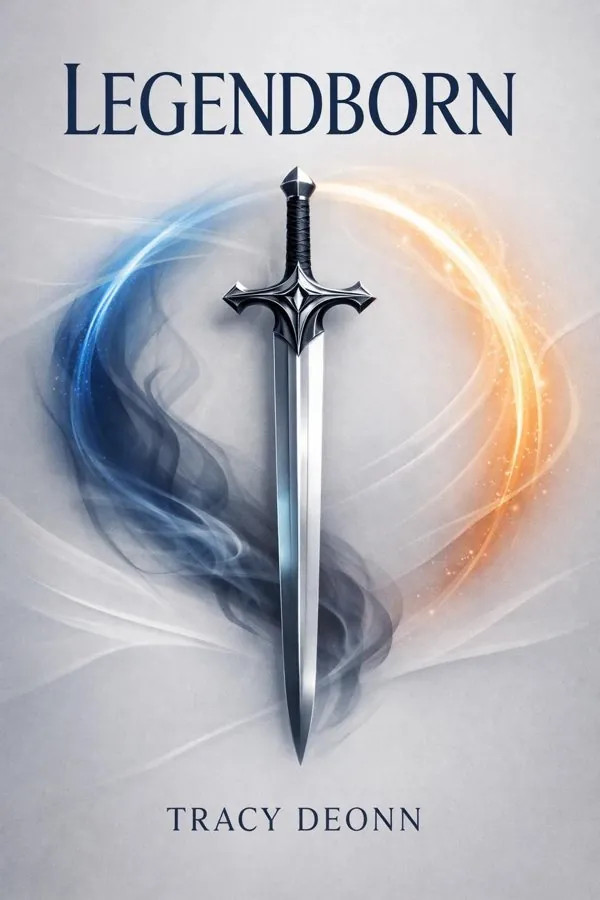
You Might Also Like
Red Rising
Pierce Brown
10 min
Stranger in a Strange Land
Robert A. Heinlein
10 min
AI Valley
Chen Qiufan
10 min
Bloodchild
Octavia E. Butler
10 min
Do Androids Dream of Electric Sheep?
Philip K. Dick
10 min
Jujutsu Kaisen, Vol. 24
Gege Akutami
10 minBrowse by Category
Ready to read Bloodmarked?
Get the full summary and 100K+ more books with Fizz Moment.