
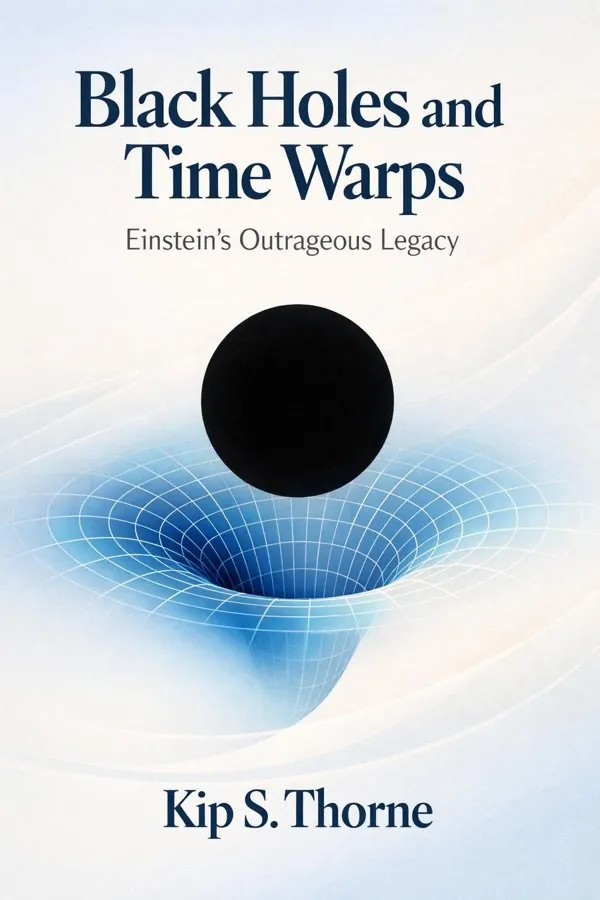
Black Holes and Time Warps: Einstein’s Outrageous Legacy: Summary & Key Insights
 10 min11 chaptersAudio available
What Is Black Holes and Time Warps: Einstein’s Outrageous Legacy About?
Black Holes and Time Warps: Einstein’s Outrageous Legacy by Kip S. Thorne is a space_physics book spanning 11 pages. A landmark work of popular science, this book explores the history and physics of black holes, relativity, and the nature of time. Thorne, one of the world’s leading theoretical physicists, traces the development of ideas from Einstein’s general relativity to modern astrophysics, explaining how black holes were once dismissed as impossible and later became central to our understanding of the universe. The book combines scientific rigor with accessible storytelling, offering insights into the people and discoveries that shaped modern cosmology.
This FizzRead summary covers all 11 key chapters of Black Holes and Time Warps: Einstein’s Outrageous Legacy in approximately 10 minutes, distilling the most important ideas, arguments, and takeaways from Kip S. Thorne's work. Also available as an audio summary and Key Quotes Podcast.
Black Holes and Time Warps: Einstein’s Outrageous Legacy
A landmark work of popular science, this book explores the history and physics of black holes, relativity, and the nature of time. Thorne, one of the world’s leading theoretical physicists, traces the development of ideas from Einstein’s general relativity to modern astrophysics, explaining how black holes were once dismissed as impossible and later became central to our understanding of the universe. The book combines scientific rigor with accessible storytelling, offering insights into the people and discoveries that shaped modern cosmology.
Who Should Read Black Holes and Time Warps: Einstein’s Outrageous Legacy?
This book is perfect for anyone interested in space_physics and looking to gain actionable insights in a short read. Whether you're a student, professional, or lifelong learner, the key ideas from Black Holes and Time Warps: Einstein’s Outrageous Legacy by Kip S. Thorne will help you think differently.
- ✓Readers who enjoy space_physics and want practical takeaways
- ✓Professionals looking to apply new ideas to their work and life
- ✓Anyone who wants the core insights of Black Holes and Time Warps: Einstein’s Outrageous Legacy in just 10 minutes
Want the full summary?
Get instant access to this book summary and 100K+ more with Fizz Moment.
Get Free SummaryAvailable on App Store • Free to download
Key Chapters
When Einstein introduced his general theory of relativity in 1915, he asked us to abandon centuries of intuition about space and gravity. Newton’s universe had been one of predictable forces acting at a distance, ruled by an invisible hand of gravity pulling the Earth toward the Sun. Einstein replaced that idea with something far stranger and infinitely more beautiful: gravity was not a force at all but the geometry of spacetime itself.
In Einstein’s view, massive bodies like stars and planets don’t tug on each other through an invisible medium; instead, they curve the very fabric of space and time around them, and objects move along those curves in the most natural way possible. It’s a shift from force to shape, from pull to geometry. With this idea, Einstein opened the door to a world where time dilates, space contracts, and light itself can be imprisoned by gravity.
But the revolution was deeper than physics—it was philosophical. It said that reality is dynamic, that spacetime can flex and vibrate. Einstein’s equations predicted not just the orbits of planets but the bending of starlight, the slowing of clocks, and, ultimately, the existence of black holes.
The early triumphs came swiftly. In 1919, Arthur Eddington’s expedition confirmed that the Sun’s gravity bent starlight during an eclipse, catapulting Einstein to international fame. Yet even as his work gained notoriety, some of its implications appeared utterly unthinkable. The equations were too rich, too strange. Their full meaning would take decades to unfold.
Shortly after Einstein published general relativity, Karl Schwarzschild, working in the mud of the Russian front during World War I, found an exact solution to Einstein’s equations describing the gravitational field outside a spherical mass. That solution seemed innocent at first, merely a mathematical curiosity, until it revealed an alarming feature—a radius beyond which the equations broke down.
This boundary, now known as the Schwarzschild radius, hinted at a singularity: a place where space and time would end, where the known laws of physics would fail completely. To Einstein’s mind, and to most of his contemporaries, this was absurd. Nature, they believed, could never allow such an extreme state to exist. For decades, singularities and so-called “frozen stars” were dismissed as artifacts of faulty mathematics.
What I find fascinating about this period is how human it was. Science, for all its logic, is shaped by emotion and temperament. Einstein himself could not accept the possibility of objects that trapped light. For him, the universe was a harmonious continuum, not a monster-filled abyss. And yet, the mathematics was relentless. It whispered of collapse and no return.
The seeds were planted. Though dormant, they would later bloom into the modern concept of the black hole. It took not just mathematical rigor, but also a shift in imagination—to see that what seemed impossible might be the key to understanding gravity itself.
+ 9 more chapters — available in the FizzRead app
All Chapters in Black Holes and Time Warps: Einstein’s Outrageous Legacy
About the Author
Kip S. Thorne is an American theoretical physicist known for his contributions to gravitation physics and astrophysics. He was a longtime professor at the California Institute of Technology and a co-founder of the LIGO project, which detected gravitational waves. Thorne is also a Nobel laureate in Physics and has written extensively to make complex scientific ideas accessible to the public.
Get This Summary in Your Preferred Format
Read or listen to the Black Holes and Time Warps: Einstein’s Outrageous Legacy summary by Kip S. Thorne anytime, anywhere. FizzRead offers multiple formats so you can learn on your terms — all free.
Available formats: App · Audio · PDF · EPUB — All included free with FizzRead
Download Black Holes and Time Warps: Einstein’s Outrageous Legacy PDF and EPUB Summary
Key Quotes from Black Holes and Time Warps: Einstein’s Outrageous Legacy
“When Einstein introduced his general theory of relativity in 1915, he asked us to abandon centuries of intuition about space and gravity.”
“That solution seemed innocent at first, merely a mathematical curiosity, until it revealed an alarming feature—a radius beyond which the equations broke down.”
Frequently Asked Questions about Black Holes and Time Warps: Einstein’s Outrageous Legacy
Black Holes and Time Warps: Einstein’s Outrageous Legacy by Kip S. Thorne is a space_physics book that explores key ideas across 11 chapters. A landmark work of popular science, this book explores the history and physics of black holes, relativity, and the nature of time. Thorne, one of the world’s leading theoretical physicists, traces the development of ideas from Einstein’s general relativity to modern astrophysics, explaining how black holes were once dismissed as impossible and later became central to our understanding of the universe. The book combines scientific rigor with accessible storytelling, offering insights into the people and discoveries that shaped modern cosmology.
More by Kip S. Thorne
You Might Also Like
The Means Of Prediction
Mark P. Silverman
10 min
AstroTech
Various Authors
10 min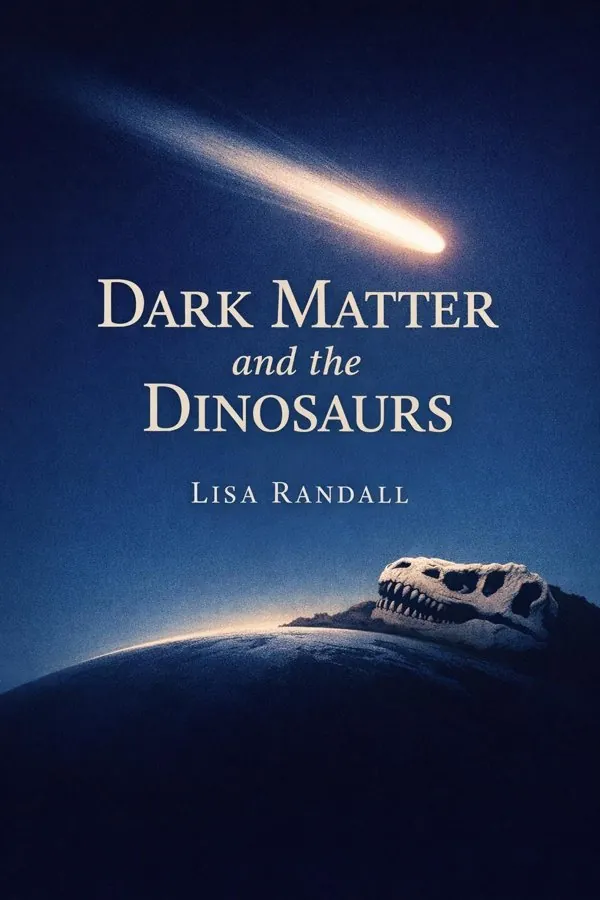
Dark Matter and the Dinosaurs: The Astounding Interconnectedness of the Universe
Lisa Randall
10 min
Helgoland
Carlo Rovelli
10 min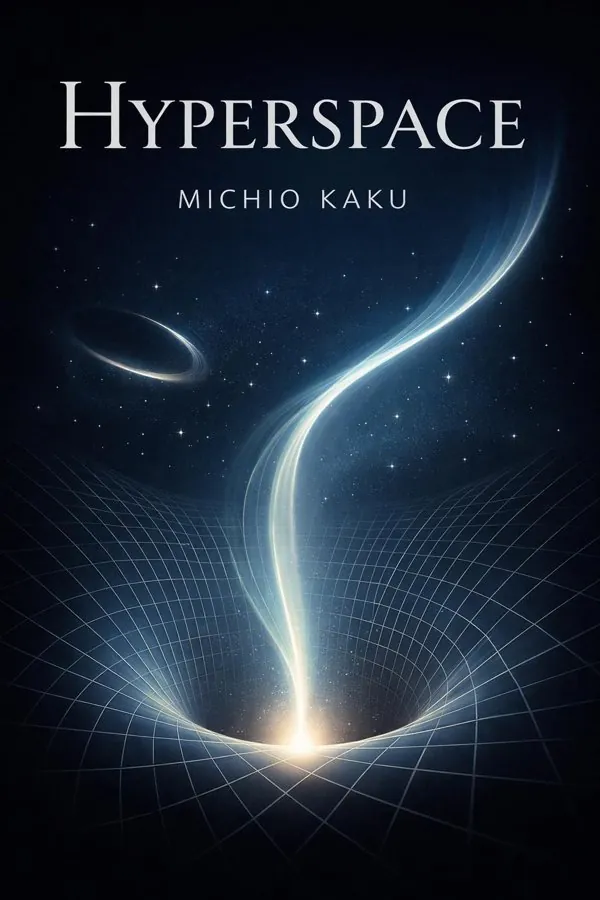
Hyperspace: A Scientific Odyssey Through Parallel Universes, Time Warps, and the 10th Dimension
Michio Kaku
10 min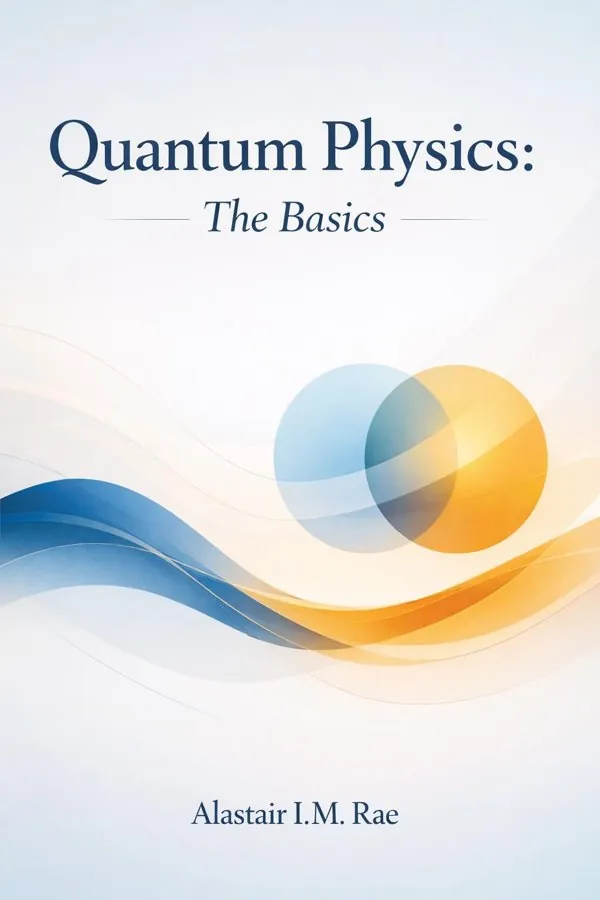
Quantum Physics: The Basics
Alastair I.M. Rae
10 minBrowse by Category
Ready to read Black Holes and Time Warps: Einstein’s Outrageous Legacy?
Get the full summary and 100K+ more books with Fizz Moment.