

Michel Foucault Books
Michel Foucault (1926–1984) was a French philosopher, historian of ideas, and social theorist. His work profoundly influenced contemporary philosophy, sociology, and cultural studies, particularly through his analyses of power, knowledge, and institutional structures.
Known for: Discipline and Punish: The Birth of the Prison, Madness and Civilization: A History of Insanity in the Age of Reason, The Archaeology of Knowledge, The Birth Of The Clinic: An Archaeology Of Medical Perception, The History of Sexuality, Volume 1: An Introduction, The Order of Things: An Archaeology of the Human Sciences
Books by Michel Foucault
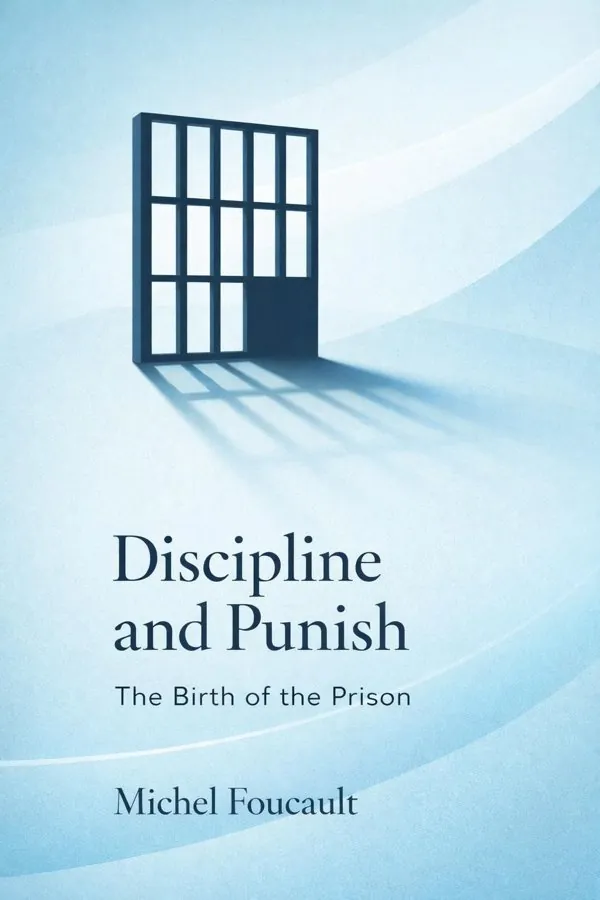
Discipline and Punish: The Birth of the Prison
Originally published in 1975, Discipline and Punish is Michel Foucault’s groundbreaking history of how modern societies learned to control people not mainly through spectacular violence, but through q...
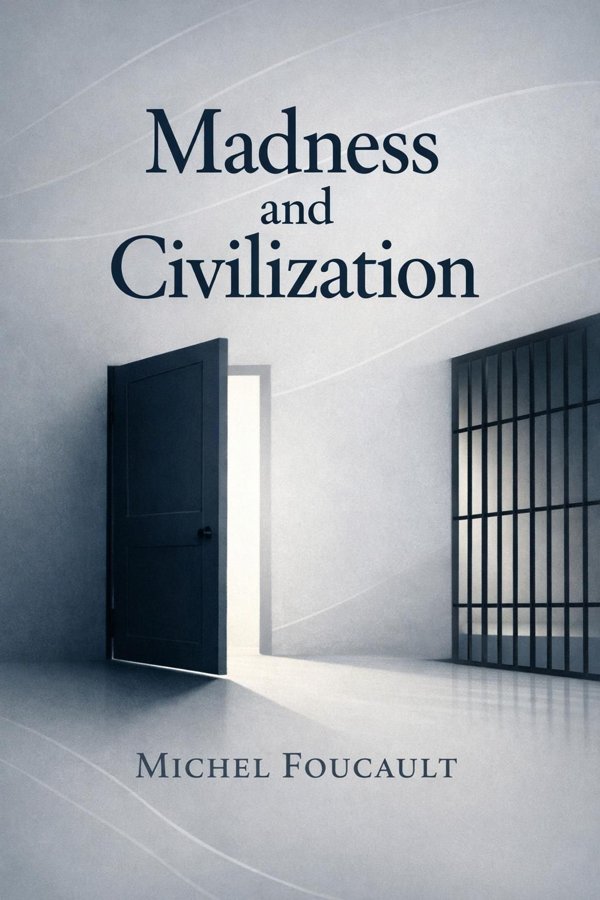
Madness and Civilization: A History of Insanity in the Age of Reason
First published in English in 1965, this landmark work by Michel Foucault traces the cultural and institutional history of madness in Western civilization from the Renaissance to the modern era. Fouca...

The Archaeology of Knowledge
Originally published in 1969, The Archaeology of Knowledge is Michel Foucault’s most explicit statement of method and one of the defining works of twentieth-century philosophy. Rather than telling a f...

The Birth Of The Clinic: An Archaeology Of Medical Perception
In this influential work, Michel Foucault examines the historical transformation of medical knowledge at the end of the eighteenth century. He explores how the emergence of the clinical gaze redefined...

The History of Sexuality, Volume 1: An Introduction
Michel Foucault’s The History of Sexuality, Volume 1: An Introduction is one of the most influential works of modern philosophy because it overturns a deeply familiar story: that Western society simpl...

The Order of Things: An Archaeology of the Human Sciences
Originally published in French in 1966 as Les Mots et les Choses, The Order of Things is Michel Foucault’s bold investigation into the hidden rules that make knowledge possible in different historical...
Key Insights from Michel Foucault
Torture as Sovereign Power on Display
Punishment once aimed less at reforming the criminal than at dramatizing the ruler’s power. Foucault opens with the 1757 execution of Robert-Francois Damiens, who attempted to assassinate the French king. The horrifying details are not included for shock alone. They reveal a political logic: the cri...
From Discipline and Punish: The Birth of the Prison
Punishment Becomes Rational and Calculated
What if a penal system could punish more effectively by seeming less brutal? In the late eighteenth century, reformers such as Cesare Beccaria and Jeremy Bentham criticized arbitrary cruelty and demanded a justice system based on reason, regularity, and proportionality. Punishment, they argued, shou...
From Discipline and Punish: The Birth of the Prison
Discipline Creates Obedient and Useful Bodies
The most powerful forms of control do not need chains when they can shape the body itself. In the central section of the book, Foucault introduces discipline as a modern technology of power. Unlike sovereign power, which punishes dramatically and from above, disciplinary power works through small, r...
From Discipline and Punish: The Birth of the Prison
The Prison Expands into a Carceral Network
Prison seems like the obvious punishment for crime today, but Foucault asks a startling question: why did imprisonment become so natural, even though it often fails on its own stated terms? His answer is that the prison belongs to a much wider carceral network. It is not an isolated institution but ...
From Discipline and Punish: The Birth of the Prison
Surveillance Works Best When Internalized
The most effective observer is the one you carry inside yourself. Foucault’s most famous image in the book is Bentham’s Panopticon, a prison design in which inmates can be seen from a central tower without ever knowing whether they are being watched at a given moment. Because visibility is constant ...
From Discipline and Punish: The Birth of the Prison
The Examination Produces Modern Individuals
Modern institutions do not simply observe people; they turn them into cases. Foucault argues that one of discipline’s most important tools is the examination, which combines surveillance with judgment. Through tests, medical assessments, inspections, interviews, report cards, personnel files, and ca...
From Discipline and Punish: The Birth of the Prison
About Michel Foucault
Michel Foucault (1926–1984) was a French philosopher, historian of ideas, and social theorist. His work profoundly influenced contemporary philosophy, sociology, and cultural studies, particularly through his analyses of power, knowledge, and institutional structures. Foucault’s major works include ...
Read more
Michel Foucault (1926–1984) was a French philosopher, historian of ideas, and social theorist. His work profoundly influenced contemporary philosophy, sociology, and cultural studies, particularly through his analyses of power, knowledge, and institutional structures. Foucault’s major works include ...
Michel Foucault (1926–1984) was a French philosopher, historian of ideas, and social theorist. His work profoundly influenced contemporary philosophy, sociology, and cultural studies, particularly through his analyses of power, knowledge, and institutional structures. Foucault’s major works include 'The History of Sexuality' and 'Madness and Civilization.'


Frequently Asked Questions
Michel Foucault (1926–1984) was a French philosopher, historian of ideas, and social theorist. His work profoundly influenced contemporary philosophy, sociology, and cultural studies, particularly through his analyses of power, knowledge, and institutional structures.
Read Michel Foucault's books in 15 minutes
Get AI-powered summaries with key insights from 6 books by Michel Foucault.