
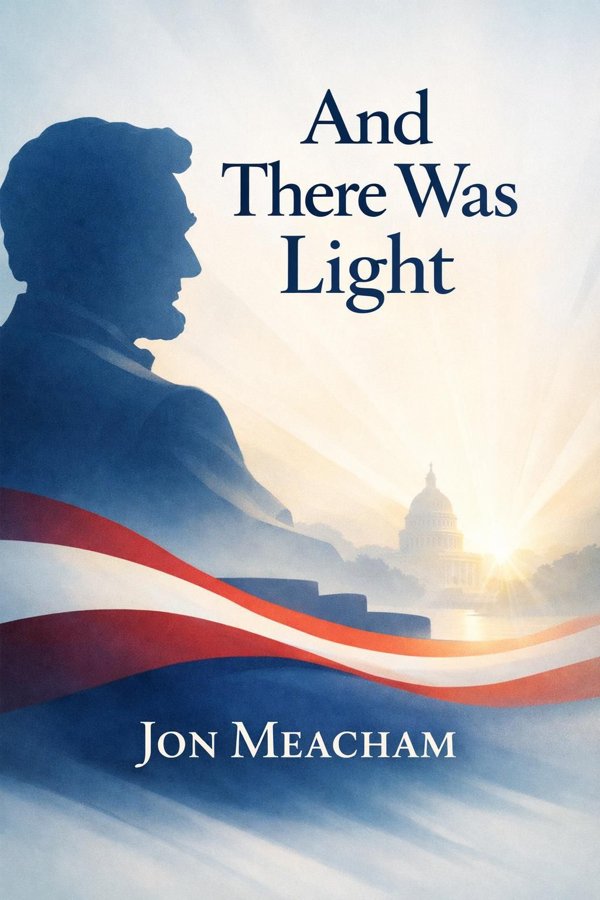
And There Was Light: Abraham Lincoln and the American Struggle: Summary & Key Insights
by Jon Meacham
 10 min10 chaptersAudio available
Key Takeaways from And There Was Light: Abraham Lincoln and the American Struggle
Great leaders are often formed long before they hold office, in places where pain teaches them how other people suffer.
Politics is never only about policy; it is also a public test of temperament, trust, and purpose.
A nation can postpone a moral crisis, but it cannot escape it forever.
Ideas matter most when they are expressed in language strong enough to travel.
The true measure of leadership appears when events outrun preparation.
What Is And There Was Light: Abraham Lincoln and the American Struggle About?
And There Was Light: Abraham Lincoln and the American Struggle by Jon Meacham is a biographies book spanning 10 pages. And There Was Light: Abraham Lincoln and the American Struggle is far more than a chronological account of a president’s life. In this sweeping and deeply human biography, Jon Meacham explores how Abraham Lincoln grew from a poor frontier boy into the leader who guided the United States through its gravest moral and political crisis. The book is not only about Lincoln’s rise, but about the inner forces that shaped him: sorrow, ambition, reading, faith, empathy, and an expanding conviction that slavery was incompatible with the nation’s ideals. What makes this book matter is Meacham’s central insight that Lincoln did not begin as a flawless moral hero. He evolved. He learned. He responded to events with increasing clarity and courage. That journey makes Lincoln more relevant, not less, because it suggests that democratic leadership is forged through struggle rather than perfection. Meacham brings unusual authority to this subject. As a Pulitzer Prize-winning historian and acclaimed biographer of American presidents, he combines narrative grace with rigorous research, placing Lincoln’s decisions within the broader contest over race, union, liberty, and national purpose.
This FizzRead summary covers all 10 key chapters of And There Was Light: Abraham Lincoln and the American Struggle in approximately 10 minutes, distilling the most important ideas, arguments, and takeaways from Jon Meacham's work. Also available as an audio summary and Key Quotes Podcast.
And There Was Light: Abraham Lincoln and the American Struggle
And There Was Light: Abraham Lincoln and the American Struggle is far more than a chronological account of a president’s life. In this sweeping and deeply human biography, Jon Meacham explores how Abraham Lincoln grew from a poor frontier boy into the leader who guided the United States through its gravest moral and political crisis. The book is not only about Lincoln’s rise, but about the inner forces that shaped him: sorrow, ambition, reading, faith, empathy, and an expanding conviction that slavery was incompatible with the nation’s ideals.
What makes this book matter is Meacham’s central insight that Lincoln did not begin as a flawless moral hero. He evolved. He learned. He responded to events with increasing clarity and courage. That journey makes Lincoln more relevant, not less, because it suggests that democratic leadership is forged through struggle rather than perfection.
Meacham brings unusual authority to this subject. As a Pulitzer Prize-winning historian and acclaimed biographer of American presidents, he combines narrative grace with rigorous research, placing Lincoln’s decisions within the broader contest over race, union, liberty, and national purpose.
Who Should Read And There Was Light: Abraham Lincoln and the American Struggle?
This book is perfect for anyone interested in biographies and looking to gain actionable insights in a short read. Whether you're a student, professional, or lifelong learner, the key ideas from And There Was Light: Abraham Lincoln and the American Struggle by Jon Meacham will help you think differently.
- ✓Readers who enjoy biographies and want practical takeaways
- ✓Professionals looking to apply new ideas to their work and life
- ✓Anyone who wants the core insights of And There Was Light: Abraham Lincoln and the American Struggle in just 10 minutes
Want the full summary?
Get instant access to this book summary and 100K+ more with Fizz Moment.
Get Free SummaryAvailable on App Store • Free to download
Key Chapters
Great leaders are often formed long before they hold office, in places where pain teaches them how other people suffer. Meacham shows that Lincoln’s early life in Kentucky and Indiana was marked by poverty, physical labor, isolation, and loss. He grew up in a world of crude cabins, hard soil, and few comforts. The death of his mother, Nancy Hanks Lincoln, left a wound that never fully healed, and that early sorrow deepened his melancholy and emotional seriousness. Yet hardship did not make him bitter. It made him observant.
Lincoln’s education was irregular, but his hunger for learning was intense. He read whatever he could find and trained himself to think carefully, speak plainly, and reason from first principles. This habit of self-education mattered because it gave him both intellectual independence and moral depth. He was not shaped by elite institutions; he was shaped by struggle, books, and reflection.
Meacham argues that these frontier experiences gave Lincoln a rare ability to connect with ordinary Americans. He understood toil because he had lived it. He understood grief because he had endured it. He understood aspiration because he had climbed slowly, without inherited privilege. In modern terms, Lincoln’s emotional credibility came from lived experience, not branding.
A practical lesson emerges here for readers in leadership, public service, or management. Adversity can become a source of wisdom if we process it honestly rather than deny it. Personal difficulty, when paired with reflection, can sharpen empathy and judgment.
Actionable takeaway: Treat your own hardships as material for moral growth—write about them, reflect on them, and ask how they can make you more compassionate and more grounded in the realities others face.
Politics is never only about policy; it is also a public test of temperament, trust, and purpose. Lincoln’s entry into politics in Illinois revealed these qualities early. Meacham describes a young man drawn to the Whig vision of national improvement: roads, commerce, industry, education, and economic mobility. Lincoln admired Henry Clay not simply because of party loyalty, but because Clay represented a hopeful idea of America as a place where government could help create opportunity.
Lincoln’s early political life was modest. He served in the Illinois legislature, built a law practice, and developed a reputation for honesty, discipline, and practical intelligence. These years mattered because they taught him how institutions work, how coalitions are built, and how persuasion often succeeds where moral outrage alone cannot. He was ambitious, certainly, but his ambition was tied to a larger vision of public usefulness.
Meacham also emphasizes that Lincoln’s political maturation involved restraint. He learned when to speak boldly and when to wait. He learned that public life rewards those who can translate principle into language others can accept. This is not cynicism; it is democratic realism. In any pluralistic society, durable change depends on credibility and timing.
For modern readers, this section offers a corrective to the fantasy that effective leadership is mostly charisma or ideological purity. Lincoln’s rise came through steady preparation, reputation-building, and patient engagement with systems many people dismiss as slow or compromised.
Actionable takeaway: If you want influence, build it through competence and trust over time—master the details of your field, keep your word, and connect your personal ambition to a purpose larger than yourself.
A nation can postpone a moral crisis, but it cannot escape it forever. One of Meacham’s most important contributions is showing Lincoln’s changing relationship to slavery not as a simple tale of instant enlightenment, but as an evolution shaped by conscience, politics, and events. Lincoln always disliked slavery, but his views developed over time from opposition to its expansion into a deeper recognition that the institution was a fundamental evil threatening both the republic and the soul of the nation.
He had to navigate a country in which racism was widespread, constitutional limits were real, and open abolitionism could fracture political support. Meacham resists flattening this complexity. Lincoln was not initially a modern egalitarian, yet he increasingly grasped that slavery could not be morally contained. The Kansas-Nebraska Act, the spread of pro-slavery power, and the judicial logic of decisions like Dred Scott pushed him toward clearer and stronger resistance.
What stands out is Lincoln’s habit of grounding moral claims in the nation’s founding language. He returned again and again to the Declaration of Independence and its assertion that all men are created equal. He used America’s own ideals as leverage against its injustices. That strategy remains powerful today: reform often gains force when it reveals the gap between professed values and lived reality.
This chapter has practical relevance far beyond nineteenth-century history. Institutions, companies, and communities often tolerate wrongs because confronting them appears disruptive. Lincoln’s story reminds us that delay has costs, and moral ambiguity tends to strengthen the status quo.
Actionable takeaway: Identify one injustice or harmful norm in your environment that people have learned to normalize, and begin addressing it by appealing to the core values your group already claims to uphold.
Ideas matter most when they are expressed in language strong enough to travel. The Lincoln-Douglas debates transformed Lincoln from a regional politician into a national moral and intellectual force. Meacham presents these encounters not merely as campaign events, but as a public struggle over the meaning of democracy, equality, and the future of the republic.
Stephen Douglas argued for popular sovereignty, the idea that settlers in each territory should decide the slavery question for themselves. On the surface, this sounded democratic. Lincoln recognized the danger: if slavery is treated as a matter of preference, then moral truth is surrendered to convenience and power. He insisted that the issue was not simply local self-government, but whether one human being could rightfully own another.
The debates sharpened Lincoln’s public voice. He learned how to combine logic with moral seriousness, and how to criticize slavery without losing touch with voters who feared sudden upheaval. Meacham highlights Lincoln’s ability to speak in a way that was elevated but accessible. He did not lecture the public from above; he reasoned with them.
In contemporary life, this is an essential leadership skill. Whether in civic advocacy, business, education, or community organizing, people rarely move because facts alone are available. They move when someone frames those facts in a way that clarifies what is at stake and why it matters now.
Actionable takeaway: When advocating for an important cause, do not only state your position. Practice explaining why the issue is moral, not merely procedural, and do so in clear language that thoughtful skeptics can still hear.
The true measure of leadership appears when events outrun preparation. Lincoln’s election in 1860 triggered secession, panic, and the collapse of old political assumptions. Meacham shows how astonishingly difficult Lincoln’s first months were: Southern states were leaving the Union, federal authority was weakening, and many doubted whether the republic itself could survive. In that environment, Lincoln’s greatest initial achievement was steadiness.
He understood that disunion was not merely a political dispute but a direct challenge to constitutional government. If secession succeeded, democratic elections would become provisional, valid only when losers approved the result. Lincoln therefore treated the preservation of the Union as both a practical necessity and a moral principle. At the same time, he avoided needless provocation. He was firm without theatrics.
Once war began, his burdens multiplied. He managed generals, factions within his cabinet, hostile newspapers, impatient radicals, cautious moderates, and grief on the battlefield. Meacham emphasizes that Lincoln’s wartime leadership was neither effortless nor consistently popular. He made mistakes, revised strategies, and endured relentless criticism. But he kept learning. He listened widely, absorbed conflicting advice, and slowly improved his command over military and political realities.
This is a valuable model for anyone leading through uncertainty. Crisis rarely allows perfect information or universally satisfying choices. Effective leaders create stability not by pretending certainty, but by preserving clarity of mission while adapting in method.
Actionable takeaway: In a crisis, define the non-negotiable principle you must protect, communicate it consistently, and remain flexible about tactics as new information emerges.
History often presents moral action and political necessity as opposites, but Lincoln’s genius was learning how they could reinforce each other. Meacham treats the Emancipation Proclamation as the result of Lincoln’s deepening conviction that saving the Union and ending slavery had become inseparable. By 1862, the war had revealed that slavery was not peripheral to the conflict; it was central to the Confederacy’s power, economy, and purpose.
Lincoln moved carefully. He knew that a premature proclamation might alienate border states, divide the North, or appear desperate if issued amid military defeat. So he waited for the right moment, linking emancipation to wartime authority and announcing it after Antietam. Critics then and now have debated the limits of the Proclamation, since it did not free every enslaved person instantly. Meacham’s point is that it changed the character of the war. It made abolition a Union aim, authorized Black military service, and placed the federal government unmistakably on the side of freedom.
The practical lesson here is that transformative decisions are often prepared long before they are announced. Timing is not moral weakness when the delay serves effectiveness rather than avoidance. Lincoln showed that courageous action can be strategic without becoming cynical.
In organizations and public life, leaders often face moments when principle must be translated into policy under difficult constraints. The challenge is to move decisively enough to matter, while building the conditions for success.
Actionable takeaway: If you are facing a major value-based decision, prepare it rigorously, choose your moment carefully, and ensure the action changes the underlying direction of events rather than merely signaling virtue.
In times of catastrophe, people do not only ask what to do; they ask what suffering means. Meacham pays close attention to Lincoln’s relationship with faith and providence, showing a man who was neither conventionally pious nor spiritually empty. Lincoln wrestled with religious language throughout his life, often skeptical of dogma yet increasingly open to the possibility that history unfolded under a divine judgment beyond human comprehension.
The Civil War deepened this spiritual seriousness. Personal grief, especially the death of his son Willie, and the immense carnage of the conflict pushed Lincoln toward a more searching humility. His public language began to reflect this. In the Second Inaugural Address, he did not claim that God was simply on the Union’s side. Instead, he suggested that both North and South stood under judgment for the national sin of slavery. This was a profound act of moral leadership because it replaced self-righteous triumph with sober accountability.
Meacham suggests that Lincoln’s faith was less about certainty than about submission to complexity. He believed leaders must act, but also recognize the limits of their knowledge. That balance matters now. Ideological cultures often reward confidence and punish humility, but Lincoln’s example shows that seriousness about moral responsibility can coexist with deep awareness of ambiguity.
For readers today, whether religious or secular, this chapter offers a way to think about purpose in hard times. Meaning does not require simplistic answers. It may require endurance, honesty, and reverence for truths larger than personal preference.
Actionable takeaway: In moments of stress, resist the urge to claim absolute certainty; instead, pair decisive action with humility by asking what responsibilities the moment places on you, not just what outcomes you want.
Compassion is often mistaken for weakness, yet Lincoln demonstrates that empathy can be a source of political strength. Meacham repeatedly returns to Lincoln’s extraordinary ability to imagine the feelings, fears, and motives of other people. He understood rivals, grieving families, soldiers, ordinary workers, and even many of those with whom he deeply disagreed. This did not make him passive. It made him effective.
Lincoln’s humor, storytelling, and accessibility were not superficial charms. They were tools for managing pressure, building rapport, and lowering defenses. He could calm tense rooms, absorb criticism, and create space for persuasion. His empathy also mattered in policy. He listened to petitioners, visited hospitals, read soldiers’ letters, and carried the emotional burden of war more personally than many leaders would have allowed themselves to do.
Meacham makes clear that empathy did not prevent hard decisions. Lincoln suspended habeas corpus, replaced generals, prosecuted war, and accepted mass casualties in pursuit of Union victory. But his human understanding made those decisions more responsible because he never treated suffering as abstract. He knew power can become monstrous when it loses contact with actual lives.
This insight applies strongly in professional settings today. Managers, executives, teachers, and public officials sometimes fear that empathy will reduce standards or blur authority. More often, the reverse is true: people trust demanding leaders when they feel seen and respected.
Actionable takeaway: Build one habit that turns abstract responsibility into human awareness—such as regular direct conversations with those affected by your decisions—so that your authority remains connected to real experience.
Winning a war is one challenge; building a just peace is another. Meacham shows that Lincoln’s vision for the nation’s future was shaped by a difficult balance between reconciliation and accountability. As the Confederacy weakened, Lincoln looked beyond battlefield victory toward the reintegration of the South and the meaning of freedom in postwar America. He wanted reunion, but not at the cost of forgetting what the war had been about.
His rhetoric near the end of his life reflected this balance. The famous call for malice toward none and charity for all was not an invitation to moral amnesia. It was an attempt to create the conditions for a durable peace without glorifying rebellion or minimizing slavery. Lincoln understood that vindictiveness could prolong national hatred, yet he also knew that freedom had to be secured in law and public life. Emancipation without political reconstruction would leave justice unfinished.
Meacham invites readers to see Reconstruction as an unresolved moral project rather than a tidy historical aftermath. Lincoln did not live long enough to shape it fully, and that absence mattered enormously. Still, his instinct was clear: national healing requires generosity, but generosity must not become surrender to old injustices under new names.
This has contemporary relevance wherever institutions face reform after crisis. Whether in nations, companies, or communities, people often swing between punitive revenge and superficial unity. Lincoln’s unfinished example suggests a third path: truth, accountability, and reintegration together.
Actionable takeaway: When repairing a broken relationship or institution, pursue reconciliation only alongside concrete changes that protect the vulnerable and address the original harm.
Sometimes a life becomes larger in death because the work was still unfolding. Lincoln’s assassination in April 1865 transformed him from wartime president into national martyr. Meacham treats this not as sentimental closure, but as a turning point in American memory. Lincoln died just as Union victory had been secured and the future of emancipation and reconstruction remained uncertain. That timing gave his life a tragic, unfinished quality that intensified his symbolic power.
His death invited generations of Americans to read him in different ways: as savior of the Union, champion of freedom, healer of division, or embodiment of democratic possibility. Meacham is careful, however, not to let reverence obscure reality. Lincoln’s legacy is inspiring precisely because he was not born complete. He struggled, changed, and grew in office. The enduring lesson is not that America once had a perfect leader, but that moral progress can emerge from imperfect people willing to enlarge their own vision.
This matters because public memory often turns complex figures into convenient icons. Meacham resists that flattening. He presents Lincoln as both exceptional and human, reminding us that democratic societies need heroes they can learn from, not saints they cannot imitate.
For modern readers, legacy is not only about fame. It is about what survives us in institutions, values, and examples. Lincoln’s life suggests that the most lasting influence comes from aligning ambition with principle during moments when compromise with wrong would be easier.
Actionable takeaway: Think about legacy not as how you will be praised, but as what moral standard your decisions establish for those who come after you.
All Chapters in And There Was Light: Abraham Lincoln and the American Struggle
About the Author
Jon Meacham is an American historian, biographer, editor, and Pulitzer Prize-winning author known for bringing major figures in American public life vividly to the page. He has written widely praised books on presidents and national leadership, including biographies of Thomas Jefferson, Andrew Jackson, and George H. W. Bush. Meacham is especially admired for combining rigorous historical research with elegant, accessible prose, helping modern readers understand the moral and political stakes of the American past. In addition to his books, he has worked in journalism and public commentary, often writing about democracy, religion, and civic culture. His work consistently explores how character, conviction, and historical circumstance shape leadership. In And There Was Light, those strengths come together in a nuanced, deeply human portrait of Abraham Lincoln.
Get This Summary in Your Preferred Format
Read or listen to the And There Was Light: Abraham Lincoln and the American Struggle summary by Jon Meacham anytime, anywhere. FizzRead offers multiple formats so you can learn on your terms — all free.
Available formats: App · Audio · PDF · EPUB — All included free with FizzRead
Download And There Was Light: Abraham Lincoln and the American Struggle PDF and EPUB Summary
Key Quotes from And There Was Light: Abraham Lincoln and the American Struggle
“Great leaders are often formed long before they hold office, in places where pain teaches them how other people suffer.”
“Politics is never only about policy; it is also a public test of temperament, trust, and purpose.”
“A nation can postpone a moral crisis, but it cannot escape it forever.”
“Ideas matter most when they are expressed in language strong enough to travel.”
“The true measure of leadership appears when events outrun preparation.”
Frequently Asked Questions about And There Was Light: Abraham Lincoln and the American Struggle
And There Was Light: Abraham Lincoln and the American Struggle by Jon Meacham is a biographies book that explores key ideas across 10 chapters. And There Was Light: Abraham Lincoln and the American Struggle is far more than a chronological account of a president’s life. In this sweeping and deeply human biography, Jon Meacham explores how Abraham Lincoln grew from a poor frontier boy into the leader who guided the United States through its gravest moral and political crisis. The book is not only about Lincoln’s rise, but about the inner forces that shaped him: sorrow, ambition, reading, faith, empathy, and an expanding conviction that slavery was incompatible with the nation’s ideals. What makes this book matter is Meacham’s central insight that Lincoln did not begin as a flawless moral hero. He evolved. He learned. He responded to events with increasing clarity and courage. That journey makes Lincoln more relevant, not less, because it suggests that democratic leadership is forged through struggle rather than perfection. Meacham brings unusual authority to this subject. As a Pulitzer Prize-winning historian and acclaimed biographer of American presidents, he combines narrative grace with rigorous research, placing Lincoln’s decisions within the broader contest over race, union, liberty, and national purpose.
More by Jon Meacham
You Might Also Like
An American Marriage
Tayari Jones
10 min
Benjamin Franklin: An American Life
Walter Isaacson
10 min
I Know Why The Caged Bird Sings
Maya Angelou
10 min
Long Walk to Freedom
Nelson Mandela
10 min
Persepolis
Marjane Satrapi
10 min
Surely You're Joking, Mr. Feynman!
Richard P. Feynman
10 minBrowse by Category
Ready to read And There Was Light: Abraham Lincoln and the American Struggle?
Get the full summary and 100K+ more books with Fizz Moment.