
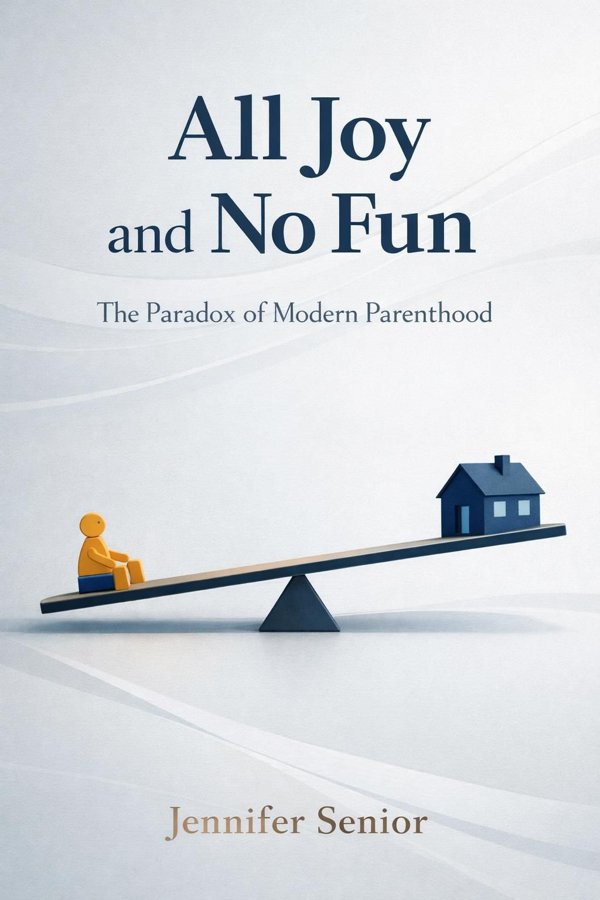
All Joy and No Fun: The Paradox of Modern Parenthood: Summary & Key Insights
 10 min10 chaptersAudio available
What Is All Joy and No Fun: The Paradox of Modern Parenthood About?
All Joy and No Fun: The Paradox of Modern Parenthood by Jennifer Senior is a parenting book spanning 10 pages. In this insightful work, Jennifer Senior explores the profound and often paradoxical effects of parenthood on adults. Drawing on research, interviews, and cultural analysis, she examines how raising children reshapes parents’ identities, relationships, and sense of fulfillment, revealing that while children bring immense joy, they also introduce stress, sacrifice, and complexity to modern family life.
This FizzRead summary covers all 10 key chapters of All Joy and No Fun: The Paradox of Modern Parenthood in approximately 10 minutes, distilling the most important ideas, arguments, and takeaways from Jennifer Senior's work. Also available as an audio summary and Key Quotes Podcast.
All Joy and No Fun: The Paradox of Modern Parenthood
In this insightful work, Jennifer Senior explores the profound and often paradoxical effects of parenthood on adults. Drawing on research, interviews, and cultural analysis, she examines how raising children reshapes parents’ identities, relationships, and sense of fulfillment, revealing that while children bring immense joy, they also introduce stress, sacrifice, and complexity to modern family life.
Who Should Read All Joy and No Fun: The Paradox of Modern Parenthood?
This book is perfect for anyone interested in parenting and looking to gain actionable insights in a short read. Whether you're a student, professional, or lifelong learner, the key ideas from All Joy and No Fun: The Paradox of Modern Parenthood by Jennifer Senior will help you think differently.
- ✓Readers who enjoy parenting and want practical takeaways
- ✓Professionals looking to apply new ideas to their work and life
- ✓Anyone who wants the core insights of All Joy and No Fun: The Paradox of Modern Parenthood in just 10 minutes
Want the full summary?
Get instant access to this book summary and 100K+ more with Fizz Moment.
Get Free SummaryAvailable on App Store • Free to download
Key Chapters
To understand the modern parent’s predicament, we have to recognize how dramatically parenting itself has changed. In earlier generations, children were viewed less as projects and more as labor or legacy. A century ago, they contributed to the family economy; their value was tangible, practical. The relationship carried expectations but not psychological scrutiny. Parents loved their children, certainly, but they didn’t see them as central to their own self-fulfillment.
Economic evolution altered this dynamic. As children became economically useless but emotionally priceless, the role of parenthood transformed. In the postwar years, prosperity and cultural shifts elevated the child to a position of emotional primacy in the household. By the late twentieth and early twenty-first century, especially in affluent societies, parenting became a full-time psychological occupation. It wasn’t just about raising decent citizens; it was about sculpting ideal humans. Parents were now expected to find their personal meaning through their children.
This historical shift introduced the very paradox I describe: parenting grew richer in emotional depth but poorer in freedom. As children became central to our happiness, they also became the primary source of our anxiety. The modern parent must navigate a world where success is measured not by one’s own achievements but by the perceived success and emotional well-being of one’s offspring. The old structure provided predictability and community standards; the new one infuses every act of parenting with self-consciousness. We are no longer merely caretakers — we are curators of experience, managers of emotion, and architects of a future we can’t control.
Having children changes who we are in ways nothing else can. They reorder our sense of self, often quietly but inexorably. For many parents, the moment a child arrives marks both a beginning and a diminishment — a redefinition of personhood. Where once our identity was fluid, defined by choice and autonomy, now it becomes tethered to responsibility.
Through my interviews and field research, I saw this identity transformation as both liberating and confining. Children provide direction to lives that might once have felt aimless. They force adults to prioritize, to invest in relationships, to develop emotional patience. Yet, in doing so, they also shrink the space available for self-expression. Parents often mourn the pre-child version of themselves — the spontaneity, ambition, or attention to self-care — even as they delight in new feelings of purpose.
This tension is not pathological; it is endemic to the structure of modern adulthood. When the world tells parents that childrearing should be the ultimate source of personal meaning, then any sense of ambivalence feels like moral failure. But ambivalence is natural. Our children reflect our best selves back to us while also reminding us of what we’ve relinquished.
In exploring how children affect identity, I saw that parenthood forces adults into a constant negotiation between being and becoming. Parents wrestle with questions of relevance — not only to their children but to the world outside. For some, the child becomes an anchor stabilizing them through middle age; for others, a mirror showing them the loss of possibility. Parenthood doesn’t simply change what we do each day; it transforms how we conceive of ourselves. And sometimes, that transformation brings both serenity and sorrow.
+ 8 more chapters — available in the FizzRead app
All Chapters in All Joy and No Fun: The Paradox of Modern Parenthood
About the Author
Jennifer Senior is an American journalist and author known for her work on psychology, family, and culture. She has written for The New York Times and New York Magazine, and her reporting often focuses on how social and cultural forces shape personal lives.
Get This Summary in Your Preferred Format
Read or listen to the All Joy and No Fun: The Paradox of Modern Parenthood summary by Jennifer Senior anytime, anywhere. FizzRead offers multiple formats so you can learn on your terms — all free.
Available formats: App · Audio · PDF · EPUB — All included free with FizzRead
Download All Joy and No Fun: The Paradox of Modern Parenthood PDF and EPUB Summary
Key Quotes from All Joy and No Fun: The Paradox of Modern Parenthood
“To understand the modern parent’s predicament, we have to recognize how dramatically parenting itself has changed.”
“Having children changes who we are in ways nothing else can.”
Frequently Asked Questions about All Joy and No Fun: The Paradox of Modern Parenthood
All Joy and No Fun: The Paradox of Modern Parenthood by Jennifer Senior is a parenting book that explores key ideas across 10 chapters. In this insightful work, Jennifer Senior explores the profound and often paradoxical effects of parenthood on adults. Drawing on research, interviews, and cultural analysis, she examines how raising children reshapes parents’ identities, relationships, and sense of fulfillment, revealing that while children bring immense joy, they also introduce stress, sacrifice, and complexity to modern family life.
You Might Also Like
Never Enough
Jennifer Breheny Wallace
10 min
Bluey: Sleepytime
Joe Brumm
10 min
In My Heart: A Book of Feelings
Jo Witek
10 min
Love From The Crayons
Drew Daywalt, Oliver Jeffers
10 min
Pete The Cat: Big Easter Adventure
James Dean, Kimberly Dean
10 min
Smart Money Smart Kids: Raising the Next Generation to Win with Money
Dave Ramsey, Rachel Cruze
10 minFeatured In
Browse by Category
Ready to read All Joy and No Fun: The Paradox of Modern Parenthood?
Get the full summary and 100K+ more books with Fizz Moment.